
Read the first chapter
The whole of chapter one, free. About 9 min. Turn the pages with the arrows, your keyboard, or a swipe.
Chapter 1
The Child Waiting in the Car
The Car Outside the Shop
A child can be in immediate danger while everything around the child looks ordinary: a parked car, a short errand, a parent moving quickly through a shop. The unsettling part is that neglect often arrives without shouting, bruises, or a dramatic warning; it can look like a routine decision repeated so often that nobody notices it anymore.
Picture the familiar setting: a vehicle stopped outside a convenience store, engine off, windows closed, a child visible in the rear seat. The adult has gone inside “for a minute.” From the pavement, the scene may appear harmless. Yet the child’s safety now depends on temperature, traffic, the vehicle’s locks, the adult’s return, and the willingness of strangers to recognise that an ordinary errand has become a risk.
The Unseen Child Lens begins at that pavement. It asks what is happening to the child when adults are focused on the task in front of them, and why the surrounding community so often treats the absence of care as a private family matter rather than a public concern. How many dangerous moments become normal simply because the adult who created them is not watching?
A Small Errand With Large Consequences
Leaving a child alone in a car is not one single kind of danger. A vehicle can heat rapidly in warm weather, even when the outside temperature does not seem extreme. A child may be unable to open a door, operate a seat belt, communicate clearly with a passer-by, or judge whether moving traffic is safe. A car can also become part of a wider chain of risk: theft, accidental movement, a medical emergency, or an adult who is delayed longer than expected.
The shortness of the errand does not settle the question. “Just a minute” describes the adult’s intention, not the child’s actual exposure. A queue forms. A payment fails. The cashier calls for assistance. The adult meets someone and stops to talk. The vehicle is parked farther away than expected. A minute becomes ten, and ten minutes can be long enough for conditions inside a car to change sharply.
Children are especially vulnerable because they do not possess the same physical and practical resources as adults. Their bodies can heat faster, and younger children may not recognise the seriousness of thirst, dizziness, or confusion. They may cry, fall silent, or attempt to solve the problem in ways that create new dangers. A child who presses a button, climbs across a seat, or tries to leave the vehicle is not behaving irrationally. The child is responding with limited knowledge to a situation created by someone with more knowledge and power.
The visible car is only the outer layer. Behind it are decisions about time, convenience, trust, and responsibility. The adult may not consider the act neglectful. A passer-by may hesitate to interfere. Staff inside the shop may assume that someone else is watching. The child remains at the centre of the event, but the child’s perspective is the one least represented.
How “Only a Minute” Became Ordinary
For much of modern history, children were expected to remain close to adults, but closeness did not always mean careful supervision. In crowded streets, industrial towns, and expanding suburbs, children were often left to move through public spaces with considerable independence. The difference today is not that adults have suddenly become careless. It is that vehicles, buildings, traffic patterns, phones, and commercial routines have created new places where a child can be physically near an adult yet effectively unattended.
The parked car is a particularly revealing space because it combines privacy with public visibility. Anyone can see that a child is inside, but the vehicle’s doors and windows create a boundary. A passer-by may notice the child and still feel uncertain about what to do. Is the adult nearby? Is the child asleep? Is the situation a family matter? That uncertainty can produce the most dangerous response of all: waiting for someone else to decide.
Modern life also rewards speed. Shops are designed for quick stops. Cars are used as temporary waiting rooms, storage spaces, offices, and places to make phone calls. Children are carried through these systems as dependants whose needs must fit around adult schedules. The arrangement can feel efficient until the child’s body, fear, or vulnerability interrupts it.
A phone can intensify the problem. An adult looking at a screen may be physically present but mentally elsewhere, while a child in the back seat may be hidden by tinted glass or a high seat. In this setting, attention becomes a limited resource. The danger is not always deliberate indifference. It is the repeated assumption that nothing important will happen during the interval when nobody is looking.
The Unseen Child Lens makes that interval visible. It does not begin by asking whether the adult meant well. It begins by asking what the child could see, understand, reach, and do. That shift matters because good intentions are invisible to a frightened or overheated child. Conditions are not.
The Science of an Unwatched Body
The human body is constantly regulating temperature, heart rate, breathing, and blood sugar. Children have less control over these systems and fewer ways to correct a dangerous change. Inside a parked vehicle, sunlight passing through the windows warms seats, dashboard, and interior surfaces. Ventilation is limited when the windows are closed, and opening them slightly does not reliably prevent the interior from becoming dangerous.
This is why a mild day can still create a serious risk. The outside air may feel tolerable to an adult standing beside the car, while the enclosed space becomes much hotter. A child strapped into a seat cannot move into shade, remove layers easily, find water, or decide to walk into a building. The adult’s absence removes not only supervision but also the ability to interpret early signs of distress.
The same principle applies beyond heat. A child left alone may have a seizure, an asthma attack, an allergic reaction, or a sudden injury. A sleeping child may be difficult to wake. A frightened child may not know the adult’s telephone number or be able to explain the location. The adult who sees the situation as a brief pause may have placed the child in a setting where a small event cannot be managed.
A surprising feature of these incidents is that the most visible danger is not always the most likely first failure. People often focus on extreme temperature, but the immediate problem may be the child’s inability to summon help. A locked car turns a minor medical problem into an isolated one. A crowded car park can turn a frightened child into an unnoticed child.
That is the central reframing: the risk comes not only from what might happen, but from the removal of the child’s access to a capable adult when something does happen. The car is not merely hot, cold, or enclosed. It is a place where the child’s options have been reduced.
This changes how the event should be understood. The adult does not need to predict the exact emergency in advance. The basic responsibility is to recognise that young children cannot reliably protect themselves from ordinary hazards. What appears to be a small absence can therefore be a major transfer of risk from adult to child.
The People Who See and Do Not See
A child alone in a car is rarely invisible in the literal sense. Someone may walk past, park beside the vehicle, collect a trolley, or stand near the entrance. The problem is social recognition. Adults are trained by habit to respect other people’s boundaries, and families are often assumed to have their own arrangements. A stranger who intervenes risks being accused of overreacting, while a stranger who does nothing can later wonder whether the warning signs were obvious.
This hesitation has a history. In many communities, supervision has been treated as a private family duty unless the danger is unmistakable. Neighbours may notice children spending long periods alone, shop workers may see the same parent making repeated unattended stops, and relatives may sense that something is wrong without having a clear event to point to. Each observation remains separate. No one wants to turn an impression into an accusation.
The result is a gap between visibility and responsibility. The child is seen, but not necessarily recognised as someone requiring immediate care. The adult is absent, but the absence is explained away by the errand. A society can therefore become accustomed to conditions that would have seemed unacceptable if the child were an adult unable to leave, call, or seek help.
In 2018, the death of Mason Desai, a two-year-old boy in the United Kingdom, showed how a short period of adult absence can become a matter of public grief and legal scrutiny. Mason was found unresponsive after being left in a vehicle during a warm day while his father went into a shop. The details were reported as a family tragedy, but the wider question was not confined to one household: how does a community recognise danger before an irreversible outcome makes recognition unavoidable?
The answer is complicated by the fact that neglect is often cumulative. One unattended errand may be described as a lapse. Repeated lapses can create a household expectation that the child will wait, cope, and remain quiet. The child learns that discomfort does not necessarily bring an adult back. That lesson reaches beyond the car park.
The Child Who Learns to Wait
Children who are frequently left to manage adult-sized risks do not always appear distressed in public. Some become quiet and watchful. Others become unusually independent, not because they are ready for independence but because dependence has proved unreliable. A child who knows how to stay still in a car, avoid asking for help, or keep a younger sibling calm may be praised as mature. The praise can hide the reason the skill was needed.
This is where immediate danger connects to long-term social consequences. A child’s early expectations about care are built from repeated encounters with adults. If adults respond to vulnerability with attention, the child learns that danger can be shared and explained. If adults respond with absence or irritation, the child may learn that needs are obstacles and that safety depends on self-management.
No single car-park incident determines a child’s future. Human lives are not mechanical outcomes. Yet ordinary moments matter because they teach children what other people are likely to do. A society concerned with wellbeing cannot look only for spectacular harm. It must also notice the quiet training that occurs when children are left to absorb risks that adults could have prevented.
The car outside the shop is therefore more than a setting. It is a compact picture of a wider arrangement: an adult controls the time, the transport, the decisions, and the exit, while the child waits inside the consequences. The child may be only a few metres away from help and still be unable to reach it.
What the Waiting Child Reveals
The most unsettling part of the scene is its ordinariness. Nothing about the shop, the car, or the errand announces that a boundary has been crossed. Neglect can hide inside routines because routines make decisions feel smaller than they are.
A child waiting alone is not merely waiting for an adult to return. The child is waiting to discover whether the adult’s convenience or the child’s safety will govern the next few minutes. And somewhere between the locked door, the bright pavement, and the ordinary movement of strangers, society reveals how easily a visible child can remain unseen.
End of chapter one. 39 more chapters and about 64,369 words in the full book.
Swipe or use the arrows to turn the page


What's inside: 40 chapters
- 1. The Child Waiting in the Car
- 2. When Phones Replace Eye Contact
- 3. The Myth of the Self-Sufficient Child
- 4. Parenting on Autopilot
- 5. The Cost of Being Unbelieved
- 6. Discipline Without Relationship
- 7. The Quiet Hunger for Praise
- 8. Children as Emotional Caretakers
- 9. The Home That Never Feels Safe
- 10. Neglect Without an Empty Fridge
- 11. The Adults Who Look Away
- 12. Childhood Managed by Screens
- 13. The School’s Unpaid Safety Net
- 14. When Help Has a Waiting List
- 15. The Price of Unstable Childcare
- 16. Poverty Is Not Parental Indifference
- 17. The Workday That Swallows Childhood
- 18. Care Across the Generational Divide
- 19. The Child Nobody Claims
- 20. When Fathers Become Visitors
- 21. Mothers Asked to Do Everything
- 22. The Child Behind the Behavior
- 23. Why Some Children Stop Asking
- 24. The Body Keeps the Score
- 25. The Talent Lost to Survival
- 26. The First Job of Growing Up
- 27. The Teenager We Call Trouble
- 28. How Neglect Becomes Public Expense
- 29. A Workforce Raised on Disconnection
- 30. Democracy Needs Cared-For Children
- 31. The Neighborhood That Raises Nobody
- 32. What Other Countries Protect
- 33. The Warning Signs Adults Miss
- 34. Listening Without Taking Over
- 35. Repair After You Have Failed
- 36. Making Care a Shared Duty
- 37. The Policies That Buy Time
- 38. Building Schools That Notice
- 39. Measuring What Care Changes
- 40. The Country We Teach Children to Build
About this book
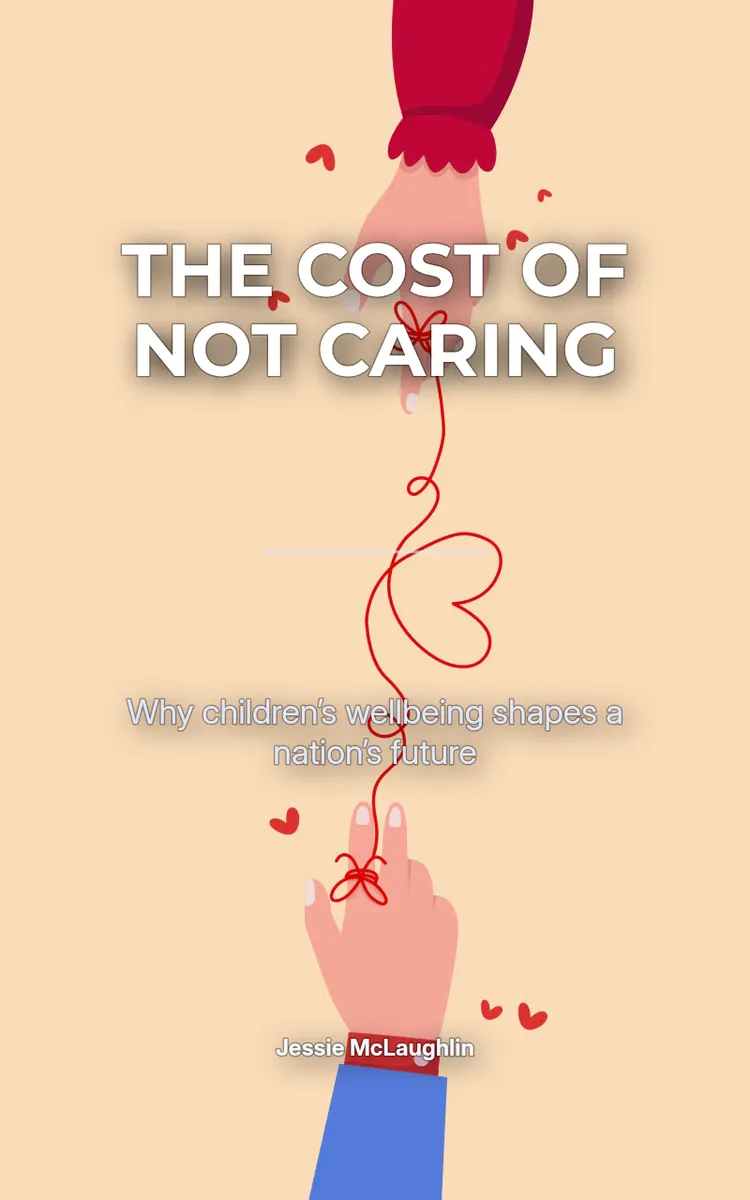
"The Cost Of Not Caring" is a curiosity book by Jessie McLaughlin with 40 chapters and approximately 64,369 words. Adult neglect of children and its consequences for society and national stability.
This book was created using Inkfluence AI, an AI-powered book generation platform that helps authors write, design, and publish complete books.
Frequently Asked Questions
What is "The Cost Of Not Caring" about?
Adult neglect of children and its consequences for society and national stability
How many chapters are in "The Cost Of Not Caring"?
The book contains 40 chapters and approximately 64,369 words. Topics covered include The Child Waiting in the Car, When Phones Replace Eye Contact, The Myth of the Self-Sufficient Child, Parenting on Autopilot, and more.
Who wrote "The Cost Of Not Caring"?
This book was written by Jessie McLaughlin and created using Inkfluence AI, an AI book generation platform that helps authors write, design, and publish books.
Write your own curiosity book with AI
Describe your idea and Inkfluence writes the whole thing. Free to start.
Start writingCreated with Inkfluence AI


