

Read the first chapter
The whole of chapter one, free. About 3 min. Turn the pages with the arrows, your keyboard, or a swipe.
Chapter 1
How the Pyramids Rose
A Mountain Made by People
The Great Pyramid of Giza is a mountain made by people. Its stones were cut, carried, and stacked without engines, cranes, or trucks. Yet its sides once rose higher than any other human-made building.
How did this happen? The answer was not one giant trick. Egyptian builders used many small ideas together: careful plans, strong ropes, wooden sledges, boats, ramps, and thousands of steady workers.
We will follow the stones from the quarry to the pyramid. We will look for marks left by the builders and see how simple tools could solve a huge problem.
How can a mountain rise when nobody has a machine to lift it?
The Stone-to-Sky Method
The builders first chose a firm place near Giza, where the ground could hold the pyramid’s great weight. They measured directions by watching the sky and used straight lines to guide the shape. A pyramid had to be planned before the first stone was moved.
Much of the stone came from nearby quarries. Workers struck softer rock with hard stone tools. They shaped blocks with care, much like carving a giant brick from a wall.
The Stone-to-Sky Method began with a simple idea: make the ground ready, move each block, and raise the building layer by layer.
Sledges, Water, and Boats
A heavy stone did not need to be lifted high at once. Workers placed it on a wooden sledge and pulled it across the ground with ropes. Wetting the sand could make the sledge slide more easily. A painting from an Egyptian tomb shows people pulling a large statue while another person pours liquid in front of it.
The Nile River was another important part of the plan. Boats carried stone from quarries farther away. When the river rose, water reached special channels near building sites. The stones could then travel by water instead of over long stretches of land.
Ramps to the Higher Layers
To raise stones, builders likely used ramps made from earth, mud brick, and stone. A ramp turned a steep lift into a longer, gentler pull, like pushing a toy wagon up a sloping path.
The surprising part is that the pyramid did not rise in one huge leap. Each layer was a small step. Ropes, wooden levers, sledges, and many hands helped place blocks where they belonged.
The Human Puzzle Behind the Stones
The builders were not simply strong. They were organized. Quarry workers, rope makers, boat crews, stone cutters, cooks, and planners all had different jobs. A large building site worked more like a busy town than a crowd pulling together.
Evidence from workers’ homes near Giza shows that teams lived close to the pyramid. Their work was hard, but they had food, tools, and places to rest. The pyramid was a building project shared by a whole community.
A Mountain Built Without a Crane
Here is the strange truth: the Egyptians did not need one powerful machine. They used many ordinary tools in the right order.
That changes the puzzle. The question is not, “What secret machine lifted the pyramid?” It is, “How did people join simple ideas so carefully that they could build something enormous?”
The Workers at Giza
At Giza, the pyramid builders left more than stones behind. They left bakeries, workshops, animal bones, and marks written by work teams. These clues show people planning meals, repairing tools, and moving stone day after day.
When we look at the pyramid, we may see one silent object. The evidence shows a noisy place filled with boats, ropes, sledges, hammers, dust, and shouted directions. Every block carried the work of many people.
The Mystery Still Rises
The pyramids reveal that great buildings are made from small choices repeated with care. A wet patch of sand, a strong rope, or a well-placed ramp could matter as much as a giant block.
We know many parts of the plan, but some details remain hidden beneath the stones. What other clever ideas are waiting to be found? Draw a pyramid and add the path you think one stone took from quarry to sky.
End of chapter one. 24 more chapters and about 12,735 words in the full book.
Swipe or use the arrows to turn the page

The Truth Detectives

The Future Museum: 100 Mysteries Every Curious Kid Should Solve

Robot Builders Of Tomorrow
What's inside: 25 chapters
- 1. How the Pyramids Rose
- 2. The Ramp Puzzle
- 3. Who Built the Pyramids?
- 4. Stone Tools, Sharp Ideas
- 5. The Nile’s Moving Highway
- 6. Machu Picchu Without Mortar
- 7. Roads Across the Andes
- 8. Roman Concrete That Lasted
- 9. Aqueducts That Defied Gravity
- 10. The Colosseum’s Clever Crowdways
- 11. Babylon’s Hanging Gardens Mystery
- 12. Ziggurats Reaching the Sky
- 13. Maya Cities in the Rainforest
- 14. Maya Reservoirs and Rain
- 15. Stonehenge’s Changing Purpose
- 16. Easter Island’s Moving Statues
- 17. Angkor’s Water City
- 18. The Great Wall’s Many Builders
- 19. Persian Engineers and Windcatchers
- 20. Göbekli Tepe’s Ancient Carvers
- 21. How Archaeologists Read Ruins
- 22. Finding Cities Beneath the Ground
- 23. The Builders’ Math and Measures
- 24. What Ruins Cannot Tell Us
- 25. Building Wonders, Human Ingenuity
About this book
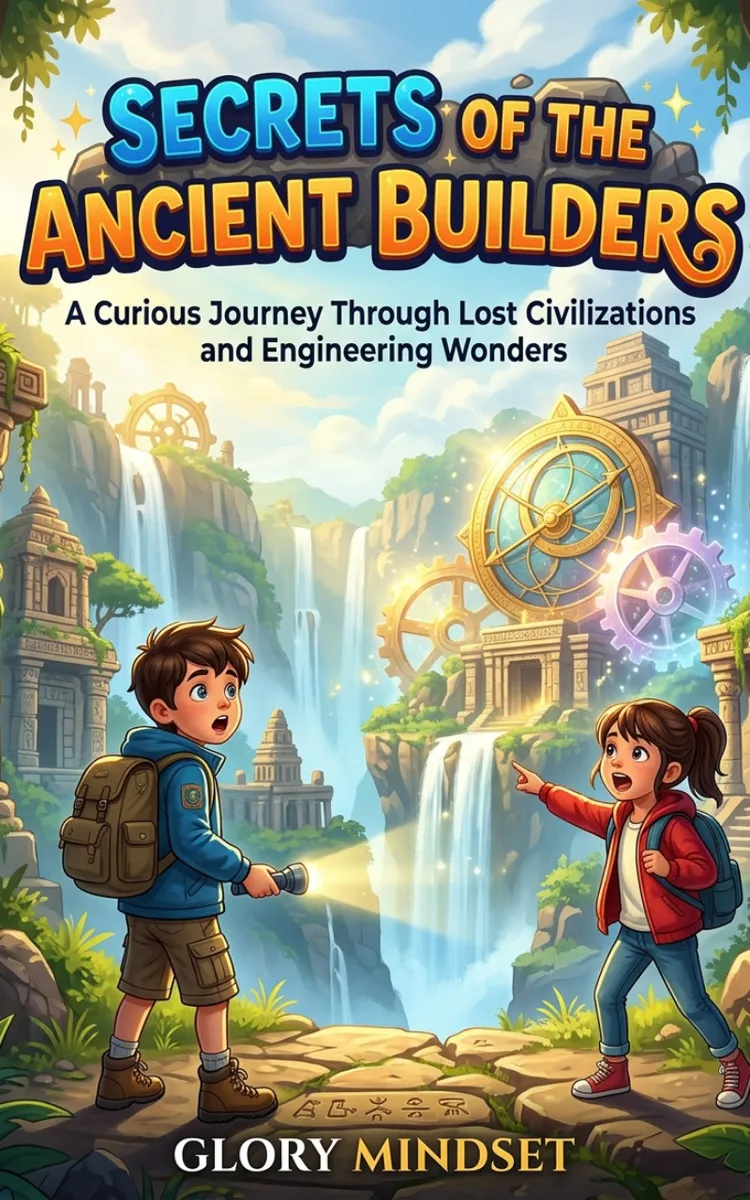
"Secrets Of The Ancient Builders" is a curiosity book by Glory Mindset with 25 chapters and approximately 12,735 words. Ancient civilizations, archaeological puzzles, and remarkable engineering achievements.
This book was created using Inkfluence AI, an AI-powered book generation platform that helps authors write, design, and publish complete books.
Frequently Asked Questions
What is "Secrets Of The Ancient Builders" about?
Ancient civilizations, archaeological puzzles, and remarkable engineering achievements
How many chapters are in "Secrets Of The Ancient Builders"?
The book contains 25 chapters and approximately 12,735 words. Topics covered include How the Pyramids Rose, The Ramp Puzzle, Who Built the Pyramids?, Stone Tools, Sharp Ideas, and more.
Who wrote "Secrets Of The Ancient Builders"?
This book was written by Glory Mindset and created using Inkfluence AI, an AI book generation platform that helps authors write, design, and publish books.
Write your own curiosity book with AI
Describe your idea and Inkfluence writes the whole thing. Free to start.
Start writingCreated with Inkfluence AI


