
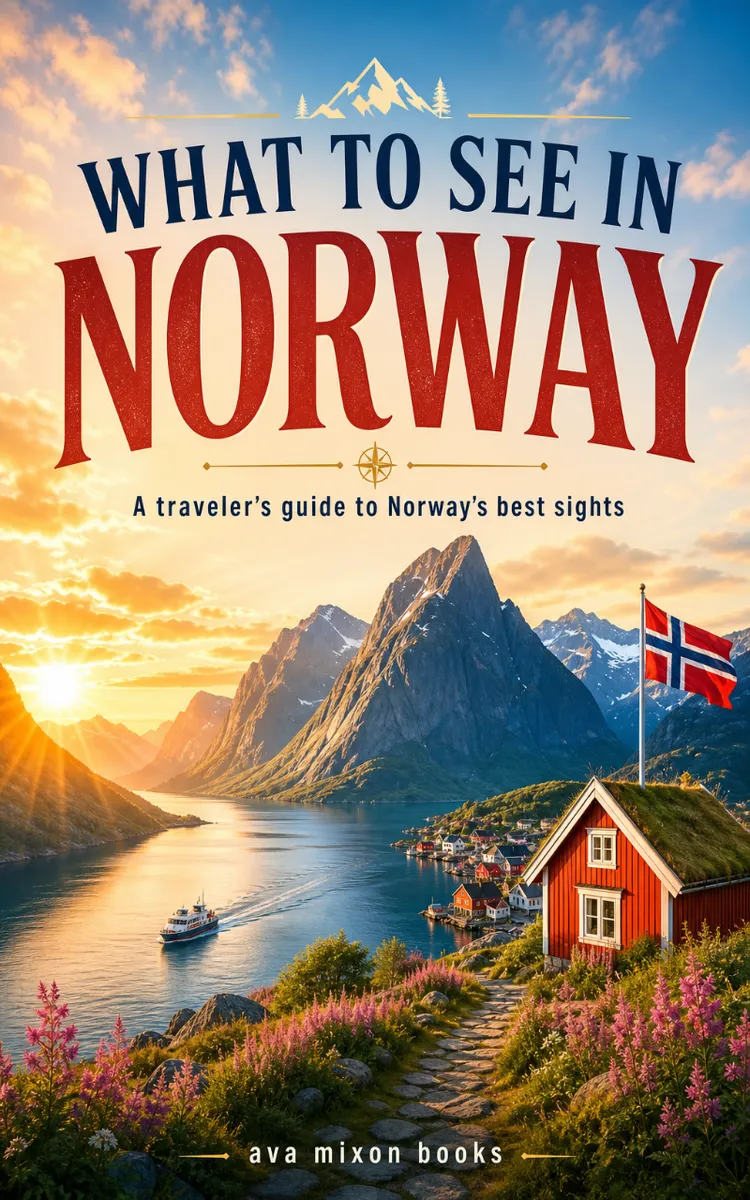

Read the first chapter
The whole of chapter one, free. About 8 min. Turn the pages with the arrows, your keyboard, or a swipe.
Chapter 1
Oslo: Fjords, Museums, and City Life
Oslo at a Glance: Waterfront Energy and Easy Fjord Escapes
Oslo gives you a rare combination: a compact capital, a working harbor, leafy walking routes, and museums packed with world-famous art and polar history. You can watch ferries cross the fjord in the morning, see Edvard Munch’s The Scream before lunch, and eat fresh seafood beside the water that evening.
It suits first-time visitors who want culture without endless travel between sights. Most central attractions are walkable, and the Oslo Pass makes museums and public transport much easier to manage.
> Quick Facts > - Best months: June to August for long days and fjord trips; December for Christmas lights and winter atmosphere. > - Getting there: Oslo Airport Gardermoen is about 50 kilometers from the center. The Flytoget airport train costs about $22 one way and takes 19 minutes; the slower Vy train costs about $12 - $15 and takes roughly 23 minutes. > - Budget per day: Budget $95 / Mid-range $190 / Luxury $350+ > - Languages: Norwegian and English; English is widely spoken. > - Currency: Norwegian krone (NOK) > - Time needed: 2-3 days minimum
What sets Oslo apart is the way its highlights sit beside nature. In many capitals, a fjord view means a distant lookout. Here, you can take a city bus to the harbor, board a local ferry, and reach islands with swimming beaches and walking trails in minutes.
The Oslo Sights Worth Your Time
1. Oslo Opera House The white marble roof rises from the harbor like a sloping plaza, and you can walk all the way to the top for broad views over the water. It’s open 24 hours as an outdoor space, while indoor public areas generally open from 10 a.m. to 4 p.m.; walking the roof is free. Allow 30-45 minutes. Go early in the morning for quieter photos, and look back toward the city to see how close the fjord is to the center.
2. MUNCH Museum Edvard Munch’s The Scream is the obvious draw, but the museum also displays Madonna, landscapes, sketches, and rotating exhibitions across its tall Bjørvika building. It usually opens from 10 a.m. to 6 p.m., with later hours on some evenings; adult admission is about $17 - $20. Plan 1½ - 2 hours. There are several versions of The Scream, so check the daily display schedule rather than assuming the famous painting is in the first gallery you enter.
3. Vigeland Sculpture Park More than 200 sculptures by Gustav Vigeland fill this open-air park, including the famous Monolith and the expressive Sinnataggen, or Angry Boy. The park is open around the clock and free, making it one of Oslo’s best-value stops. Give it 1-1½ hours. The main bridge is busy at midday; arrive before 9 a.m. or walk beyond the Monolith for quieter views of the sculptures and surrounding gardens.
4. Bygdøy Museums A short ferry ride from the harbor brings you to Bygdøy, where the Fram Museum, Kon-Tiki Museum, and Norwegian Museum of Cultural History sit within walking distance. Individual museum tickets cost roughly $12 - $18, while the ferry ride is covered by a standard public-transport ticket. Allow at least half a day. Start with the Fram Museum: stepping inside the wooden polar ship makes Arctic exploration feel wonderfully real, not just something you read about on a wall.
5. Akershus Fortress This medieval fortress overlooks the harbor and offers some of the city’s best free waterfront walking. The grounds are usually open from 6 a.m. to 9 p.m.; the castle interiors generally open from 10 a.m. to 4 p.m., with adult admission around $10 - $12. Spend 1-2 hours. Walk the outer walls first, then visit the castle rooms - the harbor views are strongest from the western ramparts.
6. The National Museum Norway’s largest art museum brings together paintings, design, architecture, and decorative arts in one broad collection. It normally opens Tuesday through Sunday from 10 a.m. to 8 p.m., with Monday closure; adult admission is about $16 - $18. Allow 2 hours. Don’t rush through the Munch room - its surrounding Norwegian art helps explain why The Scream feels so connected to the country’s landscapes and light.
7. Hovedøya Island For a quieter fjord experience, take the local ferry from Aker Brygge to Hovedøya. The island has forest paths, small beaches, picnic spots, and the ruins of a 12th-century Cistercian monastery. There’s no entry fee, and the ferry ride takes about 10 minutes; allow 2-4 hours. Pack lunch and swimwear, then follow the path toward the monastery before settling on the southern shore.
Skip These Tourist Traps
• The Nobel Peace Center gift shop as a main stop: It’s interesting but small. Spend more time at the nearby waterfront and Akershus Fortress instead. - Aker Brygge’s most obvious harbor tables: The view is good, but prices can be steep. Eat at Vippa or Mathallen, then return to Aker Brygge for a sunset walk. - A rushed fjord sightseeing cruise: If the weather is clear, use the public ferry to Hovedøya or Gressholmen. You’ll get real island time for the price of a transit ticket.
Where to Stay, Eat, and Taste Oslo
Oslo’s neighborhoods change quickly. Sentrum puts you near the Opera House, Akershus, and the harbor. Grünerløkka feels younger, with cafés, bars, and vintage shops along the Akerselva River. Frogner is calmer and close to Vigeland Park, while Bjørvika is the sleek waterfront district built around MUNCH and the Opera House.
| Budget Tier | Recommendation | Area | Price/Night | Best For | |---|---|---|---:|---| | Budget | Anker Hostel | Grünerløkka | $55 - $95 | Travelers who want a central bed and kitchen access | | Mid-range | Thon Hotel Opera | Bjørvika | $170 - $240 | Museum visits and easy airport-train access | | Luxury | The Thief | Tjuvholmen | $350 - $550 | Design, spa time, and waterfront views |
Hrimnir Ramen (Grünerløkka) - Japanese ramen. Order the pork ramen (about $22). Its rich broth and handmade noodles make it a welcome break from expensive Nordic tasting menus.
Lofoten Fiskerestaurant (Aker Brygge) - Norwegian seafood. Order the fish soup (about $20) or the catch of the day (from $35). It’s a dependable choice when you want seafood with a harbor view.
Mathallen Oslo (Vulkan) - Indoor food hall. Try the Norwegian cheese and cured-meat plates (about $18 - $25). Several counters let you build one meal around local flavors without committing to a formal restaurant.
Smalhans (St. Hanshaugen) - Modern Norwegian cooking. Order the daily lunch special (about $20 - $25). The menu changes, but the relaxed setting and carefully prepared local ingredients stay consistent.
Vippa Oslo (Vippetangen) - International street food. Try a fish taco or Middle Eastern plate (about $12 - $18). The old warehouse setting and fjord-facing tables make it more memorable than a standard food court.
Street Food to Try
• Pølse: A Norwegian hot dog in lompe, a soft potato flatbread, for about $5 - $8. - Fiskekake: A warm fish cake from a market or casual counter, usually $5 - $9. - Skillingsbolle: A cinnamon bun with cardamom, about $4 - $6. - Brunost on waffles: Brown cheese on a waffle, usually $7 - $10 at cafés or food halls.
Practical Details for Museums and the Fjord
Oslo rewards light packing and a little planning, especially if you’re combining museum interiors with ferry rides and long waterfront walks. Weather can shift between sunshine and cold wind within an hour, even in summer.
Packing Checklist
• Waterproof jacket for ferry decks and sudden rain. - Comfortable shoes with grippy soles for Akershus and island paths. - Warm layer for evening harbor walks. - Reusable water bottle; public refill points are easy to find. - Swimsuit and quick-dry towel for Hovedøya in summer. - Small daypack for museum and ferry days. - Sunglasses; summer daylight remains bright late into the evening. - Portable battery for maps, ferry times, and digital tickets. - Contactless bank card or phone for public transport. - Foldable tote for Mathallen and market purchases.
Useful Phrases
1. Hei - “Hi” (hay). 2. Takk - “Thank you” (tahk). 3. Vær så snill - “Please” (vair sho snill). 4. Hvor er ferga? - “Where is the ferry?” (voor air fair-gah). 5. En kaffe, takk - “One coffee, please” (en kah-feh, tahk). 6. Kan jeg betale med kort? - “Can I pay by card?” (kahn yay beh-tah-leh meh kort).
Money-Saving Tips
1. Buy an Oslo Pass if you plan to visit at least three paid museums and use transit. A 24-hour adult pass costs roughly $50, with longer versions available. 2. Use Ruter’s app for buses, trams, metro trains, and ferries. A single central-zone ticket costs about $4 - $5, far less than taxis between museums. 3. Take the public ferry to Bygdøy or Hovedøya instead of a dedicated sightseeing cruise. The scenery is excellent, and the ticket works like ordinary local transport. 4. Eat lunch at Mathallen or Vippa, where you can find filling meals for $12 - $20. Save restaurant dining for one carefully chosen evening. 5. Visit Vigeland Park, the Opera House roof, Akershus grounds, and the fjord islands without paying separate entry fees.
Common Mistakes
• Trying to see Bygdøy and Grünerløkka in one rushed morning: Give Bygdøy half a day, then return downtown before exploring the food and bar scene. - Assuming every ferry is included without checking the route: Confirm the ferry number and zone in the Ruter app before boarding. - Visiting MUNCH without checking opening hours: The museum’s late openings vary by day, so book a timed ticket when possible. - Wearing city shoes to the islands: Hovedøya paths are easy, but comfortable footwear makes the forest and shoreline much more enjoyable.
Oslo’s best moments happen where the city loosens its grip: on the Opera House roof, beside a Munch canvas, or on a ferry pulling away from the harbor. Stay long enough to connect those places, and the capital becomes more than a museum stop - it becomes your doorway into the fjord landscape itself.
End of chapter one. 8 more chapters in the full book.
Swipe or use the arrows to turn the page

What's inside: 9 chapters
- 1. Oslo: Fjords, Museums, and City Life
- 2. Bergen: Bryggen and the Scenic Coast
- 3. Geirangerfjord: Waterfalls and Cruise Views
- 4. Stavanger: Preikestolen and Old Town
- 5. Tromsø: Northern Lights and Arctic Culture
- 6. Lofoten: Reine Villages and Island Roads
- 7. Trondheim: Nidaros Cathedral and River Walks
- 8. Ålesund: Art Nouveau Streets by the Sea
- 9. Chapter 9
About this book
"What To See In Norway" is a travel book by ava mixon books with 9 chapters and approximately 14,890 words. Norway travel highlights and recommended places to visit.
This book was created using Inkfluence AI, an AI-powered book generation platform that helps authors write, design, and publish complete books. It was made with the AI Travel Guide Creator.
Frequently Asked Questions
What is "What To See In Norway" about?
Norway travel highlights and recommended places to visit
How many chapters are in "What To See In Norway"?
The book contains 9 chapters and approximately 14,890 words. Topics covered include Oslo: Fjords, Museums, and City Life, Bergen: Bryggen and the Scenic Coast, Geirangerfjord: Waterfalls and Cruise Views, Stavanger: Preikestolen and Old Town, and more.
Who wrote "What To See In Norway"?
This book was written by ava mixon books and created using Inkfluence AI, an AI book generation platform that helps authors write, design, and publish books.
How can I create a similar travel book?
You can create your own travel book using Inkfluence AI. Describe your idea, choose your style, and the AI writes the full book for you. It's free to start.
Write your own travel book with AI
Describe your idea and Inkfluence writes the whole thing. Free to start.
Start writingCreated with Inkfluence AI


