
Read the first chapter
The whole of chapter one, free. About 9 min. Turn the pages with the arrows, your keyboard, or a swipe.
Chapter 1
St. John’s: Harbour, History, and Heat
St. John’s in Three Days: Harbour Views, Colourful Streets, and Weather with Opinions
St. John’s is for travelers who like their cities compact, historic, slightly eccentric, and attached to an ocean that refuses to behave. You can walk from a 400-year-old harbour to a pub serving cod tongues, then drive ten minutes toward the city edge and find yourself sharing the road with a moose. That is not a metaphor. The city is small enough for easy sightseeing, but lively enough to keep three days pleasantly busy.
The best first-timer plan is simple: spend one day around the harbour and downtown, one day on the cliffs and coves of the Avalon Peninsula, and one day eating, wandering, and leaving room for weather. St. John’s can serve sunshine, fog, sideways rain, and a wind capable of rearranging your hairstyle before breakfast.
Quick Facts
• Best months: June through September for the mildest weather, longest daylight, and open attractions; July and August are busiest. - Getting there: St. John’s International Airport is about 8 kilometres from downtown. A taxi usually costs $25 - $35 one way; airport rental cars commonly run $70 - $130 per day in summer. Metrobus fares are about $3 per ride. - Budget per day: Budget $110 / Mid-range $220 / Luxury $400+ - Languages: English; Newfoundland English has its own rhythm and vocabulary. - Currency: Canadian dollars. - Time needed: 3-4 days minimum
What makes St. John’s different is the mix of serious Atlantic history and cheerful local mischief. The harbour is working, not decorative. The hills are real, the weather has a personality, and the best views often come with a steep walk and a puff of wind straight off the North Atlantic.
The Sights That Make a First Visit Work
Neighbourhoods here change quickly. Downtown is dense, colourful, and walkable, though “walkable” includes hills that may cause you to reconsider every pastry purchased earlier. The waterfront is breezier and flatter. Quidi Vidi feels like a fishing village tucked inside the city. The east end leads toward Signal Hill and the coast, while the western and southern edges become more suburban and more moose-prone.
1. Signal Hill National Historic Site Open year-round; outdoor areas are free, while the Visitor Centre generally charges about $4 - $6 for adults in season. Allow 2-3 hours for the North Head Trail, Cabot Tower, and harbour views. The insider move is to arrive before 9 a.m. in July or August, when parking is easier and the wind has not yet begun its daily performance. The trail is exposed, so bring a shell even when downtown looks calm.
2. The Rooms Open Tuesday - Sunday, usually 10 a.m. - 5 p.m., with extended summer hours; adult admission is roughly $15 - $20. Allow 2 hours. This provincial museum, art gallery, and archives complex explains Newfoundland and Labrador without making you feel trapped in a lecture. Check the current exhibition before going, and take the elevator or stairs to the upper gallery for one of the best city-and-harbour views indoors.
3. Cape Spear Lighthouse National Historic Site Open year-round for the grounds; the lighthouse interior is generally open seasonally, often 9:30 a.m. - 5 p.m. from late spring through early fall, with Parks Canada admission around $8 - $10 for adults. Allow 2-3 hours, including the short coastal paths. Cape Spear is the easternmost point in North America, so stand near the lighthouse and let the Atlantic make your hair look heroic. Go early for fewer buses and better parking.
4. Quidi Vidi Village and Brewery The village is always accessible; Quidi Vidi Brewery hours change seasonally, commonly late morning until evening, with tours and tastings often $15 - $25. Allow 2 hours. Walk the shoreline, look for the old fishing stages, then try a local beer in the brewery’s taproom. The insider tip: combine this with a stroll around nearby Quidi Vidi Lake, especially during the Royal St. John’s Regatta season in August.
5. East Coast Trail: Sugarloaf Path or Blackhead Path Trail access is free and available year-round, though conditions can become unsafe in winter or heavy rain. Allow 2-4 hours depending on the route and turnaround point. Sugarloaf Path offers dramatic cliffs and ocean views close to town, but it is not a casual sidewalk stroll. Download the East Coast Trail map before leaving service areas, and don’t trust fog to respect your sense of direction.
6. Johnson GEO CENTRE Usually open daily in summer, with reduced hours outside peak season; adult admission is commonly about $12 - $16. Allow 1-2 hours. Built into Signal Hill, this geology centre explains the rock beneath the island and the forces that shaped it. It is a strong rainy-day choice, particularly when the fog has swallowed the view and the Atlantic is throwing a tantrum.
7. Bannerman Park and the Colonial Building Bannerman Park is free and open daily; the Colonial Building’s public hours and access vary, so check the provincial heritage listing before visiting. Allow 45-90 minutes. This is a quieter downtown pause: green space, historic architecture, and a chance to sit down before tackling another hill. Bring coffee from nearby Rocket Bakery and pretend the bench is part of your carefully designed itinerary.
Skip These Tourist Traps
• Driving slowly through every colourful downtown street: See Jellybean Row from a few good viewpoints instead, then leave room for actual neighbourhoods and harbour walks. - Treating Cape Spear as a quick photo stop: The lighthouse is only half the point; stay for the coastal paths and allow time for parking delays. - Buying the first souvenir mug you see on Water Street: Compare prices at the Newfoundland Chocolate Company, local craft shops, and the St. John’s Farmers’ Market if it is operating during your visit.
Where to Sleep, Eat, and Order the Cod
Stay downtown if you want restaurants, pubs, and the harbour within walking distance. The west end offers easier parking and often lower room rates, while the Quidi Vidi and Signal Hill areas feel quieter but require more uphill walking or a car. In July and August, book early; St. John’s rooms disappear faster than a sunny forecast.
| Budget Tier | Recommendation | Area | Price/Night | Best For | |---|---|---|---|---| | Budget | Memorial University residences, summer lodging | Churchill Square | $70 - $110 | Students’ rates, basic rooms, parking | | Mid-range | Alt Hotel St. John’s | Waterfront | $190 - $280 | Harbour views, modern rooms, walkability | | Luxury | Jag Boutique Hotel | Downtown | $240 - $380 | Music-themed rooms and central location |
The Merchant Tavern (Downtown) - Newfoundland-focused modern Canadian cuisine. Order the cod cheek fritters or seasonal seafood plate ($18 - $38). It is polished without losing the island’s fondness for butter, salt, and food that once looked back at you.
Raymonds (Downtown) - Fine dining and Atlantic seafood. The tasting menu commonly starts around $150 per person before drinks. Reserve well ahead, especially in summer; this is the splurge for a serious anniversary, birthday, or “the weather cancelled our hike” evening.
Chinched (Downtown) - Charcuterie and creative small plates. Order the house charcuterie board ($28 - $40) and add a seasonal plate. The room is relaxed, portions encourage sharing, and the menu rewards curiosity without requiring a dictionary.
Mallard Cottage (Quidi Vidi) - Seasonal Newfoundland cooking. Try the fish cakes or a changing local entrée ($20 - $35). The cottage setting feels genuinely connected to the old village, and the menu makes excellent use of seafood, root vegetables, and preserved ingredients.
The Duke of Duckworth (Downtown) - Pub food and local atmosphere. Order fish and chips ($22 - $28) with a Newfoundland beer. It is a reliable stop after a windy Signal Hill walk, when your appetite has become less a feeling and more a legal demand.
Rocket Bakery & Fresh Food (Downtown) - Bakery and café fare. Get a cinnamon bun or sandwich ($5 - $16) and a coffee ($3 - $5). It is ideal for a quick breakfast before Cape Spear, though “quick” may become “one more pastry.”
Street Food to Try
• Toutons with molasses: $6 - $10 at breakfast cafés; fried bread dough, gloriously simple. - Fish cakes: $8 - $14 at pubs and casual restaurants; look for versions made with salt cod. - Fries with dressing and gravy: $8 - $12; a Newfoundland comfort-food classic best eaten while questioning your nap schedule. - Cod tongues: $12 - $18 as a pub starter; tender, rich, and less alarming than the name suggests.
Weather, Moose, and the Small Details That Save the Day
St. John’s weather can change between the time you leave breakfast and the time you reach the end of the block. Summer highs often sit around 16-22°C, but wind can make a mild day feel much colder. Fog may erase Signal Hill, rain may arrive horizontally, and brilliant sunshine may return before you finish complaining.
Packing Checklist
• Waterproof jacket with a hood; an umbrella is often a doomed little sail. - Warm mid-layer for exposed cliffs and evening harbour walks. - Comfortable shoes with good grip for wet hills and uneven trails. - Sunscreen and sunglasses; fog does not cancel ultraviolet rays. - Refillable water bottle for Signal Hill and coastal trails. - Small daypack for extra layers and snacks. - Offline maps for the East Coast Trail and Cape Spear area. - Insect repellent for parks, lakes, and rural edges in summer. - Camera cloth or lens wipes for mist and sea spray. - Bright outer layer if hiking beyond busy city paths.
Useful Phrases
1. “Stay where you’re at.” - stay wear yer at; stay where you are. 2. “Right some good.” - rite sum good; very good or excellent. 3. “B’y.” - bye; a friendly term for a person, not necessarily a male relative. 4. “What’re you at?” - wutter ya at; what are you doing? 5. “Come from away.” - kum frum away; someone from outside Newfoundland. 6. “Long may your big jib draw.” - long may yer big jib draw; a warm wish for good fortune and smooth sailing.
Money-Saving Tips
1. Use Metrobus for downtown, Churchill Square, and several city routes, but rent a car only for Cape Spear, coastal trails, and day trips. 2. Visit The Rooms and Johnson GEO CENTRE on separate rainy windows rather than stacking expensive indoor stops in one day. 3. Buy breakfast from Rocket Bakery or a grocery store before heading to Cape Spear; food options near the lighthouse are limited. 4. Choose a harbour-view walk instead of a paid attraction when fog blocks the big scenery. The ocean remains free, even when it is being dramatic. 5. Check summer festival schedules, especially the Royal St. John’s Regatta, for free public events and temporary road closures.
Common Mistakes
• Packing only summer clothes: Bring waterproof layers and warm socks, even in July. - Walking downtown in brand-new shoes: St. John’s hills and pavement will find every weak seam. - Assuming a city edge means no wildlife: Moose can appear around wooded roads, especially near parks and the Trans-Canada Highway approaches. Slow down, never approach, and give a moose far more space than seems necessary. - Leaving for Cape Spear with no time buffer: Add 30-45 minutes for traffic, parking, wind-blown photography, and the sudden discovery that the view deserves another ten minutes.
For a first visit, use St. John’s as a base rather than trying to conquer the whole Avalon Peninsula at once. Walk the harbour, climb Signal Hill, eat something involving cod, and keep one flexible afternoon for weather. The city rewards travelers who leave room for fog, conversation, and the possibility that the road just outside town belongs to a moose for the next five minutes.
End of chapter one. 20 more chapters in the full book.
Swipe or use the arrows to turn the page


What's inside: 21 chapters
- 1. St. John’s: Harbour, History, and Heat
- 2. Avalon Peninsula: Best Routes and Stops
- 3. Signal Hill: Sunset Without the Stress
- 4. Cape Spear: The Edge of Everything
- 5. Trinity: Heritage Town and Craft Stops
- 6. Fogo Island: Ferry Timing and Culture
- 7. Twillingate: Icebergs, Boats, and Bites
- 8. Bonavista: Legends, Lighthouses, and Loops
- 9. Trinity Bay: Towns, Trails, and Weather
- 10. Grand Falls-Windsor: Falls, Town, and Transit
- 11. Gros Morne National Park: Day Hikes Done Right
- 12. Corner Brook: City Services and Coast Views
- 13. Port au Port Peninsula: Rural Roads and Moose
- 14. Stephenville: Beaches, Museums, and Timing
- 15. St. George’s: Harbour Life and Local Flavours
- 16. Northern Peninsula: Viking, Water, and Trails
- 17. L’Anse aux Meadows: Archaeology and Weather
- 18. Labrador City: Mining History and Supplies
- 19. Happy Valley-Goose Bay: Flights, Trails, Culture
- 20. Nain: Coastal Wonders and Practical Off-Grid Tips
- 21. MAP Of Newfoundland & Labrador
About this book
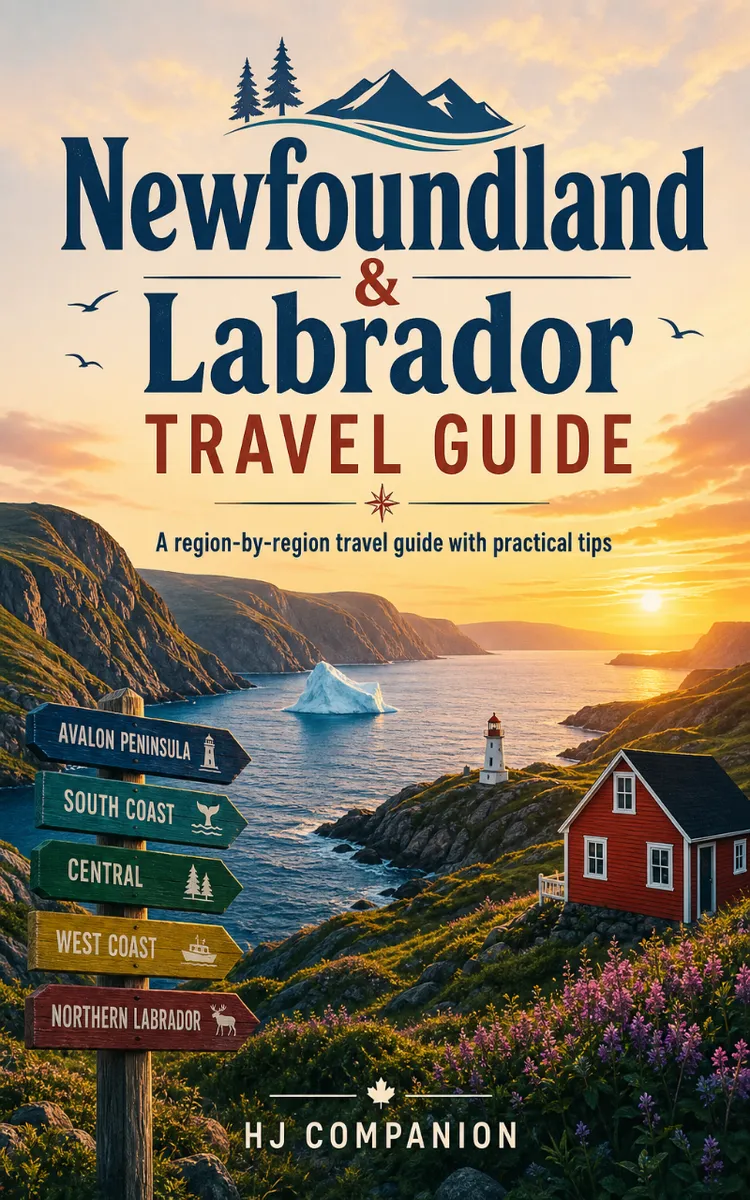
"Newfoundland & Labrador - Travel Guide" is a travel book by HJ Companion with 21 chapters and approximately 41,390 words. Plan a Newfoundland and Labrador trip that runs smoothly, looks great, and still leaves room for the weather to have opinions. This guide gives you region-by-region direction, so you know where to go, how to get there, and what to prioritize without overstuffing your days.
This book was created using Inkfluence AI, an AI-powered book generation platform that helps authors write, design, and publish complete books. It was made with the AI Travel Guide Creator.
Frequently Asked Questions
What is "Newfoundland & Labrador - Travel Guide" about?
Plan a Newfoundland and Labrador trip that runs smoothly, looks great, and still leaves room for the weather to have opinions. This guide gives you region-by-region direction, so you know where to go, how to get there, and what to prioritize without overstuffing your days. You will build confident itineraries for St. John’s and the Avalon Peninsula, learn the best timing for key experiences, and get quick facts like getting around, budgeting ranges, and what to expect from local conditions. The tone is playful, but the information is practical, designed for travelers who want local flavor with less stress. Educate yourself fast, then travel with confidence.
How many chapters are in "Newfoundland & Labrador - Travel Guide"?
The book contains 21 chapters and approximately 41,390 words. Topics covered include St. John’s: Harbour, History, and Heat, Avalon Peninsula: Best Routes and Stops, Signal Hill: Sunset Without the Stress, Cape Spear: The Edge of Everything, and more.
Who wrote "Newfoundland & Labrador - Travel Guide"?
This book was written by HJ Companion and created using Inkfluence AI, an AI book generation platform that helps authors write, design, and publish books.
How can I create a similar travel book?
You can create your own travel book using Inkfluence AI. Describe your idea, choose your style, and the AI writes the full book for you. It's free to start.
Write your own travel book with AI
Describe your idea and Inkfluence writes the whole thing. Free to start.
Start writingCreated with Inkfluence AI


