
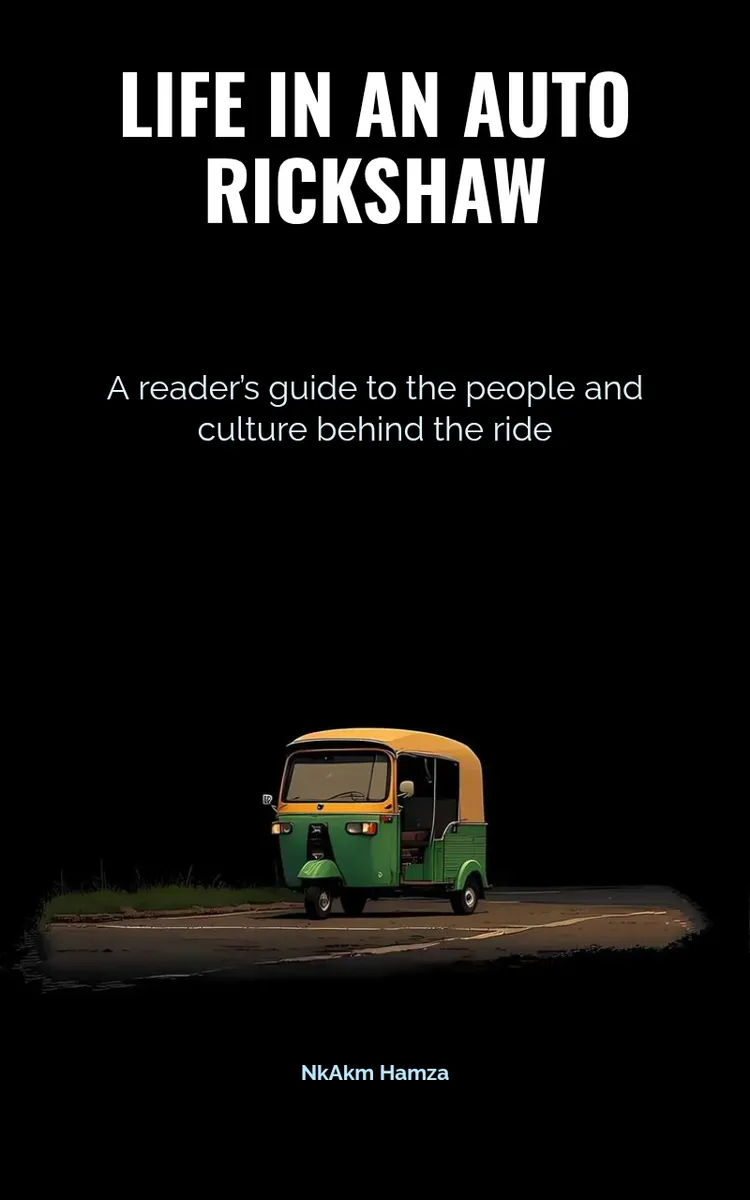

Read the first chapter
The whole of chapter one, free. About 8 min. Turn the pages with the arrows, your keyboard, or a swipe.
Chapter 1
Delhi: The Shared-Ride Rhythm
Delhi’s Green-and-Yellow Pulse
An auto rickshaw slips between a bus, a fruit cart, and a delivery van, its little engine buzzing like an impatient sewing machine. In Delhi, that movement is the story. Drivers connect metro stations to office lanes, old markets to new apartment blocks, and distant neighborhoods to the daily rush in between.
This city suits curious travelers who want to see how a capital actually works. You’ll find grand monuments, but the better lesson often comes from the back seat: a driver knows which gate is open, which lane is jammed, and where a commuter can eat for ₹80 before catching the next train.
Quick Facts
• Best months: October - March, when cooler air makes long rides and walking easier. Avoid the worst summer heat in May - June. - Getting there: Indira Gandhi International Airport to central Delhi by Airport Express metro: about ₹60 - ₹70; prepaid taxi: ₹500 - ₹900. New Delhi Railway Station is linked to the Yellow Line at New Delhi metro station; auto rides nearby usually cost ₹40 - ₹150. - Budget per day: Budget $25 / Mid-range $60 / Luxury $150+ - Languages: Hindi, English, Punjabi, Urdu - Currency: Indian rupee (₹); $1 is roughly ₹83, though rates change. - Time needed: 3-5 days minimum
Delhi feels different from cities where sightseeing happens in a neat center. Its sights and working neighborhoods stretch across a huge urban map. An auto rickshaw makes that distance readable. In twenty minutes, you can move from Mughal walls to a metro interchange, then into a market where the capital’s next generation is already shopping.
Eight Stops That Explain the City
1. Jama Masjid and the lanes of Old Delhi The mosque is open daily from 7:00 a.m. to noon and 1:30 p.m. to 6:30 p.m., except during prayer periods; entry is free, with a camera fee of about ₹300. Allow two hours, then continue by auto toward Matia Mahal and Chawri Bazaar. Go early, before the lanes tighten with shoppers, and ask your driver to drop you near Gate 1 rather than forcing a turn into the busiest stretch.
2. Chandni Chowk Chandni Chowk has no single opening hour, but most shops run roughly 10:30 a.m. - 7:00 p.m.; many close on Sunday. There’s no entry fee, and two to three hours disappears quickly among spice sellers, wedding shops, and hardware stalls. Use the Yellow Line metro to Chandni Chowk, then walk or take an auto for ₹40 - ₹80 to a side lane. The famous main road is only the beginning - Dariba Kalan for silver and Kinari Bazaar for wedding trim show how many small trades share this district.
3. Humayun’s Tomb Open daily from sunrise to sunset, with entry around ₹600 for foreign visitors and ₹35 for Indian citizens. Give it 90 minutes. The monument’s wide garden and red sandstone arches offer a calmer view of Delhi’s imperial past. Take an auto from JLN Stadium or Hazrat Nizamuddin station, usually ₹80 - ₹150, and visit before 9:00 a.m.; later, the light is harsher and the approach road busier.
4. India Gate and Kartavya Path The outdoor memorial area is open around the clock and costs nothing, though nearby museums have separate hours and tickets. Allow 60-90 minutes, especially after sunset when the arch is illuminated and families gather along the lawns. Don’t ask an auto to enter the central ceremonial road during closures. Get down near National Stadium or the National Gallery of Modern Art and walk the final stretch.
5. Sanjay Van This scrub forest near Vasant Kunj and Mehrauli is open from about 6:00 a.m. to 6:00 p.m., free of charge, and worth two hours with sturdy shoes. It’s one of the places where Delhi’s expanding edges become visible: apartment towers sit beyond thorny woodland and old tombs. Enter from the Vasant Kunj side, go in daylight, and use a map offline because phone signals can be unreliable among the trails.
6. Sultan Garhi Tomb Open daily from sunrise to sunset, with no entry fee; allow 45 minutes. Built in 1231, this small shrine is tucked among the planned neighborhoods of Vasant Kunj and Mahipalpur. It feels far removed from the airport traffic only a few kilometers away. An auto from Vasant Kunj costs about ₹80 - ₹140. Remove your shoes before entering the shrine area and keep your voice low.
7. Nizamuddin Basti and Sunder Nursery Sunder Nursery is open daily from 7:00 a.m. to 10:00 p.m.; entry is ₹200 for foreign visitors and about ₹50 for Indian visitors. Spend two hours in the gardens, then walk toward Nizamuddin Basti for food and music. Visit the nursery first, when paths are quiet, and use the Humayun’s Tomb gate as your landmark. The short auto ride between Nizamuddin East and the nursery usually costs ₹40 - ₹70.
8. Majnu ka Tilla Shops and cafés generally open from noon until 10:00 p.m., with no entry fee; allow two to three hours. This Tibetan settlement near the Yamuna has narrow lanes, momo stalls, bookstores, and cafés that feel unlike the broad avenues of central Delhi. Take the Yellow Line to Vidhan Sabha, then an auto for about ₹60 - ₹100. Visit on a weekday afternoon; weekends bring crowds that make the tiny lanes hard to navigate.
Skip These Tourist Traps
• Unmetered “sightseeing” auto tours near Connaught Place: They often end at commission shops. Book individual rides through a fare app or agree on each destination before moving. - The most crowded Chandni Chowk food alleys at lunchtime: Go before noon, or eat at Karim’s near Jama Masjid and save the market lanes for browsing. - Overpriced rooftop views around India Gate: Walk the lawns instead, then have a proper drink at Indian Accent’s bar in The Lodhi if your budget allows.
Where Drivers Pause, Eat, and Sleep
Delhi’s neighborhoods change quickly. Paharganj is noisy, cheap, and close to New Delhi station. Old Delhi is intense by day and quiet once shutters fall. South Delhi offers tree-lined streets, cafés, and easier access to monuments, while Aerocity is built for airport convenience rather than street life. For the most useful auto-rickshaw experience, stay near a metro station. Drivers can cover the last mile, but the train saves you from sitting in traffic across the whole city.
| Budget Tier | Recommendation | Area | Price/Night | Best For | |---|---|---|---:|---| | Budget | Smyle Inn | Paharganj | $20 - $35 | Station access and simple rooms | | Mid-range | Bloomrooms @ Janpath | Connaught Place | $70 - $100 | Clean design and central metro links | | Luxury | The Imperial New Delhi | Connaught Place | $220 - $350 | Historic interiors and polished service |
Karim’s (Old Delhi) - Mughlai cuisine. Order the mutton burra or chicken jahangeeri ($5 - $8). Its Jama Masjid location makes it a practical stop after exploring the mosque, though the dining room is plain.
Khan Chacha (Khan Market) - North Indian rolls. Order the chicken seekh kebab roll ($4 - $6). It’s quick, filling, and easy to carry when your auto is waiting outside.
Sita Ram Diwan Chand (Paharganj) - Vegetarian North Indian food. Order the chole bhature ($2 - $3). The portion is rich, spicy, and built for a hungry traveler arriving from New Delhi station.
Indian Accent (The Lodhi, Lodhi Road) - Modern Indian cuisine. Order the tasting menu ($90 - $120). It’s a splurge, but the restaurant turns familiar flavors into a careful, memorable meal.
Dolma House (Majnu ka Tilla) - Tibetan and Himalayan food. Order the steamed momos ($3 - $5). The small plates suit a neighborhood wander, especially with butter tea or a cold drink.
Street Food to Try
• Aloo tikki: ₹40 - ₹80 at stalls near Chandni Chowk. - Jalebi: ₹30 - ₹60 for a small serving at Old Delhi sweet shops. - Momos: ₹80 - ₹150 in Majnu ka Tilla. - Chole bhature: ₹80 - ₹150 around Paharganj.
Riding Delhi Without Losing the Thread
An auto ride is most useful when you treat it as a short link, not a substitute for the metro. A driver may take you from Hazrat Nizamuddin station to Sunder Nursery, from a metro exit to a market gate, or through a neighborhood too spread out for walking. The fare is part of the city’s rhythm: short rides often cost ₹40 - ₹100, while longer crossings can reach ₹250 - ₹500.
Packing Checklist
• Reusable water bottle; Delhi’s dry air catches up with you. - Cotton scarf or mask for dust and traffic fumes. - Comfortable closed shoes for uneven Old Delhi lanes. - Hand sanitizer and tissues for market stops. - Light layer for winter mornings and air-conditioned metros. - Sun hat and sunscreen from October through June. - Small notes of ₹10, ₹20, and ₹50 for short rides and snacks. - Offline map with metro stations saved. - Power bank for ride apps and navigation. - Modest clothing for Jama Masjid and shrine visits.
Useful Phrases
1. “Bhaiya, meter se chaliye” (BHAI-yah, MEE-ter say CHAH-lee-yay) - Please use the meter. 2. “Kitna hoga?” (KIT-nah HOH-gah) - How much will it cost? 3. “Yahan rok dijiye” (YAH-hahn ROHK dee-jee-yay) - Please stop here. 4. “Aage left” (AH-gay left) - Left ahead. 5. “Bheed bahut hai” (BHEED bahut hai) - It’s very crowded. 6. “Jaldi nahi, theek hai” (JAL-dee nahin, theek hai) - No need to hurry; it’s fine.
Money-Saving Tips
1. Use the metro for long crossings, then take an auto for the final 1-3 kilometers. 2. Compare the quoted fare with a ride app before agreeing, especially near airports and major monuments. 3. Carry small notes; drivers often can’t change ₹500 or ₹2,000 bills. 4. Eat one substantial local meal daily - chole bhature, thali, or momos can cost under ₹200. 5. Stay near a metro station rather than paying extra for a hotel in a famous landmark district.
Common Mistakes
• Taking an auto from the airport without checking the fare: Use the prepaid counter or an app, and confirm the exact hotel name. - Expecting every driver to know a new apartment complex: Save the pin and the nearest main road; Delhi’s expanding suburbs often have duplicate street names. - Planning Old Delhi, India Gate, and Mehrauli in one afternoon: Group nearby stops and let the metro handle the long distance. - Treating traffic as wasted time: Watch the changing city from the back seat - construction, school runs, market deliveries, and office commuters are the map.
Delhi’s auto rickshaws don’t merely carry people between attractions. They stitch together a capital that has grown in layers: Sultanate tombs beside flyovers, village lanes beside glass towers, and market workers sharing roads with commuters bound for new suburbs. Follow that route instead of racing past it, and the city’s real landmark becomes clear - the daily movement itself.
End of chapter one. 4 more chapters and about 10,192 words in the full book.
Swipe or use the arrows to turn the page
What's inside: 5 chapters
- 1. Delhi: The Shared-Ride Rhythm
- 2. Mumbai: Metered Miles
- 3. Kolkata: The City’s Green Autos
- 4. Chennai: Learning the Driver’s Craft
- 5. Puducherry: Quiet Streets, New Routes
About this book
"Life In An Auto Rickshaw" is a travel book by NkAkm Hamza with 5 chapters and approximately 10,192 words. Auto rickshaws, their drivers, history, and role in everyday urban life.
This book was created using Inkfluence AI, an AI-powered book generation platform that helps authors write, design, and publish complete books. It was made with the AI Travel Guide Creator.
Frequently Asked Questions
What is "Life In An Auto Rickshaw" about?
Auto rickshaws, their drivers, history, and role in everyday urban life
How many chapters are in "Life In An Auto Rickshaw"?
The book contains 5 chapters and approximately 10,192 words. Topics covered include Delhi: The Shared-Ride Rhythm, Mumbai: Metered Miles, Kolkata: The City’s Green Autos, Chennai: Learning the Driver’s Craft, and more.
Who wrote "Life In An Auto Rickshaw"?
This book was written by NkAkm Hamza and created using Inkfluence AI, an AI book generation platform that helps authors write, design, and publish books.
How can I create a similar travel book?
You can create your own travel book using Inkfluence AI. Describe your idea, choose your style, and the AI writes the full book for you. It's free to start.
Write your own travel book with AI
Describe your idea and Inkfluence writes the whole thing. Free to start.
Start writingCreated with Inkfluence AI


