

Read the first chapter
The whole of chapter one, free. About 2 min. Turn the pages with the arrows, your keyboard, or a swipe.
Chapter 1
Modeling Kindness at Home
Why Your Kindness Becomes a Mirror
When you thank the bus driver, wait your turn, or speak softly to a tired pet, your child notices. Children ages four to ten learn kindness by watching what you do each day.
Your child may copy your words, hands, and face. This is the Kindness Mirror Method: your child sees a kind action, hears kind words, and tries the same action. Fun fact: children can copy a kind action as quickly as they copy a silly dance!
Kind actions help children know what to do. A calm parent shows a child how to stay calm. A helpful parent shows a child how to help.
What the Kindness Mirror Shows
Kind words are words that help people feel safe. Say, “Please pass the bread,” instead of grabbing it. Your child hears a useful way to ask.
Kind hands use gentle touches. Stroke the dog softly. Put toys down instead of throwing them. Your child sees how hands can help, not hurt.
Patient waiting means staying calm while you wait. Say, “I want the red cup, but I can wait.” Your child learns that waiting does not mean shouting.
Use small examples during the day. When a toy breaks, say, “That is sad. We can fix it.” When your child spills juice, say, “Spills happen. Let’s clean it together.” These words teach your child to solve problems without blame.
Try a simple activity. Draw a face that looks angry and a face that looks calm. Color the calm face. Then practice saying, “I need a break,” with a quiet voice.
The Kindness Mirror Method in Action
Use this plan when your child grabs a toy from another child.
1. Stop your hand gently and say, “We do not grab.” 2. Name the feeling: “You really want the blue truck.” 3. Show the kind choice: “Say, ‘May I have a turn when you finish?’” 4. Help your child wait for two minutes. Use a timer. 5. Praise the exact action: “You waited and asked with kind words.” 6. Expect your child to use the asking words more often after several calm practices.
Quick checklist
• Use a calm voice. - Show gentle hands. - Name the feeling. - Give the words your child can copy. - Practice waiting for a short time. - Praise the kind action.
Small Mistakes We Can Fix
You speak kindly but act roughly
Your child may hear “Be gentle” while watching you slam a cupboard.
Do this: Pause, take one breath, and close the cupboard softly. Not this: Shout, “Be gentle!” while banging things.
Your child does not copy you right away
Learning takes practice. A tired child may forget kind words at snack time or school.
Do this: Repeat the same short words: “Ask. Wait. Take turns.” Not this: Give a long lecture.
Your child makes a mistake
Mistakes give you a chance to show patience.
Do this: Say, “You grabbed. Put it back. Now ask.” Not this: Call your child mean or bad.
At home today, draw two hands: one grabbing a toy and one offering a toy. Color the offering hand. Which hand would you like to use next?
End of chapter one. 11 more chapters in the full book.
Swipe or use the arrows to turn the page


What's inside: 12 chapters
- 1. Modeling Kindness at Home
- 2. Naming Feelings Before Acting
- 3. Practicing Empathy Through Perspective-Taking
- 4. Teaching Gentle Words and Actions
- 5. Sharing, Turns, and Fair Play
- 6. Listening Without Interrupting
- 7. Waiting Through Everyday Delays
- 8. Calming Down During Frustration
- 9. Handling Sibling and Peer Conflicts
- 10. Apologizing and Making Amends
- 11. Reinforcing Progress Without Bribes
- 12. Building Kindness Beyond the Home
About this book
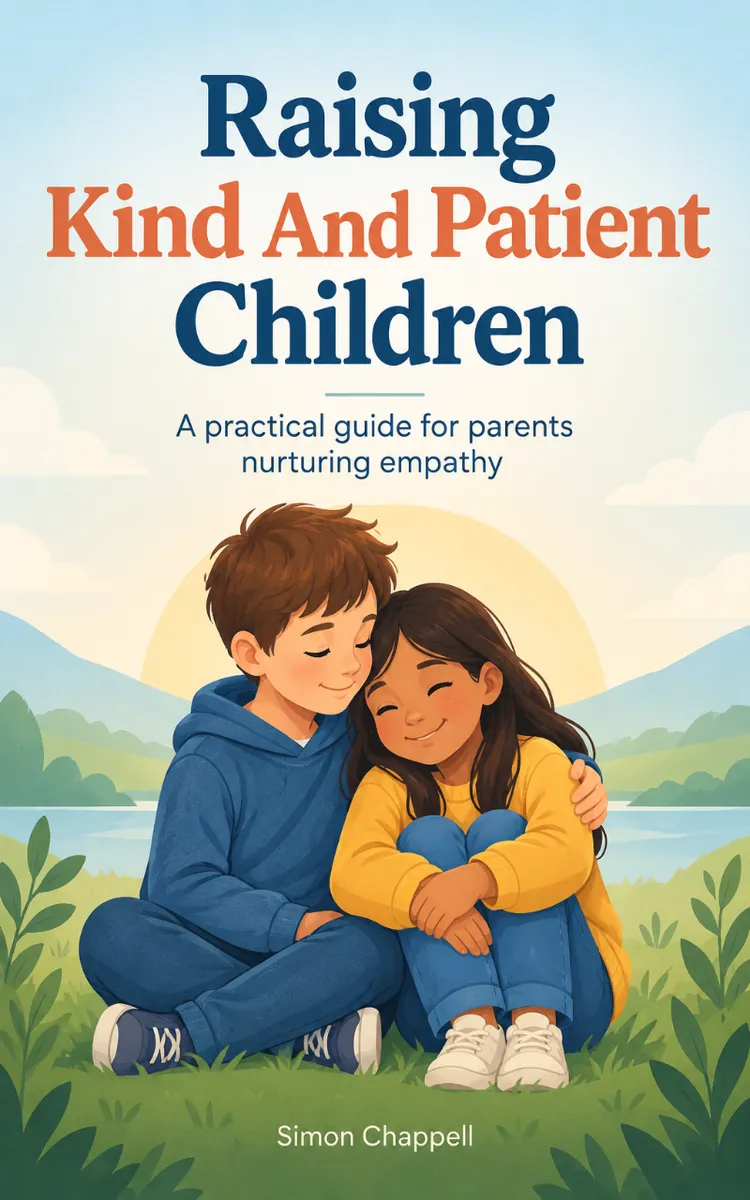
"Raising Kind And Patient Children" is a how-to guide book by Simon Chappell with 12 chapters and approximately 6,246 words. Teaching young children kindness and patience through parent-led guidance.
This book was created using Inkfluence AI, an AI-powered book generation platform that helps authors write, design, and publish complete books. It was made with the AI Ebook Generator.
Frequently Asked Questions
What is "Raising Kind And Patient Children" about?
Teaching young children kindness and patience through parent-led guidance
How many chapters are in "Raising Kind And Patient Children"?
The book contains 12 chapters and approximately 6,246 words. Topics covered include Modeling Kindness at Home, Naming Feelings Before Acting, Practicing Empathy Through Perspective-Taking, Teaching Gentle Words and Actions, and more.
Who wrote "Raising Kind And Patient Children"?
This book was written by Simon Chappell and created using Inkfluence AI, an AI book generation platform that helps authors write, design, and publish books.
How can I create a similar how-to guide book?
You can create your own how-to guide book using Inkfluence AI. Describe your idea, choose your style, and the AI writes the full book for you. It's free to start.
Write your own how-to guide book with AI
Describe your idea and Inkfluence writes the whole thing. Free to start.
Start writingCreated with Inkfluence AI


