
Read the first chapter
The whole of chapter one, free. About 7 min. Turn the pages with the arrows, your keyboard, or a swipe.
Chapter 1
Recognizing Your Ripple
A cashier once told a customer, “Take your time,” after the customer fumbled with a payment card. It took three seconds. The customer later said those words kept embarrassment from turning into a ruined day. That small kindness didn’t stay at the checkout. It changed how the customer spoke to a child in the car, who then carried a calmer mood into the afternoon.
The opposite can happen just as quickly. A sharp comment, a dismissive look, or a careless action can travel farther than we see. The moment ends, but the feeling may remain. That feeling can shape the next choice someone makes, including how they treat the person who comes after them.
The Struggle: Seeing Past the Moment
The challenge is learning to notice the distance between what you meant and what your words or actions may cause. Most of us judge an interaction by its ending: the argument is over, the message is sent, the job is finished, or the person walks away. We don’t always see what happens afterward.
That gap trips people up because daily life moves fast. Stress makes patience thinner. Pride makes an apology feel unnecessary. A joke may seem harmless to the person saying it while leaving someone else feeling exposed. Even silence can send a message when a person is asking for help. The ripple isn’t always dramatic. Often, it starts with a tone of voice, a delayed reply, or a choice to ignore what we know is wrong.
The Expanding Circles Model helps you pause and look farther. The first circle is you: your words and choices. The second is the person directly affected. The third includes the people that person meets next. The fourth is the wider pattern - what gets repeated, accepted, or passed along. You don’t control every circle, but you do influence the first one.
You’re Ready for This If...
• You’ve ever said, “I didn’t mean it that way,” and still noticed someone pull back. - You want to catch harmful words before they become someone else’s burden. - You’ve seen a bad mood spread through a home, workplace, or group. - You’re willing to repair one small moment instead of defending every mistake. - You want your influence to be measured by what people carry away from you.
The Everyday Pattern: Pause Before You Pass It On
Most People Do This: React to the feeling they’re having and treat it as permission to speak or act immediately. A stressful customer gets snapped at. A partner’s mistake becomes a personal attack. A co-worker’s question is brushed off because the day is already busy. The reaction may last ten seconds, but the other person may carry it for hours.
Try This Instead: Notice the feeling, name the likely ripple, and choose a response that deals with the problem without adding harm. You might say, “I’m frustrated, so I need a minute before we talk,” or, “That message came out sharper than I intended. Let me try again.” This isn’t about pretending everything is fine. It’s about refusing to make another person carry your unfiltered reaction.
A useful check is the three-question pause: What am I about to send? Who may receive the effect? What could this person do next because of it? That last question matters. A harsh supervisor may cause an employee to speak harshly to a customer. A parent’s insult may become a child’s inner voice. A friend’s steady encouragement may give someone enough confidence to offer kindness elsewhere.
You won’t catch every ripple in real time. Nobody does. The goal is not perfect behavior. It’s better awareness and faster repair. If you notice that your words landed badly, don’t wait for the other person to prove they’re hurt. Say what you saw, take responsibility, and change the next sentence. A simple “I was short with you, and you didn’t deserve that” can stop the ripple from widening.
A Daily Practice for Catching Ripples
Use this short schedule for one week. It takes about ten minutes a day, plus a few seconds during ordinary interactions.
| Time | Micro-action | Time needed | |---|---|---:| | Morning | Choose one quality to carry into conversations, such as patience, respect, or care. Write one sentence describing what it will sound like today. | 3 minutes | | Midday | Review one interaction from the morning. Ask where your words or actions may have traveled, then choose one repair or kindness before the day ends. | 4 minutes | | Evening | Record one ripple you created and one ripple you received. Note the next choice each one seemed to encourage. | 3 minutes |
In the morning, make the quality specific. “I’ll be kind” is broad. “When someone repeats a question, I’ll answer without sarcasm” gives you something you can actually do. If you work with customers, family members, patients, or a team, choose the moment most likely to test you.
At midday, don’t turn the review into a trial against yourself. Look for information. Maybe your answer was correct but your tone made the person afraid to ask again. Maybe you gave someone time to speak, and they became more open. If repair is needed, send a short message or speak directly. The sooner you correct the course, the fewer circles the ripple has to cross.
In the evening, include what you received. Someone’s patience may have helped you avoid passing stress to another person. Naming that influence builds awareness without pretending you did everything alone. After seven days, read your notes and look for a pattern: a certain time, person, or pressure point may be where your ripples grow fastest.
Before, The Change, After
Before: A worker receives a rushed request near the end of the day. They answer with, “You should’ve asked earlier,” and turn away. The task still gets handled, but the other person leaves embarrassed and unsure whether it’s safe to ask for help again. Later, that person gives a curt answer to someone at home. The original comment has traveled into a second relationship.
The Change: The worker keeps the boundary but removes the sting: “I can help with part of this today. For the rest, I’ll need you to ask earlier next time.” The message is still clear. The difference is that it corrects the timing without attacking the person. Before walking away, the worker adds, “If you’re unsure what to include next time, ask me.”
After: The request gets handled with less tension. The other person understands the limit and feels able to ask a better question in the future. At home, they’re less likely to carry humiliation into the next conversation. The worker also finishes the day without the familiar feeling of having been harsher than necessary.
That’s the Expanding Circles Model in ordinary use. The first circle changed by a few words. The second person received direction instead of shame. The third circle may now receive a calmer, more respectful response. No grand performance was required. Just a pause long enough to separate a useful boundary from an unnecessary wound.
Questions That Show You the Ripple
1. What words or tone from someone else still affect how you speak to people today? Be honest about the connection. Perhaps being mocked for asking questions now makes you impatient when someone needs an explanation. Naming the old ripple helps you stop passing it along.
2. When I’m stressed, who usually receives the first spillover from my mood? It may be a partner, child, co-worker, customer, or the person closest to you in line. Write one recent example without defending it or exaggerating it.
3. What is one sentence I often use that could be heard as disrespectful, even if I mean it as humor or efficiency? For example, “That’s not my problem” may be technically accurate but still shut down a person who needs guidance. Write a replacement that keeps the boundary and removes the unnecessary bite.
4. Which ripple have I received that I’m grateful not to have passed on? Maybe someone embarrassed you, but you chose not to embarrass the next person. Give yourself credit for the interruption while staying curious about what helped you make that choice.
5. Who might experience a different day if I changed one repeated response this week? Keep the answer concrete. “My family” is a start, but “my child when I listen for two minutes before correcting them” gives you a clear place to act.
Your First Ripple Check
Right now, take five minutes and write down one interaction from today that may still be moving through another person. Choose the interaction that makes you slightly uncomfortable - not because you need to punish yourself, but because discomfort often points to useful information.
Write three short lines:
• What I said or did. - What the other person may have felt or done next. - What I can say or do now to create a better next circle.
Time: 5 minutes. Difficulty: Easy. You’ll know it’s working when... you stop explaining only what you intended and begin noticing what the other person may have carried away.
A ripple doesn’t need to be loud to travel. One careful sentence can interrupt harm that might otherwise keep moving. One respectful choice can give another person a better choice to pass on.
End of chapter one. 7 more chapters and about 12,308 words in the full book.
Swipe or use the arrows to turn the page


What's inside: 8 chapters
- 1. Recognizing Your Ripple
- 2. Pausing Before You Speak
- 3. Breaking the Cycle of Hurt
- 4. Choosing Kindness in Action
- 5. Building Respectful Boundaries
- 6. Finding Strength Beyond Toughness
- 7. Repairing Harm Through Accountability
- 8. Creating an Everlasting Tidal Wave
About this book
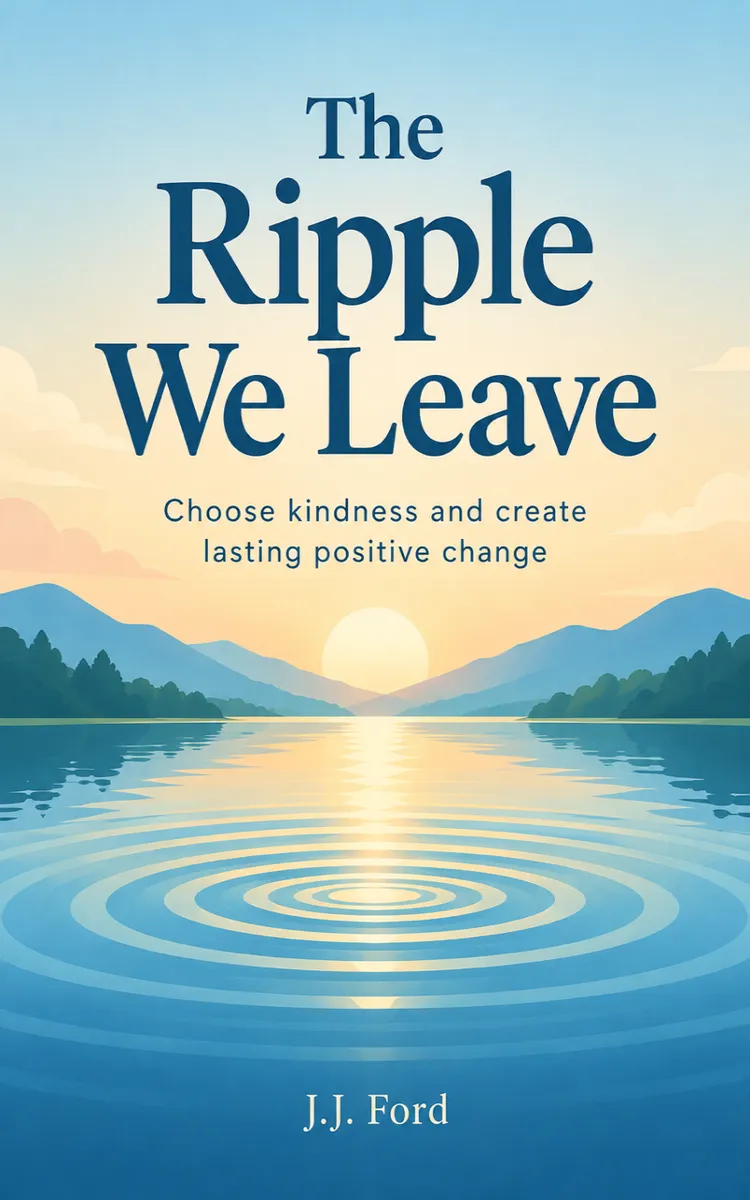
"The Ripple We Leave" is a inspirational book by J.J. Ford with 8 chapters and approximately 12,308 words. How words and actions affect others and spread kindness or harm.
This book was created using Inkfluence AI, an AI-powered book generation platform that helps authors write, design, and publish complete books. It was made with the AI Inspirational Book Writer.
Frequently Asked Questions
What is "The Ripple We Leave" about?
How words and actions affect others and spread kindness or harm
How many chapters are in "The Ripple We Leave"?
The book contains 8 chapters and approximately 12,308 words. Topics covered include Recognizing Your Ripple, Pausing Before You Speak, Breaking the Cycle of Hurt, Choosing Kindness in Action, and more.
Who wrote "The Ripple We Leave"?
This book was written by J.J. Ford and created using Inkfluence AI, an AI book generation platform that helps authors write, design, and publish books.
How can I create a similar inspirational book?
You can create your own inspirational book using Inkfluence AI. Describe your idea, choose your style, and the AI writes the full book for you. It's free to start.
Write your own inspirational book with AI
Describe your idea and Inkfluence writes the whole thing. Free to start.
Start writingCreated with Inkfluence AI


