
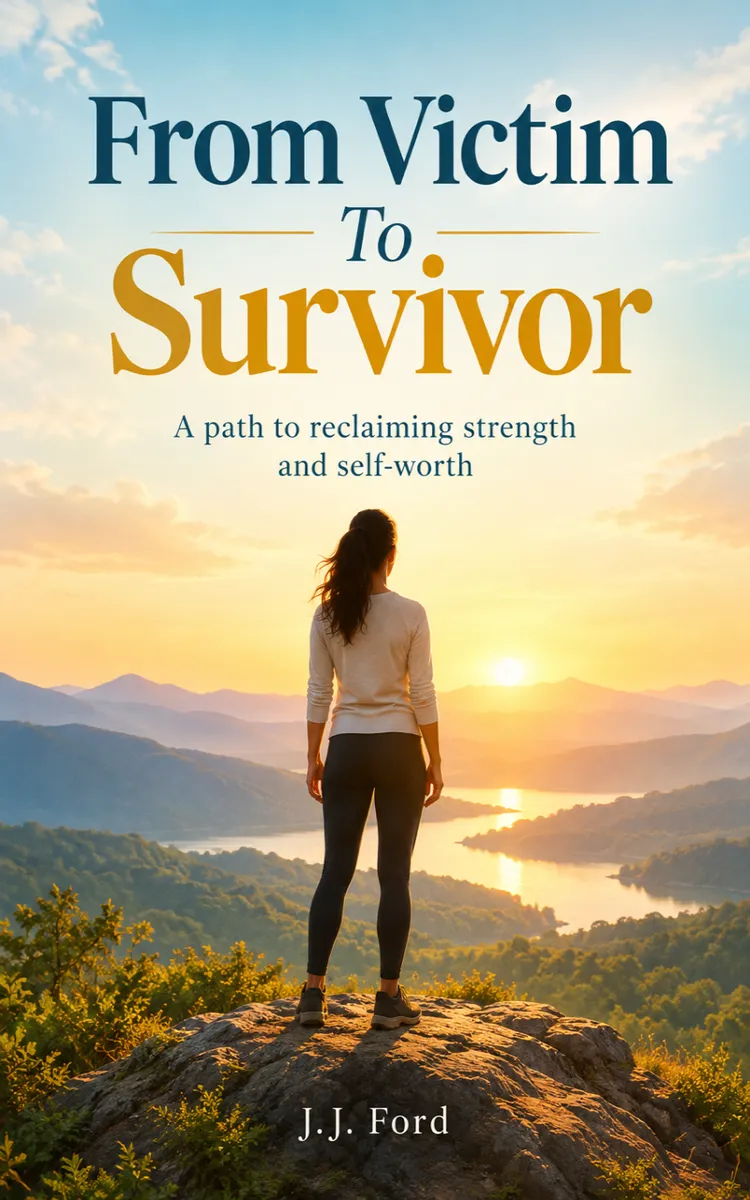
Read the first chapter
The whole of chapter one, free. About 8 min. Turn the pages with the arrows, your keyboard, or a swipe.
Chapter 1
Reclaiming Your Identity Beyond Trauma
The Moment You Stop Letting the Past Introduce You
The message sits on your phone: “Can you cover the morning shift?” Your stomach tightens before you even answer. You’ve been here before - being blamed, ignored, controlled, or made to feel small. One simple request suddenly feels like proof that people will always use you. Your thumb hovers over the screen, ready to send the same old response: silence, anger, or a long explanation about everything you’ve survived.
Then you catch yourself. Not because the past didn’t matter. It did. But because this moment isn’t the past. You’re standing in your kitchen, holding your phone, with a choice in front of you. You can answer from the wound, or you can answer from the person you’re becoming.
The past may explain your reactions, but it does not get to write your identity.
Three People Who Refused to Become Their History
The Overlooked Caregiver. Marisol spent years caring for a parent who criticized everything she did. She learned to expect disappointment, so she stopped making decisions without asking for approval. One afternoon, she turned down a promotion before anyone could reject her. Then she recognized the pattern. She applied anyway. The promotion didn’t erase her history, but accepting it proved that her choices could come from her values - not her fear.
The Angry Protector. Darnell grew up in a home where being vulnerable made him a target. He became quick to argue and quicker to leave. He called it strength. Eventually, he admitted it was a shield. He still valued protection and loyalty, but he stopped confusing constant suspicion with safety. When conflict came up at work, he asked one direct question instead of exploding. That was his identity changing in real time.
The Invisible One. Priya had been dismissed so often that she began treating her own needs like an inconvenience. She said yes when she meant no, then blamed herself for feeling resentful. She started writing down three choices each day that reflected what mattered to her. Sometimes the choice was small - eating lunch away from her desk, returning a call later, or saying, “That doesn’t work for me.” Small didn’t mean meaningless. Small meant repeatable.
What all these have in common:
• They stopped treating old survival habits as permanent personality traits. - They separated the facts of their past from the conclusions they carried about themselves. - They made present-day choices based on values, not automatic fear. - They built identity through repeated action instead of waiting to feel completely healed.
That’s the part people often miss. You don’t discover your new identity by thinking about it forever. You build it by making different choices while the old story is still shouting in the background.
Your trauma may have taught you to stay quiet, stay angry, stay useful, stay guarded, or stay ready to run. Those responses may have helped you get through something. But a response that once protected you can later become a cage. The question isn’t, “Why am I like this?” The better question is, “Is this choice coming from who I am now, or from what happened then?”
Why Your History Feels Like Your Identity
Trauma can blur the line between an event and a self-description. Something happened, and your mind formed a conclusion: I’m unsafe. I’m unwanted. I’m weak. I can’t trust anyone. I always ruin things. After enough repetition, that conclusion stops sounding like a thought. It starts sounding like your name.
That’s why changing identity takes more than positive thinking. You’re not arguing with one sentence. You’re challenging a pattern built from memories, body reactions, habits, and expectations. Your brain looks for evidence that confirms the old story. If you believe you’re powerless, you’ll notice every delay, rejection, and unfair moment. You may overlook the times you spoke up, followed through, or protected your own peace.
The Whole-Self Compass gives you a way to check what is guiding you. One direction is your past experience. Another is your values - the qualities you want to live by. Another is your choices. The final direction is your present life, the actual place where your identity is being built. The past belongs on the compass. It does not belong in the driver’s seat.
You may need this work if:
1. You introduce yourself through what happened to you, even when the conversation isn’t about it. 2. You use your past to explain every current decision, including choices you’re still making today. 3. You feel guilty when life goes well, as if peace means you’re forgetting what happened. 4. You keep waiting to feel confident before taking action that would help you become confident.
You are not required to deny what happened; you are required to stop handing it total authority over who you are.
That doesn’t mean pretending you’re untouched. It means telling the truth with better grammar: This happened to me is different from This is me. One describes an experience. The other turns an experience into a life sentence.
Questions That Put You Back in the Picture
1. What labels have you accepted about yourself because of what happened? Write the exact words, even if they’re harsh: “too much,” “weak,” “difficult,” “unlovable,” or “damaged.” Then ask, “Is this a fact, or a conclusion I learned while trying to survive?”
2. Which part of your personality may actually be a survival habit? Look at one pattern, such as people-pleasing, shutting down, controlling details, or expecting betrayal. Don’t attack yourself for it. Write what the habit once protected you from - and what it costs you now.
3. What three values do you want your present life to show? Choose clear words such as honesty, courage, patience, loyalty, creativity, or freedom. Then name one recent moment when you acted against each value and one small action that would bring you closer to it.
4. Where are you still asking the past for permission? Maybe you’re waiting to apply for work, trust a healthy person, set a boundary, rest, or enjoy something without guilt. Write what you’re waiting to feel before acting. Then write what a values-based choice would look like this week.
5. What would you do differently today if your history were information, not an instruction? Keep it specific. You might say, “I would answer the email without apologizing for existing,” or “I would leave the conversation when the disrespect starts.” Specific choices are where identity becomes visible.
Don’t polish these answers. Polished answers are often just another way to hide. Write the answer you’d be embarrassed for someone else to read. That’s usually where the real pattern is sitting.
The Whole-Self Compass: A Seven-Day Identity Challenge
Challenge name: Seven Days of Choosing Who You Are Now
Difficulty level: 7 out of 10. Not because the tasks are complicated, but because they require you to catch yourself before the old story takes over.
For seven days, carry a note on your phone titled “My Whole-Self Compass.” Each day, record one moment when the past tries to define you and one choice that reflects the person you want to be.
• Day 1 - Name the old label. Write one identity label you’ve carried from your past. Under it, write: “This is a conclusion I learned. It is not the whole truth about me.”
• Day 2 - Identify the value. Choose one value you want to live by. Before bed, write one action that matched it, even if the action was small.
• Day 3 - Catch the automatic reaction. When you feel triggered, pause for ten seconds. Name what happened, what you felt, and what you want to choose now. Don’t demand calm. Demand awareness.
• Day 4 - Make one values-based decision. Say yes, say no, ask for help, or speak honestly based on your chosen value - not on what will keep everybody else comfortable.
• Day 5 - Stop using your past as a full explanation. Notice one sentence beginning with “I’m this way because…” Add: “That may explain it, but I still have a choice about my next step.”
• Day 6 - Act like your present identity is real. Take one visible action that fits the person you’re becoming. Send the application. Keep the appointment. Set the boundary. Finish the task.
• Day 7 - Review the evidence. Read your notes. Circle every choice that came from your values instead of fear. Write a short paragraph beginning, “I am learning that I…”
Celebrate when:
• You catch an old label before automatically believing it. - You make one decision without asking the past to approve it. - You express a need, boundary, or honest opinion clearly. - You can name evidence that your identity is larger than what happened.
You may still feel nervous during this challenge. Good. Nervousness doesn’t mean you’re failing. It means you’re doing something unfamiliar. The goal isn’t to become a fearless person in seven days. The goal is to collect proof that fear can be present without being in charge.
Your Life Is Bigger Than Its Worst Chapter
Your trauma is part of your story, but your values and choices are what shape the person you are becoming.
• You separated the event from the identity label attached to it. - You saw how survival habits can become cages when they run your present life. - You used the Whole-Self Compass to reconnect with your values, choices, and current reality. - You created a seven-day practice for building identity through visible action.
Stop waiting for the past to become harmless before you start living. It may always be part of your history, but it doesn’t get the final word. The next step is learning how to turn this reclaimed identity into daily confidence, stronger boundaries, and a survivor mindset you can actually trust.
End of chapter one. 7 more chapters and about 12,590 words in the full book.
Swipe or use the arrows to turn the page


What's inside: 8 chapters
- 1. Reclaiming Your Identity Beyond Trauma
- 2. Rewriting the Beliefs That Keep You Stuck
- 3. Honoring Pain Without Living in Blame
- 4. Building Daily Habits of Agency
- 5. Setting Boundaries That Protect Your Peace
- 6. Asking for Support Without Losing Autonomy
- 7. Practicing Resilience Through Setbacks
- 8. Turning Survival Into Purposeful Living
About this book
"From Victim To Survivor" is a self-help book by J.J. Ford with 8 chapters and approximately 12,590 words. Replacing victim mentality with a resilient survivor mindset.
This book was created using Inkfluence AI, an AI-powered book generation platform that helps authors write, design, and publish complete books. It was made with the AI Self-Help Book Writer.
Frequently Asked Questions
What is "From Victim To Survivor" about?
Replacing victim mentality with a resilient survivor mindset
How many chapters are in "From Victim To Survivor"?
The book contains 8 chapters and approximately 12,590 words. Topics covered include Reclaiming Your Identity Beyond Trauma, Rewriting the Beliefs That Keep You Stuck, Honoring Pain Without Living in Blame, Building Daily Habits of Agency, and more.
Who wrote "From Victim To Survivor"?
This book was written by J.J. Ford and created using Inkfluence AI, an AI book generation platform that helps authors write, design, and publish books.
How can I create a similar self-help book?
You can create your own self-help book using Inkfluence AI. Describe your idea, choose your style, and the AI writes the full book for you. It's free to start.
Write your own self-help book with AI
Describe your idea and Inkfluence writes the whole thing. Free to start.
Start writingCreated with Inkfluence AI


