
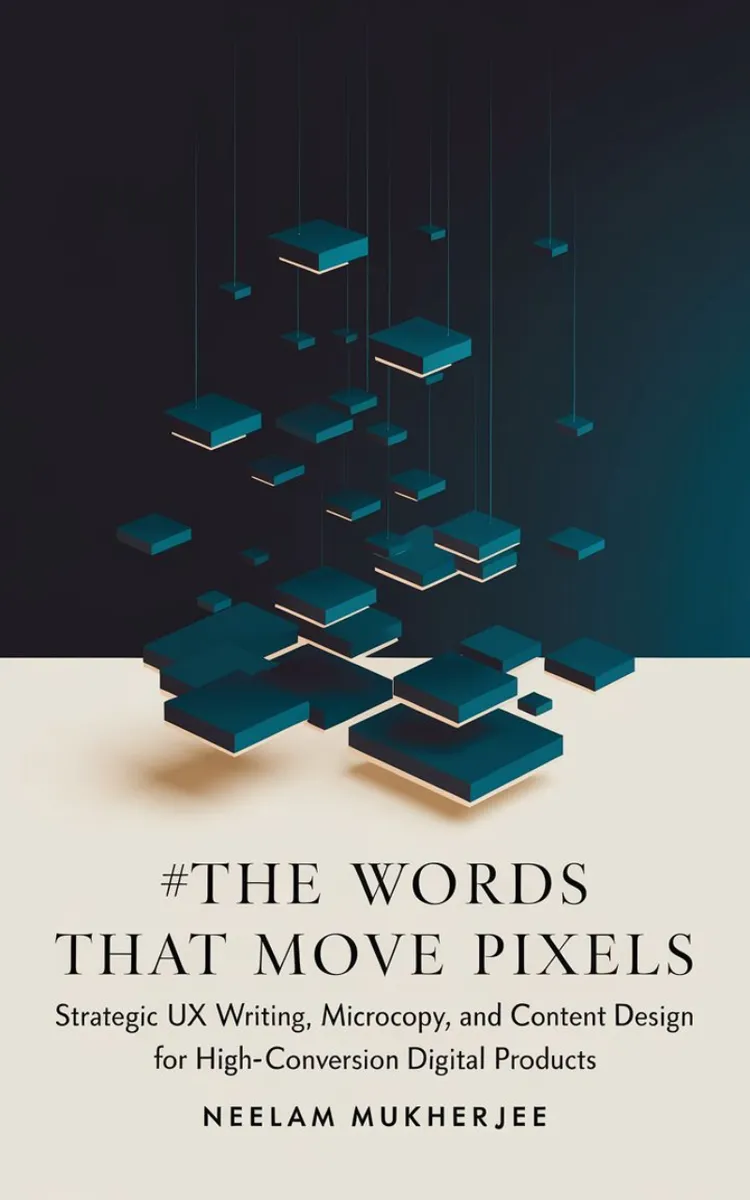
The Words That Move Pixels Strategic Ux Writing Microcopy and Content Design for High Conversion Digital Products91518ca3.book
Created with Inkfluence AI
Imported from the-words-that-move-pixels-strategic-ux-writing-microcopy-and-content-design-for-high-conversion-digital-products91518ca3.book.pdf
Table of Contents
- 1. Introduction to Microcopy
- 2. ChatGPT for UX Writing
- 3. ChatGPT as an Assistant
- 4. Prompt Engineering for Research
- 5. Improving Processes with ChatGPT
- 6. Integrating ChatGPT into Workflows
- 7. Voice and Tone
- 8. Language for Personalization
- 9. Practical Voice & Tone Guide
- 10. Microcopy Types in Gainsight
- 11. Calls to Action (CTAs) Mastery
- 12. UX Writing for Multichannel Consistency
- 13. Building Use-case Libraries
- 14. Developing Brand-aligned Templates
- 15. Enhancing Microcopy with Emojis and Graphics
- 16. Microcopy Types and Best Practices
- 17. UX Writing Workflow Integration
- 18. User Feedback and Iterative Improvement
- 19. Content Libraries and Template Building
- 20. Testing Strategies for UX Writing
- 21. Advanced Microcopy Techniques
- 22. Applying Knowledge: Real-world Projects
Preview: Introduction to Microcopy
A short excerpt from “Introduction to Microcopy”. The full book contains 22 chapters and 70,613 words.
In the expansive landscape of digital product design, where every pixel and interaction matters, there exists a hidden hero that often goes unnoticed by many but remains undeniably pivotal in shaping the overall user experience: microcopy. At its core, microcopy comprises the small chunks of text sprinkled throughout an interface - from button labels and error messages to tooltips and form field hints. Though seemingly minute in size, these tiny fragments hold substantial power in guiding, reassuring, and engaging users throughout their journey. They help bridge the gap between intention and action, clarity and confusion, hesitation and confidence. Microcopy is far more than just a decorative accessory or an afterthought; it is a strategic, purposeful component of UX writing that significantly influences how users interact with and perceive a digital product. Understanding what microcopy truly is and grasping its multifaceted impact on user interaction and conversion allows product teams to harness its effectiveness intentionally and meaningfully.
At its essence, microcopy refers to concise, context-specific pieces of copy embedded within user interfaces to facilitate comprehension, ease navigation, and encourage desired behaviors. Unlike long-form content or marketing copy, microcopy must achieve precision and clarity in an extraordinary economy of words. Every syllable counts because users typically skim, scan, or engage briefly with these bits of text during critical moments of decision-making or problem-solving. The challenge lies in crafting language that not only conveys information but also resonates emotionally, reflects brand personality, and inspires action. It often functions silently, yet plays a noisy role in breaking down barriers, reducing friction, and fostering direct
Page 18
THE WORDS THAT MOVE PIXELS
communication without intruding on the user experience. Microcopy can be a friendly nudge, a calming reassurance, or a sharp guidepost guiding users through complex workflows or unfamiliar terrain, transforming what could be frustrating or uncertain moments into smooth, confident interactions.
Its significance is perhaps best appreciated when we consider the user's mindset and environment. In digital spaces, users are goal-oriented, often balancing multiple tasks, time constraints, and varying levels of expertise. In these moments, clarity is salvation, and microcopy is the telescope that brings distant instructions or abstract concepts into sharp focus. For instance, a simple button label like “Subscribe Now” communicates immediacy and clarity, whereas a generic “Submit” might leave doubt about what the action entails. Likewise, an error message saying “Your password must contain at least eight characters, including a number and a symbol” not only informs but educates, preventing repeated frustration and reducing drop-off rates. The tone used in microcopy also plays a crucial role - it can convey warmth, professionalism, or urgency, subtly shaping user emotions and perceptions without overt marketing messages. This tone alignment ensures that microcopy integrates harmoniously within the overall brand voice, reinforcing trust and familiarity, which encourages users to stay engaged and complete transactions.
Furthermore, beyond facilitating action, microcopy operates at a psychological level by addressing common user anxieties and uncertainties that often lead to hesitation or abandonment. Think about the moments when a user hesitates before clicking a payment button, concerned about the security of their data or the difficulty of reversing their choice. Here, microcopy can alleviate fears by adding a reassuring note such as “Your information is securely encrypted” or “You can cancel anytime.” These few words create emotional comfort that lubricates the path to conversion. The impact on business metrics
Page 19
THE WORDS THAT MOVE PIXELS
cannot be overstated; effective microcopy fosters a sense of reliability, transparency, and user-centricity, which strengthens brand loyalty and reduces churn. Digital products that invest thought and creativity into microcopy often observe higher completion rates in sign-ups, purchases, onboarding, and other key user flows, proving that words really do move pixels - and wallets.
Integrating microcopy strategically aligns perfectly with the content-first approach to product design, wherein content is considered an integral and foundational element rather than a last-minute addition. The content-first mindset advocates for early collaboration between writers, designers, developers, and product leads, ensuring that the language complements visual design, interaction patterns, and technical constraints. It acknowledges that microcopy cannot be effective in isolation; it thrives when informed by user research, empathy, and a deep understanding of the product’s goals and user context....
About this book
"The Words That Move Pixels Strategic Ux Writing Microcopy and Content Design for High Conversion Digital Products91518ca3.book" is a marketing book by Neelam M with 22 chapters and approximately 70,613 words. Imported from the-words-that-move-pixels-strategic-ux-writing-microcopy-and-content-design-for-high-conversion-digital-products91518ca3.book.
This book was created using Inkfluence AI, an AI-powered book generation platform that helps authors write, design, and publish complete books. It was made with the AI Ebook Creator.
Frequently Asked Questions
What is "The Words That Move Pixels Strategic Ux Writing Microcopy and Content Design for High Conversion Digital Products91518ca3.book" about?
Imported from the-words-that-move-pixels-strategic-ux-writing-microcopy-and-content-design-for-high-conversion-digital-products91518ca3.book.pdf
How many chapters are in "The Words That Move Pixels Strategic Ux Writing Microcopy and Content Design for High Conversion Digital Products91518ca3.book"?
The book contains 22 chapters and approximately 70,613 words. Topics covered include Introduction to Microcopy, ChatGPT for UX Writing, ChatGPT as an Assistant, Prompt Engineering for Research, and more.
Who wrote "The Words That Move Pixels Strategic Ux Writing Microcopy and Content Design for High Conversion Digital Products91518ca3.book"?
This book was written by Neelam M and created using Inkfluence AI, an AI book generation platform that helps authors write, design, and publish books.
How can I create a similar marketing book?
You can create your own marketing book using Inkfluence AI. Describe your idea, choose your style, and the AI writes the full book for you. It's free to start.
Write your own marketing book with AI
Describe your idea and Inkfluence writes the whole thing. Free to start.
Start writingCreated with Inkfluence AI


