
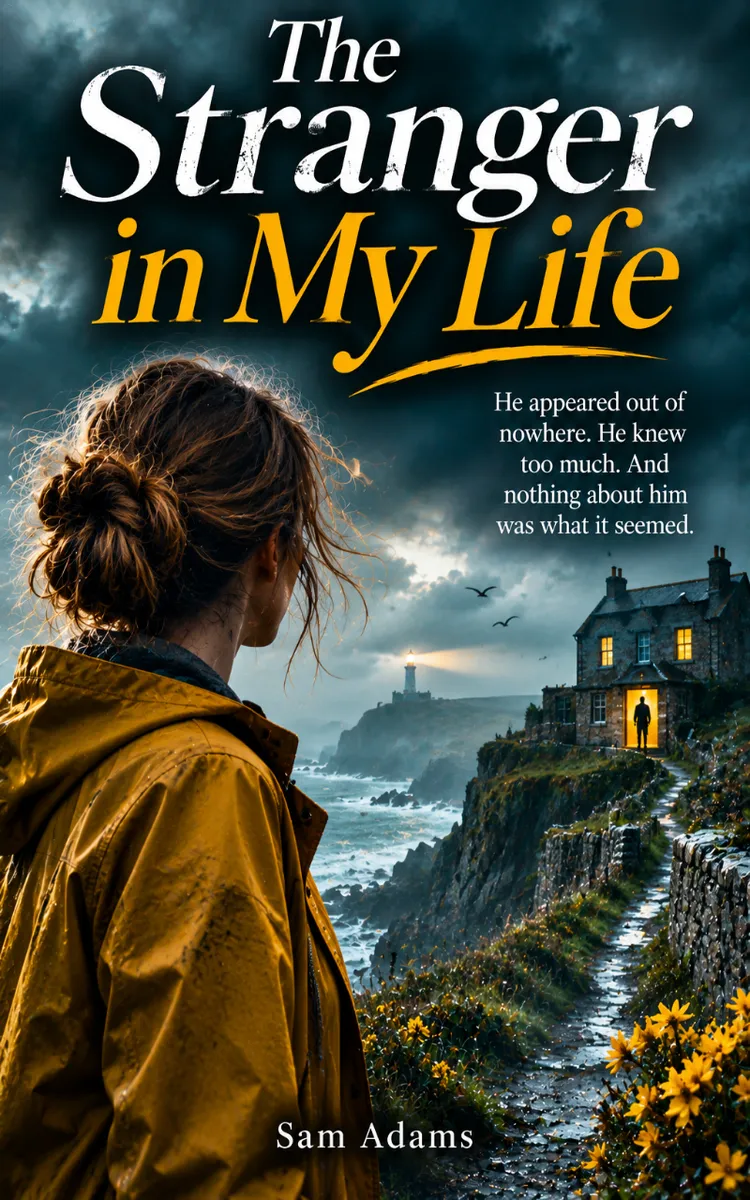

Read the first chapter
The whole of chapter one, free. About 8 min. Turn the pages with the arrows, your keyboard, or a swipe.
Chapter 1
The Frozen Account
My accounts appeared normal when I left home, the banking app showing the familiar balance beneath the familiar name.
At Victoria station, the card reader rejected my payment with a red flash.
I tried again, pressing the card harder against the machine as though force could persuade it. Behind me, someone sighed. The coffee queue shifted, coats brushing, the departure board clicking overhead as destinations changed from amber to white.
“Sorry,” I said, though nobody had accused me of anything.
The barista glanced at the screen. “It says declined.”
“I know what it says.”
The words came out sharper than I intended. I pulled out my phone and opened the app. The station’s public Wi-Fi struggled to connect. A small wheel turned beside my account balance, then disappeared.
Available funds: £0.00.
For a moment, I thought I had opened the wrong account. I tapped the screen, entered the passcode again and watched the balance remain unchanged.
The coffee machine hissed behind the counter. Somewhere above me, a train announcement dissolved into static.
“No,” I whispered.
The barista leaned towards me. “Would you like to try another card?”
“I haven’t got another card.”
That was not entirely true. I had a savings card at home, locked in a drawer with my passport and birth certificate. It was useless here, and the thought of those documents suddenly made my stomach tighten.
My phone vibrated.
BANK SECURITY ALERT: Your debit card has been temporarily restricted. Please contact us immediately.
I read it twice. The message was dated two minutes earlier.
“I need to make a call,” I said.
The barista had already turned to the next customer.
I stepped away from the queue, clutching my phone and handbag against my ribs. My train to Manchester left in thirty-two minutes. I had a meeting with the regional director at eleven, the kind of appointment that could decide whether I kept my position after months of restructuring. I needed the fare, a taxi at the other end, lunch, anything that might require payment. More than that, I needed the neat surface of my morning restored. I needed this to become a temporary error before it grew teeth.
The bank’s number connected after three attempts. A recorded voice asked me to confirm my date of birth, then the final four digits of my card.
The system rejected both.
I moved towards the wall beneath a poster advertising a holiday I could not afford. “I’m entering the correct details.”
“I’m sorry,” the automated voice replied. “We can’t verify your information. Please visit a branch with photographic identification.”
I ended the call and immediately dialled again.
A man answered this time. “Good morning, you’re through to security. My name is - ”
“I can’t access my account. My card has been blocked and your automated service won’t accept my details.”
“Can I take your full name?”
“Emma Richardson.”
“Date of birth?”
I gave it.
There was a pause. I could hear the faint click of a keyboard.
“For security, can you confirm the address registered to the account?”
I did.
Another pause, longer this time.
“I’m afraid that doesn’t match our records.”
The station seemed to tilt, though the tiled floor stayed firmly beneath my shoes.
“What do you mean?”
“Could you confirm your postcode?”
I gave him that too. He asked me to repeat it, then said, “I’m sorry, Ms Richardson. The details you’ve provided don’t correspond with the profile we hold.”
“It’s my account.”
“I understand this is frustrating.”
“No, you don’t understand. I checked it this morning. The balance was there. The account is in my name.”
“I can’t discuss the account until we’ve completed security.”
“Then tell me what has changed.”
“I’m unable to do that.”
A train rumbled beneath the concourse, a deep vibration passing through the soles of my shoes. People moved around me, purposeful and anonymous, carrying briefcases and paper cups. I stood still while the bank refused to recognise me.
“Where do I go?” I asked.
“You’ll need to attend a branch.”
“There’s one here.”
“The Victoria branch is closed for refurbishment.”
I looked towards the station exit, where rain silvered the glass doors. “Then where?”
“Buckingham Palace Road. It’s approximately ten minutes on foot.”
“I have a train.”
“I’m sorry.”
The line went quiet.
I checked the time. Twenty-three minutes.
I ran.
The station swallowed me first. I cut between commuters, past the Underground signs and the florist, my handbag striking my hip with every step. The bank’s message remained open on my phone, bright and accusing. At the ticket barriers, I stopped and tried my card.
Declined.
The attendant lifted the gate. “Problem?”
“My card isn’t working.”
“Then you’ll need to speak to the ticket office.”
“I’m late.”
“So is everyone.”
I used my phone to buy a single ticket, watching the payment screen spin while the seconds disappeared. It went through. Relief arrived so quickly it felt like pain.
Outside, rain had begun to fall. I held my coat over my head and hurried along Buckingham Palace Road, past black railings and wet buses breathing fumes at the kerb. My shoes slipped on the pavement. I called work as I walked.
The office receptionist answered.
“Hi, it’s Emma. I’m going to be late for the meeting.”
There was a pause. “Emma Richardson?”
“Yes.”
“I’m sorry, who are you trying to reach?”
I stopped beneath a dripping awning. “The London office. I’m Emma Richardson.”
Another pause, this one deliberate.
“Your meeting was cancelled.”
“It wasn’t.”
“It was removed from the diary yesterday.”
“By whom?”
“I don’t know. I only manage the front desk.”
“Can you put me through to - ”
“I’m sorry, I have someone waiting.”
The call ended.
I stared at my reflection in the dark window behind me. Rain had flattened my hair against my forehead. Mascara had smudged beneath one eye. I looked like a woman who had run from something without knowing what it was.
The branch occupied the ground floor of a narrow stone building. Its doors opened when I pressed the handle, and warm, recycled air closed around me. A security guard looked up from behind a desk.
“Photo ID,” he said.
“I need to speak to someone about my account.”
“Photo ID first.”
I took out my driving licence. My hands were trembling enough to make the plastic click against the counter.
He glanced at it, then at me.
“This is you?”
I almost laughed. “Yes.”
He scanned the licence beneath a small reader. The machine beeped once and displayed a red light.
“Could you wait over there, please?”
“Why?”
“I need to call through.”
“Call who?”
He had already picked up the phone.
I sat beneath a television showing muted financial news. Red figures crawled across the bottom of the screen. A child cried near the cash machines while his mother tried to quiet him. Every few seconds, the doors opened and let in a blast of wet cold.
After twelve minutes, a woman in a navy suit approached. Her badge read Richardson.
The surname pulled my attention to her chest.
“Ms Richardson?”
“Yes.”
“I’m Helen. We’ll need to verify your identity privately.”
“I’ve been trying to do that for half an hour.”
Her smile was professional, but it did not reach her eyes. “This way.”
The interview room had glass walls and a table bolted to the floor. Helen closed the door, sat opposite me and placed my driving licence between us.
“Can you tell me when you last accessed the account?”
“This morning. At home.”
“Approximately what time?”
“Eight fifteen.”
“Did anyone else have access to your phone?”
“No.”
“Your cards?”
“No.”
“Your online banking password?”
“No.”
She typed something into her tablet.
“What has happened?” I asked.
“I’m not authorised to discuss account activity until we establish that you are the account holder.”
“You’ve seen my licence.”
“We have.”
“And it’s valid.”
“We have not said it isn’t.”
“Then what is the problem?”
Helen looked towards the glass wall. The security guard stood watching from the lobby.
“Your account has been flagged for a change of personal details.”
“What details?”
“Address. Telephone number. Email.”
“I haven’t changed any of them.”
“Can you confirm your current address?”
I gave it.
She looked down at the tablet.
“That isn’t the address on the account.”
“Then put it back.”
“I can’t do that.”
“Why not?”
“Because the change was made after enhanced verification.”
The room seemed to shrink around the table.
“By whom?”
“I’m unable to say.”
“Someone has stolen my identity.”
Helen’s expression shifted - not surprise, exactly. Recognition.
“We can investigate suspected fraud.”
“Then investigate it.”
“We’ll need further identification.”
I produced my passport from my handbag, along with a utility bill I had printed for the meeting. Helen examined both. She scanned the passport, frowned at the screen and scanned it again.
“Is there a problem with that?”
“The photograph appears to be different from the image attached to your customer profile.”
I stared at her.
“It’s my passport.”
“I understand.”
“No, you don’t. You’re saying I don’t look like myself.”
“I’m saying the records are inconsistent.”
“Show me the photograph.”
“I can’t.”
“Why?”
“Data protection.”
A hard, cold anger rose through me. “My data. My account. My name.”
Helen folded her hands. “There is another matter.”
I waited.
“A second customer using the name Emma Richardson has contacted the bank.”
For a few seconds, the sentence had no meaning.
“What?”
“The account details were amended following a request made by Emma Richardson.”
“That was me.”
“The request was completed in person.”
“I haven’t been here.”
Helen glanced at the passport again. “The person who attended provided identification.”
“What identification?”
“I can’t disclose that.”
“Was it a woman?”
She did not answer.
“Helen.”
“The account is now under review.”
“My train leaves in ten minutes.”
“I’m afraid that’s not something I can help with.”
“I need money.”
“I understand.”
“No, I don’t think you do. I have no cash. My card is blocked. My work thinks I cancelled a meeting I never cancelled. I need access to my own account.”
Helen’s voice softened, which made it worse. “We can issue emergency funds once the review is complete.”
“When will that be?”
“I can’t give you a timescale.”
“What am I supposed to do until then?”
She looked at me with the careful sympathy people used when they had already decided you were a problem.
“I’m sorry, Ms Richardson.”
The printer beside her began to whirr. A sheet emerged. Helen read it, then placed it face down on the table.
“Both accounts have been frozen pending investigation,” she said.
“Both?”
“Your current account and savings account.”
I pushed back from the table so quickly the chair struck the wall.
“Who changed my details?”
Helen’s gaze held mine.
“Another Emma Richardson.”
Outside, the station kept moving. Trains arrived, doors opened, passengers disappeared into them. My phone vibrated with a message from work, then another from the bank.
I turned the printed sheet over.
At the bottom was a signature.
It was mine.
End of chapter one. 39 more chapters and about 77,340 words in the full book.
Swipe or use the arrows to turn the page


What's inside: 40 chapters
- 1. The Frozen Account
- 2. The Duplicate Record
- 3. The Photograph at Reception
- 4. A Stranger at My Door
- 5. The Name I Answer To
- 6. The Missing Employment File
- 7. The Witness Who Hesitated
- 8. The Guard’s Empty Desk
- 9. My Mother’s Version
- 10. The Second Emma Calls
- 11. The Locket’s Provenance
- 12. The Closed Children’s Home
- 13. Two Girls in One Drawing
- 14. The Box Marked Mara
- 15. The Initials on the Label
- 16. The Archive Basement
- 17. The Memory I Avoided
- 18. The Complaint Goes Public
- 19. The House by the Reservoir
- 20. The Name Beneath the Paint
- 21. The Twin I Never Knew
- 22. The Neighbour’s Retraction
- 23. The Photograph’s Date
- 24. The Reservoir Path
- 25. Daniel’s Hidden Message
- 26. The Voice Note Disappears
- 27. Helen Voss’s Last Address
- 28. The Locked Care Home
- 29. The Ward Number
- 30. The Child I Replaced
- 31. The Unaltered Case Copy
- 32. The Officer’s Empty Cottage
- 33. The Name I Chose
- 34. The First Statement
- 35. The Reservoir Confession
- 36. The Memory Returns
- 37. The Other Woman’s Choice
- 38. A Name Without Proof
- 39. The Account Reopened
- 40. The Letter in the Locket
About this book
"The Stranger In My Life" is a fiction book by Sam with 40 chapters and approximately 77,340 words. A woman fights to prove her identity against a convincing impersonator.
This book was created using Inkfluence AI, an AI-powered book generation platform that helps authors write, design, and publish complete books. It was made with the AI Novel Writer.
Frequently Asked Questions
What is "The Stranger In My Life" about?
A woman fights to prove her identity against a convincing impersonator
How many chapters are in "The Stranger In My Life"?
The book contains 40 chapters and approximately 77,340 words. Topics covered include The Frozen Account, The Duplicate Record, The Photograph at Reception, A Stranger at My Door, and more.
Who wrote "The Stranger In My Life"?
This book was written by Sam and created using Inkfluence AI, an AI book generation platform that helps authors write, design, and publish books.
How can I create a similar fiction book?
You can create your own fiction book using Inkfluence AI. Describe your idea, choose your style, and the AI writes the full book for you. It's free to start.
Write your own fiction book with AI
Describe your idea and Inkfluence writes the whole thing. Free to start.
Start writingCreated with Inkfluence AI


