
Read the first chapter
The whole of chapter one, free. About 8 min. Turn the pages with the arrows, your keyboard, or a swipe.
Chapter 1
The Recipe Box Goes Missing
The brass bell above Bell’s Bakery chimed twice as a gust shoved the front door against its stopper.
Mairi Bell caught the tray of sugared buns before it slid from the counter. Outside, the harbor lay under a low quilt of gray cloud, its boats tugging at their ropes while rain ticked against the windows. Inside, the ovens glowed and the floorboards shone with tracked-in water.
“Not today,” Mairi muttered, steadying the tray. “You’ve had your fun.”
The storm had spent the night worrying at the village, peeling a strip of paint from the bakery’s sign and sending a loose shutter banging until dawn. Now the morning crowd would arrive within the hour, hungry for warm rolls and gossip. Mairi had only to finish glazing the buns, check the coffee urn, and fetch the old family recipe from its box in the back room.
She wiped her hands on her apron and glanced toward the narrow passage behind the ovens.
The recipe box was kept in the dry cupboard beneath a stack of flour sacks. Her grandmother had stored it there, her mother after her, and Mairi had never once doubted its safety. The recipe itself was written in a sloping hand on thick cream paper, its corners softened by generations of flour-dusted fingers. It made Bell’s honey oat loaves - the bread that had kept the bakery alive through lean winters and bad fishing seasons.
This morning, she needed it for the special loaves promised to the harbor master’s retirement breakfast.
Mairi lifted the tray onto the cooling rack. “Elsie, can you mind the till?”
Her assistant looked up from arranging jam tarts. “I can mind the till. I cannot mind the weather.”
“Then we’re equally helpless.”
A deeper boom rolled across the harbor. Somewhere behind the bakery, something crashed.
Elsie flinched. “That sounded expensive.”
Mairi was already moving. “Stay here. If anyone asks, the honey oat loaves are coming.”
“They’re not coming if the roof falls in.”
“Then tell them they’re delayed by circumstances beyond our control.”
The passage to the back rooms was colder than the shop. Rainwater had found its way through the damaged roof and gathered in dark puddles along the flagstones. A fallen length of gutter blocked part of the doorway to the storeroom, and a sack of flour had burst against the wall, turning the water into pale paste.
Mairi stepped over the mess and pushed at the door.
It opened three inches before catching on something heavy.
“Of course,” she said.
She squeezed through sideways. The storeroom smelled of wet wood, yeast, and the sharp mineral tang of seawater. Shelves leaned under jars and tins. A crate of apples had tipped over, and red fruit rolled through the shallow flood whenever the building shuddered.
The cupboard stood at the far end, half-hidden behind sacks.
Mairi picked her way toward it, gripping the wall for balance. Her slipper sank into the floury water. Cold soaked through the leather.
“Come on,” she whispered.
She dragged one sack aside, then another. The cupboard door had swollen in its frame. Mairi braced her shoulder against it and pulled. The wood groaned. A jar clattered from a shelf and shattered near her ankle.
She froze.
A thin line of blood appeared where a shard had nicked her skin.
From the front room came the muffled sound of the bell and Elsie calling, “Good morning!”
Mairi looked down at the broken jar, then at the cupboard.
The bakery was opening whether she was ready or not.
She wrapped her apron hem around her fingers and pulled again. The cupboard sprang open so suddenly she stumbled backward into a sack of oats.
The flour sacks were there. The tin of cinnamon. The old ledger with its warped leather cover. But beneath them, where the recipe box should have been, the shelf was bare.
For a moment, Mairi stared at the empty space.
Then she reached in and swept her hand across the shelf, as if the box might have slipped behind the wood. Dust clung to her damp fingers. Nothing else.
“No,” she said.
The word vanished into the rain.
She searched the cupboard twice. She checked the floor, the sacks, the ledgers, even the broken jar. She crouched and looked beneath the shelves, though there was barely room for her hand. The recipe box was not there.
Mairi backed into the passage.
The bakery’s front bell chimed again. Voices followed - Mr. Tully’s booming greeting, Mrs. Pike asking whether the blueberry scones were fresh, Elsie answering both at once.
The recipe had been in the box yesterday. Mairi remembered placing it there after copying the quantities for the harbor breakfast. She remembered the soft click of the lid. She remembered locking the back door before going upstairs.
Unless - She turned toward the rear entrance.
A strip of gray daylight showed beneath it. The storm had blown the door inward, and its latch hung crooked from the frame. Water streaked the threshold. One of the hinges had torn partly free.
Mairi hurried over and tested the handle. It swung open with a protesting scrape, revealing the narrow lane behind the bakery. Rain ran along the gutters toward the sea. A coil of rope had washed against the wall, and beyond it the harbor road was empty.
Anyone could have come in.
Anyone could have left.
“Mrs. Bell?”
Mairi spun around.
Elsie stood at the passage entrance, clutching a towel. “Are you hurt?”
“Only my pride.”
“That’s not what I asked.”
Mairi glanced at the blood on her ankle. “A jar broke.”
Elsie’s eyes moved past her to the open rear door. “Was that open all night?”
“I don’t know.”
The answer sounded worse aloud.
A customer called from the front. “Mairi! Are the honey loaves ready?”
Elsie lowered her voice. “What’s wrong?”
Mairi looked toward the storeroom. The bare shelf seemed to pull the warmth from the whole bakery.
“The recipe box is gone.”
Elsie stared. “Gone where?”
“If I knew that, I wouldn’t be standing in a puddle.”
“You mean someone took it?”
“I mean it isn’t here.”
The old building creaked. Rain rattled the roof slates. From the shop came the clink of coins and the low murmur of waiting customers.
Elsie stepped closer. “Should we close?”
Mairi pictured the harbor master’s breakfast, the orders chalked on the board, the familiar faces already gathering at the counter. She pictured her grandmother’s handwriting, every letter shaped with patient certainty. The recipe was more than flour and honey. It was the one thing in the bakery that belonged wholly to the Bells.
“No,” she said. “Not yet.”
“Not yet?”
“Take the front. Tell them the special loaves will be late.”
“And you?”
“I’m going to find the box.”
Elsie looked toward the flooded storeroom. “In there?”
“Unless it has learned to walk.”
“That would be less worrying.”
Mairi fetched the long-handled broom from beside the ovens. She propped the rear door open with a brick, then began clearing the passage. The broom struck the fallen gutter with a hollow clang. Water pushed around her shoes. A crate shifted under the force of the current, revealing a dark gap beneath the lowest shelf.
She knelt.
The gap was filled with damp paper, splinters, and a smear of green seaweed. Mairi reached in, ignoring the cold water soaking her sleeve. Her fingers closed around something thin.
She drew out a scrap of paper.
It was no bigger than two fingers laid side by side, torn raggedly from a larger sheet. Salt crystals glittered along one edge. A dark mark crossed the center in blue-black ink, blurred by moisture.
Mairi held it nearer the weak light.
Not a recipe. Not part of the box.
A single curved stroke remained visible, followed by what might have been the tail of a letter. The paper carried a faint smell of tar and seawater.
Elsie came up behind her. “What is it?”
“I don’t know.”
“Could it be from the recipe?”
Mairi turned the scrap over. The back was blank except for a brown fleck and a pressed grain of sand.
“No. Grandmother used cream paper. This is cheap stock.”
“Then someone left it.”
The thought settled between them.
Mairi looked again at the open rear door. The lane beyond it gleamed under the rain. Footprints had been washed into indistinct patches, but one dark mark remained on the threshold - a partial print, narrow at the heel and pointed toward the lane.
Her pulse quickened, though she refused to call it fear. Fear belonged to storms and collapsing roofs. This was anger, sharp and practical.
She slipped the scrap into the clean pocket of her apron.
Elsie caught her wrist. “Mairi.”
“What?”
“If someone stole it, they may come back.”
Mairi looked at the bakery - the warm ovens, the rows of pastries, the customers waiting in their damp coats. Her family’s name hung above the door, painted in gold. For eighty years, Bell’s Bakery had opened in every kind of weather.
“We’re not giving them an empty shop,” she said.
“That isn’t what I meant.”
“I know.”
Mairi shut the rear door and dragged the iron bolt across it. The lock no longer sat straight, but it held when she tested it.
Then she returned to the cupboard and pulled out the old ledger. The pages had swollen from damp, their edges rough beneath her thumb. She opened it to the section where her grandmother had copied the honey oat recipe decades ago.
The ledger held only notes about deliveries and flour prices. The recipe had never been written there. Mairi had always thought that made the box feel special.
Now it felt foolish.
From the front room, Mr. Tully called, “Mairi, the coffee’s sulking!”
“It can sulk until I get there,” she shouted back.
Elsie gave her a strained smile. “That sounded convincing.”
“It wasn’t meant to.”
Mairi tucked the ledger under one arm and picked up the broom. She paused at the storeroom entrance, studying the wet floor. The storm had made a ruin of the back rooms, but the ruin had preserved one thing: the knowledge that someone had entered through the damaged door, crossed the flooded passage, and reached the cupboard.
Someone who knew where to look.
The bell above the front door chimed again.
Mairi stepped out of the passage, carrying the ledger and the salt-stained scrap. Through the shop window, she saw a figure at the far end of the harbor lane, coat dark with rain, moving quickly toward the quay.
By the time she reached the front door, the lane was empty.
Only the bakery door stood open behind her, letting in the cold, wet wind - and leaving no way to know whether the thief had slipped away unseen.
End of chapter one. 4 more chapters and about 10,586 words in the full book.
Swipe or use the arrows to turn the page
What's inside: 5 chapters
- 1. The Recipe Box Goes Missing
- 2. A Baker’s Doubt
- 3. Ink Beneath the Salt
- 4. The Recipe at Low Tide
- 5. The Family Loaf Returns
About this book
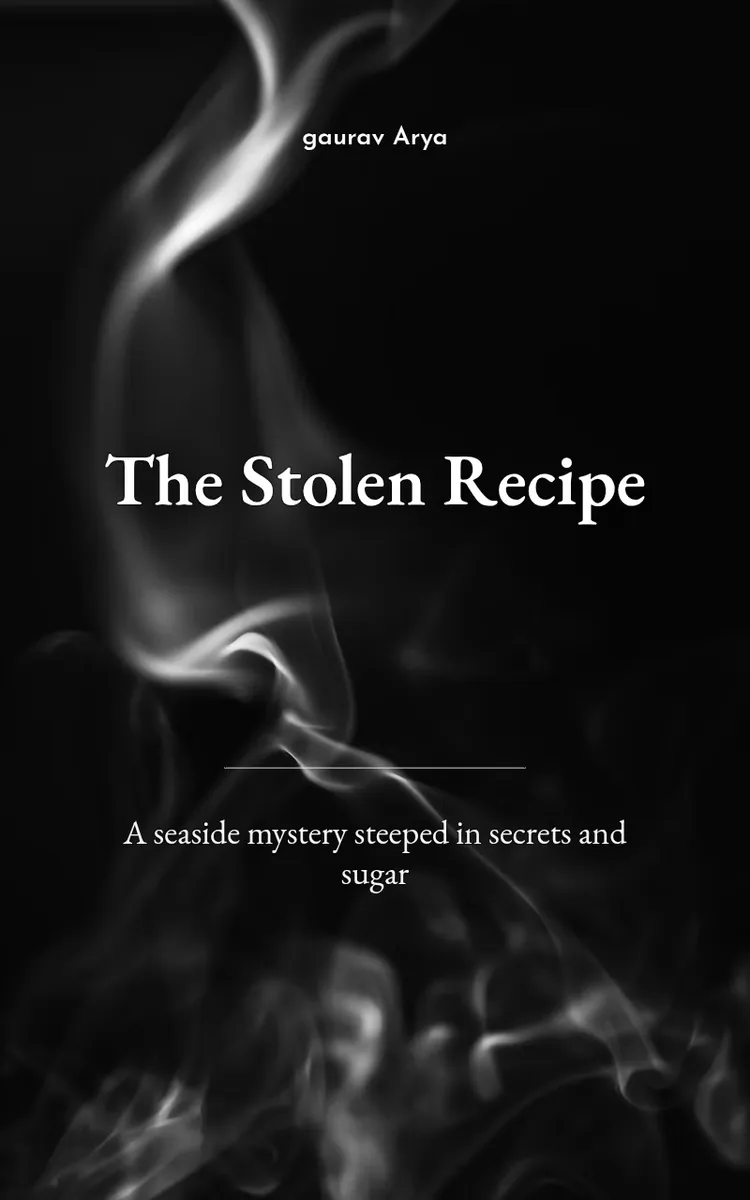
"The Stolen Recipe" is a fiction book by gaurav Arya with 5 chapters and approximately 10,586 words. A baker investigates the theft of a cherished family recipe.
This book was created using Inkfluence AI, an AI-powered book generation platform that helps authors write, design, and publish complete books. It was made with the AI Novel Writer.
Frequently Asked Questions
What is "The Stolen Recipe" about?
A baker investigates the theft of a cherished family recipe
How many chapters are in "The Stolen Recipe"?
The book contains 5 chapters and approximately 10,586 words. Topics covered include The Recipe Box Goes Missing, A Baker’s Doubt, Ink Beneath the Salt, The Recipe at Low Tide, and more.
Who wrote "The Stolen Recipe"?
This book was written by gaurav Arya and created using Inkfluence AI, an AI book generation platform that helps authors write, design, and publish books.
How can I create a similar fiction book?
You can create your own fiction book using Inkfluence AI. Describe your idea, choose your style, and the AI writes the full book for you. It's free to start.
Write your own fiction book with AI
Describe your idea and Inkfluence writes the whole thing. Free to start.
Start writingCreated with Inkfluence AI


