

Read the first chapter
The whole of chapter one, free. About 9 min. Turn the pages with the arrows, your keyboard, or a swipe.
Chapter 1
The Night I Entered Detox
The detox center smelled of bleach, old coffee, and clothes that had dried on people’s bodies. I noticed that before I noticed anything else.
I was twenty-nine, frightened, and still trying to make decisions as if the overdose had been an interruption rather than a warning. The city moved beyond the glass doors in its usual way - buses groaning at the curb, headlights sliding across wet pavement - but inside, everything felt crowded and too bright. I had come because I had survived the night. I had not yet accepted that survival might require me to give up control.
A woman behind the reception desk looked at the paperwork in front of her and then at me. Her eyes moved over my face, my hands, the clothes I had put on without much thought.
“Do you have any medications with you?” she asked.
I shook my head.
“Any belongings you need to turn in?”
“My phone.”
She held out a plastic bag. It was thin and cloudy, the kind that tore easily at the handles. I put my phone inside, along with my wallet and keys. The keys made a small metallic sound when they dropped to the bottom.
That sound stayed with me. It meant my apartment, my car, my door, and the ordinary movements I had always treated as mine were no longer within reach.
The woman sealed the bag and wrote my name on a label. She did it carefully, without judgment, which somehow made the loss feel more official.
“You’ll get these back when you’re discharged,” she said.
I looked at the bag in her hand. “How long will that be?”
“A medical provider will assess you first.”
“That wasn’t what I asked.”
She did not argue. “You need to be assessed before anyone can tell you that.”
I wanted to tell her I knew my own body. I wanted to explain that I had come voluntarily, that I was not a child, that I was capable of deciding when I had had enough. The words gathered in my throat but did not come out. My body had already offered its opinion. It had stopped protecting me long before I walked through those doors.
The waiting area was full. People sat shoulder to shoulder in plastic chairs, some with their heads lowered, some staring at the television mounted high on the wall. The sound was off, but captions moved beneath a weather report. A man near the window rubbed both hands over his face. Across from him, a woman held a paper cup and watched the liquid inside it as if it might tell her what to do next.
I found an empty chair at the end of a row and sat down. The plastic pressed cold through my clothes. My mouth was dry, and a sour taste clung to my tongue. Every few minutes, someone opened the door to the hallway, bringing in a draft that smelled of disinfectant and damp concrete.
I had imagined detox as a place where I would arrive, rest, and leave with a clear plan. I had imagined that I could keep the useful parts of my life untouched while I dealt with the part that had become dangerous. Instead, I was surrounded by strangers, under fluorescent lights, waiting for people I did not know to decide what my body needed.
A nurse called my name.
I stood too quickly and had to steady myself against the arm of the chair. The nurse noticed but did not comment. She led me down a narrow hallway to a small room with a scale, a blood-pressure machine, and a bed covered in white paper.
“Sit here,” she said.
I sat. The paper crackled beneath me.
She took my temperature, checked my pulse, and wrapped the cuff around my arm. It tightened until my fingers tingled. I watched the numbers appear and disappear.
“When was the last time you used?” she asked.
I told her.
“What did you take?”
I told her that, too.
She wrote everything down. Her pen moved steadily while mine was the body being measured.
“Have you been vomiting?”
“No.”
“Shaking?”
“Not yet.”
“Do you feel like you might hurt yourself?”
The question landed differently from the others. I looked at the floor, where a dark mark had been scrubbed but not removed.
“No,” I said. “I just want to go home.”
She nodded as if those two things could exist together. “You’re not going home tonight.”
The sentence was plain. It did not need force behind it.
I felt anger rise, hot and immediate. “I came here for help. I didn’t agree to be locked up.”
“You’re not locked up,” she said. “You’re being monitored because withdrawal can become dangerous.”
“I can manage it.”
She set the pen down. “You may be able to manage some of it. That doesn’t mean you can safely manage all of it alone.”
I looked away. The room had begun to feel smaller. A machine beeped somewhere beyond the wall. Someone coughed in the hallway, then coughed again.
The nurse explained the process: regular checks, medication if needed, fluids, rest, and observation. She spoke in a calm voice, but I heard only the limits. I would not keep my phone. I would not decide when to leave. I would not be able to disappear into my apartment and tell everyone that I was fine.
I had spent years treating independence as proof that I was all right. If I could work, answer messages, pay bills, and keep my problems out of other people’s hands, then I believed I was managing. Detox challenged that belief before I had even reached a bed.
They brought me to a shared room. Every bed was occupied, and one additional mattress had been placed along the wall. A woman slept beneath a thin blanket, her face turned toward the wall. Another sat upright with a basin beside her. The air was warm and stale. Someone had left a cup of tea on the windowsill, and its sweetness mixed with the sharper smell of antiseptic.
“This is where you’ll stay,” the nurse said.
I looked at the mattress. “For how long?”
“That depends on your assessment and how your symptoms progress.”
Again, an answer without a number.
I put my small bag beside the bed and sat down. The mattress sank beneath me. My legs felt weak, and the room seemed to tilt whenever I moved my head. I tried to focus on practical things: the blanket, the water pitcher, the bathroom sign taped to the wall. If I reduced the place to objects, maybe I could keep it from becoming real.
A staff member came in with a clear plastic container and a paper cup.
“This is for your fluids,” she said. “Take small sips.”
“I’m not thirsty.”
“You still need to drink.”
“I said I’m not thirsty.”
She placed the cup on the table beside me. “You don’t have to feel thirsty to become dehydrated.”
Her tone was not harsh, but I heard the instruction underneath it. Another person telling me what to do. Another part of my life being handled by someone else.
I picked up the cup because refusing seemed childish, and I was determined not to look childish. The water tasted faintly of plastic. I swallowed once, then set it down.
The first hours passed in pieces. I slept for a short time and woke sweating. Then I shivered beneath the blanket. My stomach tightened and released. The sounds of the center continued around me: footsteps, doors opening, the low murmur of staff, a television somewhere down the hall. There was no privacy in any of it. Even my discomfort belonged to a shared space.
When a nurse returned, she asked me to rate my symptoms. I tried to give answers that would let me leave sooner.
“Not too bad,” I said.
She studied my face. “You don’t have to minimize them.”
“I’m not.”
“You’re sweating through your shirt.”
I looked down. Dark patches had formed beneath my arms.
“I just need to get some sleep.”
“You need to let us keep checking you.”
The words made me angry again, but beneath the anger was fear. I did not know what would happen if I stopped resisting. I had built my life around staying ahead of consequences. If I admitted that I needed supervision, I would have to admit that my own judgment had not brought me safely here.
Later, a physician examined me. I answered the same questions again. The physician explained that the overdose and the substances involved made withdrawal unpredictable. Leaving could mean more than discomfort. It could mean seizures, severe dehydration, confusion, or another medical emergency.
“I’m not planning to use,” I said.
“I’m glad to hear that,” the physician replied. “But the danger isn’t limited to what you plan to do.”
That was the first time I understood that intention was not protection. I had believed that wanting to be safe should make me safe. It did not. My body had its own timeline, and it did not care how firmly I promised to take control.
I asked when I could leave.
“Not tonight,” the physician said. “We need to see how you respond.”
The old part of me reached for an argument. I could sign something. I could call a ride. I could walk out and prove that no one could keep me anywhere. The keys to my apartment were in a labeled plastic bag at the nurses’ station, close enough to imagine and too far away to touch.
Instead, I drank the water.
It was not a noble decision. I was still resentful. I still wanted my phone, my clothes, and the right to decide what happened next. But I had begun to understand the difference between surrendering and accepting. Surrendering meant believing I had no choice. Accepting meant recognizing the choice I had already made when I walked through the door: I had chosen to stay alive long enough to become someone different.
That night, they checked on me at regular intervals. Each time, a quiet knock came before the door opened. A nurse asked my name, checked my temperature, watched my hands, and wrote notes on a chart. I answered as clearly as I could. My body remained unsettled, but the worst possibilities did not happen. Medication eased some of the symptoms. Water stayed down. The room stopped spinning.
By morning, I was medically stable. The words should have made me feel free. Instead, the nurse told me I was still not cleared to leave.
“You’re doing better,” she said. “But better isn’t the same as safe to discharge.”
I looked toward the hallway. Beyond it were the reception desk, the sealed bag, the city, and the life I had been trying to return to as quickly as possible.
“So I’m still here,” I said.
“You’re still here,” she answered.
I wanted that to sound like a defeat. For a while, it did. But beneath the frustration was something quieter: relief. I had made it through the night without making another decision that could end my life. I had allowed other people to watch over me when I could not trust myself to understand what was happening inside my body.
Looking back, I now understand that detox took my freedom before it gave me any sense of direction. That was the cost I had resisted most. I had thought recovery would begin when I felt ready, when I could organize it around my preferences and return to ordinary life on my own schedule. Instead, it began with a plastic bag of belongings, a shared room, and a medical decision I was not allowed to overrule.
I entered the center determined to manage recovery on my own terms. I left the first night with a different kind of knowledge. I was alive, stabilized, and still confined to the place I had feared. For the first time, dependence was not a sign that I had failed. It was the condition that allowed me to survive long enough to begin.
End of chapter one. 9 more chapters and about 23,198 words in the full book.
Swipe or use the arrows to turn the page

The Ocean Of 2100

First Kids On Another World

The Future Files: 100 Questions That Could Change Tomorrow
What's inside: 10 chapters
- 1. The Night I Entered Detox
- 2. Choosing the Recovery House
- 3. Tracing the First Relapse
- 4. Returning to the Apartment
- 5. Rebuilding the Missing Timeline
- 6. Facing the Family's Anger
- 7. The Job That Tested Sobriety
- 8. The Morning I Nearly Left
- 9. Asking for Help Before Leaving
- 10. Building a Life Beyond Survival
About this book
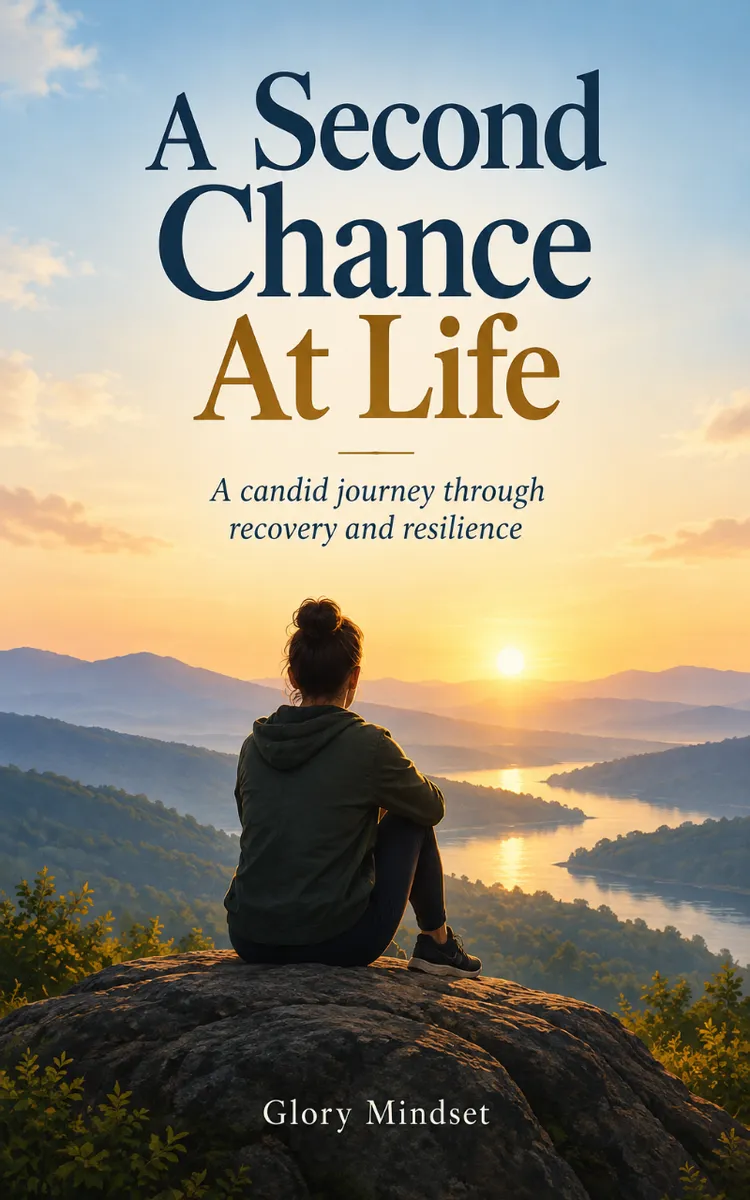
"A Second Chance At Life" is a biography book by Glory Mindset with 10 chapters and approximately 23,198 words. A personal account of recovery, resilience, and second chances.
This book was created using Inkfluence AI, an AI-powered book generation platform that helps authors write, design, and publish complete books. It was made with the AI Biography Writer.
Frequently Asked Questions
What is "A Second Chance At Life" about?
A personal account of recovery, resilience, and second chances
How many chapters are in "A Second Chance At Life"?
The book contains 10 chapters and approximately 23,198 words. Topics covered include The Night I Entered Detox, Choosing the Recovery House, Tracing the First Relapse, Returning to the Apartment, and more.
Who wrote "A Second Chance At Life"?
This book was written by Glory Mindset and created using Inkfluence AI, an AI book generation platform that helps authors write, design, and publish books.
How can I create a similar biography book?
You can create your own biography book using Inkfluence AI. Describe your idea, choose your style, and the AI writes the full book for you. It's free to start.
Write your own biography book with AI
Describe your idea and Inkfluence writes the whole thing. Free to start.
Start writingCreated with Inkfluence AI


