

Read the first chapter
The whole of chapter one, free. About 5 min. Turn the pages with the arrows, your keyboard, or a swipe.
Chapter 1
Trade the One-Person Show for a Discipling Church
A youth ministry can look busy while quietly teaching students the wrong lesson: church life depends on one gifted adult. If every question, decision, and meaningful conversation runs through you, students may learn to wait for the youth pastor instead of recognizing the whole church as part of their discipleship.
Ephesians 4:11-12 gives a different picture. Leaders equip the saints for ministry. That means your role isn’t simply to do more ministry. It’s to help the church become a discipling community. A healthy youth ministry equips the church to become a discipling community.
Shared ministry isn’t the same as splitting tasks. It means students experience care, wisdom, prayer, and spiritual encouragement through several faithful people - not just the person with the microphone.
See the Ministry You’re Actually Building
Start by noticing what your current patterns teach. If you answer every parent email, lead every small group, handle every crisis, and carry every spiritual conversation, your ministry may depend on you even when your volunteer list looks full.
A discipling church has several connected parts:
1. Students participate in their own growth and learn to encourage others. 2. Parents and families receive support and take an active role in faith formation. 3. Volunteers build relationships and practice ministry, not just crowd control. 4. The wider church sees young people as part of the body of Christ, not a separate department.
The question isn’t, “How can I get more help?” A better question is, “What kind of church are students experiencing through our current structure?” That question moves you from task coverage to shared discipleship.
Ministry Snapshot
Use the grid below to name who currently carries each part of student discipleship. Write one or more names in each space. If the answer is only you, mark it with a star.
• Weekly teaching: ____________________________ - Small-group conversation: __________________ - Prayer with students: ______________________ - Parent communication: _____________________ - Follow-up after absence: ____________________ - Crisis or care response: ____________________ - Connecting students to the wider church: _______
Now circle any line with a star. Those are not proof that you’ve failed. They’re clear places where the church can be equipped.
Map One Student’s Discipleship Circle
Materials needed: paper or a notes app, your ministry snapshot, and one student’s first name or initials. Time required: 20 minutes.
Choose one student who regularly attends your ministry. Pick someone you know well enough to answer honestly, but don’t use private details that don’t belong on paper.
1. Write the student’s name or initials in the center of a page. 2. Draw four circles around the name. Label them Student, Family, Volunteers, and Wider Church. 3. In each circle, write the names of people who currently help this student grow, pray, belong, or receive care. 4. Put a check beside relationships that happen at least twice each month. 5. Put a question mark beside any circle with no meaningful connection. 6. Choose one question-mark area. Write one specific connection you could build within the next 14 days. 7. Name the person you’ll invite, the student it will involve, and the next action.
Your goal is not to create a perfect network. Your goal is to identify one missing relationship and take one measurable step toward it.
> Completed example: > Student: “Maya” > Family: Dad receives monthly updates; no recent conversation about her faith. > Volunteers: Jordan leads her group and prays with her most weeks. > Wider Church: Maya serves with the children’s ministry once a month. > Missing connection: A second adult who knows Maya beyond Wednesday nights. > Next action: Ask Jordan to invite another trusted church member to join Maya’s serving team by next Sunday.
Your Turn: Complete your own circle before moving on. You’re done when all four circles contain either a person, a question mark, or a clear explanation of why that connection isn’t needed right now.
Put Shared Discipleship Into Ordinary Ministry
The shift usually happens in small moments. A parent asks how to help a teenager who has stopped talking about church. Instead of sending a quick answer, invite a trained volunteer into the conversation and help the parent choose one next step. The expected outcome is not a longer meeting. It’s a family that knows support doesn’t end when the student leaves the room.
A volunteer notices a student sitting alone. Instead of waiting for you to intervene, the volunteer welcomes the student, learns one detail about their week, and follows up at the next gathering. You can coach that volunteer afterward with two questions: “What did you notice?” and “What might you try next time?” The expected outcome is a volunteer growing in discernment, not merely completing an assignment.
Students can participate, too. Ask an older student to pray for a younger student, help welcome someone new, or share how a Bible passage shaped a decision. Keep the role appropriate and supervised. The outcome is a student learning that discipleship includes giving care, not only receiving it.
Choose one ministry setting this week - small group, Sunday gathering, parent conversation, or serving team. Before it begins, decide what you’ll equip someone else to do. Afterward, record:
• Person equipped: ____________________________ - Ministry moment: _________________________ - Instruction I gave: ________________________ - What the person did: ______________________ - Evidence of growth: _________________________
If the person completed the task but needed correction, that still counts as progress. Shared ministry grows through practice, feedback, and another opportunity.
Decide What You’ll Release Next
Which part of student discipleship still depends most heavily on you? Be specific. Name the setting, the people involved, and the pattern you want to change.
__________________________________________________________________
__________________________________________________________________
__________________________________________________________________
What would students experience differently if one additional adult became a consistent spiritual presence in their lives? Describe one visible change you could observe within 30 days.
__________________________________________________________________
__________________________________________________________________
__________________________________________________________________
What is one responsibility you’ve been calling “help” that actually needs equipping? Write the person you’ll coach, the ministry action they’ll practice, and the date you’ll review it together.
__________________________________________________________________
__________________________________________________________________
__________________________________________________________________
You don’t have to disappear from youth ministry to stop being a one-person show. You stay present, but your presence changes. You become the person who equips others to notice, pray, speak, welcome, and care. That’s how a youth ministry becomes a church that disciples together.
End of chapter one. 17 more chapters and about 19,024 words in the full book.
Swipe or use the arrows to turn the page


What's inside: 18 chapters
- 1. Trade the One-Person Show for a Discipling Church
- 2. Map the Body, Not Just the Task List
- 3. Build Faith Across Generations
- 4. Find the Gaps Before Recruiting
- 5. Invite People for Character, Calling, and Fit
- 6. Make Screening Part of Care
- 7. Train Adults for the Moments That Matter
- 8. Read Behavior Without Reducing the Student
- 9. Listen, Clarify, and Connect
- 10. Delegate Authority, Not Just Chores
- 11. Coach with Specific Feedback
- 12. Protect Volunteer Health and Repair Conflict
- 13. Help Parents Disciple in Ordinary Life
- 14. Make Family Communication Clear and Trustworthy
- 15. Build Belonging and Make Room for Questions
- 16. Respond to Distress with Wisdom and Care
- 17. Protect Trust When Someone Discloses Harm
- 18. Measure Fruit and Keep the Whole Church Aligned
About this book
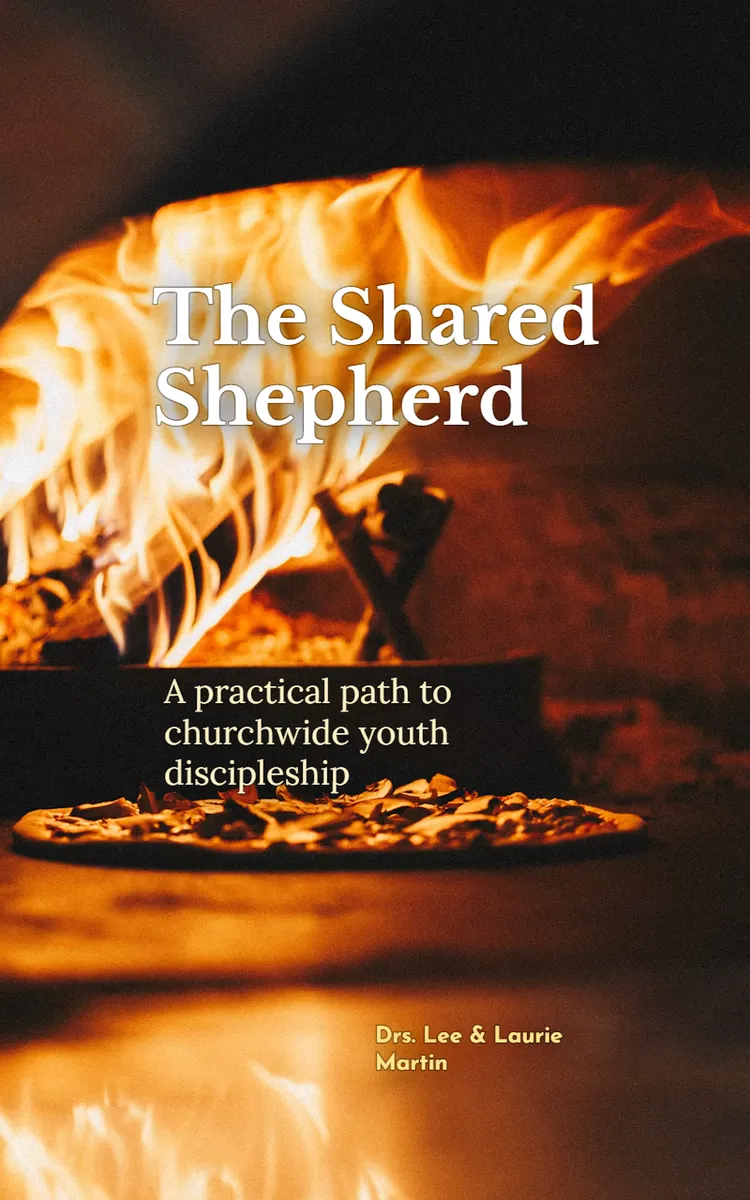
"The Shared Shepherd" is a workbook by Drs. Lee & Laurie Martin with 18 chapters and approximately 19,024 words. A hands-on guide for youth pastors to equip volunteers, partner with families, protect young people, and build a church community that shares responsibility for discipleship..
This book was created using Inkfluence AI, an AI-powered book generation platform that helps authors write, design, and publish complete books. It was made with the Workbook Generator.
Frequently Asked Questions
What is "The Shared Shepherd" about?
A hands-on guide for youth pastors to equip volunteers, partner with families, protect young people, and build a church community that shares responsibility for discipleship.
How many chapters are in "The Shared Shepherd"?
The book contains 18 chapters and approximately 19,024 words. Topics covered include Trade the One-Person Show for a Discipling Church, Map the Body, Not Just the Task List, Build Faith Across Generations, Find the Gaps Before Recruiting, and more.
Who wrote "The Shared Shepherd"?
This book was written by Drs. Lee & Laurie Martin and created using Inkfluence AI, an AI book generation platform that helps authors write, design, and publish books.
How can I create a similar workbook?
You can create your own workbook using Inkfluence AI. Describe your idea, choose your style, and the AI writes the full book for you. It's free to start.
Write your own workbook with AI
Describe your idea and Inkfluence writes the whole thing. Free to start.
Start writingCreated with Inkfluence AI


