
Read the first chapter
The whole of chapter one, free. About 8 min. Turn the pages with the arrows, your keyboard, or a swipe.
Chapter 1
What Witchcraft Really Means
Why Witchcraft Meaning Matters (and What You Can Expect to Learn)
The fastest way to scare a beginner away is to make witchcraft sound like either secret power or pure fantasy. That confusion leads people to jump into risky practices, buy random “curses” kits, or ignore basic safety. You don’t need hype - you need clear expectations.
In this chapter, you’ll learn what witchcraft really means in plain language, what it does not mean, and how to approach it responsibly when you’re just starting out. After you finish, you’ll be able to sort real witchcraft practices from harmful nonsense, explain your boundaries to yourself, and choose beginner-friendly steps you can repeat without guessing.
I’ll show you how to use your Beginner Compass Model to make decisions you can live with: you’ll check your intent, your safety, and your ethics before you light a candle or try any “energy” work. If you want a concrete anchor, picture Nadia, 32, an office administrator - the kind of person who wants to do things carefully, understands rules at work, and hates unclear instructions. That mindset fits witchcraft better than you might think.
What Witchcraft Is (and Isn’t) Using the Beginner Compass Model
Witchcraft is a set of practices where you use focused intention, attention, and often tools or routines to create change in your life. “Change” can mean emotional clarity, better habits, confidence, or practical action you take afterward. In most beginner paths, you don’t just “wish” and wait - you prepare, work, and then follow through.
Witchcraft is not about guaranteed results. It is not about forcing other people’s free will. And it is not a shortcut that replaces basic life steps like paying bills, seeking medical help, or setting boundaries. If a practice asks you to ignore your health, endanger yourself, or control someone else against their consent, treat that as a red flag.
Now let’s make this decision-making simple. Your Beginner Compass Model gives you three checks you can run every time you’re tempted to try a new practice:
1. Intent Check (why you want this): Ask, “What outcome do I want, and what do I actually control?” This matters because witchcraft works best when you aim at what you can affect - your choices, your focus, and your actions. If your intent depends on controlling someone else’s thoughts, pause and rethink.
2. Safety Check (what could go wrong): Ask, “Does this practice involve heat, chemicals, weapons, or anything that can harm me or someone else?” This matters because beginner witchcraft often uses candles, herbs, salt, and sometimes oils. You need basic safety rules the same way you would when cooking or cleaning.
3. Ethics Check (how you treat other people): Ask, “Does this practice respect consent and personal boundaries?” This matters because ethics is not decoration - it keeps your practice clean. You can work on yourself, your protection, and your own path without turning other people into targets.
A quick comprehension check: if you read a description that says, “This will make them do exactly what you want,” stop. That claim fails your Intent Check and your Ethics Check at the same time.
Practical takeaway: Use the Beginner Compass Model before you buy supplies or start a ritual. It prevents a lot of mistakes before they happen.
How Witchcraft “Works” in Real, Beginner-Friendly Terms
People use different words for the “mechanism” of witchcraft - energy, intention, spiritual connection, signs, or synchronicities. For a beginner, you don’t need to pick a complicated theory. You need a working explanation that helps you make good choices.
Here’s the simple way to think about it: witchcraft gives you a structured way to focus your mind and align your actions. Tools and routines (like candles, herbs, baths, journaling, or simple chants) act like attention anchors. When you repeat a routine with clear purpose, you train your brain to notice what supports your goal and to act more consistently.
That’s why a lot of beginner work pairs “spellwork” with real-world steps. For example, if you do a spell for confidence, you still show up on time, send the email you’ve been avoiding, and practice the conversation you need to have. The ritual helps you do the follow-through - you still do the follow-through.
Let’s ground this with Nadia’s situation: she wants calmer mornings and less stress before work. She doesn’t need to “force” her boss to be nicer. She needs to change her own response. She can do a short routine that helps her reset - then she can leave the house earlier by 10 minutes, put her bag by the door the night before, and drink water instead of grabbing coffee on an empty stomach. Witchcraft supports the habit; it doesn’t replace it.
When you’re judging whether a practice is realistic, watch for these features:
• It gives you a clear action you can do safely. - It ends with a practical follow-through step you can take the same day. - It doesn’t promise instant control over other people.
Practical takeaway: Treat witchcraft as a repeatable practice that supports your focus and your choices - not as a magic vending machine.
Putting Witchcraft Into Practice Without Getting Lost
You don’t need 20 tools to start. You need a safe, repeatable routine and a clear way to decide what’s okay for you. Here’s a beginner path you can use the first time you try anything witchcraft-related.
First, set your boundary: decide what you will and won’t do. Beginners usually do best with simple, low-risk practices - like candle work, journaling, protective routines, and cleansing habits - before they touch anything intense or secretive.
Follow these steps every time you start a new practice:
1. Write your goal in one sentence. Example Nadia could write: “I want to feel calmer before work so I stop rushing.” Keep it specific and personal.
2. Run the Beginner Compass Model with three quick questions. - Intent Check: “How does this improve my choices?” - Safety Check: “Do I use anything that could burn me or irritate my skin?” - Ethics Check: “Does this target my own life, not someone else’s will?”
3. Choose one simple action you can finish in 10-20 minutes. Example: light one candle (in a stable holder), sit somewhere safe, and write a short intention statement in a notebook. Then blow out the candle fully.
4. Add one real-world follow-through step right after. Example: lay out your clothes, pack your lunch, or set one alarm 10 minutes earlier.
5. Log what you did and what changed. Write: date, time, what you used, and one sentence about your result (even if it’s just “I felt steadier” or “I worried less”).
That’s the whole loop. You repeat it until your practice feels clear and safe.
Quick checklist
• Define your goal in one sentence - Run Intent Check / Safety Check / Ethics Check - Pick one low-risk practice you can finish in 10-20 minutes - Do one real-world step immediately afterward - Write down what happened
Nadia’s first week could look like this: she does a short calming candle routine on Monday, Wednesday, and Friday. Each time she also prepares her bag the night before. By the end of the week, she notices she’s less likely to panic in the morning. That outcome matters more than whether anyone “sees” magic. The practice works when it improves your life.
Practical takeaway: Start small, finish the routine, then measure your follow-through - not someone else’s reaction.
What to Watch For: Red Flags, Edge Cases, and Fixes
Beginners don’t need paranoia, but you do need pattern recognition. Witchcraft has room for spirituality and creativity, but it also attracts people who sell fear. Here are common mistakes and how you correct them right away.
Overpromising results If someone tells you, “This will 100% guarantee they come back” or “You must do it exactly or it won’t work,” treat it as a red flag. That kind of promise bypasses your Intent Check and Ethics Check. Do this: Rewrite the goal into something you can control. Example: instead of “make them love me,” aim for “help me communicate clearly and make better choices for myself.” Not this: Trust claims that require you to ignore consent, ignore your safety, or abandon your common sense.
Unsafe materials and “it’s fine” thinking Beginners often jump into practices that involve unknown oils, strong chemicals, or heat without setup. Candles can tip, herbs can irritate skin, and some products can trigger allergies. Do this: Use simple, familiar items first. Keep candles in a stable holder, keep hair and sleeves tied back, and do a quick patch test if you plan to use anything on skin. Not this: Rush a practice right after a long day when you’re clumsy, distracted, or running on low sleep. You set yourself up for accidents.
Targeting other people’s will Ethics matters in witchcraft because it changes your whole practice. When you focus on controlling someone else, you often end up feeding anxiety instead of building your own clarity. Do this: Redirect your work toward protection, boundaries, or your own behavior. Example: “I want to feel safe and respected in my interactions,” followed by a concrete boundary you can practice tomorrow. Not this: Treat other people as puzzles you can force. If your plan depends on controlling someone’s choices, stop and reset your intent.
Mini “Ask yourself” checks Ask yourself these questions before you start: - “Can I explain what I’m doing in plain steps?” - “Can I keep this safe with basic precautions?” - “Does this respect consent and personal boundaries?”
If you can’t answer yes to those, slow down. Witchcraft rewards careful beginners.
Practical takeaway: Red flags usually show up as pressure, control, or unsafe shortcuts. Fix the intent, simplify the method, and keep your body and boundaries in charge.
Closing: Your First Real Job Is Clarity
Witchcraft doesn’t become real to you because someone else says it’s real. It becomes real when you can describe what you did, why you did it, how you stayed safe, and what changed afterward. That’s why the Beginner Compass Model matters: it turns “mystery” into choices you can make calmly.
Your next chapters will give you tools and routines you can practice step-by-step, starting with safety and ethics, then moving into space setup, simple supplies, and your first beginner spellwork. For now, keep your compass close: intent, safety, ethics. When those line up, you can learn without getting pulled into fear or confusion.
End of chapter one. 13 more chapters in the full book.
Swipe or use the arrows to turn the page

The Youtube Beginner's Guide 2027

How To Start A Handyman Business

How to Start a Lawn Care Business
What's inside: 14 chapters
- 1. What Witchcraft Really Means
- 2. Safety Rules and Ethical Boundaries
- 3. Choosing and Preparing Your Space
- 4. Candles, Crystals, and Herbs Basics
- 5. Cleansing Your Space Step-by-Step
- 6. Your First Spell for Beginners
- 7. Working with Moon Phases
- 8. Kitchen Witchcraft for Everyday Life
- 9. Protection Spells and Warding Basics
- 10. Abundance Spells for Money and Opportunity
- 11. Love Magic with Respectful Consent
- 12. Wheel of the Year Celebrations
- 13. Building Your Grimoire from Scratch
- 14. Next Steps: Your First 30 Days
About this book
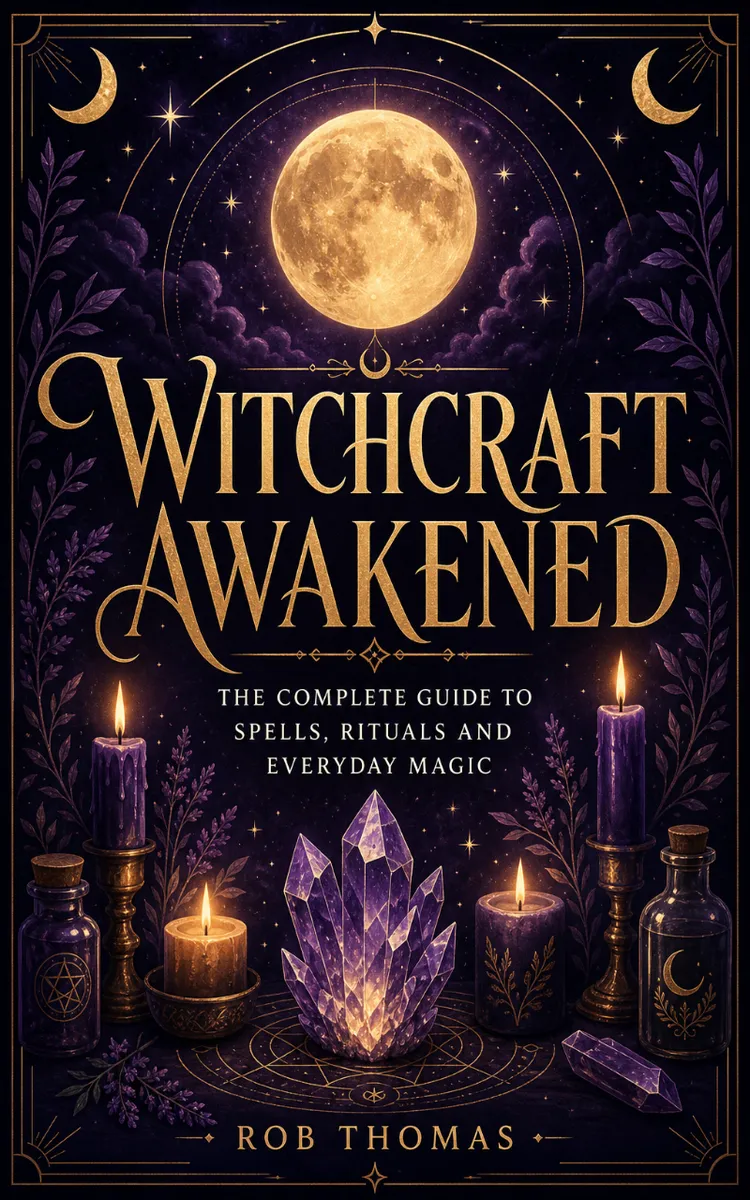
"Witchcraft Awakened" is a how-to guide book by Rob Thomas with 14 chapters and approximately 25,889 words. Beginner witchcraft guide covering spells, tools, ethics, and rituals.
This book was created using Inkfluence AI, an AI-powered book generation platform that helps authors write, design, and publish complete books. It was made with the AI Ebook Generator.
Frequently Asked Questions
What is "Witchcraft Awakened" about?
Beginner witchcraft guide covering spells, tools, ethics, and rituals
How many chapters are in "Witchcraft Awakened"?
The book contains 14 chapters and approximately 25,889 words. Topics covered include What Witchcraft Really Means, Safety Rules and Ethical Boundaries, Choosing and Preparing Your Space, Candles, Crystals, and Herbs Basics, and more.
Who wrote "Witchcraft Awakened"?
This book was written by Rob Thomas and created using Inkfluence AI, an AI book generation platform that helps authors write, design, and publish books.
How can I create a similar how-to guide book?
You can create your own how-to guide book using Inkfluence AI. Describe your idea, choose your style, and the AI writes the full book for you. It's free to start.
Write your own how-to guide book with AI
Describe your idea and Inkfluence writes the whole thing. Free to start.
Start writingCreated with Inkfluence AI


