
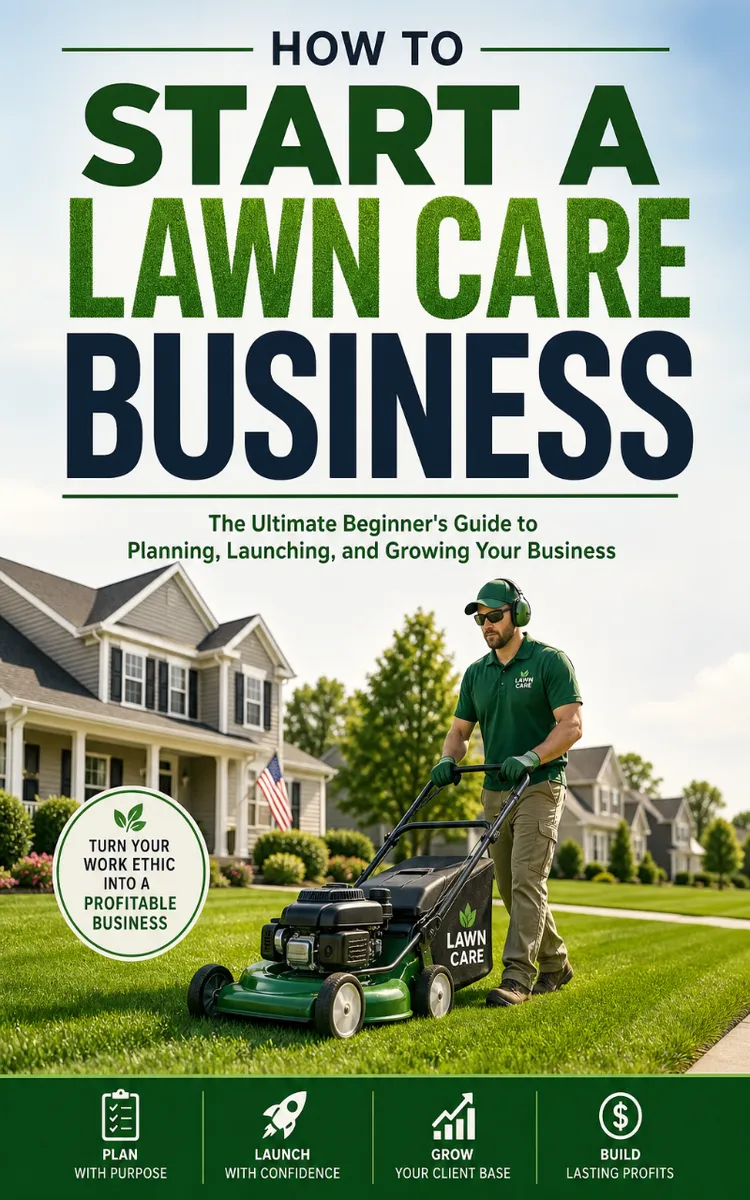
Read the first chapter
The whole of chapter one, free. About 9 min. Turn the pages with the arrows, your keyboard, or a swipe.
Chapter 1
Choosing Your Lawn Service Niche
Why a Clear Lawn Service Niche Makes Your Business Easier to Run
If you can’t explain who you serve in one sentence, you’ll struggle to get customers to remember you. A lawn care “niche” means you pick a specific customer type (like homeowners with small yards or busy renters who want quick cleanups) and a service focus (like mowing + edging, or seasonal cleanups). When you narrow your target, you stop guessing what to advertise and you start building a simple delivery system.
Most new lawn owners run into the same problem: they list every service they can think of - mowing, trimming, hauling, landscaping, weed control - then they wonder why their marketing feels scattered and why scheduling turns messy. A niche fixes that. It gives you a clear message, a clear route plan, and a clear set of jobs you can price confidently.
After this chapter, you’ll be able to choose one customer type and one service focus that fit your time, your equipment, and your local market. You’ll also know how to test your choice with real calls and walk-throughs, so you don’t pick a niche just because it sounds good.
The Niche Fit Compass: Pick a Customer Type + Service Focus That Fits
Ask yourself one question before you pick anything else: “What kind of job do I want to do the most, and who needs it the most?” Your niche should answer both parts. You don’t need to be everything to everyone - you need to be the obvious choice for a specific kind of customer.
Use the Niche Fit Compass to make the decision in a practical way. You’ll score your options based on what you can deliver well and what customers in your area actually buy.
1) Choose one customer type you can serve consistently Pick a customer type based on repeat needs and predictable schedules. Examples that work well for beginners include: - Weekly or biweekly mowing for small residential lots - Monthly seasonal cleanups for homeowners who only call a few times a year - Evening-only service for parents or people who work 9-5 and can’t be home during the day
Why this matters: repeat customers make your income steadier. Even if you start small, consistent jobs help you plan routes and reduce “gap weeks.”
2) Pick one main service focus you can do fast and clean Your service focus should match your time and tools. A strong beginner focus looks like one of these: - “Mow, edge, and trim” as a package - “Cleanup + haul-away” during spring and fall - “Weed-whack + bed edging” for properties with obvious curb appeal problems
Why this matters: when you focus, you build speed. Speed lets you fit more jobs in a day without cutting corners.
3) Match your niche to your real delivery limits (time + equipment) Be honest about your boundaries. If you only work evenings, you need customers whose lawns won’t take 3 hours to fix. If you only own a push mower right now, you need yards that fit your cutting system.
A simple way to think about it: pick a “typical job” length you can repeat. For example, if your goal is to finish most lawns in 60-90 minutes, your niche should include properties that usually allow that. If you target overgrown lots immediately, you’ll spend hours on prep and catch-up.
Why this matters: delivery limits create your pricing power. If your jobs take longer than you planned, you lose money even if your price looks fine on paper.
4) Test your niche with a short, local reality check Before you print flyers or build a website, test your niche with real conversations. - Call or text 10 people from neighborhood groups and ask what they pay now and how often they need service. - Ask what they dislike about their current lawn help. - Ask if they want evening availability, quick clean edges, or seasonal cleanup with haul-away.
Why this matters: your niche choice should reduce friction. If people don’t care about your focus, you’ll hear it fast in real replies.
Quick comprehension check Can you say your niche in this format: “I help __ (customer type) with (service focus) on __ (schedule/time)”? If you can’t, tighten your choices.
Example using Tanya (evenings-only) Tanya is 31 and starts her lawn care business by working evenings only because she has family responsibilities during the day. Instead of offering everything, she picks a niche that fits her timing: - Customer type: homeowners who need repeat mowing help but can’t meet during daytime hours - Service focus: mow + edge + basic trim so each visit stays predictable
Why this works for her: evenings-only can feel limiting, but mowing + edging on normal residential lawns usually stays within a manageable time window. Tanya also avoids taking on heavy overgrowth jobs at first, because those can blow up her schedule and make evenings impossible.
Putting the Niche Fit Compass to Work in Your Area (A Real Scenario)
Let’s walk through a realistic way to pick your niche using the Niche Fit Compass. This example uses Tanya’s evenings-only situation, but you can swap in your own limits.
Step 1: Write down 3 customer-type options Keep these options specific. Don’t write “anyone with a lawn.” Write something like: 1. Small residential homeowners who want weekly mowing 2. Busy renters who need monthly maintenance 3. Homeowners who only need spring and fall cleanups
Expected outcome: you’ll quickly see which group matches your schedule and your willingness to show up often.
Step 2: Pick 3 service-focus options you can deliver right now Use what you can actually do today, not what you hope to add later. For Tanya, service focus candidates might be: 1. Mow + edge + trim (basic curb-appeal package) 2. Cleanup + bag/haul for spring and fall 3. Weed-whack + bed edging refresh (for visible problem spots)
Expected outcome: you’ll narrow to one option that fits your time and skill level.
Step 3: Score each option using simple “fit” questions Create a quick scorecard on paper or your phone. Use a 1-5 scale for each question.
Score your options based on: - Repeat frequency: Does this create weekly/biweekly work, or occasional work? - Time control: Can you finish most jobs in your target time window? - Tool match: Do you already have the tools (or can you rent them easily)? - Marketing clarity: Can you write one clear message about it?
For Tanya, “Mow + edge + trim for weekly customers” usually scores high on time control and repeat frequency. Cleanup-heavy work scores higher on profit potential sometimes, but it can take longer and creates scheduling spikes.
Expected outcome: one option usually rises to the top without you overthinking it.
Step 4: Run a 7-day niche test before you commit For Tanya, she spends one week doing quick outreach instead of building a full menu.
Actions she takes: 1. She posts in local community groups with a single offer: evening mowing + edging for small residential lawns. 2. She messages 20 people who comment or respond. 3. She asks three questions every time: - How often do you currently get your lawn done? - What do you like or dislike about your current provider? - Do you need evenings, or can you do daytime?
Expected outcome: she learns whether evenings matter and whether mowing + edging solves the biggest pain.
Step 5: Confirm your niche with 3 job visits (free or low-cost) You don’t need to give away work forever. You can do one of these: - Offer a quick estimate visit and charge nothing for the assessment - Or offer a discounted “first clean start” for the first customer in your niche
Tanya keeps these visits focused: - She times how long it takes to mow and edge using her normal approach. - She checks lawn size and growth pattern so she can estimate visit length. - She confirms access issues (gates, parking, pets) so she can plan routes.
Expected outcome: she can stop guessing about time. If her typical visit takes 75 minutes, she can schedule evenings without chaos.
Quick checklist - Pick one customer type that needs predictable service - Pick one service focus that you can deliver fast and clean - Make sure your niche fits your time window (like Tanya’s evenings) - Test your niche by contacting 10-20 local people in 7 days - Visit 3 properties to confirm job length and real needs
Expected result you can measure After the test week, you should have: - At least a few people who say, “Yes, we need that,” especially about your schedule - Clear feedback on what service they actually want most - A realistic estimate of how long a typical job takes
What to Watch For: Common Niche Mistakes and Fixes
Most niche mistakes don’t come from bad intentions. They happen because new owners try to stay flexible, then they end up confusing customers and themselves. Watch for these problems early.
Mistake: You pick a niche based on what you want to do, not what customers buy If you choose “cleanup with haul-away” because it sounds satisfying, but your area mainly asks for weekly mowing, you’ll struggle to fill your calendar. You’ll also spend extra time explaining what you do instead of getting customers to say yes.
Fix: Ask 10 people what they already pay for and how often they call. If they don’t mention your focus, adjust your niche or add a second focus later. Pick the one that customers already treat as a need, not a preference.
Do this: Write one offer that matches your top service focus and ask, “How often do you need this?” Not this: List five services on your first post and hope customers sort it out.
Mistake: You choose “anyone” because you think more customers means more money When you target everyone, you end up with jobs that don’t fit your delivery limits. For Tanya, that could look like taking on overgrown yards that take 3 hours each. Then she misses her evening boundaries, and customers feel the slowdown.
Fix: Limit your niche by yard type and job length. Choose a range you can handle. If you want 60-90 minute mow-and-edge visits, don’t market to properties that regularly require days of prep or heavy hauling.
Do this: Describe your niche with details: “small residential lawns, mow + edge + trim, evening appointments.” Not this: Say “full lawn care” when your real capacity supports only a narrower job type.
Mistake: Your service focus changes every week New owners sometimes start with one package, then customers request “just one extra thing,” and suddenly you offer ten add-ons. That kills your speed and makes pricing inconsistent.
Fix: Lock a core package and handle extras only when you can quote them clearly. Add-ons should have a rule like “only quote after you see the yard” or “only during seasonal cleanup weeks.”
Do this: Keep one core package and add extras through a simple approval step. Not this: Change your main offer every time someone asks for something different.
Edge case: You find demand but your delivery still breaks Sometimes your test shows people want your niche, but your job time doesn’t work. If this happens, don’t scrap the niche immediately. Adjust your boundaries: - Increase your minimum visit size (only take lawns that fit your time window) - Add a “minimum charge” so small lawns don’t drain your schedule - Set a “no heavy overgrowth” rule for your first month
Ask yourself: “Can I deliver this niche without rushing?” If the answer is no, tweak the niche until you can.
Closing Takeaway: Your Niche Should Make Your Marketing and Scheduling Obvious
Your niche isn’t a fancy label - it’s the reason your phone rings with the right kind of job and the reason you can plan your week without stress. When you pick one customer type and one service focus that fit your time and tools, your advertising becomes simple, your estimates get easier, and your routes make sense.
Use the Niche Fit Compass to choose with confidence, then test it with real people and real property visits. When you get that confirmation, you can start building the rest of your business around it - pricing, scheduling, and the simple offer you’ll keep repeating until customers remember you.
End of chapter one. 7 more chapters in the full book.
Swipe or use the arrows to turn the page

The Youtube Beginner's Guide 2027

How To Start A Handyman Business

How to Start a Mobile Pet Grooming Business
What's inside: 8 chapters
- 1. Choosing Your Lawn Service Niche
- 2. Calculating Startup Costs and Break-Even
- 3. Pricing Packages for Sustainable Profit
- 4. Estimating Jobs Using a Time Budget
- 5. Building Your Equipment and Supplies List
- 6. Creating a Simple Service Area Map
- 7. Marketing Locally with Flyers and Reviews
- 8. Managing Customers with Contracts and Scheduling
About this book
"How to Start a Lawn Care Business" is a how-to guide book by Rob Thomas with 8 chapters and approximately 17,257 words. Launching and operating a lawn care business.
This book was created using Inkfluence AI, an AI-powered book generation platform that helps authors write, design, and publish complete books. It was made with the AI Ebook Generator.
Frequently Asked Questions
What is "How to Start a Lawn Care Business" about?
Launching and operating a lawn care business
How many chapters are in "How to Start a Lawn Care Business"?
The book contains 8 chapters and approximately 17,257 words. Topics covered include Choosing Your Lawn Service Niche, Calculating Startup Costs and Break-Even, Pricing Packages for Sustainable Profit, Estimating Jobs Using a Time Budget, and more.
Who wrote "How to Start a Lawn Care Business"?
This book was written by Rob Thomas and created using Inkfluence AI, an AI book generation platform that helps authors write, design, and publish books.
How can I create a similar how-to guide book?
You can create your own how-to guide book using Inkfluence AI. Describe your idea, choose your style, and the AI writes the full book for you. It's free to start.
Write your own how-to guide book with AI
Describe your idea and Inkfluence writes the whole thing. Free to start.
Start writingCreated with Inkfluence AI


