
Read the first chapter
The whole of chapter one, free. About 11 min. Turn the pages with the arrows, your keyboard, or a swipe.
Chapter 1
Introduction to Food Truck Basics
Introduction to Food Truck Basics: What You’re Building, How It Makes Money, and What to Plan Before You Spend
What will you sell, where will you sell it, and how will you pay your bills when sales swing week to week? If those questions don’t feel clear yet, you’re not behind - you just need the right foundation. A food truck business is simple on the surface (cook food, sell food), but it runs on a specific set of moving parts: menu choices, costs, permits, locations, and day-to-day operations.
This chapter helps you connect the dots between the truck you buy and the money you need to earn. You’ll learn what a food truck business is in practical terms, how it makes money through sales and margins, and what you must plan before investing so you don’t get stuck with a truck that doesn’t match your market or your budget.
By the end, you’ll walk away with a clear picture of the business model, a quick way to map revenue and costs, and a short list of planning items you can complete before you commit your cash. You’ll also know what to watch for early - because food trucks don’t fail only from “bad food.” They fail from mismatched planning.
What a Food Truck Business Really Is (and What It Must Do Every Day)
A food truck business is a mobile food operation that sells ready-to-eat items to customers at specific places and times. You don’t just run a kitchen - you run a schedule, a product line, and a compliance system. Your truck needs to produce food fast enough to meet rush demand, keep food safe, and stay within the rules of your local health department and fire code.
Think of the business as three linked systems:
1) Your product system (menu, prep steps, serving speed) 2) Your sales system (locations, events, hours, customer traffic) 3) Your cost system (food ingredients, packaging, labor, fuel, service, and fixed bills like insurance and rent for storage)
If any one system breaks, the business feels “off” right away. For example, you can have great food, but if your menu requires slow prep or too many items at once, you’ll fall behind at events and lose sales. Or you can have strong event traffic, but if your ingredient costs run high and your prices stay too low, you’ll work hard and still end the day short on cash.
Ask yourself this quick comprehension check: Can you describe your truck as a business in one sentence? Example template: “I sell [type of food] at [type of locations] using [prep approach] during [hours], and I cover my costs through [pricing and sales volume].” You don’t need fancy wording - just clarity.
The Food Truck 360 Starter Map: Your planning backbone
Use the Food Truck 360 Starter Map to keep your thinking grounded in how real trucks operate. It forces you to plan around the full loop: concept → menu → costs → permits → equipment → locations → sales pace → cash needs.
You’ll fill this out as you read the rest of the book, but you can start now. The map has four corners you must connect before you invest:
• Where you sell (events, street vending, private lots - whatever your local rules allow) - What you sell (menu items that you can produce consistently and quickly) - How you produce it (equipment and workflow that match the menu) - How you get paid (pricing, payment methods, and sales rhythm)
A practical differentiator: if you plan to sell at crowded lunch events, your truck must move food fast - so your menu and equipment choices must support speed. If you plan mostly for slower evenings at breweries or markets, you can build a menu that supports slightly more prep per order without killing your throughput.
Practical takeaway: When you talk about your food truck, talk in systems: product, sales, and costs. Don’t start with a truck purchase - start with the loop that makes the truck profitable.
How a Food Truck Makes Money (Sales, Margins, and Cash Timing)
Food trucks make money when customers pay more for meals than it costs you to produce and serve those meals - after you cover daily bills. The big trap for new owners is mixing up “profit” with “cash.” You can have a profitable menu on paper and still run out of cash if you spend too much upfront or your sales don’t show up consistently.
Here’s the money flow in plain terms:
• Revenue comes from selling menu items (plus any add-ons like drinks or extra toppings). - Cost of goods (ingredients and packaging) comes from every item you sell. - Operating costs (fuel, propane, repairs, insurance, and other recurring bills) happen whether you sell a lot or a little. - Labor matters if you pay yourself or hire help (and many owners forget to include their own pay).
You should track Food Cost (ingredients + packaging per item) and then set Price so you still cover everything else and leave room for profit. You’ll learn deeper pricing math later, but you should understand the shape of it now.
The core pieces you must plan for revenue and costs
Use this numbered set to build a simple “does this math work?” view before you spend money:
1. Pick a target selling day - Choose one realistic sales window (for example, lunch-only for events or 4-8 pm for evening spots). - Why: your day length changes how many orders you can serve and how much your daily bills drain your cash.
2. List your menu items and their “build difficulty” - Mark items as fast (assembled quickly) or slow (requires more prep or cooking steps). - Why: slow items can look profitable but can choke your line during rush.
3. Estimate ingredients + packaging per item - Use actual supplier pricing (or estimates from current retail/wholesale quotes). - Why: you can’t manage costs without a real number.
4. Set a price that covers costs and still leaves money - Later you’ll calculate precisely, but for now you must ensure your price covers ingredients and packaging at minimum, then leaves room for operating costs and profit. - Why: discounts can increase volume, but they can also wipe out margin if your baseline is too tight.
A realistic example using Jordan Kim (31, career switcher)
Jordan Kim is switching careers and wants a food truck that fits their schedule and budget. Jordan starts by writing down a short list of menu items they can prepare consistently using one main cooking process (for example, grilling or flat-top cooking). Jordan also decides to focus on items that assemble quickly - because Jordan plans for lunch events where the line moves fast.
Jordan then does a basic money check: “If I sell 80 meals in a busy lunch and my ingredients + packaging average $4 per meal, I get $320 in ingredient coverage for that day.” That number doesn’t include fuel, permits, insurance, repairs, or Jordan’s pay, so it’s not “profit” - it’s a cost checkpoint. Jordan uses it to compare different menu options and pricing ranges before committing to equipment upgrades.
Practical takeaway: You don’t make money because you own a truck. You make money because each order covers ingredient and packaging costs and helps pay the bills you can’t pause.
Putting the Food Truck 360 Starter Map Into Practice (Your first planning worksheet)
You can’t plan a food truck with vibes. You plan it by writing down the loop components and stress-testing them. This section walks you through a realistic planning pass you can complete before you invest.
Step-by-step: Build your starter map and a first-pass cash picture
1. Write your selling plan - Choose 3-5 target location types you can realistically book (events, fairs, private company parking lots, community markets, brewery nights - whatever fits your local rules). - Expected outcome: you can describe where you’ll be on a typical month, not just “I’ll find locations.”
2. Set your menu “launch list” - Pick 8-12 items that share ingredients and prep steps. - Expected outcome: you build a menu you can produce without constant rework or wasted food.
3. Map your workflow from start to finish - For each launch item, write the prep steps in order (example: chop → cook → assemble → hold hot → serve). - Expected outcome: you can spot bottlenecks before you buy equipment.
4. Pull real numbers for ingredient + packaging - Ask suppliers for quotes (or check wholesale catalogs). Record your best guess per item. - Expected outcome: you stop guessing and start comparing menu options by cost.
5. Estimate orders per service block - For your chosen selling day length, estimate a “slow,” “average,” and “busy” order count based on similar events you already know about (even from seeing other trucks). - Expected outcome: you understand how your day changes when traffic changes.
6. List your fixed bills - Write down monthly amounts you can’t skip (insurance, storage, phone/internet, accounting tools, permits renewals, and any ongoing fees). - Expected outcome: you know what cash you need even if one week is slower.
7. Set your “minimum viable day” - Determine the lowest order count where you still cover ingredient costs and contribute toward fixed bills. - Expected outcome: you know when a day is “worth it” and when you need to adjust price, menu, or event selection.
Quick checklist
• Define where you’ll sell (specific location types you can book) - Pick a launch menu that shares ingredients and prep steps - Write the prep-to-serve workflow for each menu item - Use supplier pricing for ingredient + packaging per item - Estimate slow/average/busy order counts for your service window - List fixed monthly bills and convert them into a daily target - Decide your minimum viable day so you can judge events quickly
What to do with your starter map results
Once you fill the Food Truck 360 Starter Map, you’ll see two things fast:
• Whether your menu matches your cooking speed and equipment plan - Whether your pricing can cover ingredient costs and still leave room for operating costs
If the numbers don’t work, don’t “push through.” Adjust the menu, the price range, or the location plan. The goal is to align the loop before you buy the truck.
Practical takeaway: Your starter map turns “planning” into decisions. You should be able to point at your map and explain why you chose your menu, your locations, and your pace.
What to Watch For Before You Invest (Red flags that break food truck plans)
When you start contacting sellers, booking events, and shopping equipment, you’ll hear plenty of confident answers. Your job is to notice the red flags that signal mismatch between the truck, the menu, and the market.
Common mistakes and edge cases
Forgetting that permits and inspections affect your launch date Do this: Build your timeline around permits, inspections, and any required equipment approvals. Contact your local health department early and ask what you need before you cook on-site. Not this: Buy a truck, then assume you can start cooking immediately once it arrives. Why this matters for money: delays push your start date and stack costs (storage, insurance, and ongoing expenses) before you earn sales.
Choosing a menu that looks good but slows the line Do this: Limit your launch menu to items you can produce with a clear workflow and consistent output. Share ingredients across items so you reduce prep steps. Not this: Add “special” items that require extra cooking styles, separate sauces, or long hold times just because they sound exciting. Why this matters for money: slow service reduces orders during the exact hours you need to earn.
Underestimating daily operating costs and repairs Do this: Include fuel, propane, routine maintenance, and basic repair reserves in your early budgeting. Plan for small failures (a pump clog, a broken switch, a temperature probe issue) so they don’t shut you down. Not this: Assume your truck will run perfectly for months because it’s “new” or “well maintained.” Why this matters for money: a single day lost during a busy event season can wipe out cash you needed for repairs and insurance.
A quick “before you sign anything” check
Before you invest in a truck, equipment package, or commissary arrangement, verify:
• Your local rules allow your planned menu and service style at your target locations - Your workflow supports the speed you need for your chosen events - Your numbers cover ingredient costs and contribute toward fixed bills at your minimum viable day
Practical takeaway: Watch for mismatches: launch timing vs permits, menu speed vs event pace, and real daily costs vs your budget.
Chapter Summary: Your next move with real clarity
A food truck business is a mobile food operation that depends on three linked systems: what you sell, how fast you can produce it, and where you can sell it reliably. You make money when your pricing covers ingredient and packaging costs and helps pay the fixed bills that keep running. Your biggest planning job before investing is to map the loop using the Food Truck 360 Starter Map so your menu, equipment needs, and location plan actually match your sales reality.
Your homework from this chapter is simple and concrete: complete your starter map once with realistic numbers, then decide what you would change if your slow-day order count happens more often than you expect. That decision-making habit will carry you through permits, equipment choices, and the pricing work later in the book.
And as you move forward, keep one rule close: build the plan so your truck can serve customers fast enough to earn money - then build the business around that reality.
End of chapter one. 19 more chapters in the full book.
Swipe or use the arrows to turn the page

The Youtube Beginner's Guide 2027

How To Start A Handyman Business

How to Start a Lawn Care Business
What's inside: 20 chapters
- 1. Introduction to Food Truck Basics
- 2. Is a Food Truck Right for You?
- 3. Choosing a Profitable Food Truck Concept
- 4. Market Research and Customer Insights
- 5. Writing a Food Truck Business Plan
- 6. Startup Costs and Budgeting
- 7. Financing Options for Food Trucks
- 8. Choosing the Right Food Truck
- 9. New vs Used vs Custom Built
- 10. Essential Equipment and Kitchen Setup
- 11. Licenses, Permits, and Health Regulations
- 12. Food Safety and Daily Operations
- 13. Creating a Profitable Menu
- 14. Food Costing and Pricing for Profit
- 15. Finding Suppliers and Managing Inventory
- 16. Branding and Marketing Your Food Truck
- 17. Choosing Locations and Events
- 18. Hiring Employees and Customer Service
- 19. Accounting, Taxes, Insurance, and Records
- 20. Growing, Expanding, and Long-Term Success
About this book
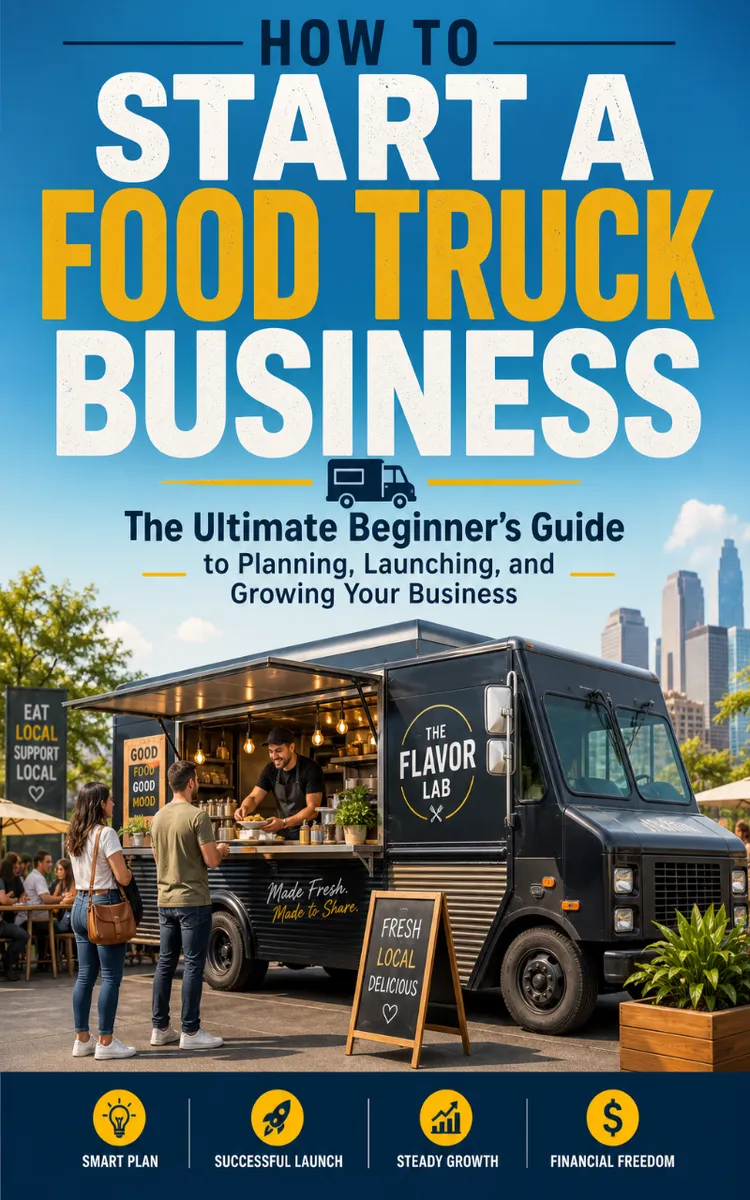
"How to Start a Food Truck Business" is a how-to guide book by Rob Thomas with 20 chapters and approximately 44,328 words. Launching and operating a profitable food truck business.
This book was created using Inkfluence AI, an AI-powered book generation platform that helps authors write, design, and publish complete books. It was made with the AI Ebook Generator.
Frequently Asked Questions
What is "How to Start a Food Truck Business" about?
Launching and operating a profitable food truck business
How many chapters are in "How to Start a Food Truck Business"?
The book contains 20 chapters and approximately 44,328 words. Topics covered include Introduction to Food Truck Basics, Is a Food Truck Right for You?, Choosing a Profitable Food Truck Concept, Market Research and Customer Insights, and more.
Who wrote "How to Start a Food Truck Business"?
This book was written by Rob Thomas and created using Inkfluence AI, an AI book generation platform that helps authors write, design, and publish books.
How can I create a similar how-to guide book?
You can create your own how-to guide book using Inkfluence AI. Describe your idea, choose your style, and the AI writes the full book for you. It's free to start.
Write your own how-to guide book with AI
Describe your idea and Inkfluence writes the whole thing. Free to start.
Start writingCreated with Inkfluence AI


