
Read the first chapter
The whole of chapter one, free. About 3 min. Turn the pages with the arrows, your keyboard, or a swipe.
Chapter 1
Meet the Inner Crowd
Chapter 1: Meet the Inner Crowd
The afternoon felt both cozy and annoying at the same time.
Cozy, because the sun was doing its warm, golden thing through the window.
Annoying, because Milo’s homework sat on the table like a sleepy monster. It didn’t bite. It just stared.
“Just ten minutes,” Milo mumbled, opening his math workbook.
And then it happened.
Inside Milo, two ideas started talking at the same time.
One voice popped up like a bubble: “Play first! You can’t even think straight without fun.”
The other voice sounded more like a teacher from a poster: “Do your homework. If you don’t, you’ll fall behind and feel terrible later.”
Milo tried to focus. Pencil in hand. Eyes on the page.
But the play voice kept bouncing around, loud and bright:
“What about the blocks? Or the game on your tablet? Or just jumping around for a second?”
The homework voice answered, steady and stern:
“Finish the problems. Then you can have a break. Trust the plan.”
Milo’s brain felt like a room full of people arguing. Not mean people. Just busy ones, all talking at once.
“Why can’t I just decide?” Milo whispered to himself.
Then, as if his thoughts had overheard him, something inside Milo shifted.
It wasn’t a magic switch. It was more like turning down the volume on a noisy crowd.
Milo took a deep breath and said, out loud, “Okay. I hear you.”
He looked at his math page and tried a new trick.
“ Play Person,” he announced, pointing at the air with his pencil, “you want fun.”
The play voice didn’t vanish. It just felt… named.
“And Homework Person,” Milo continued, “you want me to finish so I can feel okay later.”
For a moment, the arguing got quieter. Not because one person won right away. But because Milo stopped treating the whole mess like it was one big scary problem with him.
Instead, it felt like a situation inside him. Like a group of inner helpers with different jobs and different timing.
Milo tried something else. He made a tiny plan, like a peace treaty.
“Homework Person,” Milo said, “we’ll do three problems. Then we get a five-minute break.”
He waited. The homework voice was still serious, but it softened a little.
“Fine,” it seemed to say.
“Play Person,” Milo added, “you can come back after the three problems. No running off early.”
The play voice grumbled, but it also agreed, because it liked knowing when it would get its turn.
So Milo did three problems.
He didn’t do them perfectly. A couple answers were shaky. But he kept going.
And something surprising happened.
When he finished the third one, the homework monster did not disappear. But it shrank. It became smaller and more manageable, like a cloud that finally moves away.
Milo looked at the clock.
“Five minutes,” he reminded himself.
He stood up, stretched, and played with his blocks for a while. The play voice sounded happier now, like it had been heard.
Then, when the five minutes ended, Milo returned to the workbook.
This time, the voices didn’t disappear. They were still there.
But Milo could tell them apart.
He could see the inner crowd for what it was: not a personal flaw, not a broken kid, not a “something’s wrong with me” problem.
It was just competing ideas inside him, trying to protect what mattered to him in different ways.
And Milo realized something important:
When you name the parts of the crowd, the crowd gets less scary. And when you make a small plan, you can move forward even while the voices argue.
He wrote the next heading on the page.
“ Homework Person,” Milo said quietly, “we’re still working.”
And somewhere inside, the inner crowd leaned in instead of shouting.
Quick Takeaways
• Inner conflict can feel personal, but it often is not a moral flaw.
• Your mind may have different “parts” with different goals.
• Naming the parts (Play Person, Homework Person) makes conflict easier to handle.
• A small plan helps you move forward even when both voices show up.
Try This Right Now (Tiny Action)
Next time you feel “stuck” between two ideas, say:
• “I hear the __ person.” (Fill in the idea: play, worry, perfection, comfort, etc.)
• “I hear the __ person.”
• “We’ll do one small step first.”
Milo didn’t magically become one voice.
He became a leader of the crowd.
End of chapter one. 12 more chapters in the full book.
Swipe or use the arrows to turn the page


What's inside: 13 chapters
- 1. Meet the Inner Crowd
- 2. Give Each Feeling a Name
- 3. Spot the Feelings’ Messages
- 4. The Peace Plan Choice
- 5. When the Crowd Gets Loud Again
- 6. Quieting the Echoes
- 7. He remembered the last plan
- 8. The Friendly Check-In
- 9. Small Steps, Big Listening
- 10. Gentle Bench Decisions
- 11. Quieting the Little Echoes
- 12. The Quiet Guide
- 13. Quiet Crowds, Quiet Nights
About this book
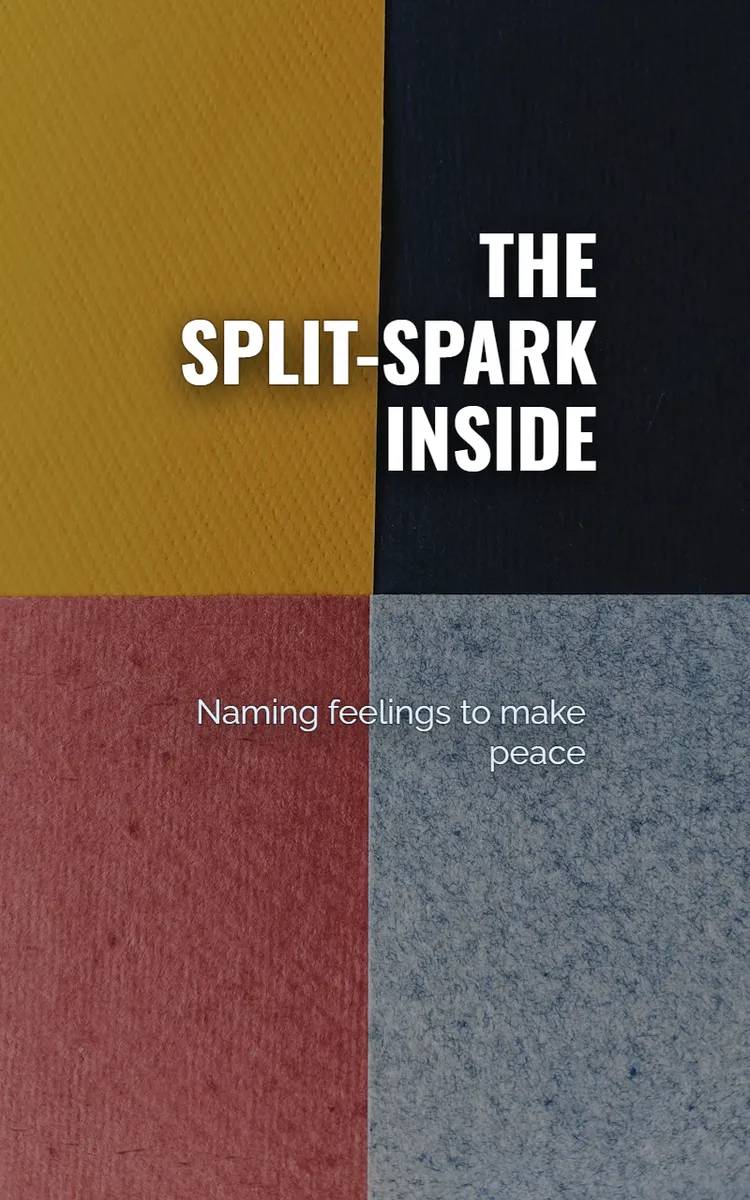
"The Split-Spark Inside" is a children's book by Timothy Phiri with 13 chapters and approximately 12,214 words. A comforting children’s story that teaches kids to notice inner “characters,” name them clearly, and turn inner bickering into calmer choices..
This book was created using Inkfluence AI, an AI-powered book generation platform that helps authors write, design, and publish complete books. It was made with the AI Children's Book Creator.
Frequently Asked Questions
What is "The Split-Spark Inside" about?
A comforting children’s story that teaches kids to notice inner “characters,” name them clearly, and turn inner bickering into calmer choices.
How many chapters are in "The Split-Spark Inside"?
The book contains 13 chapters and approximately 12,214 words. Topics covered include Meet the Inner Crowd, Give Each Feeling a Name, Spot the Feelings’ Messages, The Peace Plan Choice, and more.
Who wrote "The Split-Spark Inside"?
This book was written by Timothy Phiri and created using Inkfluence AI, an AI book generation platform that helps authors write, design, and publish books.
How can I create a similar children's book?
You can create your own children's book using Inkfluence AI. Describe your idea, choose your style, and the AI writes the full book for you. It's free to start.
Write your own children's book with AI
Describe your idea and Inkfluence writes the whole thing. Free to start.
Start writingCreated with Inkfluence AI


