

Table of Contents
- 1. Foundations of Grace-Based Parenting
- 2. Understanding Discipline in a Christian Context
- 3. The Parent’s Daily Altar: Cultivating Personal Grace
- 4. Building Healthy Habits Through Grace
- 5. De-escalating Tantrums & Power Struggles
- 6. Transforming Defiance into Cooperation
- 7. Managing Sibling Rivalry & Conflicts
- 8. Guiding Emotional Regulation & Anxiety
- 9. Chapter 9: Grace in the Digital Age
- 10. Navigating Complex Family Dynamics
- 11. Transitioning Grace for Tweens and Teens
- 12. Cultivating Rest: The Family Sabbath and Escaping Hustle Culture
- 13. Guiding Children Through Peer Pressure and Secular Influences
- 14. Teaching Financial Stewardship and Generosity
- 15. Extending Grace During Major Life Transitions
- 16. Launching Young Adults with Faith and Freedom
- 17. Master Appendix: The Pocket Tool Index
Preview: Foundations of Grace-Based Parenting
A short excerpt from “Foundations of Grace-Based Parenting”. The full book contains 17 chapters and 24,566 words.
"Or do you show contempt for the riches of his kindness, forbearance and patience, not realizing that God’s kindness is intended to lead you to repentance?" > - Romans 2:4
1. Theological & Behavioral AnchorParenting in moments of high stress often exposes our deepest human instincts: the desire for immediate control, the urge to raise our voices, and the reliance on fear to enforce compliance. Yet, when we look at the posture of God toward His children, we see a radically different model of discipline.
God does not coerce us into righteous living through intimidation or terror; rather, as the Apostle Paul reminds us in Romans 2:4, it is God’s kindness that leads us to true, heart-level repentance. Human anger and fear-based control may yield immediate behavioral modification, but they fail to transform the human heart.
HIGH WARMTH │ Permissive│ Grace-Based Parenting │ Parenting │ (Authoritative) ────────────┼──────────── HIGH BOUNDARIES Neglectful│ Authoritarian Parenting │ Parenting │ (Fear-Based) LOW WARMTH
The Neurobiology of Discipline: Amygdala vs. Prefrontal CortexChild development and modern neuroscience confirm what Scripture has long taught: fear is a terrible teacher. When a child experiences authoritarian discipline-characterized by yelling, physical intimidation, or harsh isolation-their brain perceives an immediate threat to their safety and relational connection.
The Amygdala (Fight, Flight, or Freeze): When a child is threatened, the brain's alarm system-the amygdala-takes control. Cortisol and adrenaline flood the nervous system. Compliance achieved in this state is not a moral realization; it is a neurological survival mechanism driven by fear.
The Prefrontal Cortex (Executive Function & Moral Learning): True learning, moral reasoning, empathy, and long-term behavioral regulation occur in the prefrontal cortex. However, the prefrontal cortex cannot engage when the amygdala is in a state of high arousal.
To teach a child self-control, wisdom, and righteousness, a parent must first create a state of relational safety. Connection quiets the amygdala, allowing the prefrontal cortex to online, process moral instruction, and internalize values.
Defining Grace-Based ParentingGrace-Based Parenting sits at the precise intersection of High Warmth and Firm, Consistent Boundaries.
Important Clarification: Grace is not permissiveness. Permissiveness is high warmth without boundaries, which leaves a child feeling unsafe and unanchored. Authoritarianism is high boundaries without warmth, which breeds resentment and fear. Grace-based discipline maintains unshakeable, firm boundaries while surrounding the child with unconditional love, emotional presence, and empathy.
2. Actionable Playbook & TechniquesTechnique 1: The Connection-Before-Correction RuleThe primary goal of grace-based discipline is to lower a child’s neurological arousal so their rational brain can receive guidance. When a child breaks a boundary or throws a meltdown, execute the Connection-Before-Correction Rule using three distinct physical and emotional steps.
Step-by-Step ExecutionPhysical Descent: Lower your body physical height immediately. Get down to the child’s eye level-sit on the floor, kneel, or crouch down. Removing your physical dominance signals to the child's nervous system that you are a protector, not a threat.
The Empathy Bridge: Verbally validate their internal emotional state before offering a single word of correction or discipline. Name the emotion they are experiencing to help them feel seen and understood.
The Gentle Touch: Place a reassuring, gentle hand on their shoulder, hold their hands, or pull them into a quiet embrace. Safe physical touch releases oxytocin, regulates their heart rate, and co-regulates their dysregulated nervous system.
Scripted Dialogue: High-Stress Toy ConflictScenario: A 3-year-old child (Noah) violently snatches a toy truck from his friend and yells, "Mine!" when asked to share.
Phase
Reactive / Fear-Based Approach
Grace-Based Connection Approach
Initial Reaction
Parent towers over child, snatches toy back, and yells: "Noah! We do not grab! You are being mean. Go sit in time-out right now!"
Parent kneels to eye level, gently holds Noah's hands, and places a soothing hand on his arm.
Internal Brain State
Noah's amygdala fires. He feels threatened, isolated, and angry. He cries harder out of frustration, learning nothing about sharing.
Noah's nervous system begins to co-regulate with the parent's calm presence. His prefrontal cortex engages.
Dialogue Executed
"Stop crying or you won't get any dessert tonight! You need to learn to share!"
(Empathy Bridge): "Noah, I see that you really want to play with that blue truck right now. It is hard to wait when you want a turn."
(Firm Boundary): "However, grabbing toys out of a friend's hands hurts them. We do not snatch."
...
About this book
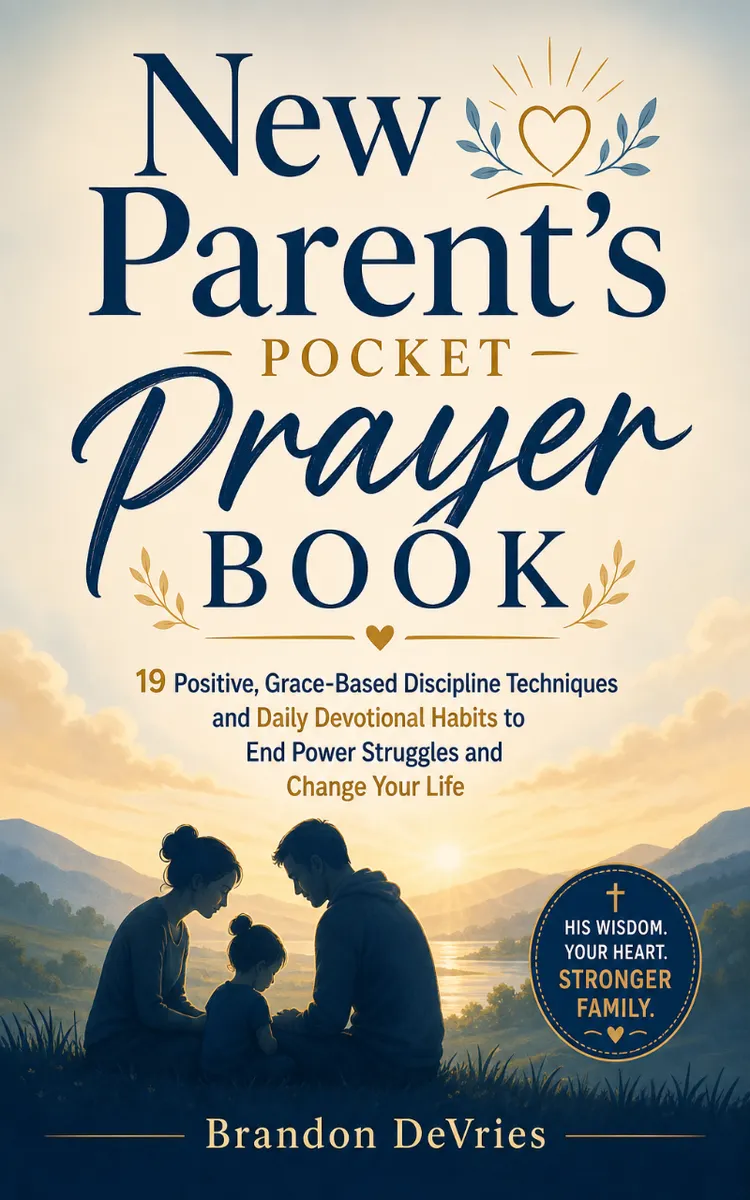
"New Parent's Pocket Prayer Book" is a general book by Brandon DeVries with 17 chapters and approximately 24,566 words. It covers key insights and practical takeaways on the topic.
This book was created using Inkfluence AI, an AI-powered book generation platform that helps authors write, design, and publish complete books.
Frequently Asked Questions
What is "New Parent's Pocket Prayer Book" about?
"New Parent's Pocket Prayer Book" is a general book by Brandon DeVries covering key insights and practical takeaways on the topic.
How many chapters are in "New Parent's Pocket Prayer Book"?
The book contains 17 chapters and approximately 24,566 words. Topics covered include Foundations of Grace-Based Parenting, Understanding Discipline in a Christian Context, The Parent’s Daily Altar: Cultivating Personal Grace, Building Healthy Habits Through Grace, and more.
Who wrote "New Parent's Pocket Prayer Book"?
This book was written by Brandon DeVries and created using Inkfluence AI, an AI book generation platform that helps authors write, design, and publish books.
Write your own book with AI
Describe your idea and Inkfluence writes the whole thing. Free to start.
Start writingCreated with Inkfluence AI


