
Read the first chapter
The whole of chapter one, free. About 5 min. Turn the pages with the arrows, your keyboard, or a swipe.
Chapter 1
The Invitation: Learning to Listen
Scripture Focus
Matthew 13:13-16
> “This is why I speak to them in parables: > ‘Though seeing, they do not see; > though hearing, they do not hear or understand.’ > In them is fulfilled the prophecy of Isaiah: > ‘You will be ever hearing but never understanding; > you will be ever seeing but never perceiving. > For this people’s heart has become calloused; > they hardly hear with their ears, > and they have closed their eyes. > Otherwise they might see with their eyes, > hear with their ears, > understand with their hearts > and turn, and I would heal them.’ > But blessed are your eyes because they see, and your ears because they hear.”
Jesus used familiar stories to invite more than attention; he invited a willing heart that could hear God’s truth beneath ordinary words.
A seed scattered across a field. A lamp set on a stand. A neighbor knocking at midnight. These scenes sound simple because they come from daily life. Yet when Jesus spoke about them, the familiar became a doorway. His listeners weren’t being handed puzzles for the sake of puzzles. They were being invited to listen closely and notice what God was revealing.
Reflection
Jesus taught in parables because truth often reaches us best through a story we can carry. A command may be remembered for a moment, but a story can stay with us while we work, drive, wash dishes, or lie awake at night. The image returns at just the right time. A buried treasure may make us ask what we truly value. A lost sheep may help us receive God’s patient care. A divided house may uncover the cost of living with a divided heart.
Still, parables don’t work like simple slogans. They ask us to slow down. Jesus sometimes explained a parable to His disciples, but He also allowed the stories to remain open long enough for people to respond. Two listeners could hear the same account and notice different things. One might focus on the seed. Another might recognize the crowded soil of a distracted life. The point isn’t that every interpretation is equally sound. The point is that listening is part of discipleship. We bring the story before God, examine our response, and allow Scripture to correct what we’ve assumed.
That matters in ordinary life. We can read the Parable of the Sower while checking messages between tasks and still miss its central concern: what kind of soil is receiving the word? We can admire the Good Samaritan and overlook the neighbor whose need interrupts our schedule. We can hear the story of the prodigal son and identify with the younger brother, while the older brother’s resentment quietly describes us. Familiarity can make us careless. A familiar parable is not an old message; it is a living invitation to listen again.
Listening with an open heart doesn’t mean setting aside wisdom or asking no questions. It means coming honestly. We can say, “Lord, show me where this story touches my life.” We can notice where we resist, where we feel comforted, and where we’d rather keep the lesson aimed at someone else. The parables often reveal God’s mercy, but they also reveal us. That discovery need not lead to shame. Jesus tells the truth so that we can turn toward healing, freedom, and a deeper trust in God.
The phrase “those who have ears, let them hear” appears again and again in Jesus’ teaching. It’s not a compliment reserved for people with perfect understanding. It’s an invitation to remain teachable. We may not grasp everything in one reading. We may need to return to the passage after a difficult conversation, a season of work, or a change in our family. Scripture meets us in changing circumstances. The words stay steady, while our questions become clearer.
So why did Jesus teach in parables? He used stories to make the kingdom of God visible in common things, to reveal truth to those who genuinely sought it, and to expose the difference between hearing words and receiving them. A parable doesn’t merely ask, “What does this mean?” It also asks, “What is God asking me to see, trust, or practice today?”
Practice for Today
1. Read one parable slowly three times. Choose Matthew 13:1-23, the Parable of the Sower. Read it once for the main action, a second time for repeated words, and a third time while asking where you see yourself in the four kinds of soil. Don’t rush to explain every detail. Notice the response to the seed.
2. Journal for ten minutes. Write about this question: What makes it difficult for me to listen to Jesus with an open heart right now? Be specific. You might write, “I’m carrying so much noise that I read quickly,” or, “I want the parable to correct another person instead of me.” Then add one sentence of willingness: Lord, help me receive what You’re showing me.
3. Practice a short listening prayer. Set a timer for five minutes. Sit without music or a phone nearby. Repeat, “Speak, Lord, for your servant is listening” (1 Samuel 3:9). Read one verse from the parable, then remain quiet. If your mind wanders, return gently to the verse. This isn’t a test of perfect concentration. It’s a small way to make room for God’s word.
As you go through the day, carry one image from the story with you. Let it be the seed, the path, the thorns, or the good soil. When you face a decision or irritation, ask, “What would it look like to receive this word here?” The question connects Bible reading with real life. It turns listening from a morning activity into a way of walking with God.
Closing Prayer
Jesus, give me ears to hear and a heart that stays open. When Your stories feel familiar, keep me from rushing past them. Help me notice what You’re revealing about Your kingdom and about my own life. Give me humility to receive Your word, courage to respond, and trust that Your truth leads me toward healing. Amen.
End of chapter one. 6 more chapters and about 7,282 words in the full book.
Swipe or use the arrows to turn the page


What's inside: 7 chapters
- 1. The Invitation: Learning to Listen
- 2. The Seed: Trusting What God Begins
- 3. The Search: Finding What Matters Most
- 4. The Open Door: Returning to Grace
- 5. The Neighbor: Living Love in Action
- 6. The Foundation: Surrendering to Wisdom
- 7. The Harvest: Hope for the Kingdom
About this book
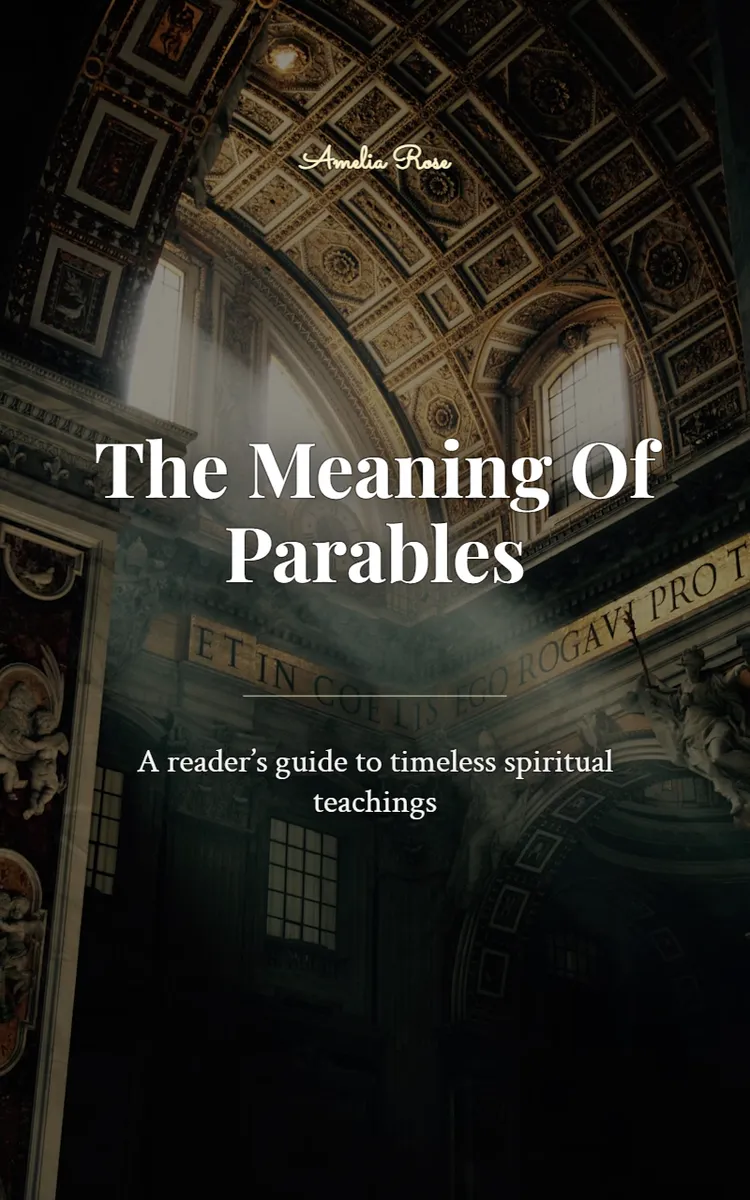
"The Meaning Of Parables" is a religious devotional book by Amelia Rose with 7 chapters and approximately 7,282 words. Interpretations and spiritual meanings of parables.
This book was created using Inkfluence AI, an AI-powered book generation platform that helps authors write, design, and publish complete books.
Frequently Asked Questions
What is "The Meaning Of Parables" about?
Interpretations and spiritual meanings of parables
How many chapters are in "The Meaning Of Parables"?
The book contains 7 chapters and approximately 7,282 words. Topics covered include The Invitation: Learning to Listen, The Seed: Trusting What God Begins, The Search: Finding What Matters Most, The Open Door: Returning to Grace, and more.
Who wrote "The Meaning Of Parables"?
This book was written by Amelia Rose and created using Inkfluence AI, an AI book generation platform that helps authors write, design, and publish books.
Write your own religious devotional book with AI
Describe your idea and Inkfluence writes the whole thing. Free to start.
Start writingCreated with Inkfluence AI


