
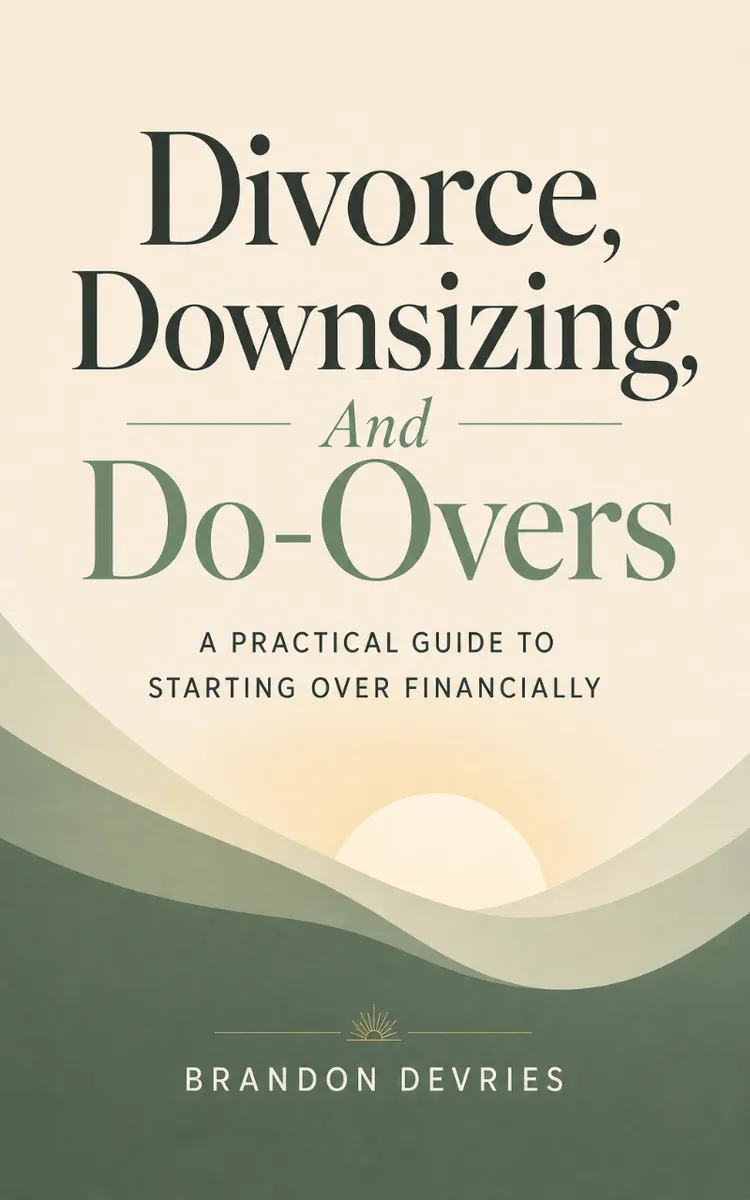

Financial decision-making for housing during divorce and life transitions
Table of Contents
- 1. You Are Not Behind
- 2. The Three Housing Money Traps
- 3. Keep, Sell, or Rent Decision Lenses
- 4. First-Year Money Rebuild Essentials
Preview: You Are Not Behind
A short excerpt from “You Are Not Behind”. The full book contains 4 chapters and 8,653 words.
You Are Not Behind When the Numbers Feel Like They’re Moving Faster Than You
If you feel behind right now, you are not alone. Many people go from “we have a plan” to “I have to decide today” and then try to make sense of money while their life is still rearranging itself. In the middle of divorce, housing decisions can feel like a deadline you cannot move, even when you do not have the full picture yet. And when you do not have the full picture, your brain starts filling in gaps with worst-case stories. That is normal.
Here is the part that matters: housing decisions during divorce usually fail for one of two reasons. Either people rush because they feel pressured, or they make a decision based on one number instead of the full set of costs. Neither reason means you made a “bad character” choice. It means you got handed a hard decision with too little time and too much emotion.
You might be thinking, “I should have known sooner.” Or, “Other people seem so put-together.” But who actually looks put-together while they are deciding whether to keep the house, sell it, or rent it out? Most people do not post the messy calculations. They only show the outcome. So you compare your behind-the-scenes to someone else’s highlight reel, and your confidence takes a hit.
Let’s name a real moment you might recognize. You open a bill, you see an amount that looks familiar but suddenly feels bigger because your income changed. Then you look at the house, and you feel two kinds of pressure at once. One is financial. The other is personal. You want stability, you want fairness, and you want to avoid regrets. How do you make a clean decision when your heart and your bank account feel like they are arguing?
That is where this book’s tone and structure help. This ebook specializing in financial and life-transition nonfiction, titled “Divorce, Downsizing, and Do-Overs: A Practical Guide to Starting Over Financially,” is built for the exact problem you are carrying right now: you need clear steps, not vague reassurance. You do not need to be perfect. You need to know what to look at first so you can stop spiraling.
If you keep one idea in your pocket, make it this: you are not behind. You are in the middle of a complicated transition, and you can still catch up by resetting your process. We will walk you through a simple loop called the Reset-First Reassurance Loop. The goal is not to “feel better” for the sake of feeling better. The goal is to get your decisions out of panic mode and into numbers mode, without pretending the emotions do not exist.
And yes, you will still have to make choices. But you will make them with a clearer head and a tighter plan, one step at a time. That is how you protect your future, even when today feels chaotic. Keep reading, because the next section will help you spot the traps that make people feel behind, so you can avoid stepping into them.
The Reset-First Reassurance Loop for Housing Decisions You Can Actually Live With
When life changes, your mind often tries to solve it with urgency. You may feel like you need to lock in housing immediately, even if you do not have your income picture stabilized yet. That urgency can push you toward decisions that feel decisive but cost you later. So you need a reset that works in the real world, not just in theory.
The Reset-First Reassurance Loop is a short routine you can use before you make any major housing move. You do it to interrupt the “rush and regret” pattern. You do it to make sure you answer the question that matters most: “What do I need to know before I commit?”
Start with reassurance that is grounded in reality. Ask yourself one question: “What do I know for sure right now?” Then list what you know about income timing, housing responsibilities you still carry, and what bills you already pay each month. You do not need every detail. You need enough clarity to stop guessing.
Next, reset your focus to the next decision you can actually control. Instead of asking, “Should I keep, sell, or rent?” ask, “What is my very next concrete step to get better numbers?” You can call it gathering data, but keep it simple. You are building a small bridge from emotion to information.
Then you repeat the loop whenever you feel yourself drifting back into panic. That panic shows up in familiar ways. You might feel restless, you might refresh your inbox too often, or you might keep re-reading the same message hoping it will suddenly make sense. When you catch that pattern, you reset again. You return to what you know, what you can do next, and what you still need to confirm.
This loop also helps you separate two things that often get tangled. Your grief or anger about the breakup deserves space. But it does not have to drive your housing math. You can acknowledge the emotional truth while you still run the financial checklist.
...
About this book
"Divorce, Downsizing, And Do-Overs" is a how-to guide book by Brandon DeVries with 4 chapters and approximately 8,653 words. Financial decision-making for housing during divorce and life transitions.
This book was created using Inkfluence AI, an AI-powered book generation platform that helps authors write, design, and publish complete books. It was made with the AI Ebook Generator.
Frequently Asked Questions
What is "Divorce, Downsizing, And Do-Overs" about?
Financial decision-making for housing during divorce and life transitions
How many chapters are in "Divorce, Downsizing, And Do-Overs"?
The book contains 4 chapters and approximately 8,653 words. Topics covered include You Are Not Behind, The Three Housing Money Traps, Keep, Sell, or Rent Decision Lenses, First-Year Money Rebuild Essentials.
Who wrote "Divorce, Downsizing, And Do-Overs"?
This book was written by Brandon DeVries and created using Inkfluence AI, an AI book generation platform that helps authors write, design, and publish books.
How can I create a similar how-to guide book?
You can create your own how-to guide book using Inkfluence AI. Describe your idea, choose your style, and the AI writes the full book for you. It's free to start.
Write your own how-to guide book with AI
Describe your idea and Inkfluence writes the whole thing. Free to start.
Start writingCreated with Inkfluence AI


