

Read the first chapter
The whole of chapter one, free. About 7 min. Turn the pages with the arrows, your keyboard, or a swipe.
Chapter 1
Defining Burnout Coaching
Why the Boundary Matters
What should you do when a client says, “I cannot get out of bed, I have stopped eating, and I wonder whether God wants me here”? Your answer must protect the client, honor your calling, and keep you from practicing outside your training.
Burnout coaching sits near counseling and pastoral care, but it does not replace either one. A coach helps a client understand present pressures, choose wise actions, and build sustainable patterns. A counselor assesses and treats mental-health conditions. A pastor provides spiritual leadership, biblical care, prayer, and help within a church community. These roles can support one another, but they require different training, agreements, and limits.
Clear boundaries solve two problems. They prevent a coach from treating depression, trauma, addiction, or crisis without proper preparation. They also prevent a coach from reducing spiritual questions to productivity advice. Scripture gives coaches a sound starting point: “The purposes of a person’s heart are deep waters, but one who has insight draws them out” (Proverbs 20:5). Your task involves careful questions, not quick control. By the end of this section, you should know how to explain your role, recognize when to refer, and use the Clear Calling Boundary Map to guide safe decisions.
The Clear Calling Boundary Map
Burnout means a sustained pattern of physical, emotional, and mental exhaustion connected to ongoing demands, often accompanied by reduced effectiveness and growing distance from work, ministry, or responsibilities. A difficult week does not automatically equal burnout. Coaching begins by examining the pattern, the pressures, and the client’s current ability to function.
Life-transition coaching supports a person during a significant change such as a job loss, ministry shift, marriage change, relocation, caregiving season, or return to work. The coach helps the client clarify values, grieve appropriate losses, make decisions, and create next steps. The coach does not promise certainty or claim to reveal God’s private direction.
Use the Clear Calling Boundary Map in five steps:
1. Name the presenting concern. Ask, “What has changed, and what result do you want from coaching?” This separates a coaching goal from a request for diagnosis or treatment.
2. Check safety and function. Ask about sleep, eating, work attendance, substance use, self-harm thoughts, and immediate danger. These questions matter because severe impairment or danger requires more than coaching.
3. Clarify your role. State, “I provide Christian coaching for burnout recovery and life transitions. I do not diagnose or treat mental-health conditions, provide emergency care, or replace pastoral or medical support.” Clear language prevents confusion later.
4. Choose the right support. Continue coaching when the client can participate safely and wants practical change. Add a pastor, physician, licensed counselor, or crisis service when the concern exceeds your scope.
5. Set a measurable coaching agreement. Record the goal, meeting frequency, communication limits, fees, confidentiality limits, referral plan, and signs that require review. A written agreement protects both people and gives the work a clear finish line.
Christian psychology views people as whole persons with body, mind, relationships, choices, and spiritual life. Scripture supports this whole-person view. Elijah needed food, sleep, and God’s presence before he could face his next assignment (1 Kings 19:1-18). Jesus also invited exhausted disciples to rest: “Come with me by yourselves to a quiet place and get some rest” (Mark 6:31). These passages do not authorize a coach to treat every problem. They remind you to consider physical care, spiritual meaning, relationships, and practical limits together.
Coaching questions should lead toward responsible action. Ask, “Which demand drains you most?” “What boundary would protect your health this week?” and “Who should join your support team?” Avoid declaring, “God told me you must leave your job.” James 1:5 encourages people to ask God for wisdom, while Romans 12:2 points toward renewed thinking and discernment. Your role supports that process without taking God’s place.
Applying the Map With a Client
Consider a client who reports six months of ministry overload, sleeps five hours most nights, misses meals, and wants to resign immediately. Apply the map in this order:
1. Begin with a 20-minute intake. Record the client’s main concern, current responsibilities, recent changes, support system, and desired outcome. Expected result: you can describe the coaching issue in one sentence, such as, “The client needs a safe workload decision and a recovery routine.”
2. Complete a safety screen. Ask directly whether the client has thoughts of self-harm, feels unable to stay safe, uses alcohol or drugs to cope, or cannot manage basic daily needs. Expected result: you identify whether coaching can begin. If the client reports immediate danger, stop the coaching process and connect the client with emergency services or a qualified crisis resource in the client’s location.
3. Explain the three-role distinction. Say, “Coaching will address choices, boundaries, routines, and transition decisions. A licensed counselor can assess emotional symptoms. Your pastor can provide spiritual care and church support.” Ask the client to identify one counselor or medical professional and one trusted church leader. Expected result: the client receives a support network instead of depending on one coach.
4. Write a four-week coaching agreement. Meet once weekly for 50 minutes. Set the first goal: increase sleep from five hours toward seven by reviewing evening duties and removing two nonessential commitments. Set the second goal: prepare a resignation-or-restructure decision using written criteria rather than exhaustion alone. Expected result: the client has observable actions, not vague promises.
5. Use Scripture as a lens, not a weapon. Study 1 Kings 19 and discuss rest, fear, physical depletion, and renewed direction. Ask, “What does this passage show about the order of care?” Do not use the passage to promise a particular career decision. Expected result: biblical reflection informs discernment while the client retains responsibility for the decision.
6. Review at week four. Compare sleep records, completed boundaries, energy ratings from 1 to 10, and the client’s decision criteria. If the client remains unable to function, develops worsening symptoms, or requests treatment, pause coaching and refer. Expected result: you either create a new coaching agreement or close responsibly with referrals.
Use a basic intake form, informed-consent form, coaching agreement, session note, referral list, and closing review. Keep notes factual: record the client’s words, agreed actions, and referrals. Do not write diagnoses unless you hold the legal license required to make them. Before serving clients, obtain additional training in burnout, trauma awareness, suicide prevention, ethics, and referral practice. Seek supervision from an experienced coach or licensed professional who understands Christian care.
Price services according to your training, local market, session length, preparation time, and business costs. A new coach might offer a four-session package at $400, or $100 per session, with payment terms stated before the first meeting. Do not promise results in exchange for a fee. Explain cancellations, refunds, email access, and referral limits in writing. Review your price after serving several clients and tracking the actual time required.
Quick checklist
• Define coaching, counseling, and pastoral care in plain language. - Screen for safety, severe impairment, and urgent medical needs. - Use the Clear Calling Boundary Map before setting goals. - Obtain written consent and a signed coaching agreement. - Keep a current list of counselors, physicians, pastors, and crisis resources. - Use Scripture to support discernment, never to control a client. - Set session length, package price, cancellation terms, and communication limits. - Review progress and close or refer when the coaching goal ends.
Mistakes That Blur the Calling
Treating symptoms as a coaching challenge
A client may ask for a productivity plan while describing panic attacks, hopelessness, or inability to complete basic care. A schedule cannot safely address every concern.
Do this: Ask direct safety and function questions, document the concern, and refer to a licensed counselor or medical professional when needed.
Not this: Do not label the client “burned out” and continue coaching because the client paid for a package.
Giving spiritual certainty
Coaches sometimes say, “God is telling you to quit,” or “Your lack of peace proves you are disobedient.” Such statements can pressure vulnerable clients and confuse the coach’s opinion with God’s authority.
Do this: Ask what Scripture, wise counsel, circumstances, responsibilities, and prayer are showing the client. Encourage the client to test decisions with trusted leaders.
Not this: Do not claim prophetic authority or make a major decision for the client.
Using an unclear agreement
Without written terms, clients may expect therapy, unlimited texting, emergency availability, or guaranteed spiritual direction. Confusion often appears when the client becomes distressed.
Do this: Review the agreement aloud before the first session. Include scope, confidentiality limits, fees, cancellations, records, communication hours, referrals, and closure.
Not this: Do not rely on a friendly verbal promise or assume the client understands “Christian coaching.”
The central boundary is simple: coach what coaching can responsibly address, refer what requires another profession, and coordinate care with the client’s permission. When you hold that boundary, you create room for practical change, wise spiritual discernment, and safer service. The next steps in Christian burnout coaching depend on this foundation: before you guide a client through recovery, you must know exactly where your responsibility begins and where it ends.
End of chapter one. 7 more chapters and about 14,841 words in the full book.
Swipe or use the arrows to turn the page


What's inside: 8 chapters
- 1. Defining Burnout Coaching
- 2. Recognizing Burnout and Transitions
- 3. Building a Safe Coaching Practice
- 4. Training, Credentials, and Supervision
- 5. Designing the Client Coaching Journey
- 6. Using Scripture Without Spiritual Bypassing
- 7. Contracts, Forms, and Session Tools
- 8. Pricing and Sustaining Your Practice
About this book
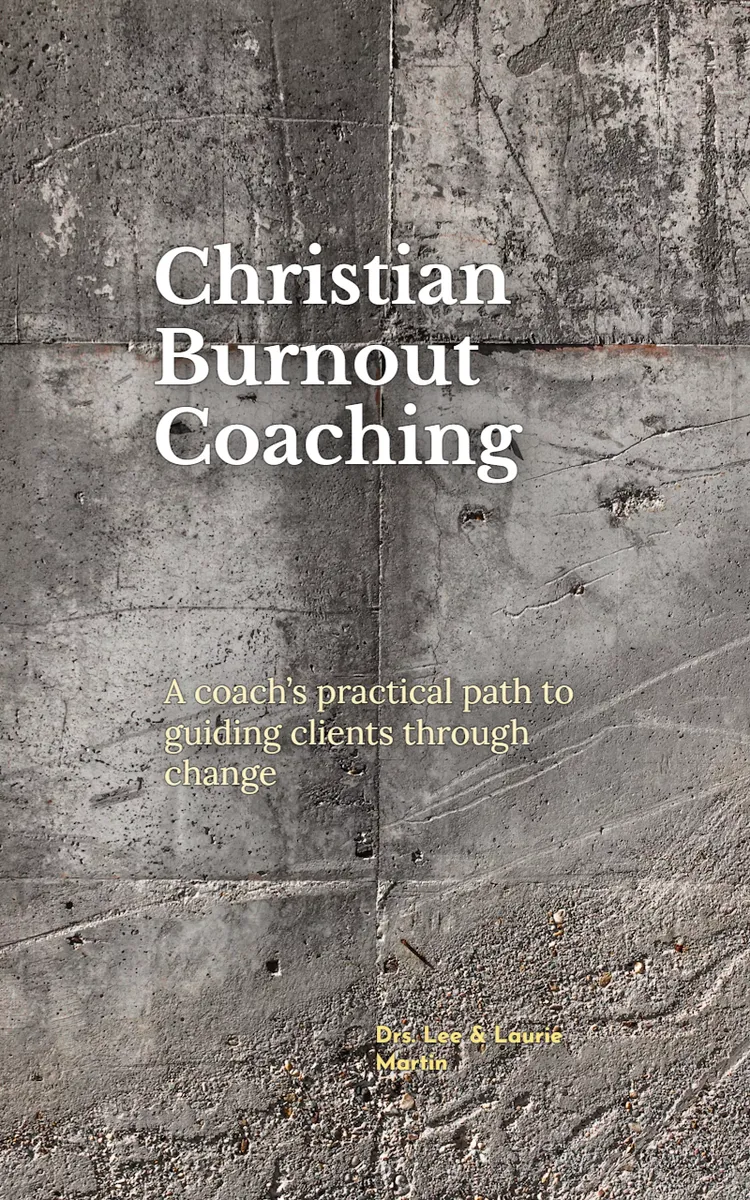
"Christian Burnout Coaching" is a how-to guide book by Drs. Lee & Laurie Martin with 8 chapters and approximately 14,841 words. Step-by-step Christian coaching training for burnout and life transitions.
This book was created using Inkfluence AI, an AI-powered book generation platform that helps authors write, design, and publish complete books. It was made with the AI Ebook Generator.
Frequently Asked Questions
What is "Christian Burnout Coaching" about?
Step-by-step Christian coaching training for burnout and life transitions
How many chapters are in "Christian Burnout Coaching"?
The book contains 8 chapters and approximately 14,841 words. Topics covered include Defining Burnout Coaching, Recognizing Burnout and Transitions, Building a Safe Coaching Practice, Training, Credentials, and Supervision, and more.
Who wrote "Christian Burnout Coaching"?
This book was written by Drs. Lee & Laurie Martin and created using Inkfluence AI, an AI book generation platform that helps authors write, design, and publish books.
How can I create a similar how-to guide book?
You can create your own how-to guide book using Inkfluence AI. Describe your idea, choose your style, and the AI writes the full book for you. It's free to start.
Write your own how-to guide book with AI
Describe your idea and Inkfluence writes the whole thing. Free to start.
Start writingCreated with Inkfluence AI


