

Read the first chapter
The whole of chapter one, free. About 8 min. Turn the pages with the arrows, your keyboard, or a swipe.
Chapter 1
Energy Budgeting for Busy Days
Stop Treating Every Hour as Equal
A shop owner once noticed that the hardest part of his day was not the work itself. It was the timing. By late afternoon, he was answering simple messages twice, putting off estimates, and making small mistakes that created more work the next morning. He had plenty of hours on paper. He did not have the same amount of usable energy in every hour.
That distinction matters. A demanding task at your best time may take forty minutes. The same task during your low point may stretch across two hours, with more frustration and poorer decisions. Energy budgeting means tracking where your energy goes, noticing when your capacity is naturally higher or lower, and matching work to the right part of the day.
Who this is for: busy adults who need to make decisions, solve problems, move their bodies, care for others, or run a business without treating exhaustion as a personal failure. The likely benefits are practical: fewer avoidable energy crashes, better timing for demanding work, clearer boundaries around recovery, and a more honest plan for the day.
You do not need to control every hour. You need to stop spending your best energy by accident. The tool for that is the Daily Energy Ledger: a simple record of energy in, energy out, and the times when you can handle more or less demand. Start with observation, not judgment. At the end of today, ask yourself: Which task used the most energy, and when was I actually at my best?
Why Energy Changes Across the Day
Energy is not a fixed tank that empties at a steady rate. It shifts with sleep, food, movement, stress, light, workload, and the body’s internal timing system. Your circadian rhythm, the roughly 24-hour pattern that influences alertness and sleepiness, helps explain why you may feel sharp in the morning, steady around midday, or slow in the late afternoon. Another person may have a different pattern.
Mental effort also counts. A difficult conversation, a long drive, customer complaints, constant interruptions, and careful physical work all draw from the same limited ability to stay focused and make sound decisions. Switching between tasks adds friction. Ten short interruptions can leave you more drained than one uninterrupted block of work, even when the clock shows the same total time.
The main causes of uneven energy usually fall into several groups:
1. Recovery: Short or broken sleep can reduce attention, patience, and physical readiness the next day. A single poor night may affect you temporarily; repeated short sleep deserves attention rather than heroic workarounds. 2. Fuel and hydration: Long gaps between meals, meals that do not keep you satisfied, and too little fluid can make concentration harder. Caffeine may improve alertness for a while, but it does not replace sleep. 3. Demand: Heavy lifting, intense exercise, prolonged concentration, emotional strain, and frequent decision-making all cost energy. A day with fewer visible tasks can still be demanding if every task requires judgment. 4. Timing and environment: Bright light late at night, a stuffy workspace, noise, heat, and an awkward schedule can affect alertness and recovery. Travel, shift work, and caregiving can make patterns less predictable.
This is why “I have eight hours” is a weak plan. Eight hours of steady, usable capacity is not guaranteed. A better plan separates high-demand work from low-demand work and leaves room for recovery before you reach the point of making poor choices.
Use a simple scale in your ledger. Rate your usable energy from 1 to 5 at three points: within an hour of waking, around the middle of your workday, and in the late afternoon or evening. A rating of 5 means you can handle complex work with reasonable focus. A rating of 1 means basic tasks feel unusually difficult. This is not a medical test. It is a planning signal.
Also record what happened before each rating. Note sleep duration and quality, your first meal, caffeine timing, movement, and the most demanding task completed. After seven days, look for repeated patterns rather than one unusual day. If your energy is consistently very low, changes suddenly, or comes with symptoms such as chest pain, fainting, severe shortness of breath, new confusion, or weakness on one side, seek urgent medical help. For ongoing fatigue, persistent sleep problems, or a major change in functioning, arrange an evaluation with a licensed health professional.
The takeaway is straightforward: energy has a pattern, and patterns can guide better timing. Before changing your whole routine, collect enough information to see what is actually happening.
Build Your Daily Energy Ledger
Keep the Daily Energy Ledger for fourteen days. Use a notebook, phone note, or spreadsheet. Do not build a complicated tracking system that becomes another job. Each day, record five things:
• Your sleep and wake times, plus a simple sleep-quality rating from 1 to 5. - Your energy rating from 1 to 5 at three set times. - The task that used the most energy. - A short note on food, fluids, caffeine, movement, and major interruptions. - Your planned high-demand work and whether you completed it during a high-energy period.
The first seven days are for observation. Do not force a new schedule yet. If you usually answer messages first thing, keep doing it while noting how you feel. If you train after work, record whether the session leaves you refreshed, neutral, or depleted. Accuracy matters more than looking disciplined.
During the second week, make one timing change. Place one demanding task inside your most reliable high-energy window. If your ratings show 4 or 5 between 8:00 and 11:00 a.m., use that period for writing, estimates, difficult calls, planning, or technical work. Move routine email, filing, errands, and simple admin to a lower-energy period. If your peak arrives later, use the same rule at that time.
Protect the window for at least five workdays before judging it. Begin with one high-demand block of 45 to 90 minutes, followed by 10 to 15 minutes away from the task. Stand up, get water, step outside, or look across the room. The break is not a reward for finishing everything. It is part of the budget.
When a task is physically demanding, plan the recovery cost as well as the task itself. A two-hour installation, workout, or delivery route may require a lighter period afterward. Do not place a difficult meeting immediately after heavy physical work simply because the calendar has an empty space. The space may be empty; your capacity may not be.
Use this weekly review:
| Question | What to look for | |---|---| | When were your highest three ratings? | A repeatable high-energy window | | Which tasks drained you most? | Mental, physical, emotional, or interruption-heavy work | | What happened before your lowest rating? | Short sleep, long food gap, poor setting, or overloaded schedule | | Which tasks improved with better timing? | Work worth protecting in your peak period | | What should move to a lower-demand period? | Routine work that does not need your best attention |
Progress in the Daily Energy Ledger should be modest. After two weeks, keep one useful change. After four weeks, consider adding a second, such as grouping calls together or reserving the final hour for closing tasks rather than complex decisions. Do not redesign your entire life from one tired Tuesday.
Energy budgeting also needs a safety margin. Leave 20 to 30 minutes unassigned in a typical workday when possible. This space absorbs delays, unexpected calls, and the normal slowdown that comes with sustained effort. A schedule packed to the minute assumes that nothing will go wrong and that your energy will remain constant. Neither assumption is practical.
If your ratings remain at 1 or 2 most days for two weeks despite reasonable sleep opportunity, regular meals, hydration, and manageable demands, speak with a licensed health professional. Seek help sooner if fatigue interferes with driving, work safety, basic care, or daily functioning. Tracking is useful, but it should support care - not replace it.
Your practical assignment is simple: begin tomorrow with one page and three energy ratings. Let the ledger show you where your best hours are before you decide how to spend them.
Mistakes That Waste Your Best Energy
Mistake: Filling the high-energy window with easy tasks
Why it happens: Easy work feels productive because it creates quick visible progress. Messages get answered, boxes get checked, and the day appears under control. The difficult estimate, planning session, or important conversation gets pushed later.
What to do instead: Reserve your best reliable window for one task that benefits from clear thinking. Write its name on the calendar before the day begins. Keep routine work nearby for the moment when your rating drops. If a high-energy period is only 45 minutes, use 45 minutes. You do not need a perfect morning to make better use of it.
Mistake: Calling every low-energy period a discipline problem
Why it happens: People often compare their current capacity with an ideal schedule. When energy falls after poor sleep, a long shift, or a demanding conversation, they respond by pushing harder. That may work briefly, but it can make the next task slower and less accurate.
What to do instead: Check the ledger before judging yourself. Ask whether the low rating follows a predictable demand. Shift to lower-risk work for 20 to 40 minutes, eat if you have gone several hours without a meal, drink water, and take a short movement break. If low energy is persistent or worsening, treat it as information worth discussing with a professional, not a character verdict.
Mistake: Tracking too much and changing everything at once
Why it happens: A detailed spreadsheet feels serious. So does a complete overhaul: earlier exercise, a new diet, a stricter bedtime, and a packed productivity system. The problem is that you cannot tell which change helped, and the system often collapses under a busy week.
What to do instead: Track the five ledger items for fourteen days, then change one timing decision. Keep the change for five workdays. Review the result using your energy ratings and completed work, not your mood in one afternoon. Add another change only when the first one is stable.
The Daily Energy Ledger is not a demand to become perfectly efficient. It is a way to make your schedule match the body and mind you actually bring to the day. Your best hours should not be spent by default on interruptions, and your hardest work should not automatically be reserved for the point when you have the least left. Track the pattern, protect one useful window, and build from there. Sustainable energy begins with spending it on purpose.
End of chapter one. 7 more chapters and about 14,098 words in the full book.
Swipe or use the arrows to turn the page


What's inside: 8 chapters
- 1. Energy Budgeting for Busy Days
- 2. Sleep Hygiene and Recovery
- 3. Morning Light and Circadian Rhythm
- 4. Steady Energy Through Everyday Nutrition
- 5. Hydration for Daily Vitality
- 6. Movement Breaks That Restore Focus
- 7. Stress Recovery and Nervous System Resets
- 8. Personalizing Your Sustainable Energy Routine
About this book
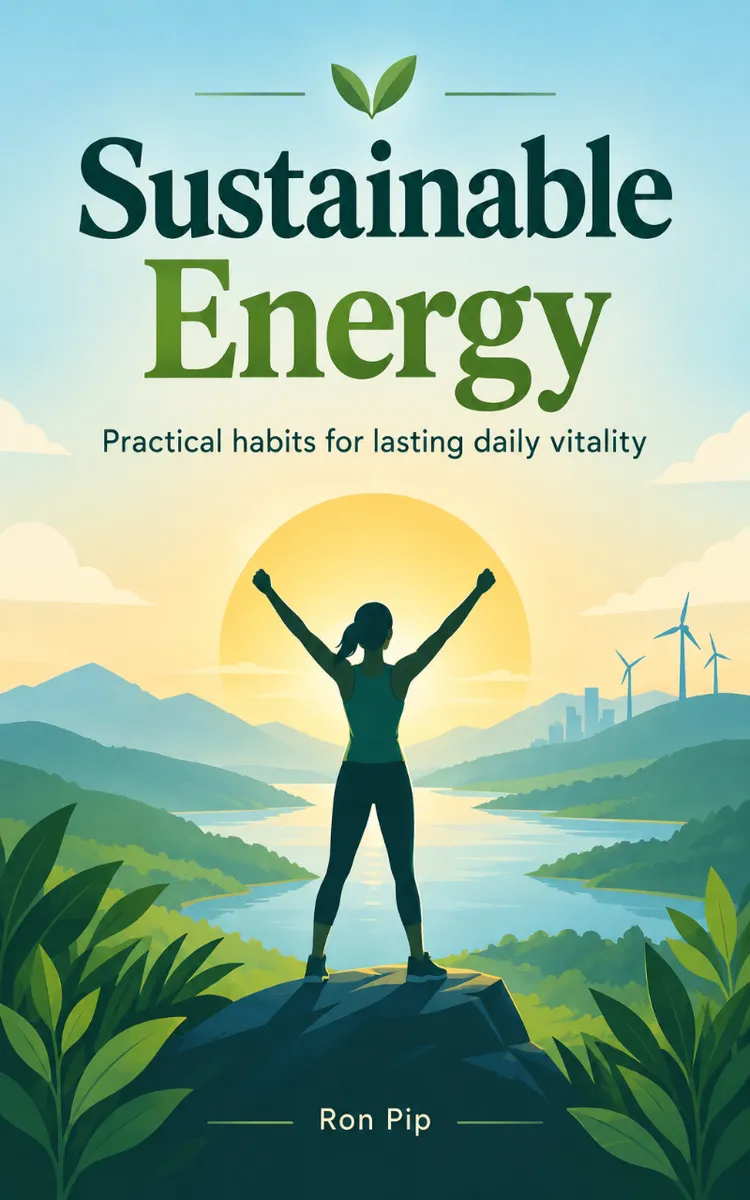
"Sustainable Energy" is a health & wellness book by Ron Pip with 8 chapters and approximately 14,098 words. Physical energy management, sleep hygiene, and sustainable wellness habits.
This book was created using Inkfluence AI, an AI-powered book generation platform that helps authors write, design, and publish complete books. It was made with the AI Health Book Generator.
Frequently Asked Questions
What is "Sustainable Energy" about?
Physical energy management, sleep hygiene, and sustainable wellness habits
How many chapters are in "Sustainable Energy"?
The book contains 8 chapters and approximately 14,098 words. Topics covered include Energy Budgeting for Busy Days, Sleep Hygiene and Recovery, Morning Light and Circadian Rhythm, Steady Energy Through Everyday Nutrition, and more.
Who wrote "Sustainable Energy"?
This book was written by Ron Pip and created using Inkfluence AI, an AI book generation platform that helps authors write, design, and publish books.
How can I create a similar health & wellness book?
You can create your own health & wellness book using Inkfluence AI. Describe your idea, choose your style, and the AI writes the full book for you. It's free to start.
Write your own health & wellness book with AI
Describe your idea and Inkfluence writes the whole thing. Free to start.
Start writingCreated with Inkfluence AI


