

Read the first chapter
The whole of chapter one, free. About 9 min. Turn the pages with the arrows, your keyboard, or a swipe.
Chapter 1
The Photograph by the Kettle
The kettle clicked off at 7.18, just as I dropped my keys into the blue ceramic bowl by the door.
Outside, London pressed its wet evening against the windows. Water ran in narrow tracks down the glass, blurring the lights of the opposite flats into yellow smears. I shrugged out of my coat, kicked off my shoes and carried the post into the kitchen, thinking only of tea, a shower and the article waiting half-finished on my laptop.
Then the photograph slid from between two envelopes.
It landed face down on the worktop.
For a moment I assumed it was an advert. A glossy leaflet from a restaurant, perhaps, or one of those charity appeals that arrived with a photograph designed to make refusal feel cruel. I reached for it while the kettle began its second, unnecessary boil.
The image showed my kitchen.
Not a similar kitchen. Mine.
The white cupboards. The chipped green mug beside the toaster. The narrow window above the sink, its blind crooked where I had pulled it down that morning. And me, standing with my back to the camera, wearing the grey T-shirt I had changed into after work.
I stopped breathing properly.
In the photograph, I was reaching for the kettle. My hair was tied up. One bare foot rested against the other. The picture had caught me in an ordinary, private moment so precisely that I could remember the small irritation I had felt when the kettle took too long to boil.
I looked at the kettle now.
Steam curled from its spout. The photograph lay beneath my hand.
“No,” I said.
The word sounded ridiculous in the empty flat.
I lifted the image closer. It was printed on thick photographic paper, the sort used by professional labs rather than cheap home printers. There was no message on the back. No name. No explanation. Only a faint grey mark in one corner, perhaps a smear from the machine.
I turned towards the kitchen door.
Nothing moved in the hallway. My flat was quiet except for the pipes ticking behind the wall and the rain tapping at the window. The lock was still turned. The chain hung in its bracket. I had been home for less than a minute, and I had not heard anyone follow me upstairs.
I placed the photograph beside the sink and checked the front door anyway.
The deadlock resisted my hand. The chain was fixed. I tested the handle twice, then crouched to examine the gap beneath the door. Nothing had been pushed through it except the post. The envelopes were still scattered on the mat, damp at their edges.
I stood and looked back at the photograph.
The first explanation arrived because I needed it to.
A prank.
Someone from work. One of the photographers I had annoyed by refusing a commission. A former source with a taste for theatrics. Perhaps even a marketing stunt, though no sensible publicist would begin with a picture taken inside someone’s home.
I picked up my phone and opened the camera. My thumb hovered over the contacts, then moved to a message thread with a colleague from the paper.
I typed, Have you sent me something strange?
The reply came almost at once.
What sort of strange?
I stared at the screen. The kitchen seemed to contract around me, its familiar surfaces acquiring edges. The chrome toaster reflected a sliver of my face. The dark window reflected the room behind me.
I turned sharply.
There was no one there.
I took the photograph into the sitting room and placed it on the coffee table. The lamp beside the sofa cast a warm circle over the image, making the moment in the kitchen look staged. That helped. Staged meant constructed. Constructed meant someone had wanted me to see it.
I called my own number from the landline.
The mobile rang on the sofa cushion beside me.
I let it ring until the recorded message began, then hung up.
“Think,” I said aloud.
The flat had one entrance, two windows in the sitting room and the small kitchen window above the sink. The bedroom window faced the courtyard. None of them opened onto a balcony. The building was old, but the rooms were straightforward. No service corridors. No adjoining door. No hiding place behind the cupboards.
I went back into the kitchen and stood where I had stood in the photograph.
The angle was wrong.
At first I thought the photographer had been outside the window, using a long lens. The kitchen was on the first floor, low enough for that to be possible from the pavement. But the image looked down slightly. Not much. Just enough to show the top of my shoulder and the line of the worktop.
I moved towards the window.
The blind was pulled halfway down. I raised it and looked outside.
The pavement below shone black with rain. A delivery cyclist passed beneath the streetlamp, his red light trembling over the wet road. Across the way, windows glowed in stacked rows. From there, someone might have seen me through the glass.
I held the photograph against the window.
The perspective did not match.
If it had been taken from the street, the cupboards would have appeared at a different angle. The photographer would have been looking up, not down. The edge of the sink would have cut across the frame differently.
I lowered the picture.
The kitchen door stood open behind me.
I walked through it, then turned to face the room from the hallway.
The photograph’s viewpoint was not outside.
It was from inside the flat.
I felt the thought settle in my body with a coldness that had nothing to do with the draught beneath the door.
I returned to the kitchen and examined every surface. The top of the fridge. The underside of the cupboards. The smoke alarm fixed to the ceiling. A black button of plastic sat near the corner of the extractor fan, but when I touched it, it came away under my fingernail: a burnt crumb.
I dragged a chair beneath the smoke alarm and climbed up. The alarm was real, dusty at its vents, its battery compartment sealed with a strip of yellowed tape. I pressed the test button. It shrieked into the flat.
I nearly fell.
The sound died when I pressed it again. I climbed down, breathing through my mouth, and stood with both hands gripping the chair back.
My phone buzzed on the worktop.
I flinched so hard the chair scraped across the tiles.
It was the colleague I had messaged.
What exactly have you received?
I looked at the photograph.
A picture of my kitchen, I wrote.
A pause.
Then: Is it one of your investigation photos?
The words made my stomach tighten.
I had not mentioned the investigation. Not to him. Not to anyone at the paper that week. The old case had been over for months, though it still surfaced in angry emails and occasional comments beneath my articles. The investigation into the housing charity, the missing funds, the people who had insisted I was destroying lives by asking where the money had gone.
I typed, No. Why would you ask that?
The three dots appeared, vanished, then appeared again.
Forget it. Probably nothing.
I read the message twice.
“Probably nothing,” I murmured.
The phrase sounded less like reassurance than retreat.
I set the phone down and went to the sitting-room window. Rain had thickened, turning the glass into a dark mirror. My reflection stood there in the grey T-shirt from the photograph, one hand curled around the image.
I checked the window latch. Locked.
The second window was locked too. I tested the bedroom window, then the bathroom one. Each latch clicked firmly beneath my fingers. I opened the wardrobe, looked behind the shower curtain and checked the cupboard beneath the sink.
The flat seemed to resist being searched. Every room offered the same answer: nothing.
In the bedroom, I pulled back the duvet and stared at the pillows. The thought came without permission that someone might have stood there while I slept. I rejected it immediately. There was nowhere for that person to stand without being seen. No reason. No evidence.
I returned to the sitting room and picked up the photograph.
The paper was cool against my fingers. Along the lower edge, almost hidden in the shadow beneath the worktop, was a small pale crescent.
I carried it beneath the lamp.
The crescent was not a flaw in the print. It was the reflection of something circular, positioned between the photographer and me. A lens. Or the rim of a lens.
The camera had been inside the flat.
I put the photograph down.
For several seconds I listened to the building. A footstep sounded overhead. Water rushed through a pipe. Somewhere beyond the wall, a television audience laughed together, then fell silent.
I called the front desk of the building.
The caretaker answered on the fourth ring.
“Hello?”
“It’s Sarah Collins from 1B. Has anyone been let into my flat today?”
There was a pause. I heard paper shifting.
“Not that I know of.”
“Could you check?”
“Is there a problem?”
“I’ve received a photograph that appears to have been taken inside my kitchen.”
The line went quiet.
“Mr Harris?”
“I’m here. Are you saying someone’s been in?”
“I’m asking whether anyone has been authorised to enter.”
“No one has been authorised.”
“Could you check the entry log?”
“I can look in the morning.”
“Tonight, please.”
Another pause, longer this time.
“Sarah, if you think someone’s entered the property, call the police.”
I looked at the photograph on the coffee table. My own back faced me, unaware.
“I don’t know what I think.”
“That’s usually when it’s best to call them.”
I thanked him, though I did not mean to, and ended the call.
The room had become too warm. I opened the front door and stood on the landing, listening. The corridor smelled of wet coats and old carpet. No one emerged from the stairwell. No lift moved behind its metal doors.
I shut myself in again.
My first impulse was to photograph the photograph and send it to someone. My second was to destroy it. I did neither. Instead, I slid it into a clear plastic folder from my desk and wrote the date on a sticky note.
Then I took the folder to the kitchen.
The explanation remained possible. A prank. An elaborate one, but still a prank. Someone could have entered while I was out. Someone with a key. Someone who knew the building, or knew me well enough to understand how long I would stare at a single image before calling for help.
That was not the same as danger.
I repeated it silently until the words lost their shape.
A prank.
I locked the front door again. I checked the chain. I walked through each room, switching on every light, opening every cupboard, looking behind every door.
In the kitchen, I paused beside the window.
From the hallway, the angle seemed impossible. From the sitting room, it seemed worse. The photograph had been taken from somewhere near the ceiling, somewhere just beyond the doorway, where no person could have stood without being seen.
I stepped backwards into the hall.
The kitchen remained empty.
But on the dark glass of the microwave, behind my shoulder, a small red point appeared.
I spun around.
Nothing.
Only the microwave clock, blinking 7.42.
I stood there until the numbers changed.
Then I checked the kitchen again, and this time I did not turn off the light.
End of chapter one. 19 more chapters and about 38,970 words in the full book.
Swipe or use the arrows to turn the page


What's inside: 20 chapters
- 1. The Photograph by the Kettle
- 2. A Joke Shared with Friends
- 3. The Second Image
- 4. The Locked Window
- 5. The Story I Buried
- 6. The Camera in the Vent
- 7. The Print Shop Receipt
- 8. The Station Without Cameras
- 9. My Own Notes Against Me
- 10. The Months in the Margins
- 11. The Editor’s Warning
- 12. The Source Who Vanished
- 13. The Safe House Key
- 14. The Leak in the Newsroom
- 15. The Name I Cannot Clear
- 16. The Archive That Was Altered
- 17. The House Beyond the Marsh
- 18. The Face Behind the Lens
- 19. What I Put on Record
- 20. The Curtains Stay Open
About this book
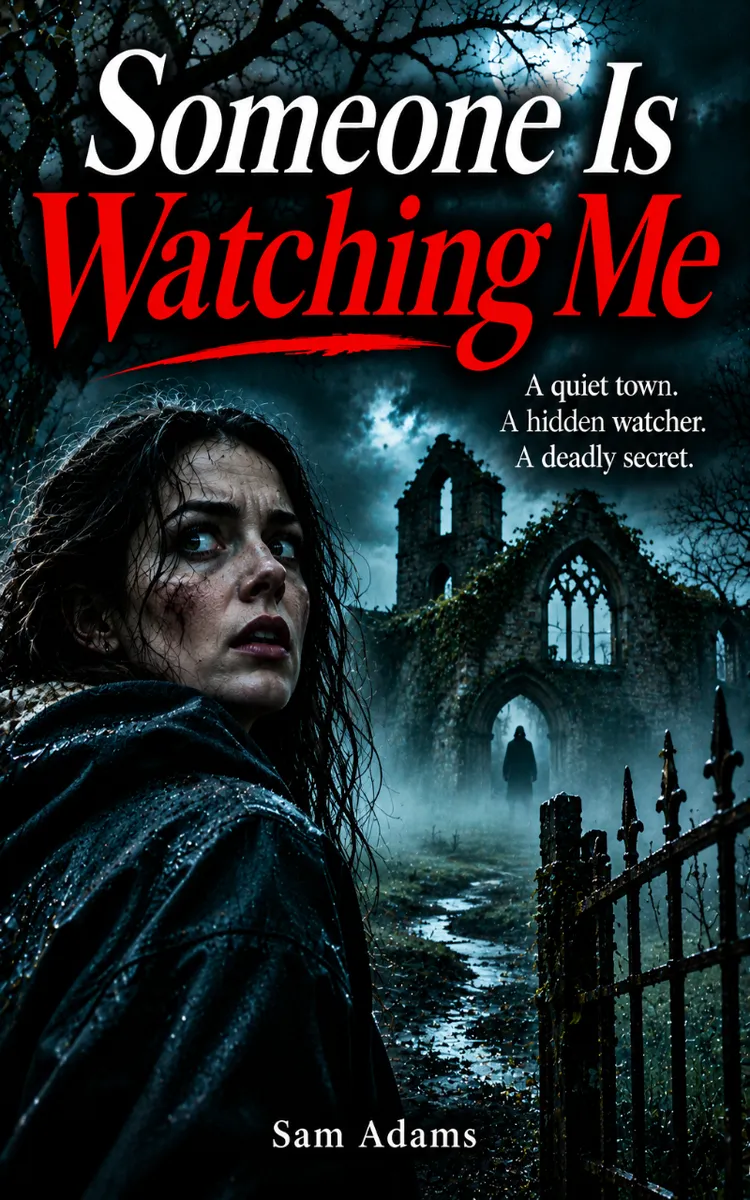
"Someone Is Watching Me" is a fiction book by Sam with 20 chapters and approximately 38,970 words. A journalist investigates threatening surveillance tied to a controversial past investigation.
This book was created using Inkfluence AI, an AI-powered book generation platform that helps authors write, design, and publish complete books. It was made with the AI Novel Writer.
Frequently Asked Questions
What is "Someone Is Watching Me" about?
A journalist investigates threatening surveillance tied to a controversial past investigation
How many chapters are in "Someone Is Watching Me"?
The book contains 20 chapters and approximately 38,970 words. Topics covered include The Photograph by the Kettle, A Joke Shared with Friends, The Second Image, The Locked Window, and more.
Who wrote "Someone Is Watching Me"?
This book was written by Sam and created using Inkfluence AI, an AI book generation platform that helps authors write, design, and publish books.
How can I create a similar fiction book?
You can create your own fiction book using Inkfluence AI. Describe your idea, choose your style, and the AI writes the full book for you. It's free to start.
Write your own fiction book with AI
Describe your idea and Inkfluence writes the whole thing. Free to start.
Start writingCreated with Inkfluence AI


