
Read the first chapter
The whole of chapter one, free. About 6 min. Turn the pages with the arrows, your keyboard, or a swipe.
Chapter 1
Judge Actions, Not Promises
When Promises Keep Replacing Proof
By Friday afternoon, your partner has promised three things: they’ll stop disappearing during arguments, tell you when plans change, and introduce you to the friend group they keep mentioning. By Sunday, the argument happens again. Your messages sit unanswered for hours. The introduction becomes “next time.”
When you bring it up, the conversation turns soft and familiar. They apologize. They explain. They promise this time will be different. You want to believe them because the apology sounds sincere - and because the good moments are real. Still, your body notices the pattern before your hope is ready to.
Are you judging the relationship by what is promised, or by what keeps happening?
From Hopeful Claims to Observable Patterns
Old Belief: If someone means what they say, their words should count as evidence of change.
New Reality: Words can show intention, but repeated actions show capacity, responsibility, and commitment.
This shift isn’t about becoming suspicious of every apology. People do make mistakes, lose track of plans, and have rough days. The question is what happens next. Do they repair the damage, change the behavior, and keep the change going? Or do they offer just enough reassurance to reset the conversation?
Consider a partner who says they want an equal relationship but expects you to answer every message immediately while they vanish whenever you need support. Their words may sound caring. Their standard is not equal. The useful information is found in the gap between what they request from you and what they offer you.
That gap becomes clearer when you track behavior over time. The Behavior-over-Claims Ledger helps you record the promise, the observable action, the impact on you, and whether anything changed afterward. You’re not building a case for court. You’re giving your memory something solid to stand on when a moving explanation makes you doubt yourself.
A promise such as “I’ll be more reliable” is difficult to measure. “They arrived on time for the next three planned visits and warned me two hours before canceling once” is clear. So is “They apologized each time, but canceled four times in three weeks without warning.” Clarity can feel uncomfortable, but it protects you from arguing with fog.
What the Pattern Is Telling You
A relationship pattern often hides inside separate incidents. One missed call looks small. So does one secretive password change, one mood swing, or one canceled plan. But repeated behavior creates a direction.
Double standards are especially revealing. Your partner may demand full honesty while keeping parts of their life deliberately hidden. They may call your need for space “rejection” while treating your request for reassurance as pressure. The issue isn’t that two people have different needs. It’s that one person’s needs become rules while the other person’s needs become problems.
Mood swings also deserve attention - not because every change in mood is dangerous, but because of what you’re expected to do about it. Do you have to monitor every word, cancel your plans, or absorb blame to keep the peace? A difficult mood becomes a relationship pattern when the whole household starts organizing itself around it.
Secrecy and social exclusion can work quietly. You may know very little about the people, places, or routines that fill your partner’s life. They might keep you separate from friends, avoid being seen with you, or make you feel unreasonable for asking ordinary questions. Privacy is healthy. A wall that prevents basic trust is different.
Watch for these signs:
1. You keep rewriting the same promise in your head because the behavior never becomes consistent. 2. You spend more energy managing their mood than noticing your own. 3. You’re excluded from important parts of their life, then blamed for feeling disconnected. 4. You explain away repeated flakiness, broken agreements, or familiar relationship problems because each incident has a fresh excuse.
The Behavior-over-Claims Ledger turns emotional confusion into a pattern you can actually examine.
The ledger works best when you write facts close to the event. Record the date, what was agreed, what happened, and the response afterward. Include your own action, too. Did you chase an explanation? Cancel something important? Pretend you were fine? That detail matters because troubling patterns don’t only affect what you feel. They slowly reshape how you live.
Repeated relationship problems from the past are another piece of the picture. A partner may describe every former relationship as the other person’s fault. Perhaps every ex was “crazy,” “controlling,” or “too needy.” One difficult former relationship proves very little. A long trail of identical blame, with no meaningful self-reflection, suggests the same conflict may be waiting for you.
Questions That Bring the Pattern Closer
1. What promise has been repeated at least three times without a lasting change? Write the exact promise if you can. An honest answer might be, “They keep saying they’ll tell me when plans change, but I usually find out after I’ve been waiting.”
2. Where do double standards show up in ordinary life? Look at texting, friendships, money, privacy, or time. If they expect immediate replies but disappear for a day, record both sides instead of treating them as unrelated.
3. What happens when their mood changes? Ask yourself whether you can continue a normal evening, express a different opinion, or make independent plans. If you’re constantly scanning their face before speaking, that’s important information.
4. Which parts of their life remain closed to you, and is there a reasonable explanation? Privacy might mean keeping a journal. Secrecy may look like hidden social plans, unexplained absences, or anger whenever you ask a basic question. Focus on the repeated response, not one awkward moment.
5. What do their past relationships suggest about responsibility? Listen for whether they can name their own contribution to earlier problems. “I handled conflict badly and worked on it” shows more accountability than a list of villains.
You don’t need to answer these questions perfectly. The goal is not to produce a verdict tonight. It’s to stop letting the most recent apology erase the last six weeks.
The Seven-Day Ledger Challenge
For the next 7 days, record behavior before interpreting it.
• Create four columns in a notebook or notes app: Agreement or claim, What happened, Impact on me, and What changed afterward. - Record only observable details. Write “canceled at 6:10 p.m. for a 6:00 p.m. plan,” not “doesn’t care about me.” - Include examples of follow-through, not only failures. A fair record helps you see consistency in either direction. - Mark repeated themes with a simple label: double standard, mood, secrecy, exclusion, broken promise, flakiness, or past-pattern concern. - Review the ledger on the seventh day. Look for repetition, repair, and whether your life is becoming smaller around the relationship.
Difficulty: Medium
You’ll know it’s working when:
• You can describe the pattern without relying on a heated argument. - You notice the difference between an explanation and changed behavior. - You stop debating whether one incident was “bad enough.” - You can name one boundary or support step based on facts rather than panic.
If recording events could put you at risk, keep the notes somewhere your partner cannot access, or use a safer support person instead. Your safety comes before a perfect record.
Let Behavior Earn Your Trust
Promises may open the conversation, but consistent action is what earns trust.
• You learned to separate intention from capacity. - You learned to notice double standards, mood-based control, secrecy, exclusion, broken promises, and chronic flakiness as connected patterns. - You learned to use the Behavior-over-Claims Ledger to compare claims with observable behavior over time. - You learned that repeated blame for past relationships can reveal a lack of responsibility.
You’re allowed to appreciate someone’s good moments and still take their harmful patterns seriously. You’re allowed to accept an apology without treating it as proof. Most of all, you’re allowed to let trust grow at the speed of evidence.
The next step is to look beyond behavior in the relationship and examine whether the life surrounding it supports responsibility, stability, and a future you can safely share.
End of chapter one. 4 more chapters and about 7,166 words in the full book.
Swipe or use the arrows to turn the page

What's inside: 5 chapters
- 1. Judge Actions, Not Promises
- 2. Recognize the Rescue Trap
- 3. Test Plans Against Trajectory
- 4. Run the Six-Month Commitment Check
- 5. Choose Recovery, Leaving, or Safety
About this book
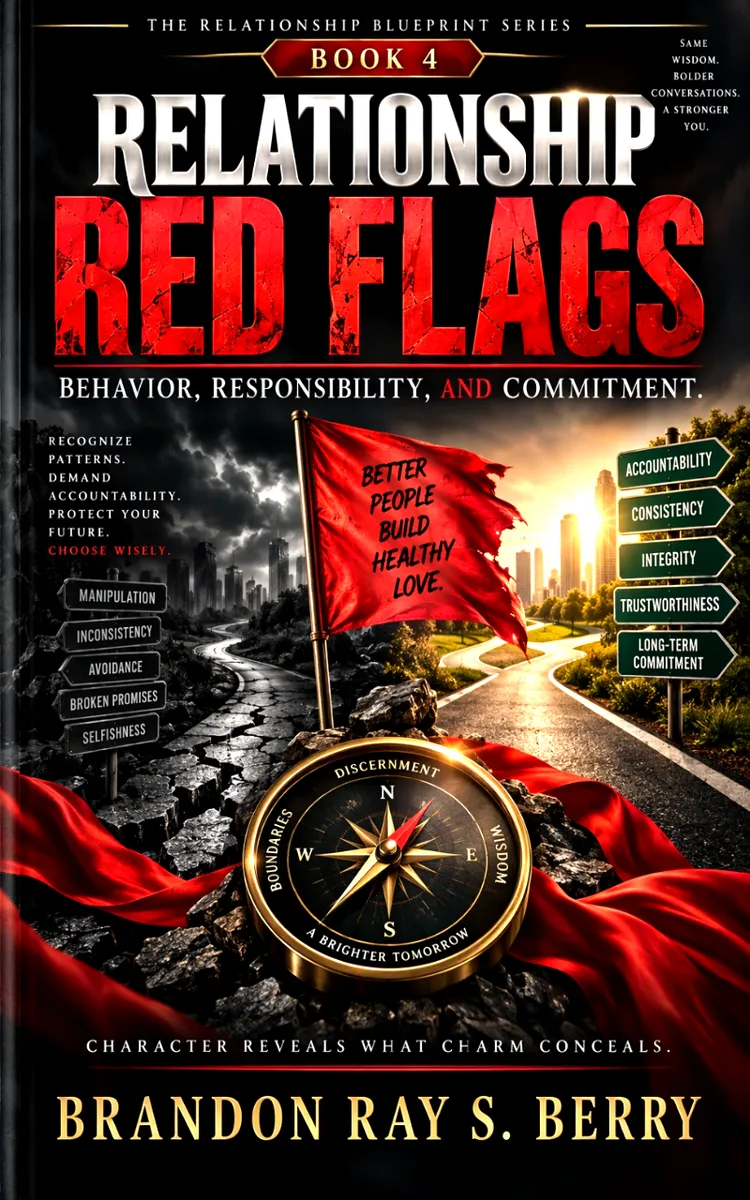
"Behavior, Responsibility, and Commitment" is a self-help book by Brandon with 5 chapters and approximately 7,166 words. Learn to judge a relationship by what keeps happening, not by what gets promised after an argument. This book gives you concrete ways to assess whether an apology leads to changed behavior, whether a partner is taking responsibility for recurring crises, and whether talk of a future is turning into real steps.
This book was created using Inkfluence AI, an AI-powered book generation platform that helps authors write, design, and publish complete books. It was made with the AI Self-Help Book Writer.
Frequently Asked Questions
What is "Behavior, Responsibility, and Commitment" about?
Learn to judge a relationship by what keeps happening, not by what gets promised after an argument. This book gives you concrete ways to assess whether an apology leads to changed behavior, whether a partner is taking responsibility for recurring crises, and whether talk of a future is turning into real steps. The Responsibility Reality Check helps you see when paying bills, making excuses, and managing appointments has become your job. The Commitment Trajectory Map compares what is promised, practiced, and prepared. You don’t need a perfect five-year plan to ask for clarity. Notice who repairs harm, who follows through, and who makes room for shared plans. Start with what is already visible: the unanswered messages, the repeated rescue, and the next step that never reaches the calendar.
How many chapters are in "Behavior, Responsibility, and Commitment"?
The book contains 5 chapters and approximately 7,166 words. Topics covered include Judge Actions, Not Promises, Recognize the Rescue Trap, Test Plans Against Trajectory, Run the Six-Month Commitment Check, and more.
Who wrote "Behavior, Responsibility, and Commitment"?
This book was written by Brandon and created using Inkfluence AI, an AI book generation platform that helps authors write, design, and publish books.
How can I create a similar self-help book?
You can create your own self-help book using Inkfluence AI. Describe your idea, choose your style, and the AI writes the full book for you. It's free to start.
Write your own self-help book with AI
Describe your idea and Inkfluence writes the whole thing. Free to start.
Start writingCreated with Inkfluence AI


