

Read the first chapter
The whole of chapter one, free. About 5 min. Turn the pages with the arrows, your keyboard, or a swipe.
Chapter 1
Introductions, Greetings, and First Impressions (Business Context)
Overview
A first meeting can turn on one sentence: the right Russian greeting sounds prepared and respectful, while the wrong level of formality can make a partner uncomfortable before business begins. This chapter covers five practical steps for offices, conferences, and negotiations: choosing formal greetings, introducing yourself, presenting colleagues, making polite small talk, and moving smoothly from conversation to business.
Use the Russian phrases as ready-to-say tools. Pay attention to ты (informal “you”) and вы (formal or plural “you”); with new business contacts, вы is the safe starting point.
Practical takeaway: Begin formally, listen for the other person’s preferred style, and let the relationship become less formal gradually.
The Breakdown
#1: Choose a Formal Greeting for the Setting
Problem: A greeting that works with a friend may sound too casual in a negotiation. Saying only “Привет” (“Hi”) to a new partner, senior manager, or conference speaker can create a poor first impression. The problem is greater when several people are waiting for introductions and you need a phrase immediately.
Solution: Use Здравствуйте (“Hello”) in offices, meetings, and professional events. Add Доброе утро (“Good morning”) before midday or Добрый день (“Good afternoon”) during the day. In the evening, use Добрый вечер (“Good evening”). When meeting someone for the first time, combine the greeting with a polite phrase:
• Здравствуйте. Очень приятно познакомиться. - Hello. Nice to meet you. - Добрый день. Рад с вами познакомиться. - Good afternoon. I’m pleased to meet you. A woman says Рада instead of Рад.
Do not use ты unless the other person suggests it. A useful phrase is Давайте на “вы” (“Let’s use the formal ‘you’”) if you want to make the level clear.
Result: Your opening sounds professional in under five seconds. You also avoid the common mistake of becoming too familiar before trust has been established.
#2: Introduce Yourself with Name, Role, and Company
Problem: A name alone is not enough at a busy conference or office reception. The other person may remember your face but not know what you do, which can lead to repeated explanations later. Long introductions also waste time before a scheduled meeting.
Solution: Use a three-part introduction: name, role, and company. The basic pattern is:
Меня зовут [name]. Я [role] в компании [company]. “My name is [name]. I am a [role] at [company].”
Examples:
• Меня зовут Анна Петрова. Я руководитель отдела продаж в компании “Вектор”. My name is Anna Petrova. I am the head of sales at Vector. - Меня зовут Дэвид Браун. Я управляющий партнер компании “Норд”. My name is David Brown. I am a managing partner at Nord.
Then ask a simple question: А как я могу к вам обращаться? (“How should I address you?”) This is useful when you are unsure whether to use a first name and patronymic, a title, or a surname.
Result: The other person quickly understands who you are and why the meeting matters. Your introduction takes about 10-15 seconds and gives the conversation a clear starting point.
#3: Introduce a Colleague Correctly
Problem: Introducing a colleague without explaining their role makes the meeting harder to follow. Saying only “This is Maria” gives the partner no reason to know why Maria is present or when to address her. In Russian business settings, a clear role helps establish authority and prevents confusion during negotiations.
Solution: Name the colleague, state the role, and connect that role to the meeting. Use:
Позвольте представить [name], [role]. “Allow me to introduce [name], [role].”
For a more formal introduction, say:
• Позвольте представить нашего финансового директора, Елену Смирнову. Allow me to introduce our finance director, Elena Smirnova. - Это мой коллега Алексей Иванов, он отвечает за технические вопросы. This is my colleague Alexey Ivanov; he handles technical matters.
If you introduce a group, identify the person who will lead a topic: А это Сергей, он расскажет о сроках поставки. (“And this is Sergey; he will explain the delivery schedule.”) After the introduction, give the visitor a moment to greet each person rather than speaking over them.
Result: Everyone knows who is responsible for each subject. The meeting starts with less repetition, and your team appears organized and prepared.
#4: Use Safe Small Talk Before Business
Problem: Moving straight into prices or contract terms can feel abrupt, especially after a first introduction. At the same time, personal questions about age, salary, politics, or family may be too direct for a new business contact. You need a short, neutral bridge that fits the location and event.
Solution: Keep small talk connected to the meeting:
• Как добрались? - How was your journey? - Вы впервые в нашей компании? - Is this your first time at our company? - Как вам конференция? - How do you like the conference? - У вас уже была возможность познакомиться с нашей командой? - Have you had a chance to meet our team? - Надеюсь, дорога прошла хорошо. - I hope your journey went well.
Ask one question, listen to the answer, and offer a short response. Avoid turning small talk into a long conversation; two or three exchanges are usually enough. If the weather is relevant to travel, На улице сегодня холодно, не правда ли? (“It’s cold outside today, isn’t it?”) is acceptable, but a question about the event is usually more useful.
Result: The first minutes feel natural without losing business focus. You show attention, learn a small practical detail, and create an easy path to the agenda.
#5: Move from Small Talk to the Meeting Agenda
Problem: Some meetings remain stuck in casual conversation because nobody signals the transition. Others switch suddenly to business, making the change sound cold or impatient. In a 30-minute meeting, losing even five minutes can leave no time for decisions or next steps.
Solution: Use a polite transition that recognizes the opening conversation and sets a clear purpose:
• Спасибо, что нашли время для встречи. Предлагаю перейти к повестке. Thank you for finding time for the meeting. I suggest we move to the agenda. - Если вы не возражаете, начнём с краткого знакомства, а затем обсудим условия сотрудничества. If you do not mind, we’ll begin with brief introductions and then discuss the cooperation terms. - Давайте начнём. Сегодня мы хотели бы обсудить три вопроса. Let’s begin. Today we would like to discuss three questions.
State the number of topics when possible: Сегодня у нас три вопроса: сроки, стоимость и доставка. (“Today we have three questions: timing, cost, and delivery.”) This gives everyone a simple map and makes it easier to return to the agenda if the discussion wanders.
Result: The meeting moves forward respectfully and on time. Your partner knows what will be discussed and what the conversation should accomplish.
What Comes Next
After introductions and first impressions, successful Russian business communication depends on asking clear questions and confirming what each side means. The next chapter focuses on practical questions, clarification phrases, and ways to prevent misunderstandings during business discussions.
End of chapter one. 9 more chapters in the full book.
Swipe or use the arrows to turn the page


What's inside: 10 chapters
- 1. Introductions, Greetings, and First Impressions (Business Context)
- 2. Company, Role, and Meeting Logistics (Who/Where/When)
- 3. Email and Messaging Essentials (Professional Tone)
- 4. Meetings and Presentations (Agenda, Transitions, and Clarifications)
- 5. Negotiation and Offers (Proposing, Countering, and Compromising)
- 6. Pricing, Payment, and Contracts (Numbers and Conditions)
- 7. Orders, Delivery, and Logistics (Shipping, Deadlines, Tracking)
- 8. Problem-Solving and Service Issues (Delays, Defects, Complaints)
- 9. Relationship Building and Business Etiquette (Polite Persuasion)
- 10. Closing Deals and Wrap-Up (Next Steps, Deadlines, and Sign-Off)
About this book
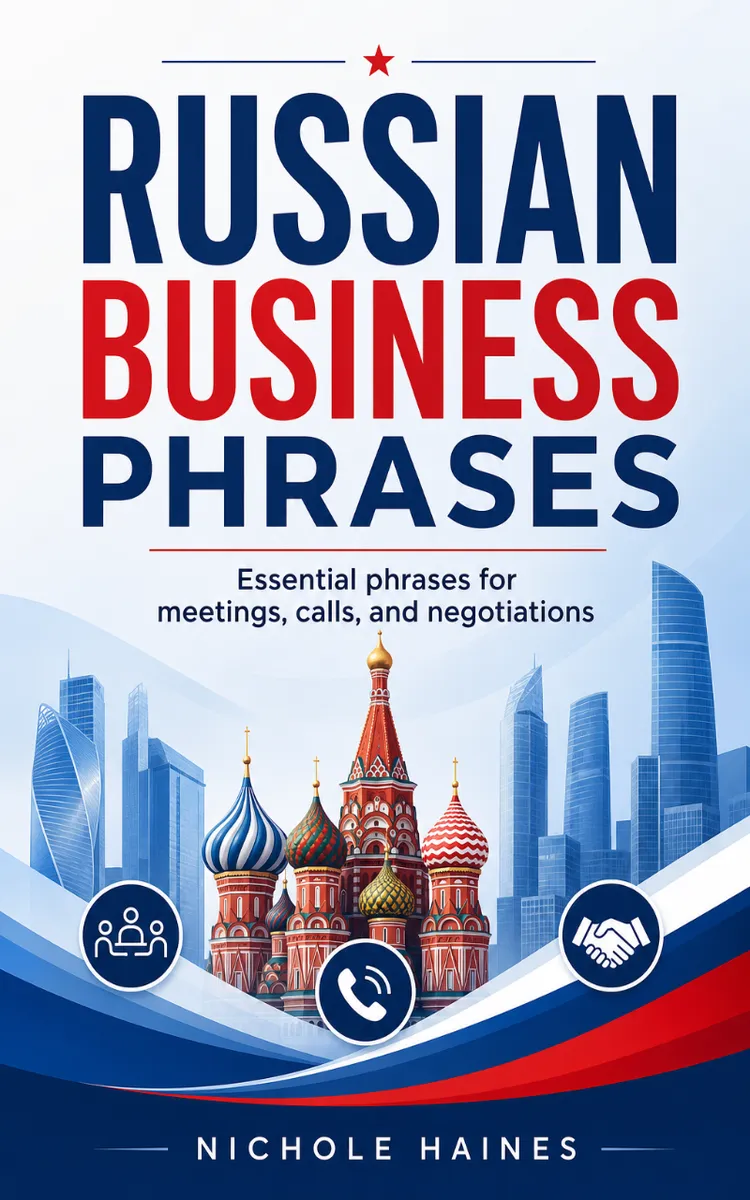
"Russian Business Phrases" is a list book by Nichole Haines with 10 chapters and approximately 8,953 words. Russian business phrases for professional communication.
This book was created using Inkfluence AI, an AI-powered book generation platform that helps authors write, design, and publish complete books.
Frequently Asked Questions
What is "Russian Business Phrases" about?
Russian business phrases for professional communication
How many chapters are in "Russian Business Phrases"?
The book contains 10 chapters and approximately 8,953 words. Topics covered include Introductions, Greetings, and First Impressions (Business Context), Company, Role, and Meeting Logistics (Who/Where/When), Email and Messaging Essentials (Professional Tone), Meetings and Presentations (Agenda, Transitions, and Clarifications), and more.
Who wrote "Russian Business Phrases"?
This book was written by Nichole Haines and created using Inkfluence AI, an AI book generation platform that helps authors write, design, and publish books.
Write your own list book with AI
Describe your idea and Inkfluence writes the whole thing. Free to start.
Start writingCreated with Inkfluence AI


