
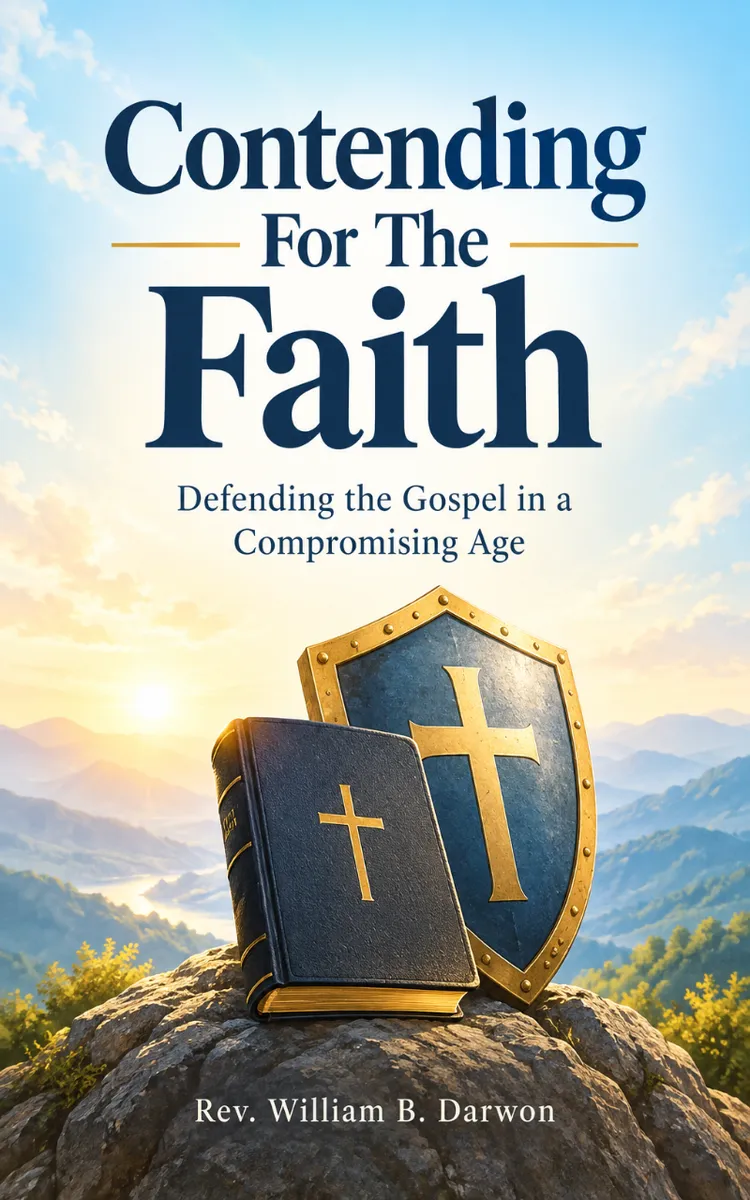
Read the first chapter
The whole of chapter one, free. About 5 min. Turn the pages with the arrows, your keyboard, or a swipe.
Chapter 1
Day 1: The Call to Contend
Scripture Focus
Jude 1:3-5
> Beloved, while I was very diligent to write to you concerning our common salvation, I found it necessary to write to you exhorting you to contend earnestly for the faith which was once for all delivered to the saints. For certain men have crept in unnoticed, who long ago were marked out for this condemnation, ungodly men, who turn the grace of our God into lewdness and deny the only Lord God and our Lord Jesus Christ. But I want to remind you, though you once knew this, that the Lord, having saved the people out of the land of Egypt, afterward destroyed those who did not believe.
Jude calls the church to guard the gospel we received, not with panic or pride, but with steady faithfulness.
A letter that begins with “our common salvation” sounds warm and encouraging. Jude intended to write about the joy believers share in Christ. Yet the situation around him required a change of direction. False teaching had slipped into the church, and the gospel was being reshaped to excuse sin and deny the authority of Jesus. Jude couldn’t treat that as a minor disagreement. He urged believers to contend for the faith “once for all delivered to the saints.”
Reflection
To contend doesn’t mean looking for arguments at every turn. It means standing faithfully for something precious when it is being distorted or pushed aside. The faith Jude describes is not a private set of opinions we invent as we go. It is the good news about Jesus Christ - His coming, His death for sinners, His resurrection, His lordship, and His call to repentance and obedient faith. God entrusted this message to His people, and we’re responsible to receive it, live it, and pass it on without quietly editing the difficult parts.
That responsibility matters in ordinary places. A conversation at work may reduce Christianity to “being a good person.” A social media post may call biblical truth hateful simply because it sets a boundary. A friend may say grace means God never confronts sin. We don’t need a sharp comeback or a perfect theological vocabulary. We do need enough biblical grounding to speak clearly: grace forgives sinners, and grace also teaches us to reject ungodliness (Titus 2:11-12). Contending for the faith begins with knowing what the gospel is and refusing to replace it with a more comfortable message.
Jude also reminds us that this work must be done with humility. The warning about Israel’s unbelief is not an invitation to feel superior. It is a reminder to remain watchful over our own hearts. We can defend sound doctrine while becoming harsh, impatient, or eager to win. That would misrepresent the Savior we claim to defend. Jesus was full of grace and truth (John 1:14). His followers should be willing to correct error, but they should do so with gentleness, respect, and a clean conscience (1 Peter 3:15-16).
The phrase “once for all delivered” gives us both confidence and direction. We aren’t responsible for creating a new gospel that fits every cultural moment. We’re called to hold firmly to the apostolic message while learning how to express it wisely in our own setting. The wording may change from one conversation to another. The truth about Christ does not. A nurse, a mechanic, a parent, a student, and a church leader may explain the gospel differently, but each can point people to the same Lord.
This devotional journey begins there: not with fear of culture, and not with confidence in our debating skills, but with confidence in God’s Word. We’ll learn to recognize compromise, answer common objections, strengthen our own obedience, and speak about Jesus with courage and love. The goal isn’t to collect arguments like tools in a toolbox and leave them unused. The goal is to become people whose lives make the gospel believable and whose words make it understandable.
Practice for Today
1. Read Jude 1:1-5 slowly twice. On the first reading, notice what Jude says about the gospel. On the second, notice what he says about the danger facing the church. Write down one phrase that stands out. Pay special attention to “our common salvation” and “contend earnestly.” Ask how both phrases belong together. We defend the faith because salvation in Christ is worth guarding.
2. Write a one-paragraph gospel summary in your own words. Keep it to five or six sentences. Include God’s holiness, humanity’s sin, Jesus’ death and resurrection, the call to repent and believe, and the hope of new life. Don’t aim for polished language. Aim for faithfulness. For example, you might begin, “The gospel is the good news that God saves sinners through Jesus Christ, who died and rose again.” Then compare your summary with 1 Corinthians 15:1-4 and note anything important you left out.
3. Pray for one person by name for five minutes. Choose someone who has misunderstood Christianity, resisted the gospel, or been influenced by a teaching that weakens biblical truth. Ask God for an opportunity to speak with humility and clarity. Pray first for your own heart - that you would seek the person’s good rather than simply winning an exchange. If a conversation comes today, listen carefully before answering. A thoughtful question such as “What makes you see it that way?” can open a better door than a quick correction.
As you journal, consider these questions: Where have I been tempted to soften the gospel so that it will be more acceptable? Where have I spoken truth without enough love? What specific part of the Christian faith do I need to study more carefully? Write one honest answer and one practical next step. You might decide to read the Gospel of Mark, review your church’s statement of faith, or ask a mature believer to help you understand a difficult doctrine.
Jude’s appeal is urgent, but it isn’t frantic. Faithful defense usually grows through small habits: reading Scripture before scrolling, checking popular claims against God’s Word, listening before responding, and praying before difficult conversations. These practices won’t make us experts overnight. They will make us steadier disciples.
Closing Prayer
Lord Jesus, thank You for the salvation we share through Your death and resurrection. Help me hold firmly to the faith You have entrusted to Your people. Give me courage to speak when truth is being distorted, humility to examine my own heart, and love for the people I hope to reach. Teach me to defend the gospel without bitterness and to live it without compromise. Amen.
End of chapter one. 19 more chapters in the full book.
Swipe or use the arrows to turn the page


What's inside: 20 chapters
- 1. Day 1: The Call to Contend
- 2. Day 2: The Faith Once Delivered
- 3. Day 3: Rooted Before the Storm
- 4. Day 4: Trusting the Keeper of Our Faith
- 5. Day 5: Prayer in the Contest
- 6. Day 6: Courage Without Contempt
- 7. Day 7: Discernment in a Noisy Age
- 8. Day 8: When the Gospel Is Distorted
- 9. Day 9: Grace That Leads to Holiness
- 10. Day 10: Remembering God’s Faithfulness
- 11. Day 11: Surrendering to the Lordship of Christ
- 12. Day 12: Hope That Holds Fast
- 13. Day 13: The Church as a Faithful Community
- 14. Day 14: Passing the Faith to the Next Generation
- 15. Day 15: Speaking Truth in Love
- 16. Day 16: Standing Firm Under Pressure
- 17. Day 17: Resisting Fear and Shame
- 18. Day 18: Mercy Toward Those Who Doubt
- 19. Day 19: Keeping Yourself in God’s Love
- 20. Day 20: To the One Who Keeps Us
About this book
"Contending For The Faith" is a religious devotional book by Rev. William B. Darwon with 20 chapters and approximately 20,072 words. Biblical teaching on defending the Christian faith against compromise.
This book was created using Inkfluence AI, an AI-powered book generation platform that helps authors write, design, and publish complete books.
Frequently Asked Questions
What is "Contending For The Faith" about?
Biblical teaching on defending the Christian faith against compromise
How many chapters are in "Contending For The Faith"?
The book contains 20 chapters and approximately 20,072 words. Topics covered include Day 1: The Call to Contend, Day 2: The Faith Once Delivered, Day 3: Rooted Before the Storm, Day 4: Trusting the Keeper of Our Faith, and more.
Who wrote "Contending For The Faith"?
This book was written by Rev. William B. Darwon and created using Inkfluence AI, an AI book generation platform that helps authors write, design, and publish books.
Write your own religious devotional book with AI
Describe your idea and Inkfluence writes the whole thing. Free to start.
Start writingCreated with Inkfluence AI


