
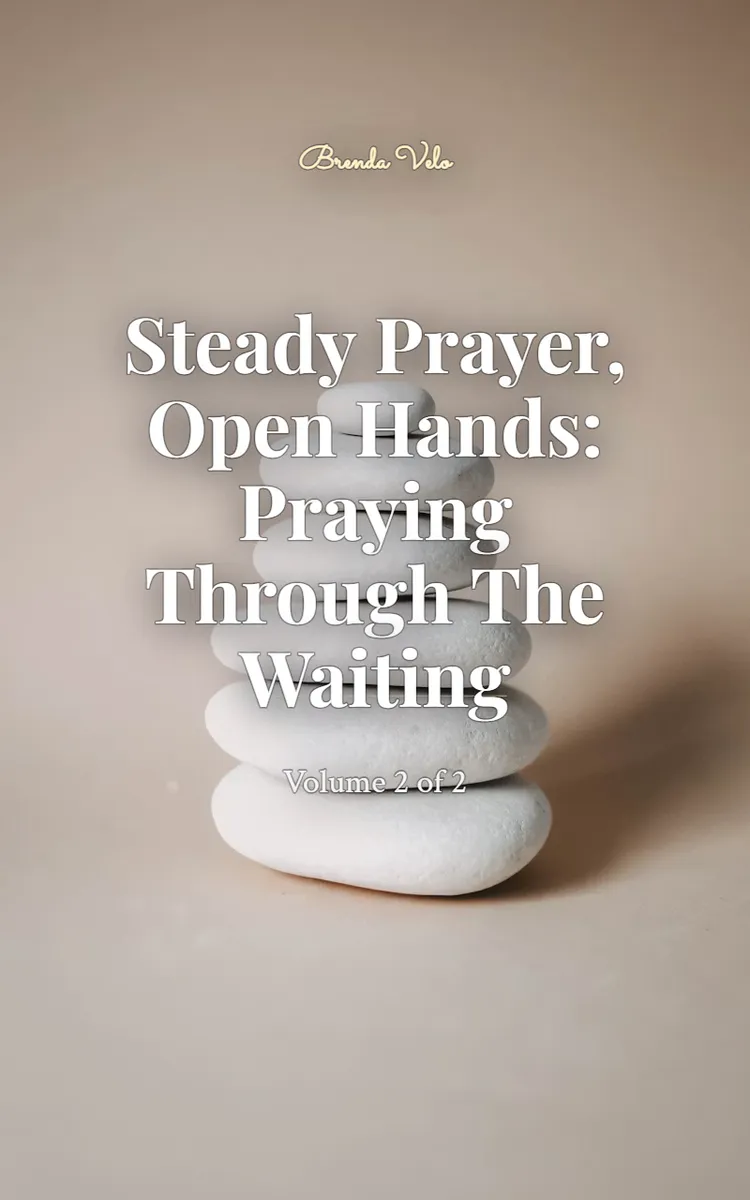
Steady Prayer, Open Hands: Praying Through the Waiting
Created with Inkfluence AI
🔀 Remixed from Steady Prayer, Open Hands
Volume 2 follows the shift from panic to trust into the long middle—learning how to pray faithfully when answers are delayed, hearts change slowly, and God’s work looks different than expected.
Table of Contents
- 1. The Middle Is Still Holy
- 2. When Prayers Feel Unanswered
- 3. A Short Prayer for Long Days
- 4. God Changes the Wanting
- 5. Obedience After the Amen
- 6. Your Story Learns to Breathe
- 7. Open Hands, Last Word
Preview: The Middle Is Still Holy
A short excerpt from “The Middle Is Still Holy”. The full book contains 7 chapters and 10,514 words.
The Middle Is Still Holy
The beginning of a difficult season often has a certain clarity. Something happens, and you know you need to pray. A diagnosis arrives. A relationship changes. A door closes. Someone you love makes a choice you cannot make for them. You bring the situation to God because there is nowhere else to take it.
The ending has its own clarity too. The answer comes. The relationship is repaired, or the direction becomes clear. The opportunity opens, the treatment works, the conversation finally happens. Even a painful ending can feel easier to understand because the uncertainty is over.
But most of life is lived in between.
The middle is the stretch of time when you have prayed, acted wisely, and waited, yet nothing seems to be changing. You may still be checking your phone. Still wondering what to say. Still hoping for a different report. Still asking God to protect someone who does not appear to be turning around.
This middle can feel like a spiritual no-man's-land. You are no longer responding to the first shock, but you have not reached resolution. The urgency has not completely disappeared, and neither has the uncertainty. Some days you feel peaceful. Other days the same concern rises again before breakfast.
It is tempting to decide that this season is wasted. If nothing is resolved, what is the point of continuing to pray?
The answer is that waiting is not the absence of God's work. It is often the place where God's work is hardest to see.
No change yet is not the same as no work
We naturally measure progress by visible results. We look for a changed attitude, a returned call, a better test result, a restored relationship, or a clear next step. These things matter. We are not wrong to desire them.
But visible change is not the only kind of change.
Roots grow underground before anything appears above the soil. A body heals in ways you cannot watch. A person may be thinking, softening, grieving, or becoming willing to receive help long before that inner work becomes visible. God may be strengthening your endurance, correcting your motives, teaching you to release control, or preparing you for an answer that is not ready yet.
This does not mean every delay has a simple explanation. It does not mean we should call suffering good or pretend disappointment does not hurt. It means we should be careful about the conclusion we draw from silence.
No change yet is information about the present, not a final verdict about the future.
It tells you that the situation is still unfolding. It does not prove that your prayers have failed, that God is absent, or that you have somehow missed the right words.
Prayer is more than a request for results
When we are waiting, prayer can become narrowly focused. We bring God the same request again and again, hoping that persistence will finally produce movement. There is nothing wrong with asking for the thing we deeply desire. Jesus taught people to bring their needs to God honestly and persistently.
But steady prayer is larger than repeating a request until we receive an answer.
Prayer keeps us connected to God while the outcome remains unknown. It gives fear somewhere to go. It helps us tell the truth without letting the truth become the whole story. It reminds us that the person we love is not held only by our efforts. It gives us wisdom for the action that is ours and restraint for the action that is not.
Sometimes the most faithful prayer is still, “God, please change this.” Sometimes it is, “Help me know what to do today.” Sometimes it is simply, “Stay near me. I do not know how to carry this.”
These prayers may feel small compared with the size of the problem. They are not small to God. A prayer does not become meaningful only when it produces an immediate result. Relationship itself is meaningful. Returning to God, even with the same ache, is an act of trust.
Do not turn waiting into a test you must pass
Many people quietly create rules for themselves during a waiting season:
If I were trusting God enough, I would not feel anxious.
If I prayed correctly, the situation would have changed by now.
If I were more spiritual, I would not need to ask again.
If I take a break from praying, I am giving up.
These rules add shame to an already difficult experience. They make prayer another performance, something you must do perfectly to prove your faith.
But God is not grading your waiting. He is not surprised when you become tired. He does not require you to sound calm when you are not calm. You can be faithful and frustrated at the same time. You can trust God and still wish the answer had come yesterday. You can release control without releasing hope.
Steadiness is not emotional sameness. It is not never shaking. It is returning, again and again, to the One who can hold you when you do.
A practice for the days when nothing has changed
When the situation feels exactly as it did last week, try giving your prayer a simple shape....
About this book
"Steady Prayer, Open Hands: Praying Through the Waiting" is a self-help book by Brenda Velo with 7 chapters and approximately 10,514 words. Volume 2 follows the shift from panic to trust into the long middle—learning how to pray faithfully when answers are delayed, hearts change slowly, and God’s work looks different than expected..
This book was created using Inkfluence AI, an AI-powered book generation platform that helps authors write, design, and publish complete books. It was made with the AI Self-Help Book Writer.
Frequently Asked Questions
What is "Steady Prayer, Open Hands: Praying Through the Waiting" about?
Volume 2 follows the shift from panic to trust into the long middle—learning how to pray faithfully when answers are delayed, hearts change slowly, and God’s work looks different than expected.
How many chapters are in "Steady Prayer, Open Hands: Praying Through the Waiting"?
The book contains 7 chapters and approximately 10,514 words. Topics covered include The Middle Is Still Holy, When Prayers Feel Unanswered, A Short Prayer for Long Days, God Changes the Wanting, and more.
Who wrote "Steady Prayer, Open Hands: Praying Through the Waiting"?
This book was written by Brenda Velo and created using Inkfluence AI, an AI book generation platform that helps authors write, design, and publish books.
How can I create a similar self-help book?
You can create your own self-help book using Inkfluence AI. Describe your idea, choose your style, and the AI writes the full book for you. It's free to start.
Write your own self-help book with AI
Describe your idea and Inkfluence writes the whole thing. Free to start.
Start writingCreated with Inkfluence AI


