
Read the first chapter
The whole of chapter one, free. About 8 min. Turn the pages with the arrows, your keyboard, or a swipe.
Chapter 1
Choosing Tulip Types and Varieties
Match Tulip Choices to the Garden You Actually Have
A gardener once planted a bed of tall, late-flowering tulips beside a hedge that cast afternoon shade. The bulbs produced leaves, but the flowers opened weakly and leaned toward the light. A nearby group of shorter tulips, chosen for earlier bloom and better wind resistance, performed far better. The difference did not come from extra fertilizer or more careful watering. It came from matching the tulip group to the site.
Tulips differ in height, bloom time, flower shape, weather resistance, and ability to return after the first year. A sunny border that needs April color calls for different varieties than a sheltered container that must look good for two weeks in May. Choosing by flower color alone often creates gaps, crowding, or disappointing repeat blooms.
The Bloom-Window Selector helps you make this choice before you buy. You will compare your garden’s light, soil, exposure, and design purpose with the main tulip groups. You will also learn how to combine early, midseason, and late varieties so the display develops in stages instead of appearing all at once.
Use the Bloom-Window Selector
Start by defining the bloom window, meaning the period when you want flowers to appear. Early tulips often open in late March or early April, midseason tulips usually flower in April, and late tulips commonly bloom from late April into May. Local weather can shift these times by several weeks, so treat the dates as a planning guide rather than a promise.
Next, check the planting site. Measure the bed or container, note the number of hours of direct sun, and observe wind and drainage after rain. Tulips perform best in well-drained soil and strong spring light. Wet soil can rot bulbs, while heavy shade can produce thin stems and fewer flowers. A site beside a sunny wall may warm early and bring flowers forward; an exposed hill may shorten the display because wind damages open blooms.
Use these five selector points when comparing varieties:
1. Choose the bloom window. Pick early varieties for the first spring color, midseason varieties for the main display, and late varieties to extend the bed. This prevents a single short burst of flowers.
2. Match height to the site. Select shorter tulips for windy areas, containers, and the front of a border. Choose tall tulips for sheltered beds where their stems can stand upright.
3. Match flower form to the design. Single early tulips give a clean, simple shape. Double tulips resemble peonies and create a fuller effect. Lily-flowered tulips have pointed petals, while parrot tulips have twisted or fringed petals that draw attention as focal flowers.
4. Match the group to repeat-bloom goals. Some tulips perform best as annual displays, while Darwin hybrids and certain species tulips often return more reliably when the soil drains well and the foliage remains in place after flowering. Choose strong perennial performers for permanent beds, and use showy but less dependable types where you can replant each autumn.
5. Check the mature height and spacing. Read the bulb label before buying. A variety listed at 40 centimeters needs more room and shelter than one listed at 20 centimeters. Crowded tall stems compete for light and often lean.
A useful comparison looks like this:
| Tulip group | Usual bloom period | Typical use | Main strength | |---|---|---|---| | Species tulips | Early | Rock gardens, edges, natural-looking beds | Short, tough, often good for returning | | Fosteriana tulips | Early | Bold groups and containers | Large flowers on sturdy stems | | Single early tulips | Early to midseason | Formal beds and pots | Clear colors and reliable shape | | Triumph tulips | Midseason | Mixed borders and cut flowers | Strong stems and wide variety | | Darwin hybrids | Mid to late season | Long-term beds and large displays | Tall stems and good return in suitable soil | | Double late tulips | Late | Rich, full displays | Peony-like flowers | | Lily-flowered tulips | Late | Elegant borders and cutting gardens | Pointed, outward-curving petals | | Parrot tulips | Late | Focal groups and containers | Unusual, feathered flowers |
Ask yourself one practical question: What must this planting do? If it must cover a bare border quickly, use a group of similar-height tulips with overlapping bloom times. If it must provide a long sequence of color, combine groups that open at different points. If you plan to hybridize, include healthy plants with clear flower form and keep their labels, even when their colors seem less dramatic.
For a natural-looking bed, avoid planting every bulb in a straight line. Place bulbs in groups of five, seven, or more, with each group containing one variety or a carefully planned color blend. For a formal design, repeat the same variety at measured intervals. The right group matters more than a perfect color chart if the site cannot support the plant’s height or bloom period.
The practical takeaway is simple: select the flowering schedule first, then choose height, form, color, and return habit. That order keeps the garden’s conditions in charge of the decision.
Build a Three-Window Display
Consider a 3-meter-long border that receives six hours of direct sun, drains quickly, and sits beside a low fence. The goal is a display from early April through mid-May, with enough sturdy flowers for cutting and a few varieties suitable for future crossing.
Apply the Bloom-Window Selector in this order:
1. Record the site. Write down “six hours of sun, free drainage, moderate wind, 3 meters by 1 meter.” The open exposure rules out very tall varieties as the only planting because wind could bend them.
2. Assign three bloom windows. Reserve one-third of the bed for early varieties, one-third for midseason varieties, and one-third for late varieties. This spreads the display instead of placing every bulb in the same week.
3. Choose the early group. Plant 12 species tulips near the front edge, using a low-growing variety about 20 centimeters tall. Expect the first flowers in early April. Their short stems should resist the wind and show clearly from a path.
4. Choose the main-season group. Plant 15 Triumph tulips in the center, using two colors with similar height. Expect the strongest display around mid-April. Their sturdy stems should also provide usable cut flowers.
5. Choose the late group. Plant 12 lily-flowered tulips toward the sheltered end, where the fence reduces wind. Expect flowers from late April into early May. Their pointed petals will add a different shape after the earlier rounded flowers fade.
6. Add a reliable return group. Replace six of the late bulbs with Darwin hybrids if long-term return matters more than a uniform late display. These may flower slightly later and grow taller, but they give the bed a stronger repeating structure in suitable soil.
7. Reserve plants for hybridizing. Select two healthy, clearly labeled varieties with different flower forms. Plant them where you can reach the flowers easily. Mark the stems with weatherproof labels showing variety name and planting position.
8. Check the expected result. Early tulips should begin the display, Triumph tulips should carry the central weeks, and late tulips should extend the color. The bed should also contain short plants at the front, medium plants in the middle, and taller plants in the protected area.
Plant bulbs at the depth shown on the supplier’s label, because recommended depth varies with bulb size and soil. Space them closely enough to create a group but not so tightly that bulbs touch. Good spacing reduces competition and improves air movement around the foliage.
For containers, simplify the plan. Choose one bloom window and one height range per pot. A 30-centimeter pot might hold a group of short Fosteriana or species tulips, while a larger pot can hold Triumph tulips. Containers dry and warm faster than beds, so check them more often in spring and move them away from strong wind if tall stems begin to lean.
Quick checklist
• Measure the planting area before ordering bulbs. - Record direct-sun hours and drainage. - Choose early, midseason, or late bloom windows. - Select shorter groups for exposed sites. - Use tall varieties only where wind will not damage them. - Compare mature height on every bulb label. - Combine flower forms deliberately rather than mixing at random. - Mark varieties that you may use for hybridizing. - Keep the foliage after flowering if you want bulbs to build strength. - Review the expected bloom sequence before planting.
A successful selection should give you a clear answer to three questions: when will the flowers open, how will the stems stand, and will the bulbs serve as annual color or a longer-term planting?
Avoid Choices That Fight the Site
Planting every variety in the same bloom window
A bed filled entirely with midseason Triumph tulips may look excellent for one week and nearly empty afterward. The problem comes from choosing varieties by catalog appearance without checking flowering time.
Do this: Combine at least two bloom windows, and use three when you want a display that lasts from early spring into May.
Not this: Buy a large mixed bag with no bloom information and expect continuous color.
Choosing tall tulips for an exposed position
Darwin hybrids, lily-flowered tulips, and some late varieties can reach 50 centimeters or more. Wind can bend or snap them, especially when rain adds weight to the flowers.
Do this: Place tall varieties beside a wall, fence, or dense planting, and use species or other short tulips in open areas.
Not this: Put the tallest group along the most exposed edge because the label shows the largest flowers.
Expecting every tulip to return for years
Many gardeners assume that a healthy first-year display guarantees the same performance later. Some tulips return well, but others lose vigor after flowering, especially in heavy, wet soil or warm climates that do not provide a long cold period.
Do this: Choose Darwin hybrids or suitable species tulips when repeat bloom matters, improve drainage, and let the leaves yellow naturally after flowering. Treat highly double or unusual forms as plants that may need replacement if their second-year display weakens.
Not this: Cut the leaves immediately after the flowers fade and then judge the bulbs as unreliable.
The best variety is not always the rarest color or the largest flower. It is the one that opens at the right time, stands in the right place, and supports the purpose of the planting. Once you can read a tulip group in those terms, your choices become clearer - and your garden gives you better material for careful growing and future hybridizing.
End of chapter one. 7 more chapters and about 14,410 words in the full book.
Swipe or use the arrows to turn the page


What's inside: 8 chapters
- 1. Choosing Tulip Types and Varieties
- 2. Preparing Beds and Soil
- 3. Planting Bulbs at the Right Depth
- 4. Seasonal Watering and Feeding
- 5. Managing Pests and Tulip Diseases
- 6. Deadheading and Storing Bulbs
- 7. Cross-Pollinating Tulips by Hand
- 8. Raising and Selecting New Hybrids
About this book
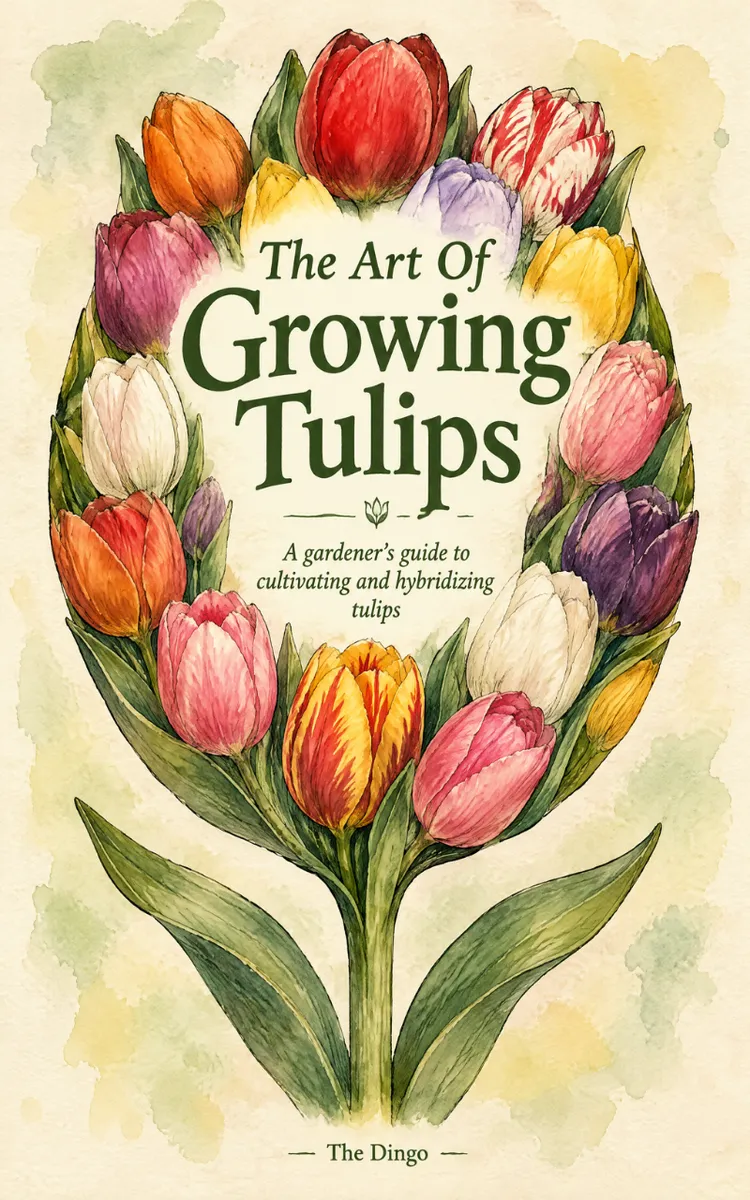
"The Art Of Growing Tulips" is a how-to guide book by The Dingo with 8 chapters and approximately 14,410 words. Raising, cultivating, caring for, and hybridizing tulips.
This book was created using Inkfluence AI, an AI-powered book generation platform that helps authors write, design, and publish complete books. It was made with the AI Ebook Generator.
Frequently Asked Questions
What is "The Art Of Growing Tulips" about?
Raising, cultivating, caring for, and hybridizing tulips
How many chapters are in "The Art Of Growing Tulips"?
The book contains 8 chapters and approximately 14,410 words. Topics covered include Choosing Tulip Types and Varieties, Preparing Beds and Soil, Planting Bulbs at the Right Depth, Seasonal Watering and Feeding, and more.
Who wrote "The Art Of Growing Tulips"?
This book was written by The Dingo and created using Inkfluence AI, an AI book generation platform that helps authors write, design, and publish books.
How can I create a similar how-to guide book?
You can create your own how-to guide book using Inkfluence AI. Describe your idea, choose your style, and the AI writes the full book for you. It's free to start.
Write your own how-to guide book with AI
Describe your idea and Inkfluence writes the whole thing. Free to start.
Start writingCreated with Inkfluence AI


