
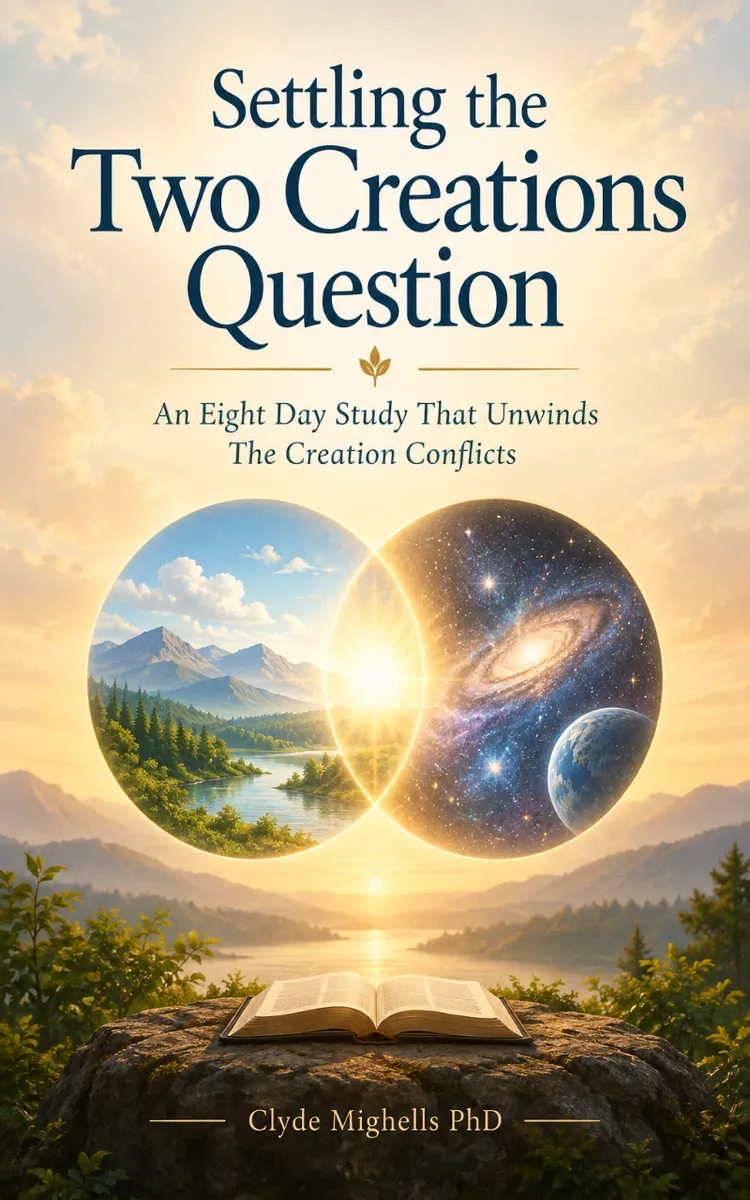

Read the first chapter
The whole of chapter one, free. About 6 min. Turn the pages with the arrows, your keyboard, or a swipe.
Chapter 1
A Beginning Held in Trust
Scripture Focus
Genesis 2:4-5
> These are the generations of the heavens and the earth when they were created, in the day that the LORD God made the earth and the heavens. When no bush of the field was yet in the land and no small plant of the field had yet sprung up - for the LORD God had not caused it to rain upon the land and there was no man to work the ground.
These verses invite us to read Genesis 2 as a focused account of God’s work in a particular place, not automatically as a second, competing timeline for the whole creation.
Genesis 1 gives a broad view: God creates the heavens and the earth, separates light from darkness, orders the waters, brings forth vegetation, appoints the heavenly lights, fills the sea and sky, makes land animals, and creates humanity. Genesis 2 narrows the view. It speaks of “the man,” the garden, the river flowing from Eden, the command concerning the tree, and the woman formed for the man.
That change in focus matters. Genesis 2:4 is a heading: “These are the generations of the heavens and the earth.” The Hebrew expression points to what came from, or proceeded from, the heavens and the earth. The passage then explains the condition of the land before cultivated growth and before rain, and it describes God’s special work with the man and the garden.
A careful reading doesn’t require us to choose between Genesis 1 and Genesis 2. It asks us to notice what each account emphasizes. Genesis 1 presents the general creation. Genesis 2 presents creation within creation: God’s distinct work in Eden, including the formation of Adam, the planting of the garden, and the making of Eve.
Reflection
The first question isn’t, “Which account should I trust?” Scripture gives us no reason to ask that. The better question is, “What is each account telling me?” Genesis 1 repeatedly uses broad terms for humanity, while Genesis 2 speaks of “the man.” In Genesis 1:26-27, God says, “Let us make man in our image,” and the text uses a general term that can refer to humankind. In Genesis 2:7, however, the LORD God forms “the man” from the dust of the ground and breathes into his nostrils the breath of life. The wording becomes personal and particular.
That distinction helps us read the opening chapters without forcing every sentence into the same level of detail. A map shows an entire region; a property survey marks one field, one boundary, and one water line. Both can be accurate. Genesis 1 gives the wide view. Genesis 2 takes us into Eden.
The timing clues are important, too. Genesis 2:5 says there was no bush of the field, no small plant of the field, no rain, and no man to work the ground. The passage does not say that no vegetation existed anywhere. Genesis 1 has already described vegetation. Rather, Genesis 2 describes the land before the particular plants associated with the field and before the human cultivation of the ground. Then God forms the man, plants the garden, and places him there. The apparent conflict begins to clear when we respect the passage’s own boundaries.
This matters in ordinary faith. We often feel pressure to make every biblical passage sound identical before we will trust it. But faithful reading sometimes means allowing a text to do its own work. A business ledger and a personal journal may describe the same week from different angles. The ledger records the whole operation; the journal records the one decision that shaped the day. Neither cancels the other.
Genesis 2 also gives us a reason to take Adam’s creation seriously. God doesn’t merely announce that humanity exists. He forms the man from dust and breathes life into him. The Hebrew word often translated “man” is related to adamah, the ground. The connection is deliberate: the man comes from the ground, yet his life comes from God’s breath. This is not a poetic way of denying his historical identity. It is a statement about his origin, dependence, and unique calling.
God can create with maturity already present. Jesus turned water into wine, not grape juice that slowly fermented through years of ordinary processes (John 2:1-11). Adam could be created as a grown man, and the earth could bear an appearance of age, including geological layers and fossils, without making God deceptive. The central biblical question is not whether created things had a history of appearance. It is what Scripture says about God’s act of creation and about Adam’s place in human history.
For a reader studying Genesis, this means we should resist two opposite habits. We shouldn’t dismiss the biblical text because its accounts differ in emphasis. Neither should we solve every question by ignoring the words that create the question. The phrases “the man,” “the land,” and “there was no man to work the ground” deserve patient attention. So do the wider references to humanity in Genesis 1.
The devotional result is steadying. When a difficult passage appears, we can slow down, observe its wording, compare Scripture with Scripture, and pray for wisdom. Trust doesn’t require hurried answers. It requires honest attention.
Practice for Today
1. Read the two accounts side by side. Set aside fifteen minutes for Genesis 1:24-31 and Genesis 2:4-25. Mark every broad term in Genesis 1 that refers to humanity, such as “mankind,” and every particular expression in Genesis 2, especially “the man.” Then note the setting of each passage: Genesis 1 describes the ordered world; Genesis 2 describes Eden and the man placed there.
2. Journal the timing clues in Genesis 2:5. Write the four details in your own words: no bush of the field, no small plant of the field, no rain, and no man to work the ground. Underneath, answer this question: “What does the text actually say, and what have I sometimes assumed it says?” A careful answer might observe that Genesis 2 does not deny all plant life. It identifies a particular condition of the land before cultivation and before rain.
3. Pray through the difference between general and particular. Set a timer for five minutes. Thank God for the vastness of His creation described in Genesis 1, then thank Him for the personal care shown in Genesis 2. Ask for the discipline to read difficult passages without suspicion or haste. End by writing one sentence beginning, “Today I will trust Scripture by paying attention to…”
The aim isn’t to win an argument with someone who has a different reading. It’s to become the kind of reader who hears the text accurately. When a question about Genesis arises, return first to the words on the page. Check the context. Compare related passages. Use reliable Hebrew tools and conservative study resources carefully, but don’t let a complicated chart replace a plain sentence of Scripture.
A useful habit is to keep two columns in your notes. Label one “What the text says” and the other “What I infer.” For Genesis 2:5, the first column might say, “No bush of the field had yet appeared; no rain had fallen; there was no man to work the ground.” The second column can then hold questions about sequence and setting without confusing interpretation with quotation. That small distinction protects both faith and careful study.
Closing Prayer
Lord God, give me patience to read Genesis as You gave it, honoring both its broad account and its focused account of Eden. Help me notice the words “the man,” “the land,” and “the garden” without forcing them into meanings the text does not give. Teach me to trust Your truth, study it carefully, and live today as a creature who depends on Your life-giving breath. Amen.
End of chapter one. 6 more chapters in the full book.
Swipe or use the arrows to turn the page


What's inside: 7 chapters
- 1. A Beginning Held in Trust
- 2. The World and the Garden Within It
- 3. Formed, Breathed Into, and Called to Serve
- 4. A Boundary, a Fall, and a World Beyond Eden
- 5. Many Peoples, One Human Story
- 6. Two Lines, Violence, and the Coming Flood
- 7. Hope After the Waters
About this book
"Creation Within Creation" is a religious devotional book by Clyde Mighells PhD with 7 chapters and approximately 9,328 words. A conservative biblical interpretation of Genesis creation accounts, humanity, Eden, and the Flood.
This book was created using Inkfluence AI, an AI-powered book generation platform that helps authors write, design, and publish complete books.
Frequently Asked Questions
What is "Creation Within Creation" about?
A conservative biblical interpretation of Genesis creation accounts, humanity, Eden, and the Flood
How many chapters are in "Creation Within Creation"?
The book contains 7 chapters and approximately 9,328 words. Topics covered include A Beginning Held in Trust, The World and the Garden Within It, Formed, Breathed Into, and Called to Serve, A Boundary, a Fall, and a World Beyond Eden, and more.
Who wrote "Creation Within Creation"?
This book was written by Clyde Mighells PhD and created using Inkfluence AI, an AI book generation platform that helps authors write, design, and publish books.
Write your own religious devotional book with AI
Describe your idea and Inkfluence writes the whole thing. Free to start.
Start writingCreated with Inkfluence AI


