

Read the first chapter
The whole of chapter one, free. About 8 min. Turn the pages with the arrows, your keyboard, or a swipe.
Chapter 1
Defining the College Transition Coach
Why Role Boundaries Matter in College Transition Coaching
When a student calls at 11:30 p.m. because panic has made sleep impossible, should you coach, counsel, mentor, or call a pastor? Your answer protects the student, your ministry, and your coaching practice.
Young adults entering college often face academic pressure, homesickness, family conflict, spiritual questions, financial stress, and mental-health concerns at the same time. A coach can help a student clarify goals, make decisions, build routines, and follow through. A coach cannot diagnose mental illness, provide clinical treatment, replace a pastor, or become the student’s parent. Confusion about these roles can delay needed care or create dependence.
Christian coaching rests on two foundations. First, Scripture treats people as whole persons made in God’s image (Genesis 1:27), with bodies, minds, relationships, choices, and spiritual lives. Second, Scripture calls helpers to practice wisdom and humility. Proverbs 11:14 values wise counsel, while Galatians 6:2 calls believers to carry one another’s burdens. These passages support care, but they do not erase professional limits. Moses needed Jethro’s correction about his workload (Exodus 18:17-23), and even Jesus sent people to appropriate helpers when the situation required it (Luke 10:30-37).
After reading this section, you should be able to explain your role in one sentence, identify when another professional should lead, and tell a student what will happen when a concern exceeds your training. Ask yourself: Could a student, parent, pastor, counselor, and college administrator each understand my role from my written agreement? If not, your boundaries need work.
The CLEAR Role-Boundary Map
Use the CLEAR Role-Boundary Map whenever you assess a new client or face a difficult request. CLEAR stands for Clarify, Locate, Establish, Act, and Review. The map gives you a repeatable way to separate coaching from counseling, mentoring, and pastoral care.
1. Clarify the request. Ask what the student wants help accomplishing. “I want to choose classes and create a weekly study plan” fits coaching. “I keep having frightening memories and cannot function” requires a clinical referral because the student describes possible trauma symptoms, not only a performance goal.
2. Locate the proper helping role. Coaching focuses on present choices, goals, skills, and accountability. Counseling or psychotherapy addresses mental-health symptoms, emotional wounds, diagnosis, and treatment. Mentoring offers guidance based on the mentor’s experience, such as explaining how office hours work. Pastoral care provides spiritual guidance, prayer, Scripture, church support, and care within a pastor’s calling. One person may serve in more than one role, but you must name which role you are using.
3. Establish the boundary. Explain what you can and cannot provide before sessions begin. State your training, fees, communication hours, confidentiality limits, emergency procedure, referral process, and whether parents or pastors may receive information. A written coaching agreement reduces confusion because everyone can review the same expectations.
4. Act within your training. Coach the student through a defined goal, use questions, teach practical skills, and track agreed actions. Do not diagnose depression, interpret trauma, promise confidentiality without exceptions, or use prayer to avoid a needed referral. James 3:1 reminds teachers that responsibility increases with influence; your title does not make you qualified for every problem.
5. Review the fit. At the end of each session, ask whether coaching still matches the student’s needs. Record the goal, action step, concern, and decision. If risk or symptoms increase, pause coaching and connect the student with qualified care. Review your own conduct with a supervisor or trusted professional, because good boundaries require honest examination.
A useful distinction appears in the questions each role asks. A coach asks, “What decision must you make this week, and what action will you take?” A counselor asks, “What symptoms are you experiencing, and how do they affect your life?” A mentor may say, “Here is how I handled my first semester.” A pastor may ask, “How does your faith shape this decision, and how can the church support you?” Coaching may include prayer or Scripture when the student agrees, but spiritual practices do not turn coaching into pastoral care.
Consider a student who misses assignments because he feels overwhelmed. You can help him list deadlines, divide a research paper into four work sessions, and schedule a meeting with his professor. If he reports hearing voices, plans to harm himself, or cannot care for himself, stop normal coaching and follow your safety and referral plan. Call emergency services when immediate danger exists. Do not promise to manage the crisis alone.
A Christian psychological foundation also requires respect for agency. Philippians 2:12-13 holds human responsibility and God’s work together without making the coach the student’s savior. Ask permission before offering advice. Separate facts from assumptions. Notice strengths without denying pain. When you use Scripture, explain why the passage fits the student’s stated concern rather than using a verse as a quick answer. This approach honors both faith and careful psychological practice.
Your practical takeaway is simple: define the role before you provide help, and reassess the role whenever the student’s needs change.
Applying CLEAR to a First Client
A new client requests six weekly sessions before starting college. The student wants help with time management, choosing between two majors, and finding a healthy church near campus. During the intake, the student also reports three nights of no sleep, intense fear, and thoughts of self-harm. CLEAR prevents you from treating every concern as a coaching assignment.
1. Clarify the request during a 60-minute intake. Write three coaching goals: create a weekly schedule, compare major requirements, and identify three local churches. Separately record the safety concern in objective language: “Student reports thoughts of self-harm and three nights of little sleep.” Do not write a diagnosis. Expected outcome: you can distinguish goals from warning signs.
2. Locate the proper role within the first 10 minutes of discussing risk. Tell the student, “I can coach your transition goals, but I am not a licensed mental-health provider. Because you mentioned self-harm, you need immediate support from a qualified professional.” Ask whether the student has an immediate plan, access to means, or current danger. Expected outcome: you determine whether emergency action is necessary.
3. Establish the boundary in writing before further coaching. Provide a two-page agreement covering the six-session limit, $75 session fee, payment timing, cancellation policy, text response window, confidentiality limits, parent involvement, emergency contacts, and referral procedure. If the student is under eighteen, obtain the required parent or guardian consent and check local rules. Expected outcome: the student and family understand the service.
4. Act on safety before scheduling goals. If immediate danger exists, stay connected while contacting emergency services or the appropriate crisis resource. If no immediate danger exists, help the student contact a licensed counselor, campus counseling center, trusted family member, or pastor that day. Ask the student to confirm the appointment or connection. Expected outcome: qualified care begins before coaching continues.
5. Coach only after the referral is active and the student is safe. In session one, create a Sunday planning routine: list fixed commitments, place two 45-minute study blocks on Monday through Thursday, and schedule one rest period. For the major decision, compare required courses, interests, and career information without telling the student which major to choose. Expected outcome: the student leaves with a visible schedule and a decision worksheet.
6. Review after each session. Use a brief check-in: “Are you safe today? Are you connected with your counselor or other support? Is coaching still helping with the agreed goals?” Document the answers, actions, and referrals. Expected outcome: you notice changes early and avoid acting as the student’s therapist.
7. Finish responsibly after six sessions. Review the original goals, completed actions, remaining concerns, and next support plan. Give the student copies of the schedule, decision worksheet, referral contacts, and a maintenance plan for the first month of college. Expected outcome: the student knows how to continue without depending on unlimited access to you.
Quick checklist
• Define coaching, counseling, mentoring, and pastoral care in plain language. - Use the CLEAR Role-Boundary Map at intake and whenever concerns change. - Give the student a written agreement before paid coaching begins. - Ask directly about immediate safety when self-harm appears. - Refer symptoms, diagnosis, trauma, and crisis needs to qualified professionals. - Obtain permission before prayer, Scripture, advice, or contacting support people. - Record facts, actions, referrals, and follow-up dates. - End the coaching relationship with a written transition plan.
The scenario shows the central rule: a referral does not mean you abandon the student. It means you place each need with the person prepared to address it while you remain within your own role.
Mistakes That Blur the Coach’s Role
Treating every spiritual concern as a coaching problem
A student may ask whether God wants a particular major or whether anxiety proves weak faith. Quoting Romans 8:28 without listening can shame the student and hide a mental-health concern. Prayer can support care, but it cannot replace assessment or treatment.
Do this: Ask what the student means, listen for symptoms and risk, and offer prayer or Scripture with permission. Refer when the concern exceeds coaching.
Not this: Use a Bible verse to end a difficult conversation or imply that stronger faith will remove clinical symptoms.
Becoming the student’s mentor, counselor, and emergency contact
Sharing your own college experience can help, but too much personal advice shifts the student from making decisions to copying yours. Unlimited texting also creates dependence and makes crisis coverage unclear.
Do this: Share one relevant lesson, return to the student’s goal, and state communication hours in the contract. Direct emergencies to emergency services and qualified crisis support.
Not this: Answer messages all night, make decisions for the student, or promise, “You can call me anytime, no matter what.”
Continuing coaching after the fit has ended
A student may begin with study planning and later disclose untreated depression, abuse, substance misuse, or repeated thoughts of suicide. Continuing the same coaching plan because the student paid for six sessions puts both of you at risk.
Do this: Pause the coaching plan, explain the concern without diagnosing, make a warm referral, document the action, and consult a supervisor or qualified professional. Resume only when the student has appropriate support and coaching remains suitable.
Not this: Label the student lazy, attempt therapy without training, or keep the concern secret from every responsible support person.
Clear boundaries do not make Christian coaching cold. They make your care honest, safe, and useful. When you know what belongs to coaching - and what belongs with a counselor, mentor, or pastor - you can help a young adult take the next responsible step without taking control of the student’s life.
End of chapter one. 7 more chapters and about 14,997 words in the full book.
Swipe or use the arrows to turn the page


What's inside: 8 chapters
- 1. Defining the College Transition Coach
- 2. Preparing for Specialized Practice
- 3. Finding and Contracting with Clients
- 4. Conducting Intake and Setting Goals
- 5. Coaching the First Semester
- 6. Supporting Faith and Emotional Wellbeing
- 7. Managing Risk and Complex Situations
- 8. Measuring Progress and Closing Well
About this book
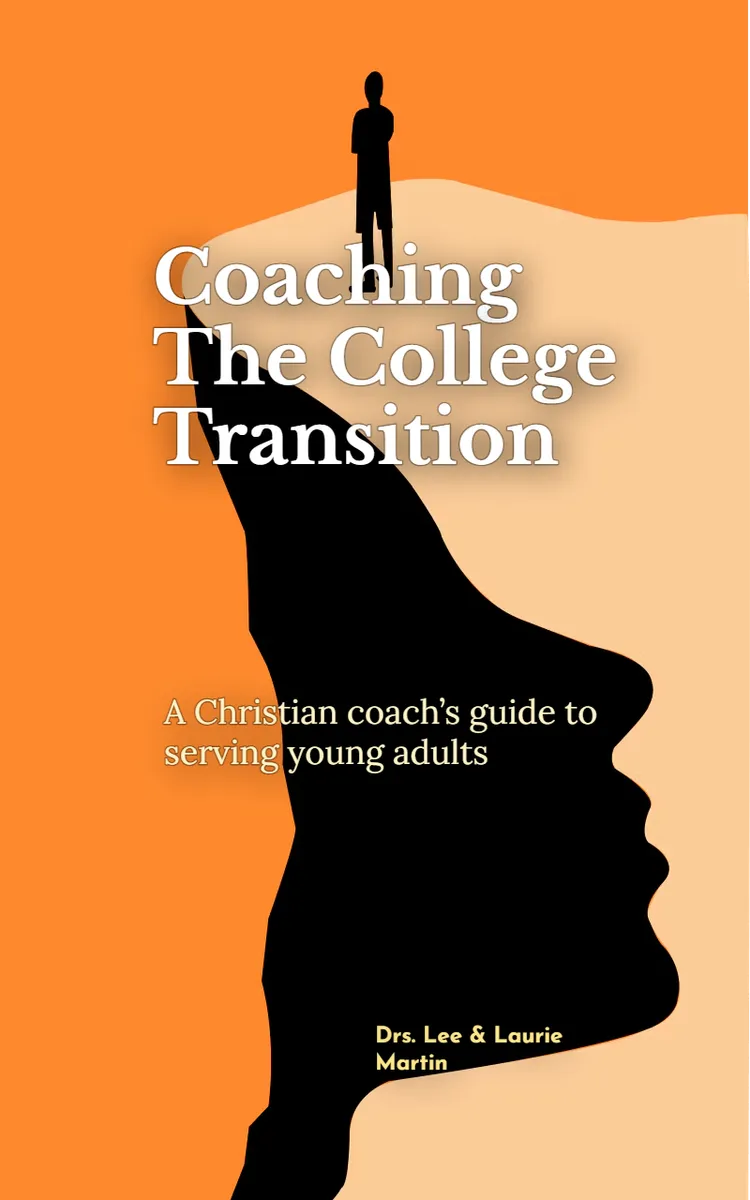
"Coaching The College Transition" is a how-to guide book by Drs. Lee & Laurie Martin with 8 chapters and approximately 14,997 words. Step-by-step training for Christian coaches supporting young adults through college transitions.
This book was created using Inkfluence AI, an AI-powered book generation platform that helps authors write, design, and publish complete books. It was made with the AI Ebook Generator.
Frequently Asked Questions
What is "Coaching The College Transition" about?
Step-by-step training for Christian coaches supporting young adults through college transitions
How many chapters are in "Coaching The College Transition"?
The book contains 8 chapters and approximately 14,997 words. Topics covered include Defining the College Transition Coach, Preparing for Specialized Practice, Finding and Contracting with Clients, Conducting Intake and Setting Goals, and more.
Who wrote "Coaching The College Transition"?
This book was written by Drs. Lee & Laurie Martin and created using Inkfluence AI, an AI book generation platform that helps authors write, design, and publish books.
How can I create a similar how-to guide book?
You can create your own how-to guide book using Inkfluence AI. Describe your idea, choose your style, and the AI writes the full book for you. It's free to start.
Write your own how-to guide book with AI
Describe your idea and Inkfluence writes the whole thing. Free to start.
Start writingCreated with Inkfluence AI


