
Read the first chapter
The whole of chapter one, free. About 4 min. Turn the pages with the arrows, your keyboard, or a swipe.
Chapter 1
The Furnace of Beginnings
Scripture Focus Psalm 139:13-14 > “For you formed my inward parts; you knitted me together in my mother’s womb. I praise you, for I am fearfully and wonderfully made.”
When you’ve lived with abuse so long you didn’t have words for it, God’s steadiness can feel quieter than fear - and still be real.
There are “hidden fires” that don’t look like flames. They look like a body that learns to brace before a voice even speaks. They look like the way your stomach tightens when the house gets too quiet. Starting from birth, that’s part of what abuse can do - it trains your senses, your expectations, your instincts. And for a long time, you might’ve called it “just how I am,” because what else would you call it when healing doesn’t have a name yet?
But Psalm 139 doesn’t treat you like an accident of pain. It says God formed you, knitted you together, and made you fearfully and wonderfully made - before you ever had the language for safety, before you could explain what happened, before anyone taught you how to name what hurt.
Reflection When abuse begins early, it can leave you with a kind of spiritual “unfinished vocabulary.” You know something is wrong, but you don’t know how to describe it. You might not even be able to say, “I was afraid,” because fear has been your background noise for so long. So the first hidden fire is fear itself - fear that grows roots in the body, not just the mind. It’s the way your thoughts race when nothing is happening. It’s the way you can be exhausted and still feel on alert.
And there’s a second hidden fire: shame. Abuse often teaches you that your feelings are trouble, your needs are too much, and your voice doesn’t belong. So you learn to shrink. Maybe you learned to keep the peace. Maybe you learned to be “easy.” Maybe you learned to stay quiet so the storm didn’t get worse. That’s not your personality problem - that’s survival training. The takeaway I want you to hold close is this: God met you in the middle of fear, long before you had words for healing.
Here’s how that shows up in real life. You may not remember a “miracle moment,” but you remember small mercies. The teacher who didn’t ask questions but still treated you with kindness. The song on the radio that made you feel less alone for three minutes. The moment you prayed without knowing what you were doing - just one sentence, barely formed, like, “God, help.” Even if you couldn’t trust people, you could still reach for God. Even if you couldn’t say “abuse,” God still heard what you couldn’t explain.
Psalm 139 gives you a different foundation than fear. It doesn’t start with what happened to you. It starts with who God says you are. “Fearfully and wonderfully made” doesn’t ignore the damage. It re-centers your identity when abuse tried to steal it. And the practical part matters: when your body reacts - when your chest tightens, when your mind floods - try not to argue with yourself like, “I shouldn’t feel this.” Instead, gently translate. “My body is remembering.” “My nervous system is doing what it learned.” Then, bring God into that moment. Not later. Not after you feel stronger. Right there.
Practice for Today 1. One-minute “knitting” check (body + scripture). Put a hand on your chest and read Psalm 139:13-14 out loud once. Then ask yourself, slowly: “Where do I feel fear in my body today?” Don’t force an answer - just notice. If you want a measuring tool, use something simple: rate it from 0 to 10. (No judgment. Just data.) Write the number and one sentence about what you noticed.
2. Journaling prompt: “What was hidden fire?” Take 5 minutes to write freely. Use this prompt exactly: “I think the hidden fire in my life was…” Then add one example from the last 24 hours. For instance: “I froze when someone raised their voice,” or “I felt sick before a phone call,” or “I kept apologizing even when I didn’t do anything wrong.” End with: “God met me by…” (even if the “by” is small - like a breath, a song, a verse, a moment of courage).
3. Timed prayer with a gentle boundary (3 minutes). Set a timer for 3 minutes. During that time, pray only one line: “God, I bring you the fear I can’t name.” When the timer ends, stop. Don’t keep grinding for the perfect prayer. If you get stuck, use a simple variation: “God, show me your mercy today.” This is about practicing presence, not performing.
Closing Prayer God, I thank You that I wasn’t made by fear. I ask You to meet me in the moments my body braces and my mind goes quiet. Help me trust that You have known me from the beginning, and help me learn Your gentle presence in the middle of what I survived. I receive Your peace today, in Jesus’ name. Amen.
End of chapter one. 24 more chapters in the full book.
Swipe or use the arrows to turn the page
What's inside: 25 chapters
- 1. The Furnace of Beginnings
- 2. Learning to Pray in the Dark
- 3. Hope That Doesn’t Break
- 4. Surrendering the Fire
- 5. Faith Through the Fire: Walking Forward
- 6. Chapter 6
- 7. Chapter 7
- 8. Chapter 8
- 9. Holding the Thread of Hope
- 10. Chapter 10
- 11. Chapter 11
- 12. Chapter 12
- 13. Rekindled Steps Forward
- 14. Chapter 14
- 15. Steady Hands, Quiet Fire
- 16. Chapter 16
- 17. Chapter 17
- 18. Chapter 18
- 19. Chapter 19
- 20. How to Utilize This
- 21. Chapter 21
- 22. Chapter 22
- 23. Quiet Water, Steady Hands
- 24. The Long Road Home
- 25. Thanking our Holy Father
About this book
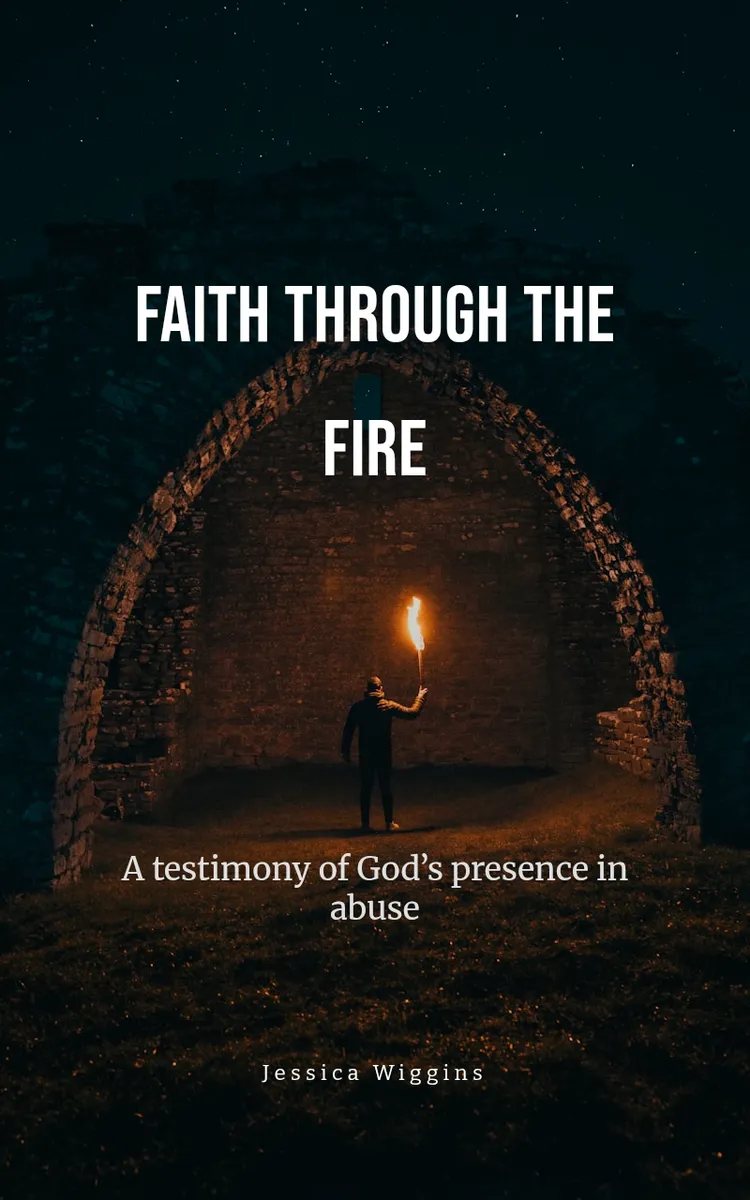
"Faith Through The Fire" is a religious devotional book by Jessica Wiggins with 25 chapters and approximately 15,923 words. What if the fear you learned in childhood was never the whole story, and God has been forming you through it all? Faith Through The Fire is a devotional for survivors of lifelong abuse, written for the days when healing feels unfinished, prayer feels small, and hope wobbles. Through Scripture like Psalm 139 and Matthew 6, you will learn to name your inner “hidden fires,” pray honestly when words fail, and anchor yourself in God’s character when setbacks hit.
This book was created using Inkfluence AI, an AI-powered book generation platform that helps authors write, design, and publish complete books.
Frequently Asked Questions
What is "Faith Through The Fire" about?
What if the fear you learned in childhood was never the whole story, and God has been forming you through it all? Faith Through The Fire is a devotional for survivors of lifelong abuse, written for the days when healing feels unfinished, prayer feels small, and hope wobbles. Through Scripture like Psalm 139 and Matthew 6, you will learn to name your inner “hidden fires,” pray honestly when words fail, and anchor yourself in God’s character when setbacks hit. This is faith that does not rush you, and guidance that meets you in the long middle, where your body remembers and your spirit needs steadiness. Read now and begin turning survival into worship.
How many chapters are in "Faith Through The Fire"?
The book contains 25 chapters and approximately 15,923 words. Topics covered include The Furnace of Beginnings, Learning to Pray in the Dark, Hope That Doesn’t Break, Surrendering the Fire, and more.
Who wrote "Faith Through The Fire"?
This book was written by Jessica Wiggins and created using Inkfluence AI, an AI book generation platform that helps authors write, design, and publish books.
Write your own religious devotional book with AI
Describe your idea and Inkfluence writes the whole thing. Free to start.
Start writingCreated with Inkfluence AI


