
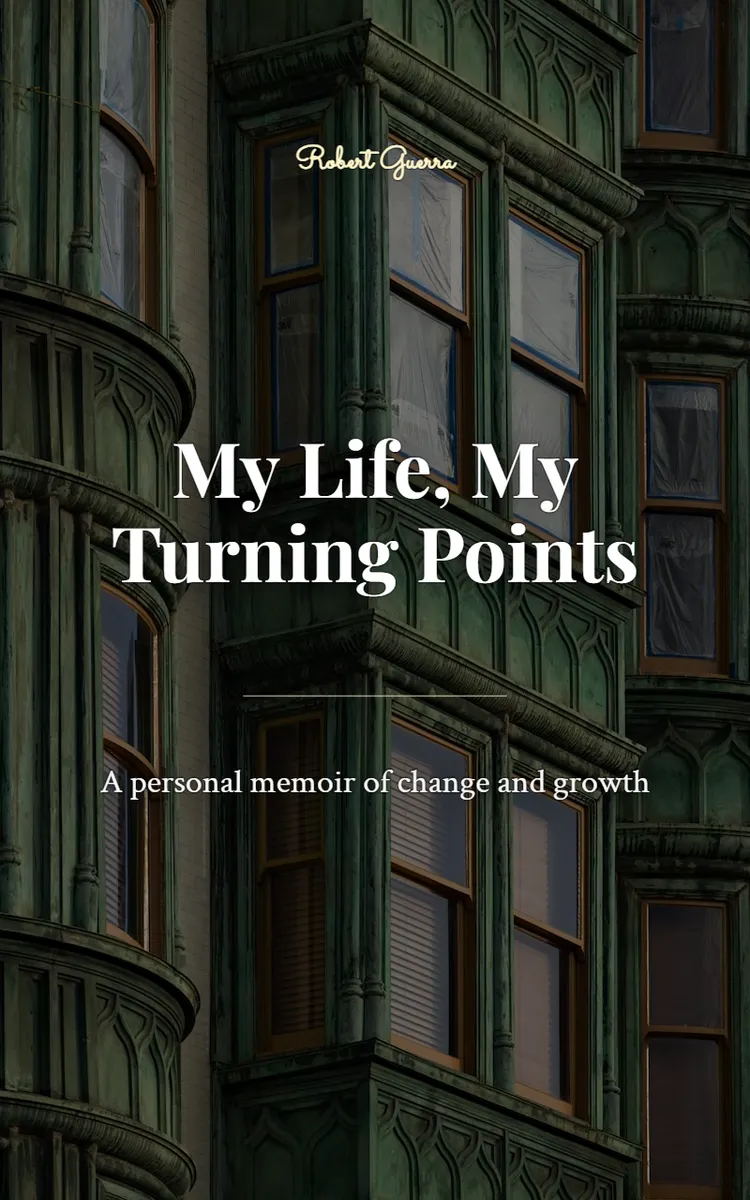
My Life, My Turning Points
Created with Inkfluence AI
A personal memoir about life events and personal transformation
Table of Contents
- 1. Leaving Home for First Job
- 2. Saying No to a Toxic Boss
- 3. Following the Missing Timecard Clue
- 4. Filing the Claim at City Labor Court
- 5. Choosing a New Life After the Transfer
Preview: Leaving Home for First Job
A short excerpt from “Leaving Home for First Job”. The full book contains 5 chapters and 9,578 words.
The key stuck halfway into the lock, and for a moment I stood in the narrow hallway with one hand on my suitcase and the other twisting uselessly against the metal.
The apartment smelled of fresh paint, dust, and something faintly sour beneath the kitchen sink. Outside, traffic moved along the unfamiliar street, its tires hissing over damp pavement. I had arrived in the new city with two suitcases, a small box of dishes, and enough confidence to believe that wanting independence was almost the same as knowing how to manage it.
I tried the key again. This time the lock turned.
Inside, the apartment was smaller than it had appeared in the photographs. The living room held barely enough space for a sofa and a narrow table. The bedroom window looked toward the brick wall of the next building, where an air-conditioning unit rattled at uneven intervals. The kitchen light flickered when I switched it on.
Still, it was mine.
I placed my suitcase beside the bed and listened to the quiet. At home, quiet had never really been quiet. There had always been a television in another room, dishes being washed, someone moving through the hallway, familiar sounds that made a house feel occupied. Here, every noise seemed to belong to someone else. A door slammed upstairs. Pipes knocked behind the wall. A siren passed and faded.
I called home that evening, mostly to hear a familiar voice. I described the apartment carefully, leaving out the parts that made me uneasy. I said the commute looked manageable and that the workplace was close enough to walk from the bus stop. I said I was tired, but in a good way.
After the call, I unpacked my work clothes and hung them in the small closet. I placed my shoes beside the door, set my alarm, and wrote the address of the office on a piece of paper even though it was already saved in my phone. The paper made the next morning feel more certain.
My first work week began before sunrise. The apartment was cold, and the floor felt hard beneath my feet. I heated water in a small saucepan because I had not yet bought a kettle. The tea tasted faintly of metal. While I drank it, I watched the sky turn from black to gray between the buildings.
I left early and still nearly missed the bus.
The route was unfamiliar, and I kept checking the street names through the window. At one stop, I got off too soon and walked several blocks with my bag pressed against my side. By the time I reached the office, my collar felt damp and my shoes had begun to rub against my heels.
No one there knew that I had spent the morning lost. I straightened my clothes in the restroom, washed my hands, and entered the workplace trying to look prepared.
The first days were filled with names, instructions, passwords, forms, and systems that seemed to have existed long before I arrived. I wrote everything down. I watched how people moved around one another, when they asked questions, when they stayed quiet, and which tasks were treated as urgent even when no one said so directly.
My coworkers were polite. A few were kind in the distracted way of people who were already carrying their own responsibilities. During lunch, I sat with two women from another section. They asked where I had moved from and how I liked the city.
“It’s different,” I said.
One of them smiled. “Different gets expensive.”
I laughed because I thought she was joking. She was not entirely joking.
The other woman asked whether I had found a place close to work. When I told her about the apartment, she exchanged a glance with her colleague.
“Read everything your landlord gives you,” she said. “And keep copies.”
“I did,” I answered, though I had only skimmed the papers before signing.
“Good,” she said. “Some places charge for every little thing.”
At the time, I thought she meant repairs or utilities. I did not yet understand how many little things could become one large problem.
I wanted the job to work. That was the simple truth beneath all my careful planning. I wanted to earn my own money, pay my own bills, and prove that leaving home had not been an impulsive decision. Each evening, I returned to the apartment tired but pleased with myself. I learned which bus arrived most reliably. I found a grocery store that stayed open late. I discovered that buying prepared food every night could quietly consume the money I had set aside for necessities.
The apartment taught me its rules gradually.
The landlord had left a printed notice beside the front door. It explained that trash had to be placed outside only during certain hours. The first evening, I took the bag out too early. By the time I returned from work the next day, it was back outside my door with a note attached.
“Collection schedule,” the note said.
I stood there holding my keys, embarrassed though no one was watching.
A few days later, I used the washing machine after what I thought was a reasonable hour....
About this book
"My Life, My Turning Points" is a biography book by Robert Guerra with 5 chapters and approximately 9,578 words. A personal memoir about life events and personal transformation.
This book was created using Inkfluence AI, an AI-powered book generation platform that helps authors write, design, and publish complete books. It was made with the AI Biography Writer.
Frequently Asked Questions
What is "My Life, My Turning Points" about?
A personal memoir about life events and personal transformation
How many chapters are in "My Life, My Turning Points"?
The book contains 5 chapters and approximately 9,578 words. Topics covered include Leaving Home for First Job, Saying No to a Toxic Boss, Following the Missing Timecard Clue, Filing the Claim at City Labor Court, and more.
Who wrote "My Life, My Turning Points"?
This book was written by Robert Guerra and created using Inkfluence AI, an AI book generation platform that helps authors write, design, and publish books.
How can I create a similar biography book?
You can create your own biography book using Inkfluence AI. Describe your idea, choose your style, and the AI writes the full book for you. It's free to start.
Write your own biography book with AI
Describe your idea and Inkfluence writes the whole thing. Free to start.
Start writingCreated with Inkfluence AI


