
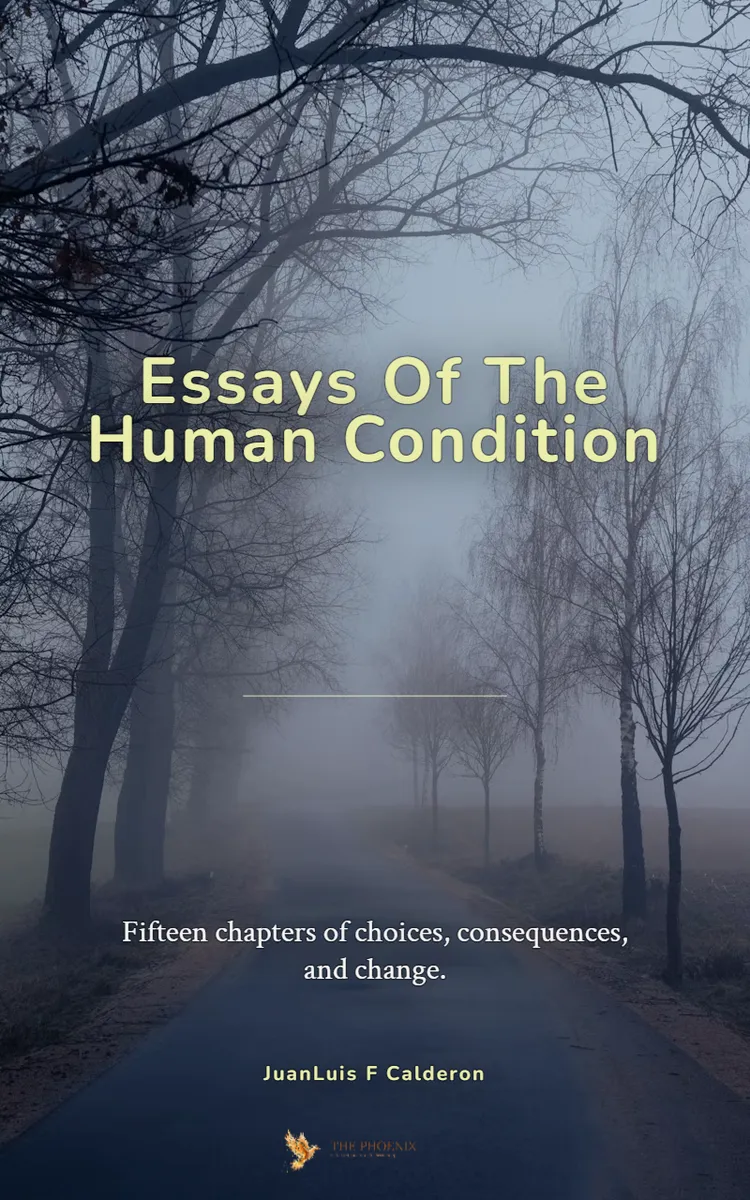

Essays on life chapters through ADHD, menopause, and PTSD experiences
Table of Contents
- 1. The Morning I Forgot Myself
- 2. When Focus Becomes a Moral Test
- 3. Hot Flashes, Cold Decisions
- 4. The Andropause Silence That Lies
- 5. PTSD Triggers Aren’t Plot Twists
- 6. Wise Choices Start With Tiny Delays
- 7. When Love Becomes a Scheduling Problem
- 8. The Gift of Losing the Plan
- 9. Grief Has a Body, Not a Timeline
- 10. The Debt of Unsaid Boundaries
- 11. Andropause Rage and the Myth of Control
- 12. ADHD Money: Impulse vs. Integrity
- 13. Menopause Sleep: The Quiet Revolution
- 14. Love Lost Without a Villain
- 15. The Chapter We Choose After Anomalies
Preview: The Morning I Forgot Myself
A short excerpt from “The Morning I Forgot Myself”. The full book contains 15 chapters and 22,250 words.
The Morning I Forgot MyselfThe first thing I noticed was the cold tea.
It had been sitting beside the bathroom sink since six-thirty, a pale skin forming across the top. I’d made it before my shower, then wandered into the bedroom to find a clean shirt, opened a drawer, remembered an email, picked up my phone, and somehow arrived back at the sink forty minutes later with no shirt and no memory of why I was there. The mirror showed a woman with wet hair, one earring, and a look of mild betrayal.
I stared at her.
Not dramatically. There was no thunderclap, no cinematic collapse. Just a small, unsettling pause in which I couldn’t quite recognise the person looking back. My face was familiar. The tiredness was familiar. Even the irritation had an old address. But underneath it all was a blankness, as if someone had removed the labels from the drawers of my mind.
I had forgotten the appointment that morning. I had forgotten the reason for the appointment. More troublingly, I had forgotten what I wanted from it.
That last part stayed with me.
For years, I had treated forgetting as a character flaw. I forgot passwords, names, shopping bags, birthdays, the location of my glasses while they were on my head. I forgot why I had walked upstairs. I forgot the sentence I was speaking halfway through saying it. ADHD gave the forgetting a particular rhythm. My attention didn’t disappear so much as leap sideways, drawn by a sound, a thought, a notification, a patch of light on the floor.
People saw the outcome. The missed deadline. The unpaid bill. The unfinished form. They didn’t see the dozen small collisions that happened before it. A task would enter my mind, bright and urgent, then another thought would slide in beside it. The first thought would remain somewhere, technically present, but unreachable. I could feel responsible for it without being able to find it.
That kind of living makes identity slippery. We tend to think of identity as something solid, a name carved into a door. I had imagined myself as organised, reliable, capable. Those words were not always true, but they were part of the person I believed I was trying to be. Then ADHD kept handing me evidence from the other side. The calendar said careless. The kitchen said distracted. The bank account said overwhelmed. My intentions told one story, while my visible life told another.
There is a particular shame in knowing you care and still not managing to behave as though you care. It’s hard to explain that a forgotten appointment wasn’t forgotten because it didn’t matter. Sometimes it was forgotten because it mattered so much that the thought of it became too large, and my mind escaped through a side door. Sometimes the task was boring. Sometimes it was frightening. Sometimes I was already carrying too many invisible things, and one more slipped from my hands.
Then the hormones began changing the weather.
Menopause did not arrive with a neat announcement. It came as a series of odd disturbances. Sleep became unreliable. My body warmed itself at three in the morning as if someone had left an oven door open. Words vanished in ordinary conversation. I’d be telling a story and lose the name of a town I had visited three times. I could see the place clearly: the narrow street, the red awning, the smell of bread. The name would not come.
I started describing this as “my brain being broken,” usually with a laugh. The laugh helped other people feel less uncomfortable. It also helped me avoid admitting how frightened I was.
Hormonal change can blur the edges of a person who has spent decades using competence as proof of worth. If I could remember, organise, produce, respond, and keep the household moving, I felt like myself. When those abilities became uneven, I didn’t simply lose efficiency. I lost a familiar route back to my own reflection.
The same thing happened with emotion. Anger arrived quickly, sometimes before I knew what had happened. A harmless question could feel like an accusation. A late delivery could become evidence that the whole world was conspiring to make my life harder. Then, ten minutes later, I would be standing in the kitchen wondering who had borrowed my body and used it to speak.
This is where trauma complicates the picture. The past doesn’t always stay in the past just because the calendar insists it should. A slammed door, a certain tone of voice, a smell of disinfectant, and suddenly the present has been crowded out. The body reacts before the mind has finished identifying the danger. I might know, intellectually, that I am safe. My shoulders don’t know. My stomach doesn’t know. My breathing certainly doesn’t know.
When ADHD, hormonal change, and trauma overlap, the question of choice becomes murky. Not impossible. Not erased. Murky.
That was the part I resisted.
I wanted a clean explanation. I wanted to know whether I was distracted, exhausted, frightened, angry, hormonal, or simply failing to manage myself....
About this book
"Essays Of The Human Condition" is a essay collection book by JuanLuis F Calderon with 15 chapters and approximately 22,250 words. Essays on life chapters through ADHD, menopause, and PTSD experiences.
This book was created using Inkfluence AI, an AI-powered book generation platform that helps authors write, design, and publish complete books.
Frequently Asked Questions
What is "Essays Of The Human Condition" about?
Essays on life chapters through ADHD, menopause, and PTSD experiences
How many chapters are in "Essays Of The Human Condition"?
The book contains 15 chapters and approximately 22,250 words. Topics covered include The Morning I Forgot Myself, When Focus Becomes a Moral Test, Hot Flashes, Cold Decisions, The Andropause Silence That Lies, and more.
Who wrote "Essays Of The Human Condition"?
This book was written by JuanLuis F Calderon and created using Inkfluence AI, an AI book generation platform that helps authors write, design, and publish books.
Write your own essay collection book with AI
Describe your idea and Inkfluence writes the whole thing. Free to start.
Start writingCreated with Inkfluence AI


