
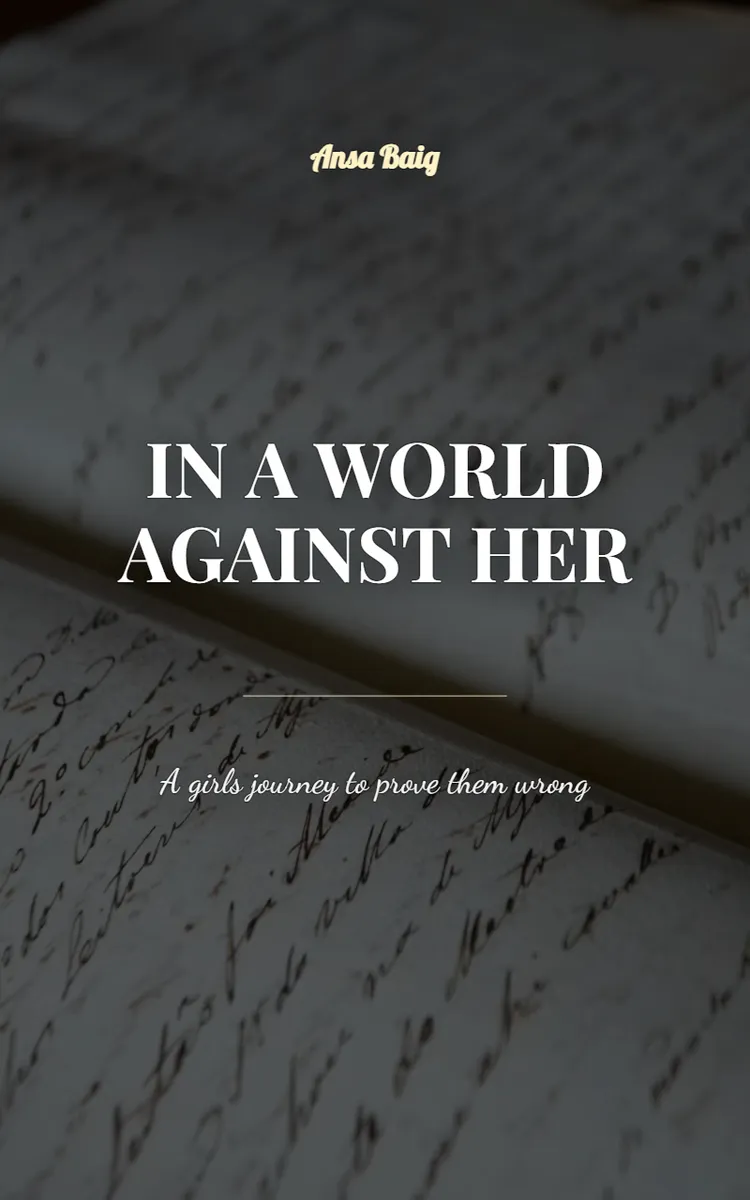

A teen Indian girl's journey from forced marriage to CEO success
Table of Contents
- 1. The Village Dream Under Pressure
- 2. Choosing Study Over Submission
- 3. The Eco-Seed Inquiry Leads to Escape
- 4. Aunt Kavya’s Plan and the Australia Offer
- 5. From Eco Trainee to CEO
Preview: The Village Dream Under Pressure
A short excerpt from “The Village Dream Under Pressure”. The full book contains 5 chapters and 9,913 words.
The brass school bell rang beyond the fields just as Meera Devkar lifted the water pot from the courtyard well. Its thin sound traveled over the mud walls, past the neem tree, and into the kitchen where her mother was sorting lentils. Meera stopped with the pot pressed against her hip.
Fifteen years old, she knew the distance to the small village school by every turn in the lane: past the broken shrine, around the banyan tree, across the patch of ground where goats slept in the afternoon. She knew the sound of chalk against a blackboard and the smell of warm dust rising beneath school sandals. Those details had become precious because, in her home, school was no longer spoken of as though it belonged to her.
“Meera,” her mother called from inside. “Bring the water and come here.”
She carried the pot into the kitchen. Smoke from the cooking fire stung her eyes, and the scent of cumin clung to the air. Her mother did not look up from the lentils.
“Your father has spoken to the matchmaker,” she said.
The words settled between them more heavily than the water pot.
Meera placed it beside the stove. “About what?”
Her mother’s fingers moved through the lentils, removing small stones. “Do not pretend you do not understand.”
“I understand that I have to go to school.”
Her mother’s hands stopped. “School will not feed you. School will not protect you. You are fifteen, Meera. It is time to think about your home.”
Meera wanted to tell her that she had already thought about a home. She had imagined one with shelves of books, a desk near a window, and enough space to work without anyone asking why she was still awake. She had imagined studying beyond the village, finding work, and building something that helped people live differently. The dream had no clear shape yet, but it had stayed with her through every chore and every dismissal.
Instead, she said, “I can study and still help here.”
Her mother gave a tired shake of her head. “Your father has decided.”
That was how decisions were made in their house. They arrived in a man’s voice and became a woman’s duty.
Meera left the kitchen before her face could reveal too much. In the courtyard, the stone beneath her bare feet was warm from the morning sun. Rohan, her elder brother, sat near the wall repairing the strap of his schoolbag. He watched her without asking at first. He had heard enough.
“Is it true?” he said.
Meera nodded.
Rohan lowered the strap into his lap. “Who is he?”
“I do not know.”
“Did Father tell you?”
“He told Mother. That is almost the same thing.”
Rohan looked toward the kitchen. Their father’s voice came from the inner room, low and firm as he spoke to someone on the other side of the wall. The house seemed to shrink around it.
“You should go to school today,” Rohan said.
Meera looked down at her hands. “What if they stop me?”
“Then go until they stop you.”
It was not a solution, but it gave her something to hold. She changed into her faded blue uniform and tied her hair with the ribbon Anika had given her. The ribbon had begun to fray at one edge, but Meera kept it because Anika had said it made her look like someone who belonged in a city.
The lane to school was already busy. Women stood outside doorways with baskets of vegetables, and children ran ahead carrying books against their chests. A bicycle bell rang behind Meera. Dust rose around her ankles, carrying the dry smell of earth and cattle. At the bend near the banyan tree, two women paused their conversation as she passed.
“That is Devkar’s daughter,” one of them said.
“The marriage will be soon, I heard.”
Meera kept walking. Their voices followed her farther than their footsteps could have.
At school, she sat on the front bench, though there were empty places behind her. The teacher wrote a problem on the board, and Meera copied it carefully. For an hour, the room held her. The scrape of pencils, the heat pressing through the windows, and the teacher’s measured voice formed a small world where her age did not decide her future.
Then Anika slipped a folded piece of paper beneath her notebook.
After class, they stood behind the school’s side wall where a narrow strip of shade protected them from the sun. Anika’s braid rested over one shoulder, and a smear of blue chalk marked her wrist.
“Is it true?” Anika asked.
Meera nodded.
“Your parents are arranging it?”
“They have spoken to a matchmaker.”
Anika’s expression tightened. “You are fifteen.”
“I know.”
“Tell the teacher.”
Meera looked toward the classroom. The teacher was gathering books, and two older girls were sweeping the floor. “What will she do? My father will say I am disobedient. Then they will keep me inside.”
Anika unfolded the paper. It contained a rough timetable written in small handwriting: early morning, before chores; schoolwork during the midday break; reading at night when the house slept.
“I made this for you,” Anika said. “It is not much.”
Meera read the lines twice....
About this book
"From Village Dreams To CEO" is a biography book by Ansa Baig with 5 chapters and approximately 9,913 words. A teen Indian girl's journey from forced marriage to CEO success.
This book was created using Inkfluence AI, an AI-powered book generation platform that helps authors write, design, and publish complete books. It was made with the AI Biography Writer.
Frequently Asked Questions
What is "From Village Dreams To CEO" about?
A teen Indian girl's journey from forced marriage to CEO success
How many chapters are in "From Village Dreams To CEO"?
The book contains 5 chapters and approximately 9,913 words. Topics covered include The Village Dream Under Pressure, Choosing Study Over Submission, The Eco-Seed Inquiry Leads to Escape, Aunt Kavya’s Plan and the Australia Offer, and more.
Who wrote "From Village Dreams To CEO"?
This book was written by Ansa Baig and created using Inkfluence AI, an AI book generation platform that helps authors write, design, and publish books.
How can I create a similar biography book?
You can create your own biography book using Inkfluence AI. Describe your idea, choose your style, and the AI writes the full book for you. It's free to start.
Write your own biography book with AI
Describe your idea and Inkfluence writes the whole thing. Free to start.
Start writingCreated with Inkfluence AI


