

Read the first chapter
The whole of chapter one, free. About 6 min. Turn the pages with the arrows, your keyboard, or a swipe.
Chapter 1
Choose Self-Control as Love
When the Loving Choice Feels Uncomfortable
“Every time you keep a promise to yourself, you teach your heart that you can be trusted.”
You’re standing in the kitchen late at night. The day was long, your phone is glowing on the counter, and the snack you promised yourself you wouldn’t eat is suddenly the only thing you can think about. You tell yourself, “I deserve this.” Maybe you do deserve comfort. But ten minutes later, the comfort has faded, and you’re left feeling disappointed - not because one snack ruined your life, but because you abandoned a promise you wanted to keep.
That moment can happen with food, spending, scrolling, drinking, exercise, sleep, or the tone you use with someone you love. Self-control isn’t about becoming cold or strict. It’s about choosing what supports the person you’re working hard to become, even when the easier choice is waving from across the room.
Will you keep giving yourself what feels good now, or start giving yourself what feels loving later?
The Shift From Punishment to Protection
Old Belief: Self-control means restricting myself, missing out, and being hard on myself.
New Reality: Self-control is how I protect my peace, my goals, my health, and my future self.
This shift matters because many people confuse self-love with constant permission. If something feels comforting, they call it self-love. If something feels challenging, they call it punishment. But love isn’t always the softest choice in the moment. A parent who loves a child doesn’t let them stay awake all night before school just because they ask. A friend who cares about you may tell you the truth instead of cheering on a decision that will hurt you.
Your relationship with yourself deserves that same honesty.
Picture a small business owner who says yes to every request, checks messages until midnight, and skips meals to keep everything moving. It may look generous from the outside. Inside, it feels like resentment, exhaustion, and a growing fear that there’s never enough time. Self-control could mean setting a 7:00 p.m. message cutoff, eating before the afternoon rush, and saying, “I can do that Friday, not today.” Those choices aren’t selfish. They protect the energy needed to serve customers well and enjoy life after work.
The Love-Through-Control Compass helps you ask one clear question before acting: Does this choice care for the person I am becoming? Not, “Will this be easy?” Not, “Will everyone approve?” The question points you back to love with direction. It turns self-control from a cage into a compass.
How Self-Control Becomes Self-Trust
Self-control works because your actions teach your mind what to expect from you. When you repeatedly say you’ll stop scrolling at 10:00 and then stay online until midnight, your brain learns that your promises are flexible. When you pause, put the phone down, and follow through - even imperfectly - you build evidence that your word matters.
That evidence becomes self-trust. Self-trust is warmer and stronger than confidence based on compliments. It comes from lived experience. You don’t have to announce that you’re becoming disciplined. You feel it when you make a choice your future self will appreciate.
Signs this pattern is running your life:
1. You keep making promises at night that disappear by morning. 2. You use “I deserve this” mainly to justify choices that leave you drained. 3. You avoid small boundaries because disappointing someone feels worse than disappointing yourself. 4. You wait to feel motivated before doing what you already know matters.
Self-control is self-love made visible through repeated choices.
Start small enough that your nervous system doesn’t treat the change like a personal emergency. If you want to sleep earlier, don’t begin with a perfect 9:00 p.m. routine. Begin by charging your phone across the room at 10:30 for three nights. The goal isn’t to prove you’re powerful. The goal is to create one reliable moment where love leads and impulse follows.
Questions That Point You Back to Yourself
1. Where do I most often trade tomorrow’s peace for today’s comfort? Be specific. It might be ordering food when you planned to cook, checking your phone during family time, or spending money after a stressful day. Naming the pattern removes some of its mystery.
2. What promise to myself have I broken so often that I’ve stopped taking it seriously? Choose one promise, not ten. An honest answer might be, “I say I’ll stretch after work, but I never decide when or where.”
3. What am I afraid I’ll feel if I practice self-control? Maybe you fear boredom, rejection, missing out, or losing your only source of comfort. That fear deserves kindness, but it doesn’t have to make every decision.
4. What would the loving choice look like if it were only five percent more supportive? Five percent might mean one glass of water before another drink, ten minutes of walking, or waiting one hour before replying to an angry message. Small choices are easier to repeat, and repetition is where transformation grows.
5. What boundary would make my life feel more peaceful this week? Write the boundary as an action you control. “I won’t let people stress me out” is too vague. “I’ll stop answering work messages after 7:00 p.m.” gives your love somewhere to land.
Don’t use these questions to build a case against yourself. Use them like a flashlight. You’re not searching for proof that you’re failing. You’re looking for the next place where you can practice being on your own side.
The Seven-Day Love-Through-Control Challenge
Challenge: Keep One Daily Promise
For the next seven days, choose one small act of self-control and complete it at the same time each day. Pick something connected to a real struggle, not a fantasy version of your life.
• Choose one promise, such as putting your phone away at 10:30 p.m., taking a 15-minute walk, or waiting 24 hours before nonessential purchases. - Write the promise in this format: “At, I will because I’m caring for ___.” - Mark each completed day with a simple checkmark on paper or in your phone. - If you miss a day, restart at the next opportunity. No dramatic speeches. No punishment. - At the end of seven days, write three sentences about what changed in your mood, energy, or self-respect.
Expected difficulty: Medium
You’ll know it’s working when:
• You pause before acting on an impulse. - You feel less need to negotiate with yourself. - You recover from a missed promise without quitting completely. - You notice one area of life becoming calmer or more organized. - You begin thinking, “I can trust myself with this.”
The point isn’t a spotless record. The point is practicing the return. Self-control becomes durable when you stop treating one imperfect moment as permission to abandon the whole commitment. A missed walk is information. A late-night scroll is information. Ask what made the choice difficult, adjust the setup, and try again.
Let Your Choices Say “I Care”
Self-control isn’t the enemy of pleasure. It helps pleasure stay connected to your values instead of becoming a reflex. You can enjoy dessert without using it to numb every hard feeling. You can rest without turning rest into avoidance. You can spend money without using purchases to prove that you’re okay. The loving question is not, “Am I allowed?” It’s, “Is this choice helping me live with more freedom?”
• You learned that self-control is protection, not punishment. - You saw how repeated choices build self-trust. - You met the Love-Through-Control Compass: choose what cares for the person you’re becoming. - You created a seven-day promise that turns self-love into daily action.
The highest form of self-love is choosing, again and again, not to abandon yourself for a temporary feeling.
Carry that truth into the next step of your growth. As you practice control with kindness, you’ll have more energy to shape your routines, your confidence, and the bright, healthy life you’re ready to bloom into.
End of chapter one. 33 more chapters in the full book.
Swipe or use the arrows to turn the page


What's inside: 34 chapters
- 1. Choose Self-Control as Love
- 2. Spot Your Self-Sabotage Signals
- 3. Rewrite Your Identity Script
- 4. Build Beliefs That Behave
- 5. Practice the Pause Before Power
- 6. Set Non-Negotiable Personal Rules
- 7. Turn Goals Into Daily Standards
- 8. Design a Morning That Directs You
- 9. Create a Night Reset for Tomorrow
- 10. Use Temptation Surfing Skills
- 11. Replace Willpower With Environment
- 12. Build Habits Using Tiny Wins
- 13. Track Progress With Kind Metrics
- 14. Master the 24-Hour Integrity Rule
- 15. Handle Emotional Urges Without Acting
- 16. Stop Negotiating With Your Standards
- 17. Practice Boundaries That Feel Safe
- 18. Say No Without Losing Yourself
- 19. Communicate Needs With Calm Clarity
- 20. Create a Self-Respect Reward System
- 21. Manage Time With the 3-Block Day
- 22. Defeat Procrastination With Start Rituals
- 23. Protect Your Focus From Digital Noise
- 24. Build Confidence Through Evidence Lists
- 25. Break the Perfectionism Trap
- 26. Practice Self-Compassion Without Excuses
- 27. Turn Setbacks Into Training Data
- 28. Use the 5-Minute Comeback Plan
- 29. Strengthen Resilience With Hard Choices
- 30. Choose Habits That Match Your Values
- 31. Create a Personal Growth Budget
- 32. Build Purpose Through Service Goals
- 33. Sustain Your Glow With Weekly Reviews
- 34. Live the 2026 Self-Control Lifestyle
About this book
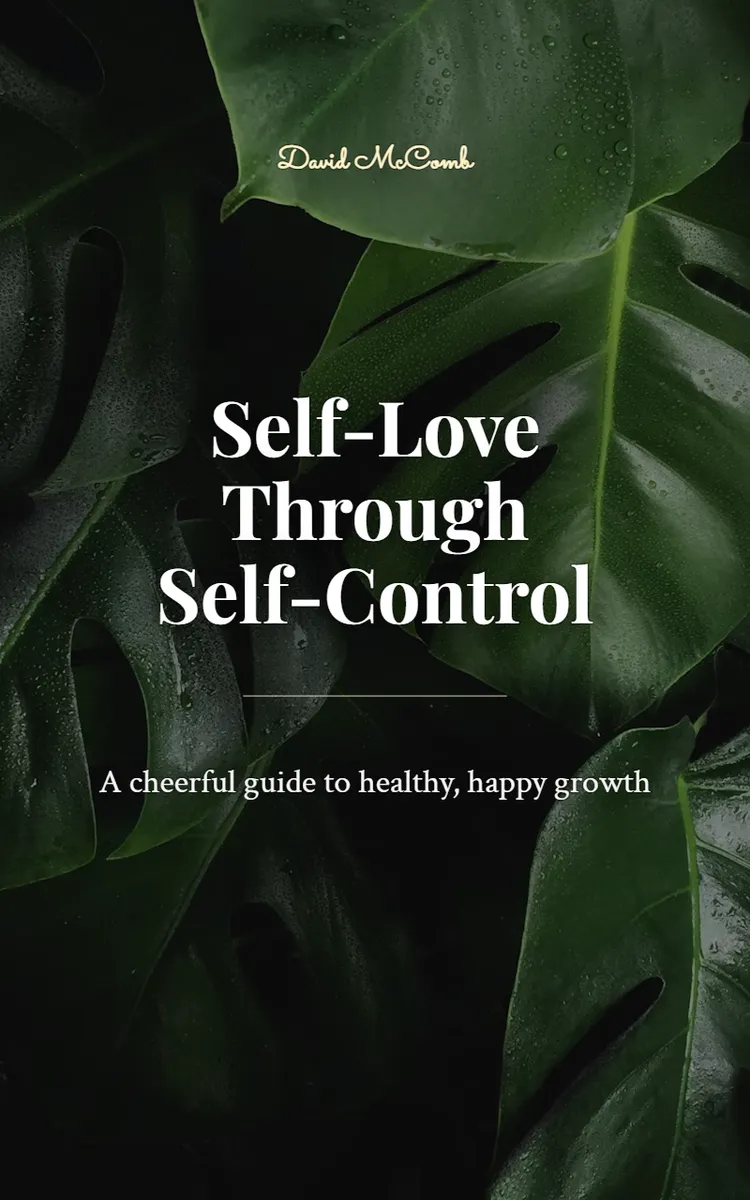
"Self-Love Through Self-Control" is a self-help book by David McComb with 34 chapters and approximately 48,564 words. Self-love teachings focused on self-control and personal growth.
This book was created using Inkfluence AI, an AI-powered book generation platform that helps authors write, design, and publish complete books. It was made with the AI Self-Help Book Writer.
Frequently Asked Questions
What is "Self-Love Through Self-Control" about?
Self-love teachings focused on self-control and personal growth
How many chapters are in "Self-Love Through Self-Control"?
The book contains 34 chapters and approximately 48,564 words. Topics covered include Choose Self-Control as Love, Spot Your Self-Sabotage Signals, Rewrite Your Identity Script, Build Beliefs That Behave, and more.
Who wrote "Self-Love Through Self-Control"?
This book was written by David McComb and created using Inkfluence AI, an AI book generation platform that helps authors write, design, and publish books.
How can I create a similar self-help book?
You can create your own self-help book using Inkfluence AI. Describe your idea, choose your style, and the AI writes the full book for you. It's free to start.
Write your own self-help book with AI
Describe your idea and Inkfluence writes the whole thing. Free to start.
Start writingCreated with Inkfluence AI


