

Read the first chapter
The whole of chapter one, free. About 3 min. Turn the pages with the arrows, your keyboard, or a swipe.
Chapter 1
Days 1-2: Mapping Your Spending Triggers
A late-night sale can turn a quiet evening into a checkout screen, a confirmation email, and a package you don’t remember needing. The purchase may take two minutes. The pattern behind it has usually been building for hours - stress after work, boredom in bed, a notification, or the promise of feeling better.
For the next two days, you won’t try to fix every spending habit at once. You’ll use The Trigger Map to notice when, where, and why shopping urges appear. Record what happens without calling yourself careless or weak. Facts are more useful than insults, and a clear baseline gives you something real to work with.
Day 1: Catch the Moment
Tip of the Day:
Today is about spotting the urge before it turns into action. An urge might show up as scrolling through a shopping app during lunch, checking a flash sale after a difficult phone call, or adding “just one thing” to an online cart while watching television.
When it happens, pause long enough to capture the moment. Note the time, place, feeling, and what you wanted to buy. Also record whether you bought it, left it in the cart, or closed the app. Don’t edit the truth to make yourself look better. A $12 purchase matters because it shows a pattern, not because it makes you a bad person.
Use these questions to build your first Trigger Map entry:
• Where were you? - What were you doing just before the urge? - What feeling was present - boredom, stress, loneliness, excitement, frustration, or something else? - What did you want to buy? - Did you buy it? If yes, how much did it cost? - What did you hope the purchase would change?
You may notice that the item isn’t the whole story. A new shirt might represent confidence before an event. Takeout might feel like relief after a long day. A sale might offer a quick hit of excitement when the afternoon feels flat. You don’t have to judge the reason today. Just name it.
Today's Action:
Carry a note in your phone or use a small sheet of paper, and record every shopping urge or purchase from waking up until bedtime using the Trigger Map questions above.
---
Day 2: Find Your Shopping Weather
Tip of the Day:
Yesterday gave you individual moments. Today, look for the weather around them - the conditions that make impulse buying more likely.
Check yesterday’s notes before you begin. Did urges gather at a certain time? Did they happen mostly at home, in the car, or while you were working? Did a notification start the process? Did you shop after an argument, when you felt tired, or when you had nothing planned? Pay attention to the small details. “I felt bad” is a start, but “I felt overlooked after a meeting and opened a clothing app in bed” gives you something you can actually respond to.
Keep recording today, but add one gentle question before each purchase: What do I need right now - the item, or a change in how I feel? Sometimes the answer will be the item. You may genuinely need groceries, replacement shoes, or a birthday gift. Other times, the purchase is trying to do the work of rest, comfort, connection, or distraction.
If you buy something, write it down without undoing the record later. If you resist, record that too. Closing a shopping app is useful information. Leaving an item in your cart is useful information. You’re learning where the choice appears, not trying to create a perfect spending day.
At the end of today, circle or highlight the three details that appear most often in your notes. They might be:
• Late-night scrolling - Shopping after stressful conversations - Free-shipping messages - Feeling bored or restless - Browsing when you’re tired - Buying small items because they seem harmless
These are early clues, not permanent labels. A trigger doesn’t force you to spend. It simply shows where you’ll need more space between the urge and the purchase.
Today's Action:
Review both days of notes, highlight your three most common shopping triggers, and write one sentence describing your usual pattern: “I’m most likely to shop when, especially.”
By the end of these two days, you should have more than a list of purchases. You’ll have a clearer picture of the moments that lead to them. That picture is your starting point - and starting with the truth gives you room to make different choices.
End of chapter one. 7 more chapters in the full book.
Swipe or use the arrows to turn the page


What's inside: 8 chapters
- 1. Days 1-2: Mapping Your Spending Triggers
- 2. Days 3-4: Interrupting the Impulse
- 3. Days 5-6: Building a Realistic Budget
- 4. Days 7-8: Making Shopping Harder
- 5. Days 9-10: Handling Sales and Social Pressure
- 6. Days 11-12: Replacing Shopping’s Reward
- 7. Days 13-14: Planning for Setbacks
- 8. After Day 14: Keeping Control
About this book
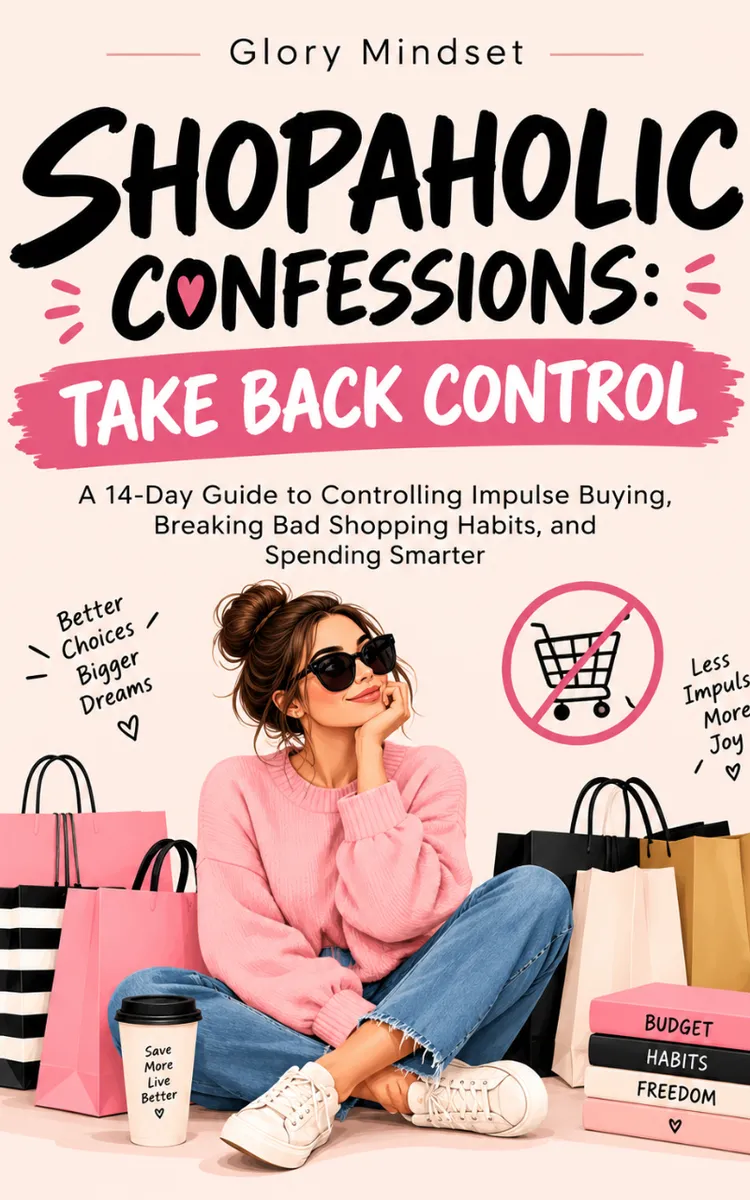
"Shopaholic Confessions: Take Back Control" is a day challenge book by Glory Mindset with 8 chapters and approximately 6,000 words. Overcoming compulsive shopping and building healthier spending habits.
This book was created using Inkfluence AI, an AI-powered book generation platform that helps authors write, design, and publish complete books.
Frequently Asked Questions
What is "Shopaholic Confessions: Take Back Control" about?
Overcoming compulsive shopping and building healthier spending habits
How many chapters are in "Shopaholic Confessions: Take Back Control"?
The book contains 8 chapters and approximately 6,000 words. Topics covered include Days 1-2: Mapping Your Spending Triggers, Days 3-4: Interrupting the Impulse, Days 5-6: Building a Realistic Budget, Days 7-8: Making Shopping Harder, and more.
Who wrote "Shopaholic Confessions: Take Back Control"?
This book was written by Glory Mindset and created using Inkfluence AI, an AI book generation platform that helps authors write, design, and publish books.
Write your own day challenge book with AI
Describe your idea and Inkfluence writes the whole thing. Free to start.
Start writingCreated with Inkfluence AI


