
Read the first chapter
The whole of chapter one, free. About 11 min. Turn the pages with the arrows, your keyboard, or a swipe.
Chapter 1
Leaving the Army, Returning home
The first thing I noticed when I arrived home back in Bognor Regis was how ordinary the air felt - sea salt on the back of my throat, diesel in the wind, the gulls screaming like they were arguing with someone. I’d left the Army in November 2011 with my bag too light and my head too full after a fulfilling career: many postings and operational tours under my belt having served with many distinctive units.On returning home the town centre looked like it always had, all shop fronts and pavement cracks and people moving without checking their shoulder. I remember standing there longer than I needed to, just watching, as if the familiar streets would confirm I’d done the right thing and thinking about the great times back in the 90s when I didnt have a care in the world and used to rave my socks off wanting to be back in those times, instead of standing with a heavy head full of traumatic experiences.
My stomach didn’t match the view. It churned with a nervous heat, like I’d swallowed a spark. For weeks before I came home I’d pictured this moment as relief - quiet mornings, routine, normal problems instead of orders and inspections. I told myself I could handle civilian life. I’d earned the right to take a breath. But the closer I got to the seafront, the more my body acted like something was about to go wrong. Even the sound of the waves felt too loud in my ears, as if the whole town was turned up and I couldn’t turn it down.
I’d arranged to rent a flat near the seafront. When I finally found the building, the stairwell smelled of damp carpet and old cooking grease. The landlord’s keys were cold in my hand. I said thank you in a voice that sounded steadier than I felt, and I forced myself to smile when he asked if I needed anything. He looked at me like I was another bloke starting over, not like someone with a history of breaking under pressure. I nodded anyway, because that was what I’d learned to do.
The room itself was smaller than it had seemed on the phone - single bed, thin curtains, a wardrobe that didn’t shut properly. The window faced the street, and beyond it you could see the faint strip of sea. It should have soothed me. Instead, the view made me restless. I kept listening for footsteps, for that distant clatter that would mean I’d missed something. I ran my hand along the wall and felt the rough texture under my palm, like the place was warning me it wouldn’t be soft to live in.
That afternoon I walked without a destination, letting the town centre pull me forward. I passed the shops I used to know, the ones where I’d bought sweets as a kid, and it was strange how my feet remembered routes my mind didn’t. The noise hit me in layers: traffic grinding over the road surface, the squeal of a bus brake, someone laughing too loudly outside a café. I caught the smell of chips and frying oil and it sat under my nose like a weight.
At the bus stop, someone asked me what I was looking for. I must have looked lost, or too fixed, because they asked twice. “Just getting myself sorted,” I said, and I tried to sound like I meant it. They pointed me toward a community centre and a job notice board. The words felt like an offer I’d been waiting for. I thanked them and walked on, my thoughts finally finding something solid to hold.
When I reached the community centre, the doors were propped open and the room inside was warm in a way that made my skin loosen. There were posters on the walls - workshops, training sessions, people advertising help for anyone who needed it. I stood just inside the entrance, listening to the low hum of conversation and the scrape of chairs. I could almost pretend I was just another resident, not a man trying to stitch his life back together from scratch.
A woman behind the desk looked up as I approached. “Can I help you?” she asked, and her voice was calm, the sort of calm that didn’t demand anything from me.
“I’m looking for work,” I said. My throat felt tight, and I hated that it did. I forced the words out anyway. “And… I’m new back home.”
She nodded like that made sense. “Do you want to sign up for the employment support?” she asked, pointing to a form. “We’ve got a few vacancies, and there’s usually someone who can help with applications.”
I filled in my details with a pen that kept slipping in my fingers. The paper was too white, too clean, and every line I wrote felt like a decision. When I handed it back, she smiled and said, “Right, we’ll get you in touch. You can come back on Thursday for the drop-in.”
For a moment, I felt something like peace. It wasn’t happiness - nothing was that simple - but it was relief. The thought of having a plan for the week, of being counted as part of something, settled in my chest like a stone instead of a spark.
That night I lay on the bed and listened to the traffic below. The room was quiet in between sounds, and that quiet felt dangerous. I kept checking the street from the corner of my eye. When a car door slammed, my body jumped before my mind could catch up. I told myself I was tired. I told myself the Army had left my muscles wired in a certain way and that I’d switch off eventually, like turning a light off after the right amount of time.
I fell asleep eventually. The sea was audible even through the window, a constant breathing. In my sleep I dreamed I was back in uniform, walking through corridors where everything had a place. I woke with my heart racing and my mouth dry, as if I’d run. The next day I went out again anyway, because that was the only way I knew to keep the panic from growing teeth.
I got a job interview through the community centre. It was nothing glamorous - hours that suited a man who needed steady money, work that didn’t require me to carry a rifle or make decisions under pressure. When I told myself I should be grateful, the words came out true, but gratitude didn’t stop my head from spinning. On the way to the interview my hands were cold and I kept rubbing my palms together, trying to warm them.
The interview room smelled of carpet cleaner and old paper. The person across the desk asked questions about experience and reliability. I answered as honestly as I could, and I watched their face for clues. I’d learned to read expressions for danger. In civilian life there was no obvious danger, but my body still hunted for it.
Afterwards, when I stepped back onto the street, the sun felt too bright. I walked fast toward the seafront, as if the air itself could reset me. The waves broke with that same insistence. I stood there and tried to slow my breathing. It worked for a few minutes. Then my mind started assembling lists - things that could go wrong, mistakes I might make, ways I could fail. I could feel my thoughts turning like a lock that wouldn’t open.
A few weeks in, the support I’d found gave me structure. I went to the drop-in. I spoke to people who were dealing with their own problems, and I listened instead of talking about myself too much. I helped with small tasks when I could. I told myself I was rebuilding, and I believed it enough to keep going.
Then the routines began to shift, not all at once, but in small ways that seemed harmless at the time. A shift got changed at short notice. A bus route altered. The person I’d been chatting to at the community centre stopped attending. I didn’t know why. I just noticed the absence, and my brain treated it like a sign.
At home in the rented room, the walls pressed closer. The window that used to feel like an escape started to feel like an opening that someone might use against me. I’d be doing something simple - making tea, sorting clothes, reading a bit of paper - and I’d suddenly feel watched. Not by anyone I could point to. By the world itself. By the idea that something was waiting to catch me.
One evening I was walking back from work when my phone buzzed. I looked down and saw a missed call. I felt my pulse jump before I even processed the number. When I called back, the line went dead. I called again. Still nothing. I stood on the pavement with the cold wind biting my ears and I could feel my thoughts racing, trying to fill the empty space with worst-case outcomes.
I heard myself say, out loud, “What is it?” as if someone could hear me from a distance and answer. A couple walked past and glanced at me. I forced a laugh that didn’t sound like me. “Just my phone acting up,” I said. They didn’t argue or get involved. They just kept walking, and that should have been normal, but it felt like abandonment anyway.
When I got back to the room I tried to distract myself. I played the radio quietly. The sound filled the spaces between my thoughts, but it didn’t calm them. My hands shook when I tried to pour water into the kettle. I kept staring at the steam as it rose, mesmerised by something that should have been ordinary.
After a while I went to the bed and sat there, staring at the ceiling. The mattress springs creaked when I shifted. Even that small sound made me flinch. I started to remember things - not in a neat way, not like a story you can control, but like flashes. A moment of shouting. A time I’d felt trapped. The way the world can narrow until there’s no air left.
I didn’t plan anything. I didn’t decide. It just came, as dark and familiar as a draft under a door: the thought that I could make everything stop. The idea didn’t feel like a dramatic fantasy. It felt like relief being offered, and my mind grabbed it, desperate for the pain to end.
I forced myself up. I went to the bathroom and splashed cold water on my face until my skin burned. The mirror showed me a man with tired eyes and a mouth set too tight. I told myself I’d been coping. I told myself I was back in Bognor Regis, back with support, back around people. I told myself I wasn’t the sort of person who fell apart like that.
But the truth was I felt trapped inside my own body, and the ordinary routines that were supposed to ground me were doing the opposite. Every day became a test I didn’t know how to pass.
The next morning I went to work as normal, because I’d learned that if you keep showing up you can keep the worst of it contained. Coworkers asked how I was. I said, “Alright,” because it was easier than explaining that my chest felt like it was holding something too heavy.
During a break I spoke to a colleague I’d grown friendly with. “You ever get that feeling,” I said carefully, “like everything’s about to go wrong but nothing’s actually happening?”
They looked at me for a second, eyebrows slightly drawn. “You should talk to someone, mate,” they said. “If you’re feeling rough, just say it.”
“I am,” I lied. “I’m fine.”
They nodded, but their eyes didn’t relax. “If it gets worse, don’t bottle it,” they said, and I could hear the worry underneath their words. I didn’t want worry. I didn’t want them to look at me like I was fragile. I wanted them to treat me like I was normal.
After work I walked the same streets I’d walked before, but the familiarity didn’t comfort me anymore. It felt like I was trapped in a loop. The shops were still there. The pavements still cracked. The sea still pulled at the shore. What had changed was the way my mind interpreted everything. I could feel myself scanning for threat, for the next thing that would go wrong, for the moment the calm would break.
Looking back, that was the first time I really understood how quickly hope can become something else. I now understand that reintegration doesn’t arrive as a straight line. It comes in phases, and the early phase can fool you - the job, the community support, the routine that holds you up for a while. I thought because I had work and people around me, my head would follow.
Instead, my mind kept its own timetable. It started to tighten its grip while I was busy doing what I’d set out to do. By the time I admitted to myself that something was happening inside me, I’d already trained myself to hide it. I’d already learned that ordinary conversation could fall apart when people didn’t know what to do with a man’s fear.
In those weeks in Bognor Regis I found community, and I found work. I got exactly what I thought I needed to rebuild a stable life. But the calm didn’t last. It turned into persistent dread, the kind that sits underneath even when you’re laughing with someone over a cup of tea. I began living like I was waiting for the next wrong turn - hypervigilant, scanning streets and faces, measuring the day by how long I could keep the panic from rising.
I didn’t yet know how far it would go, or how many times I’d end up in hospital later on, but I felt the walls closing in around my mind. The town was familiar, the seafront was still beautiful, and yet I couldn’t shake the sense that I was trapped inside ordinary routines that were starting to feel unsafe.
End of chapter one. 5 more chapters in the full book.
Swipe or use the arrows to turn the page
What's inside: 6 chapters
- 1. Leaving the Army, Returning home
- 2. The First Meltdown That Broke Friendships
- 3. Hospital Wards and Suicidal Ideation Visits
- 4. A Loss That Made the World Go Quiet
- 5. Accepting Medication After Therapy Finally Helped
- 6. The Future is Bright
About this book
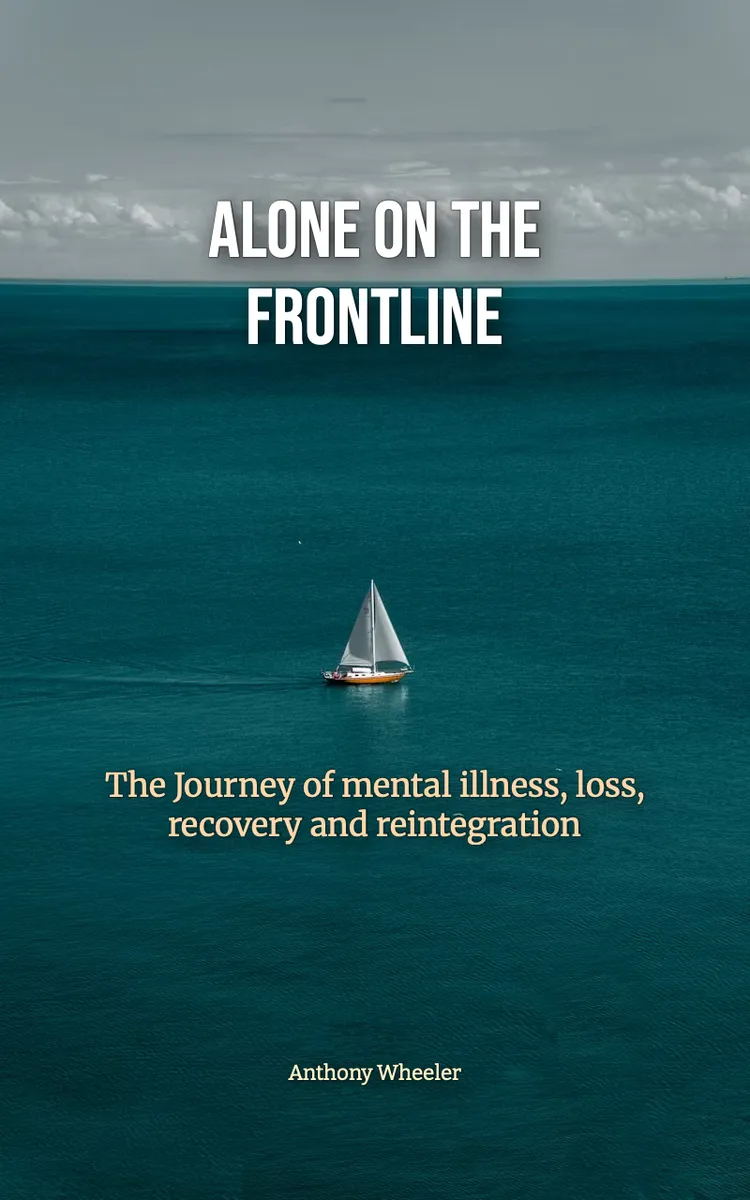
"Alone on the Frontline" is a biography book by Anthony Wheeler with 6 chapters and approximately 15,321 words. Autobiography of mental illness, hospitalization, and recovery after military service.
This book was created using Inkfluence AI, an AI-powered book generation platform that helps authors write, design, and publish complete books. It was made with the AI Biography Writer.
Frequently Asked Questions
What is "Alone on the Frontline" about?
Autobiography of mental illness, hospitalization, and recovery after military service
How many chapters are in "Alone on the Frontline"?
The book contains 6 chapters and approximately 15,321 words. Topics covered include Leaving the Army, Returning home, The First Meltdown That Broke Friendships, Hospital Wards and Suicidal Ideation Visits, A Loss That Made the World Go Quiet, and more.
Who wrote "Alone on the Frontline"?
This book was written by Anthony Wheeler and created using Inkfluence AI, an AI book generation platform that helps authors write, design, and publish books.
How can I create a similar biography book?
You can create your own biography book using Inkfluence AI. Describe your idea, choose your style, and the AI writes the full book for you. It's free to start.
Write your own biography book with AI
Describe your idea and Inkfluence writes the whole thing. Free to start.
Start writingCreated with Inkfluence AI


