
Read the first chapter
The whole of chapter one, free. About 7 min. Turn the pages with the arrows, your keyboard, or a swipe.
Chapter 1
Moving to Father’s Home at Eight
The last morning at my mother’s home began with the smell of warm food and the sound of dishes being placed on the table. At eight years old, I knew those small signs of care without needing anyone to explain them. I knew where I belonged at breakfast. I knew whose voice I would hear, whose hands might notice if I was tired, hungry, or unwell.
I did not know that the ordinary comfort of that home would soon become something I carried in memory.
The move to my father and stepmother’s home changed the shape of my days. I left the familiar rooms, the familiar routines, and the care I associated with my mother. I was too young to understand all the reasons for the change. Adults made decisions, and I followed them. I knew only that I was going somewhere else and that my mother would not be there in the same way.
The new home felt unfamiliar from the beginning. Its rooms had different sounds. The air smelled different. Even the quiet seemed to belong to someone else. I noticed where things were kept, how people moved through the house, and when it was best to stay out of the way. I was trying to learn the rules of a place no one had taught me how to enter.
My main hope was simple: I wanted to feel safe there.
I wanted to discover that the new home could hold me as the old one had. I wanted care to appear in the ordinary moments of the day. I wanted someone to notice when I was hungry, angry, sick, or hurt. I wanted to be able to ask questions without first measuring whether they were welcome.
Instead, I found myself watching and waiting.
At my mother’s home, I had known the comfort of being looked after. If I was sick, I missed being comforted. If I came home with an injury or a wound from playing with friends, I missed the tenderness I wanted. Those needs were not grand or unusual. They were the needs of a child who wanted someone to pay attention.
In the new home, I did not know how to ask for those things. I did not know what I was allowed to say, or how my words would be received. The uncertainty made even small needs feel difficult. Hunger became something I tried to ignore. Sadness became something I hid. A problem that might once have been brought to an adult became something I carried quietly.
The house itself seemed to teach me caution. I listened for footsteps before leaving a room. I noticed the tone of voices. I learned which moments felt open and which did not. These were not lessons anyone announced. They grew from the daily work of trying to fit into an unfamiliar household.
I still wanted comfort. Wanting it did not stop simply because I had moved.
Sometimes I thought about my mother when I was tired or upset. I remembered the kind of care I had known with her, and the difference between being near someone who understood my ordinary needs and being in a place where I did not know how to express them. Missing her was not only missing her presence. It was missing the feeling that I could be noticed without having to explain everything first.
That longing followed me through the house.
There were moments when I considered speaking about what I needed. I might have wanted to say that I was hungry, or that something had hurt me, or that I was troubled by the way I had been treated. But the words stayed inside. I did not have the confidence to place them in the room. I feared that complaining would make things harder, so I began to practice not complaining at all.
Silence offered a kind of protection. If I said nothing, I could avoid the discomfort of being misunderstood or dismissed. If I kept my feelings to myself, I did not have to watch someone decide whether they mattered. For a child, that can feel like control. It can seem safer to need less than to ask and be disappointed.
Looking back, I understand that my quietness was not a sign that I had no feelings. It was evidence that I had many feelings and did not know where to put them.
The new home required me to adjust, but adjustment did not erase what I had lost. I learned the paths between rooms and the patterns of the household. I settled into sleeping there, eating there, and moving through each day there. In that sense, I achieved what I had been trying to do. I found a way to remain in the home without constantly showing how uncertain I felt.
But settling in came with a cost.
I became less likely to reach for care. I began to believe that my needs were problems I should manage alone. When I was hurt, I tried to carry on. When I was angry, I swallowed the feeling. When I wanted to ask for something, I considered whether it was worth speaking. Often, I decided it was not.
That decision could be made in a moment, but its effect lasted much longer.
A child may not separate physical safety from emotional safety. A bed, a meal, and a roof can be present, while the child still feels unsure about whether there is room for their sadness or confusion. I did not have those words then. I only felt the difference between being cared for in a way I recognized and living in a place where I could not easily find that care.
I wanted the new home to become familiar. I wanted to belong there. I wanted to stop feeling as though I was waiting for something that might not come. So I adapted. I watched. I stayed quiet. I tried not to cause trouble.
The more I did this, the more natural it began to feel.
That was the beginning of a pattern I would carry for years. When I needed help, I tried to solve the problem myself. When something hurt, I hid the hurt. When I felt overlooked, I told myself not to expect too much. The child who had once wanted to speak freely began to believe that silence was the easier choice.
None of this meant that I stopped loving my mother. Distance did not remove that love. It made me more aware of it. I missed her care in the small places of the day: when I was ill, when I had been injured while playing, when I was hungry, or when something inside me felt unsettled. Those moments reminded me that comfort had once felt familiar.
Now it was something I had to search for.
There was no single moment when I decided never to speak about my feelings again. The change happened gradually, through many small choices. I chose not to mention hunger. I chose not to describe anger. I chose not to ask why something had happened. Each choice seemed minor, but together they taught me to keep my inner life hidden.
The unfamiliar home became a place I could navigate, but not a place where I could easily open my heart.
I learned where to sit, when to speak, and how to make myself less noticeable. I learned that a child could be present without being fully understood. I learned to accept what was available and to stop reaching toward what I needed. These lessons helped me get through the days, but they also made closeness more difficult.
Looking back, I can see that I was not asking for too much. I wanted the basic tenderness children need. I wanted someone to notice the signs that I was struggling. I wanted to say what I felt like eating, ask questions, and talk about what troubled me. I wanted the freedom to bring a small problem to an adult before it became a heavy one.
Those wants were not weaknesses. They were signs of a child seeking connection.
At eight, I could not explain the difference between living somewhere and feeling at home. I only knew that I had moved from familiar care into an unfamiliar household, and that the care I needed was no longer easy to find. I settled into the new home because I had to. I learned its routines because I had no other way to live there.
Yet the part of me that missed my mother did not settle so easily.
It remained in the quiet spaces between one day and the next, reminding me of what it felt like to be comforted without having to ask perfectly. It reminded me that love was not only a feeling held inside a family. It was also attention, patience, tenderness, and the willingness to hear what a child could not yet say clearly.
I would understand that more fully much later. For then, I knew only that I had found a way to stay in the new home, but I had not found the familiar safety I had been hoping for. And because I did not know how to ask for it, I began to keep the need hidden.
End of chapter one. 4 more chapters in the full book.
Swipe or use the arrows to turn the page
What's inside: 5 chapters
- 1. Moving to Father’s Home at Eight
- 2. Learning to Hide Hurt
- 3. Returning to Mother at Fifteen
- 4. Practicing Honest Conversation
- 5. Building Trust with My Children
About this book
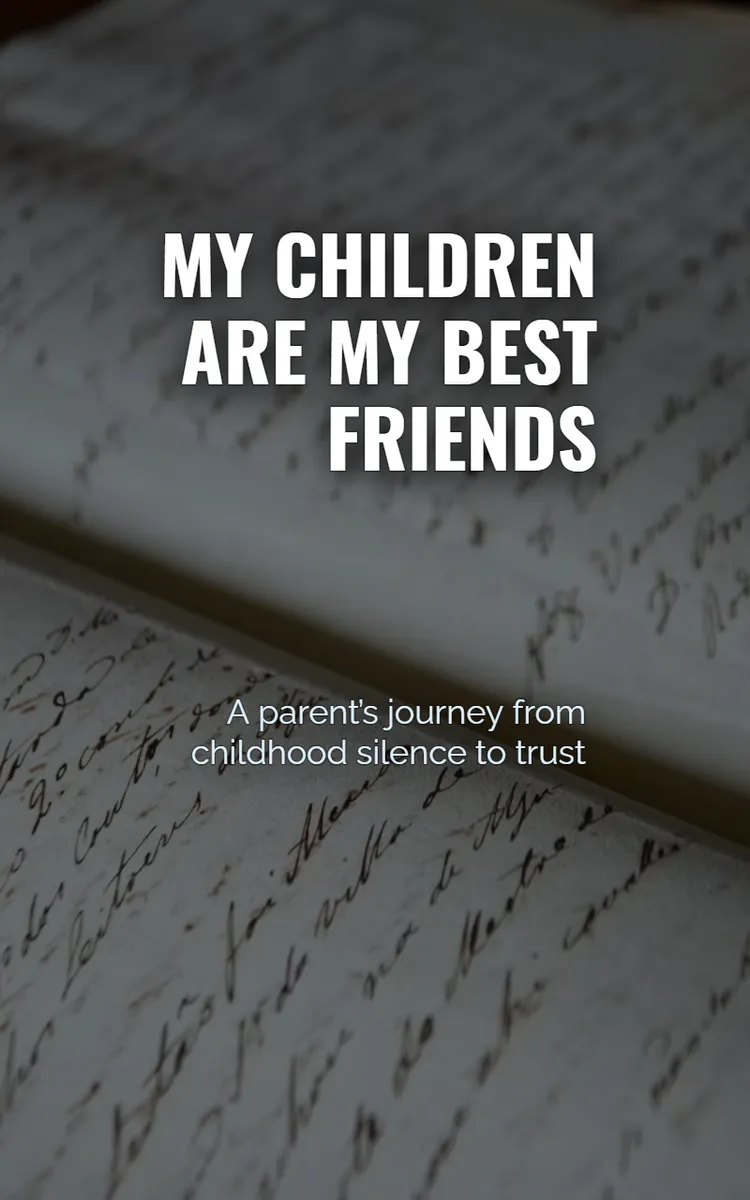
"My Children Are My Best Friends" is a biography book by Anonymous with 5 chapters and approximately 9,281 words. A parent reflects on childhood separation, emotional silence, healing, and building trust with children.
This book was created using Inkfluence AI, an AI-powered book generation platform that helps authors write, design, and publish complete books. It was made with the AI Biography Writer.
Frequently Asked Questions
What is "My Children Are My Best Friends" about?
A parent reflects on childhood separation, emotional silence, healing, and building trust with children
How many chapters are in "My Children Are My Best Friends"?
The book contains 5 chapters and approximately 9,281 words. Topics covered include Moving to Father’s Home at Eight, Learning to Hide Hurt, Returning to Mother at Fifteen, Practicing Honest Conversation, and more.
Who wrote "My Children Are My Best Friends"?
This book was written by Anonymous and created using Inkfluence AI, an AI book generation platform that helps authors write, design, and publish books.
How can I create a similar biography book?
You can create your own biography book using Inkfluence AI. Describe your idea, choose your style, and the AI writes the full book for you. It's free to start.
Write your own biography book with AI
Describe your idea and Inkfluence writes the whole thing. Free to start.
Start writingCreated with Inkfluence AI


