
Read the first chapter
The whole of chapter one, free. About 9 min. Turn the pages with the arrows, your keyboard, or a swipe.
Chapter 1
The Exam Hall Wall
The bell rang before Kabir had found a place for his knees.
Its sound struck the examination hall and returned from the high walls in thin metallic echoes. Hundreds of boys shifted at once. Wooden benches scraped the cement floor. Paper rustled. Someone coughed into his sleeve. From the open windows came the smell of wet dust, hot iron, and the frying oil of a stall beyond the school boundary.
Kabir sat very straight.
The desk was too small. His left knee pressed against the bench ahead, while his right foot rested on a patch of damp cement. The room seemed built for bodies unlike his own - narrower shoulders, shorter legs, calmer hands. He had noticed this before, but never as an accusation. Today, everything appeared to have been arranged against him.
He was thirteen years old and had spent the last several months trying to become a machine.
Every morning, before the street vendors raised their shutters, he had opened his mathematics book. He had copied difficult problems until the muscles of his fingers cramped. He had memorised definitions while brushing his teeth, revised formulas beneath the dining table, and continued reading after his mother told him to sleep.
Hard work, he had decided, was the only force that did not require permission.
Talent belonged to other children. Money belonged to their parents. Confidence appeared in some faces as naturally as clear skin. But effort - effort could be repeated. If he repeated it enough, he believed, the world would eventually have to surrender.
The question paper lay face down before him.
“Do not turn it over until instructed,” the invigilator said.
Kabir knew the voice. Mr. Sen, the science teacher, had a habit of tapping his pen against his palm. Tap. Tap. Tap.
Kabir watched the pen.
His own pen had already begun to slip between his fingers.
He wiped his palm against his trousers. The fabric felt rough and slightly damp. He had washed his hands twice before leaving home, afraid that sweat would stain the answer sheet. His mother had pressed a steel tumbler of tea into his hands and said, “You have prepared properly. There is nothing to fear.”
He had believed her because he needed the sentence to be true.
Across the aisle, a boy whispered, “Which set did you get?”
“Shut up,” another boy muttered.
Mr. Sen lifted his head.
The hall fell quiet in uneven stages.
“Begin.”
The paper turned.
For a few seconds, Kabir saw only black marks arranged in rows. Then the questions separated themselves. Mathematics. Algebra. Geometry. The first problem was familiar. The second was familiar. The third was the exact type he had practised at midnight beneath the yellow light of the kitchen.
A small heat rose in his chest.
There. He had known this would happen. Preparation had not been wasted. The world could still be made obedient.
He bent over the page.
His handwriting began neatly, each digit placed with care. He wrote the equation, shifted the term, simplified the expression. Around him, the hall breathed and moved. A chair creaked. Someone’s ruler fell. The ceiling fan rotated with a loose, clicking rhythm.
Kabir solved the first question.
Then the second.
On the third, his hand paused.
The problem was familiar, but not identical. One condition had been changed. He read it again. Then once more.
The numbers blurred.
He looked at the example in his memory. He had solved it differently. He had followed a sequence. First this, then that, then the answer. But the question before him refused to enter the sequence.
His fingers tightened around the pen.
A bead of sweat travelled from his temple to his cheek.
He tried another method. The line he wrote leaned sharply downward. He erased it. The eraser left a grey wound on the paper.
“Keep moving,” Mr. Sen said from somewhere behind him.
Kabir lowered his head.
The sound of the fan grew louder.
He moved to the next question, but the unfinished one remained beside him like an open door. He could not leave it. Leaving it meant admitting that effort had not prepared him for this particular arrangement of marks.
He had practised for hours.
He had sacrificed sleep.
He had done everything that could be done.
Why, then, was the answer not appearing?
A boy behind him began tapping his foot. The rhythm entered Kabir’s skull. Tap. Tap. Tap.
Kabir read the question again.
The letters seemed to swell. His breath shortened. He inhaled through his nose and received the smell of chalk, old wood, and the sharp sweat of the boy seated in front of him.
He tried to write.
The pen slipped.
A dark line crossed the margin.
Mr. Sen stopped beside his desk. “What is this?”
Kabir looked up.
“Nothing, sir.”
“Then write properly.”
“Yes, sir.”
Mr. Sen moved on.
Kabir stared at the line. It was only ink, but it seemed to contain a verdict.
His body had betrayed the plan before his mind had finished making it.
He turned the page. The geometry section waited below. He had always disliked geometry. His diagrams became crowded and uneven because his fingers were too thick for the small spaces between the lines. At home, he could redraw a figure until it looked correct. Here, he had one answer sheet, one ruler, and the watchful silence of the hall.
He placed the ruler against the page.
His elbow struck the desk.
The ruler shifted.
The line bent.
Kabir’s throat tightened.
“Sir,” he whispered.
Mr. Sen appeared again. “What now?”
“My ruler moved.”
“You have another one?”
“No.”
“Then use the edge of the desk.”
Kabir looked at the desk. Its wooden edge was chipped and darkened with years of sweat.
“Sir, the question - ”
“Write what you know. Do not waste time.”
The words were ordinary. They entered Kabir like an order from a world that had no interest in the conditions of his struggle.
He pressed the ruler against the page and drew the line again.
The diagram was wrong.
He knew it immediately.
The angle opened too wide. The triangle looked diseased.
Around him, pages turned. Some students had already reached the final section. One boy raised his hand and received an extra sheet. Another leaned back, chewing the end of his pen with the careless expression of someone who had never needed to force his mind into obedience.
Kabir’s chest began to contract.
He looked toward the windows. Sunlight lay across the far wall in pale rectangles. Dust moved through it, rising and falling without effort.
His breath came faster.
Not here.
He placed his palm flat on the desk.
The wood was warm.
Not here.
He tried to count. One. Two. Three.
The numbers scattered.
His ears filled with a low rushing sound. The questions seemed to retreat from him. His vision narrowed until only the white page remained, bright and hostile.
He raised his hand.
Mr. Sen came over. “Yes?”
“I need water.”
“You should have brought it.”
Kabir had brought water. The bottle was beneath the desk, but his fingers could not find it. They trembled against the metal frame.
“Take it out,” Mr. Sen said.
Kabir bent down. The room tilted. His knees struck the underside of the desk. The bottle rolled away and stopped near the foot of the boy in front.
The boy glanced back.
Kabir reached for it.
His hand would not close.
“Pick it up,” Mr. Sen said.
Kabir heard the impatience first, then the embarrassment. Both were familiar. He had felt them in classrooms, at home, in the narrow lane where boys played cricket and laughed when he missed the ball. He had believed study would carry him beyond them. He had believed knowledge could become a country with no borders.
His fingers finally closed around the bottle.
The cap resisted. He twisted it once, twice. The plastic squeaked.
“Give it here,” Mr. Sen said.
Kabir handed it over.
Mr. Sen opened the cap and returned it. “Drink.”
The water was warm and tasted faintly of metal. It touched his tongue, but his throat remained closed.
“Slowly,” Mr. Sen said, less sharply now.
Kabir drank.
For several moments, he sat with the bottle against his lips while the examination continued around him. The fan clicked. Pens scratched. Outside, a bus groaned along the road and released a long burst of black smoke.
His breathing began to settle.
He looked at the paper.
The unfinished questions remained. So did the bent diagram. So did the time he had lost.
He worked until the final bell.
When it rang, he was writing the last line of an answer he knew was incomplete. Mr. Sen pulled the paper from beneath his hand.
“Sir - one second.”
“Time.”
“But I was finishing.”
“Everyone was finishing.”
Kabir watched the answer sheet leave him.
The page carried his preparation, his sleepless nights, his sharpened pencils, the formulas repeated until they had lost their meaning. It also carried the dark streak in the margin, the unfinished equation, the crooked triangle, and the spaces where nothing had been written.
His mother was waiting outside the school gate beneath a faded blue umbrella. Rain had begun again, thin and persistent. She searched his face before he reached her.
“How was it?”
Kabir looked back at the examination hall. Through the windows, the students were standing and talking, already exchanging answers. The building seemed larger from outside, its walls stained by years of monsoon water.
“I finished,” he said.
She smiled with relief. “I knew you would.”
He wanted to tell her that finishing was not the same as winning. He wanted to tell her that the questions had changed shape, that his hands had become strangers, that the room had taken something from him while pretending merely to hold an examination.
Instead, he took the umbrella from her.
The result came three weeks later.
Kabir had improved. Not enough to surprise anyone, but enough for his mother to place the mark sheet beside the sugar jar and show it to his father after dinner. Mathematics had risen by six points. Science had risen by four.
“See?” his mother said. “Your hard work is showing.”
Kabir stared at the numbers.
Six points.
Four points.
The marks were proof of progress, but they were also evidence of a distance he could not measure. He had expected the result to open something. Instead, it stood before him like a locked gate, slightly less distant than before.
“You did well,” his father said.
Kabir nodded.
That night, he returned to the kitchen table. The house had gone quiet. A tube light flickered above him, making the pages appear and disappear in pale intervals.
He placed the mark sheet beside the mathematics book.
Then he opened a fresh notebook.
On the first page, he wrote the date.
Below it, he wrote:
I will work until nothing can stop me.
He stared at the sentence for a long time.
The examination hall returned to him - the damp floor, the clicking fan, the ruler slipping beneath his hand, the water bottle rolling away. He could still feel the panic gathering in his chest, patient and wordless, waiting for the next room.
Kabir pressed the pen harder.
The nib tore the paper.
He turned to the next page and began again.
End of chapter one. 4 more chapters and about 10,122 words in the full book.
Swipe or use the arrows to turn the page
What's inside: 5 chapters
- 1. The Exam Hall Wall
- 2. The Mask of Stillness
- 3. Verma's Open Door
- 4. The Zero Displacement
- 5. The Witness Remains
About this book
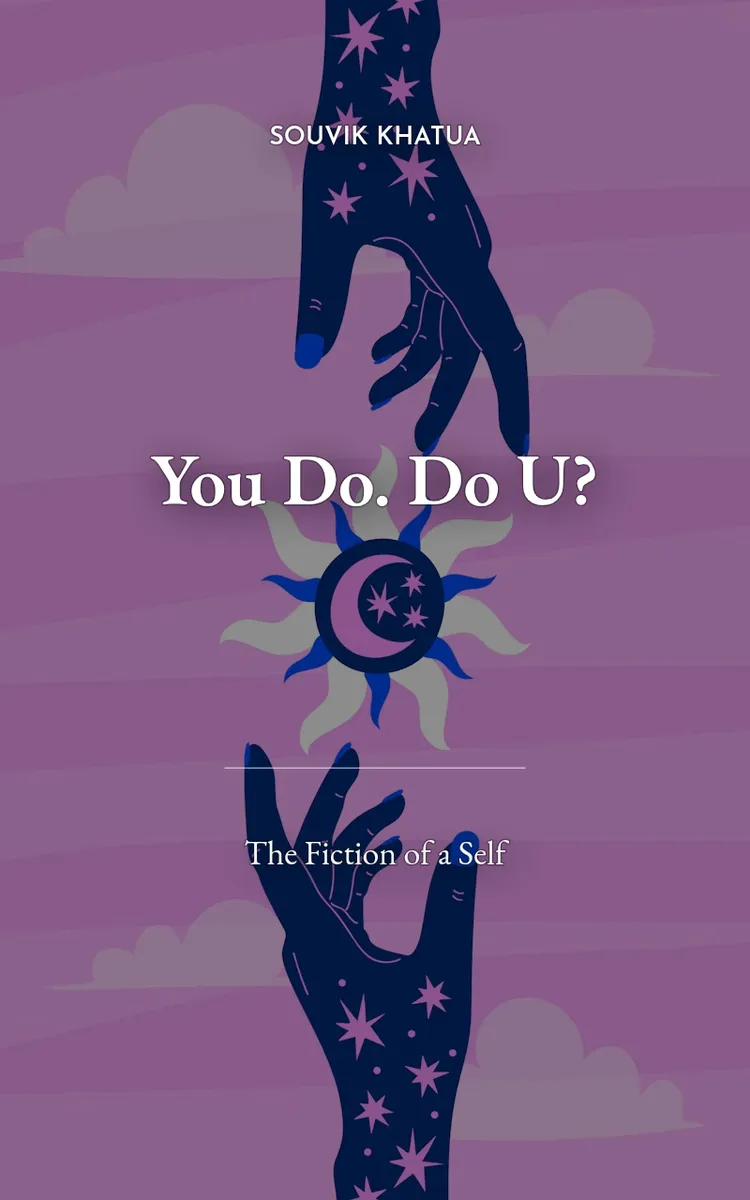
"You Do. Do U?" is a fiction book by SOUVIK KHATUA with 5 chapters and approximately 10,122 words. A young man's existential struggle with ambition, detachment, ego, and non-dual consciousness.
This book was created using Inkfluence AI, an AI-powered book generation platform that helps authors write, design, and publish complete books. It was made with the AI Novel Writer.
Frequently Asked Questions
What is "You Do. Do U?" about?
A young man's existential struggle with ambition, detachment, ego, and non-dual consciousness
How many chapters are in "You Do. Do U?"?
The book contains 5 chapters and approximately 10,122 words. Topics covered include The Exam Hall Wall, The Mask of Stillness, Verma's Open Door, The Zero Displacement, and more.
Who wrote "You Do. Do U?"?
This book was written by SOUVIK KHATUA and created using Inkfluence AI, an AI book generation platform that helps authors write, design, and publish books.
How can I create a similar fiction book?
You can create your own fiction book using Inkfluence AI. Describe your idea, choose your style, and the AI writes the full book for you. It's free to start.
Write your own fiction book with AI
Describe your idea and Inkfluence writes the whole thing. Free to start.
Start writingCreated with Inkfluence AI


