
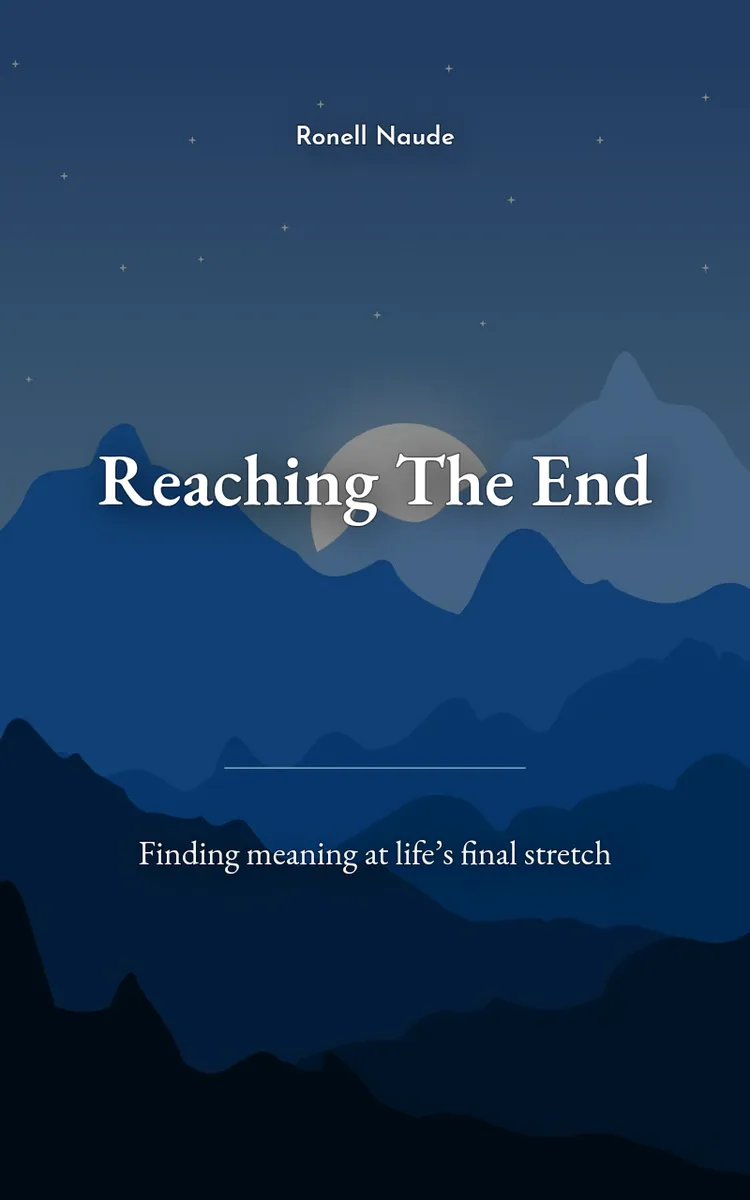
Read the first chapter
The whole of chapter one, free. About 11 min. Turn the pages with the arrows, your keyboard, or a swipe.
Chapter 1
The Call That Won’t Wait
The phone lay faceup on Mara Ellison’s kitchen table, its screen still lit with the hospital’s number and the time beneath it: 11:47 p.m.
She had not moved since the call ended. The refrigerator clicked off. Somewhere in the apartment above hers, a child thudded across a floor, then stopped. Mara listened to the silence that followed, waiting for the phone to ring again.
It did not.
She snatched up her keys.
“Calvin,” she said, though no one was there to hear.
Her father’s name seemed to change the shape of the room. It pressed against the cupboards, the half-filled mug beside the sink, the coat she had left over a chair three days ago. The nurse had said only that Calvin Rourke had been brought to St. Brigid General and that Mara needed to come in.
“We need to speak with you in person.”
Not Is he awake? Not What happened?
Mara shoved her feet into boots without fastening them. Her fingers slipped twice on the laces. She left the kitchen light burning, grabbed her coat, and ran down the stairs with the phone clenched in her hand.
Outside, rain silvered the pavement. It struck the windshield hard enough to blur the streetlamps as she backed from the curb. Her hands shook on the steering wheel, but the engine caught, and she pulled into the empty road.
At the first red light, she called the number back.
A recorded voice answered. St. Brigid General Hospital. If this is an emergency, hang up and call emergency services.
Mara hung up and dialed again.
This time, a man answered. “Emergency department.”
“I’m calling about Calvin Rourke. He was brought in tonight. I was told to come immediately.”
“Are you family?”
“I’m his daughter.”
“Date of birth?”
She gave it. The light turned green. A horn sounded behind her.
“Ma’am, I need you to pull over if you’re driving.”
“I’m almost there. Is he conscious?”
The man paused. In the pause, Mara heard keyboards clicking and someone crying in the background.
“Please come to the desk when you arrive.”
“That’s not what I asked.”
“I understand, but - ”
“Is he conscious?”
Another pause.
“I don’t have that information.”
The car behind her sounded its horn again. Mara drove through the intersection, the tires slipping briefly on the wet road.
“Which entrance?”
“Emergency entrance. Tell registration you’re next of kin.”
The line went dead.
St. Brigid rose ahead of her in blocks of yellow windows and dark glass. Its emergency sign glowed red above the covered drive, reflected in puddles like broken warning lights. An ambulance idled beneath it, exhaust rolling low around the wheels.
Mara left her car crooked at the curb and ran inside.
The automatic doors opened on a blast of overheated air. Wet coats crowded the entrance. A child slept across two plastic chairs while his mother pressed a towel to his forehead. A security guard argued with a man in a torn sweatshirt. Phones rang behind the reception desk, one after another, never answered quickly enough.
Mara stepped forward. “Calvin Rourke. He was brought in tonight. I’m his daughter.”
The receptionist kept her eyes on the monitor. “Name?”
“Calvin Rourke.”
“Date of birth?”
Mara gave it.
“Relationship?”
“Daughter.”
The receptionist typed. Her acrylic nails struck the keys like tiny hard knocks.
“I was told to come immediately,” Mara said. “A nurse called me.”
“Have a seat.”
“Where is he?”
“Have a seat, please.”
“Is he in a treatment room?”
The receptionist finally looked up. “I can’t discuss patient information at the desk.”
“I’m his daughter.”
“And I still need to verify that.”
A stretcher burst through the doors behind Mara. Two paramedics pushed a gray-haired woman beneath a clear plastic mask. One wheel caught on the threshold. The stretcher lurched, and the woman’s hand slid from beneath the blanket.
Mara stepped aside. The woman’s fingers brushed her coat.
“Room twelve,” one paramedic shouted.
“No, trauma three,” someone shouted back.
The stretcher vanished down a corridor.
Mara turned to the desk. “Please verify me faster.”
The receptionist’s mouth tightened. “You’re not the only person waiting.”
The words landed with more force than they deserved. Mara glanced at the waiting room: the child, the man in the torn sweatshirt now sitting with his head in his hands, an old woman rocking gently beside a vending machine. Everyone was waiting for a body to be returned to them in some recognizable condition.
A nurse in blue scrubs approached with a clipboard. “Mara Ellison?”
“Yes.”
“I’m Nurse Patel. Come with me.”
Mara followed her through a set of swinging doors. The corridor narrowed immediately. Curtains hung from ceiling tracks, some drawn, some open. Monitors chirped from every direction. A man called for water. A woman behind a curtain said, “No, no, don’t leave me,” again and again.
“Where’s my father?” Mara asked.
“Calvin Rourke?”
“Yes.”
“He’s been assessed.”
“What does that mean?”
“It means the physician has seen him.”
“Is he conscious?”
Nurse Patel walked faster. “He arrived with severe shortness of breath and low oxygen saturation.”
“Why?”
“We’re still determining that.”
“Was he at home? Did someone find him?”
“His residential facility called an ambulance.”
“He lives alone.”
“I don’t have the details of his living situation.”
“He doesn’t live in a facility.”
Nurse Patel stopped beside a workstation. She looked at the screen, then at Mara. “The chart says he was transferred from Rosemere Lodge.”
“That’s not possible.”
“It’s in the chart.”
“My father lives on Alder Street. He’s lived there for thirty-two years.”
Nurse Patel’s expression softened, but only briefly. “I’m going to ask you to wait here while I confirm his location.”
“You just said you were taking me to him.”
“I said I would bring you back information.”
“Then bring me to him.”
A man in a white coat pushed between them, one hand holding a phone to his ear. “No, I need the bed now. Not in twenty minutes. Now.”
Nurse Patel stepped aside. Mara saw a door at the end of the corridor marked Resuscitation. A pair of gloved hands appeared through its narrow window and disappeared.
Her phone vibrated.
Unknown number.
She answered. “Hello?”
“Mara?” The voice was a woman’s, breathless and young. “This is Jenna from St. Brigid. I called you earlier.”
“You said you needed me here. I’m here.”
“I know. I’m sorry. We had a change in status.”
“What change?”
“Your father’s oxygen needs increased.”
“What does that mean?”
“It means the emergency physician is speaking with critical care.”
“Put him on the phone.”
“I can’t.”
“Where is my father?”
“Mara, he may need to be transferred to the intensive care unit.”
The corridor seemed to tilt. A monitor began beeping rapidly somewhere behind her.
“May need?” Mara asked.
“His blood pressure is unstable.”
“Then why are you telling me this on the phone?”
“I’m not in the same area. I’m trying to locate you.”
“I’m standing in front of the emergency desk.”
“Please stay there. Someone will come.”
The call ended before Mara could answer.
She turned to Nurse Patel, who had returned with a folder pressed against her chest.
“You heard that,” Mara said.
“I heard enough.”
“Is he dying?”
The folder shifted in Nurse Patel’s hands.
“I don’t know.”
“That’s not an answer.”
“It’s the honest one.”
“Then find someone who does know.”
A doctor came through the swinging doors, pulling off a pair of gloves. He was young enough that Mara noticed the faint crease of a mask across his cheeks. His hair stood damp against his forehead.
“Ms. Ellison?”
“Yes.”
“I’m Dr. Alvarez. I’m treating your father.”
“Where is he?”
“He’s in resuscitation.”
“Can I see him?”
“Not yet.”
“Is he conscious?”
“He was when he arrived. He became confused, then less responsive.”
Mara gripped the edge of the workstation. “What happened to him?”
“We’re working through several possibilities. His lungs are failing to exchange oxygen properly, and his heart is under strain.”
“Was it a heart attack?”
“We don’t know.”
“Pneumonia?”
“We don’t know.”
“Why did the nurse say he came from Rosemere Lodge?”
Dr. Alvarez glanced at Nurse Patel. “That’s what the transfer paperwork says.”
“My father is not in a lodge.”
“The ambulance crew was dispatched from that address.”
“He must have been visiting someone.”
“Does he have a medical directive?”
Mara opened her mouth, then closed it.
Her father had opinions about everything. The cost of bread. The proper way to sharpen a pencil. Which radio host was a fool. But he had never spoken clearly about hospitals, machines, or the end of his life. Whenever Mara tried, he waved her away.
“Don’t borrow trouble,” he would say.
“I don’t know,” she admitted.
Dr. Alvarez nodded once, as if the answer added weight to something already difficult. “We’re trying to stabilize him. If we can’t, we’ll move him to ICU.”
“Trying to stabilize him for what?”
He looked at her.
The question had come out sharper than she intended, but she could not take it back.
“For time,” he said.
Behind him, a cart rattled past, stacked with sealed tubing and clear plastic bags. A nurse called for another set of blood gases. The words seemed to break apart before they reached Mara.
“How much time?” she asked.
“We don’t have a reliable estimate.”
“An hour? A day?”
“I can’t tell you.”
“You called me here for answers.”
“We called you because his condition changed quickly and we need family present.”
Family present.
The phrase belonged to a different room, a quieter room, one with chairs arranged near a bed and someone speaking in a low voice. Not this corridor, with its harsh lights and wet footprints and alarms that refused to stop.
Dr. Alvarez turned toward the resuscitation doors.
“Wait,” Mara said. “If you move him, where are you taking him?”
“ICU, fourth floor.”
“Can I go with him?”
“Not during the transfer.”
“Then when?”
“As soon as the unit receives him.”
“Promise me.”
“I’ll have a nurse find you.”
He was already moving away.
Mara followed. “Doctor.”
He stopped without turning.
“My father’s name is Calvin Rourke. He’s seventy-eight. He has a scar on his left wrist from a table saw. He takes a blue pill in the morning, but he hates doctors and lies about how often he takes it. He needs his glasses to read.”
Dr. Alvarez faced her.
“I’m telling you because if he wakes up and doesn’t know where he is - ”
“I understand.”
“No, you don’t. He’ll say he’s fine. He’ll try to leave.”
“I’ll make sure the team knows.”
“And he won’t want strangers deciding everything for him.”
The doctor’s eyes held hers for a moment. “Then help us understand what he would want.”
He disappeared through the doors.
Mara stood beneath the fluorescent lights, her coat dripping onto the floor.
Nurse Patel touched her elbow. “There’s a family room.”
“I’m not going to a family room.”
“You can’t stay in the corridor.”
“I can if my father is behind that door.”
“You’ll be in the way.”
Mara looked toward the resuscitation room. A red light above the door had come on.
“What changed?” she asked.
Nurse Patel checked the folder again. “His oxygen levels dropped despite support.”
“And now?”
“Now the team is preparing for a higher level of breathing assistance.”
“A ventilator?”
Nurse Patel did not answer quickly enough.
Mara’s knees weakened. She caught herself against the wall.
“Can I see him before that happens?”
“I don’t know.”
“You keep saying that.”
“Because things are moving faster than the information.”
A porter appeared at the far end of the corridor with an empty bed. Two ICU nurses followed him, their blue caps tied beneath their chins.
“Room?” the porter asked.
“Resus two,” one of the nurses replied.
The doors opened. The nurses went inside.
Mara stepped forward, but Nurse Patel held her back.
“Please,” Mara said.
“I can’t let you in.”
“That’s my father.”
“I know.”
“You don’t know him.”
“No,” Nurse Patel said. “But I know what this looks like.”
The words were gentle. Mara hated them for that.
A few minutes later, the doors opened again. The bed emerged surrounded by people. Calvin lay beneath a white sheet, his face waxy and unfamiliar, a mask covering his mouth and nose. Tape crossed one cheek. His eyes were closed.
Mara saw the scar on his wrist.
“Dad.”
The bed rolled past.
His hand moved once beneath the blanket, or the motion may have belonged to the wheels.
Mara walked beside him until the elevator doors opened. One of the ICU nurses blocked her path.
“Fourth floor,” the nurse said. “Wait by the elevators. We’ll come for you.”
The doors shut between them.
Mara stared at her reflection in the brushed metal: rain-dark hair, pale face, one bootlace trailing loose. In her hand, her phone showed 12:26 a.m.
She had reached the hospital. She had found him. The call had not been a promise of answers after all. It had been a warning delivered late.
The elevator chimed.
A woman in scrubs stepped out. “Mara Ellison?”
“Yes.”
“Your father is in transit to ICU. The team is intubating him now.”
Mara’s fingers tightened around the phone.
“Is he alive?”
“Yes.”
The answer came cleanly, and for one breath it steadied her.
“But?” Mara asked.
The woman looked toward the closed elevator.
“But we don’t know what caused the collapse, and his blood pressure is falling. The next few minutes are urgent.”
Mara stepped into the elevator before the doors could close.
“Take me to him.”
The woman pressed the fourth-floor button. “You can’t go into the room yet.”
“Then take me as close as the rules allow.”
The elevator began to rise. Somewhere above, behind another set of doors and another locked boundary, Calvin was being carried toward a machine that might keep him alive.
Mara watched the numbers climb, holding the partial, frightening timeline against her chest like a document that could still be changed.
At four, the doors opened onto a quiet corridor.
Too quiet.
A nurse was waiting. “Ms. Ellison, there’s something we need to discuss before you see him.”
Mara stepped out.
“About the ventilator?” she asked.
The nurse’s face tightened.
“About how long he may have been without oxygen before anyone found him.”
End of chapter one. 14 more chapters and about 30,113 words in the full book.
Swipe or use the arrows to turn the page


What's inside: 15 chapters
- 1. The Call That Won’t Wait
- 2. The ICU Bag Check
- 3. Finding the Right Name
- 4. A Door That Locks Twice
- 5. Calvin’s One Sentence
- 6. The Ethics Meeting That Breaks
- 7. The Chapel Key in Her Palm
- 8. The Missing Contact’s Trail
- 9. Dorian’s Confession, Not a Permission
- 10. Elise Morton’s Hard Deadline
- 11. When Mara Stops Asking
- 12. The Voice Card Plays Back
- 13. The Consent Signature That Holds
- 14. Saying Hope Without Promises
- 15. The End Arrives, Still Reached
About this book
"Reaching The End" is a fiction book by Ronell Naude with 15 chapters and approximately 30,113 words. Finding hope and purpose near the end of life.
This book was created using Inkfluence AI, an AI-powered book generation platform that helps authors write, design, and publish complete books. It was made with the AI Novel Writer.
Frequently Asked Questions
What is "Reaching The End" about?
Finding hope and purpose near the end of life
How many chapters are in "Reaching The End"?
The book contains 15 chapters and approximately 30,113 words. Topics covered include The Call That Won’t Wait, The ICU Bag Check, Finding the Right Name, A Door That Locks Twice, and more.
Who wrote "Reaching The End"?
This book was written by Ronell Naude and created using Inkfluence AI, an AI book generation platform that helps authors write, design, and publish books.
How can I create a similar fiction book?
You can create your own fiction book using Inkfluence AI. Describe your idea, choose your style, and the AI writes the full book for you. It's free to start.
Write your own fiction book with AI
Describe your idea and Inkfluence writes the whole thing. Free to start.
Start writingCreated with Inkfluence AI


