
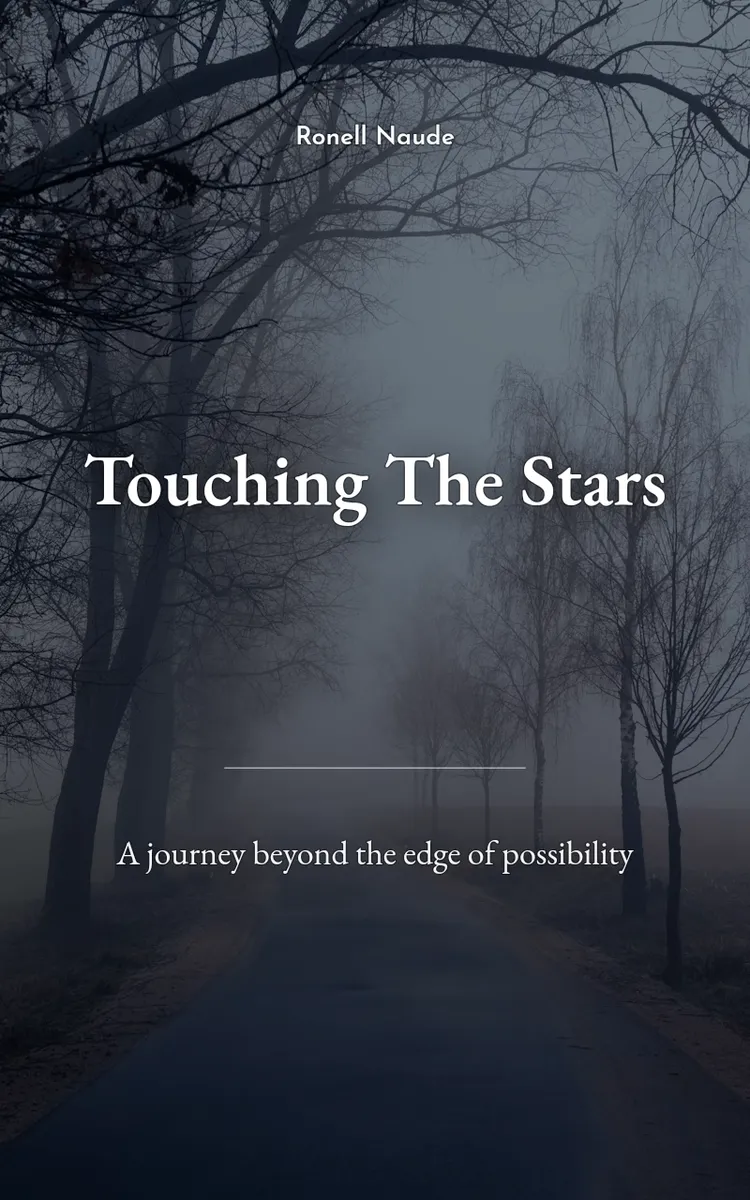
Read the first chapter
The whole of chapter one, free. About 9 min. Turn the pages with the arrows, your keyboard, or a swipe.
Chapter 1
The Observatory Roof Gives Way
The padlock snapped open at 11:47 p.m., its broken shackle dropping through the weeds around Mara Venn’s boots.
Above her, the abandoned Bellwether Observatory crouched on the mountain like a blind metal eye. One narrow window still reflected the stars. The rest were black, filmed with dust and rain.
Mara caught the gate before it groaned shut. “Quiet,” she whispered.
The gate answered with a long, protesting shriek.
She froze, listening. Only the wind moved through the dead firs below. Far off, a truck changed gears on the valley road, then faded into the dark.
The meteor shower would begin in less than twenty minutes.
She tightened the strap of her canvas pack and slipped through the gate. Inside were a flashlight, two spare batteries, a thermos, and the portable receiver her father had given her before he stopped answering calls. The receiver was small enough to fit in her palm, its plastic casing scratched white at the corners. She had carried it up the mountain because Bellwether’s roof offered the clearest view for fifty miles.
Tonight, the Perseids were supposed to burn across the sky in numbers no one had seen in decades.
Mara wanted one clean hour beneath them. No traffic. No voices. No one telling her the observatory was condemned, the stairs were unsafe, or that dead places were best left alone.
She crossed the cracked courtyard. The observatory’s front doors stood open, one hanging from a single hinge. A strip of yellow warning tape fluttered above the entrance.
She ducked under it.
The lobby smelled of wet plaster and old wiring. Her boots struck the mosaic floor, sending small echoes up the stairwell. The Bellwether’s dome rose above the central shaft, its curved ribs visible through the darkness. Somewhere overhead, loose metal tapped in an uneven rhythm.
Mara switched on her flashlight.
“Just the roof,” she said to the empty lobby. “Up, watch, down.”
Her voice came back thinner.
The staircase began behind the old ticket desk. A chain had been looped across it, but the clasp hung open. Someone had been here recently. The thought should have stopped her. Instead, she lifted the chain and stepped over it.
The first flight held. The second creaked beneath her weight. Dust shook loose from the ceiling and settled across her jacket.
At the landing, she found a fresh boot print in the gray powder.
Mara crouched. The print pointed upward.
“Elias?” she called.
No answer.
She knew Elias Rook only from the radio astronomy forum where he had warned her not to use the old Bellwether equipment without checking the power lines. He lived somewhere downstate, according to his profile, and had never met her. He had no reason to be here.
Another tap sounded above.
Mara rose and kept climbing.
The final door had swollen in its frame. She leaned her shoulder into it. The wood shifted with a damp crack, and cold wind rushed down the stairwell, carrying the sharp scent of rust.
The roof opened around her.
The dome filled most of it, a vast silver shell streaked with black. Its panels had once rolled apart along a circular track, but half the mechanism had seized. The roof beneath Mara’s boots was a patchwork of concrete, tar, and exposed steel. The telescope housing stood at the center beneath the dome, just beyond a rusted catwalk.
She checked her watch.
11:56.
Seven minutes until the first expected streaks.
The catwalk was the only way across. It curved toward the telescope platform, suspended above a gap where the dome’s maintenance floor had collapsed. A handrail leaned outward over the darkness.
Mara set her flashlight between her teeth and stepped onto the grating.
The metal flexed.
She stopped.
Below, the dome’s machinery disappeared into blackness. Wind moved through the open seams, making the gears murmur like something breathing.
“Bellwether,” she muttered, “you had one job.”
She took another step.
The catwalk gave a sharp ping beneath her left foot. A bolt spun loose and dropped. She listened for it to land.
Nothing.
The telescope waited ahead, its long barrel aimed at the sealed portion of the dome. The control console beside it had a green light glowing faintly beneath a film of dust.
Mara stared at the light.
The observatory had no power. The utility company had cut it twelve years ago.
She crossed the remaining distance.
The grating buckled.
Mara threw herself forward as the catwalk dropped behind her. Her chest struck the platform edge. The flashlight flew from her mouth and vanished through the gap.
Metal shrieked below.
She clawed at the platform, fingers catching a strip of rubber. For one breath, her legs swung over empty space. Then she hauled herself up, scraping both palms raw.
The section behind her collapsed in a cascade of rusted bars. It struck the machinery below with a roar that rolled through the dome.
Mara pressed herself against the platform.
Dust rained over her hair.
The telescope trembled on its mount. Its control console blinked once, then steadied.
A red light came on.
Mara pushed herself upright. “No.”
The dome shifted above her.
One of its panels, already split along the seam, groaned open by several inches. Moonlight spilled through the gap, pale and hard. Beyond it, the sky waited, crowded with stars.
A bright streak cut across the opening.
Then another.
Mara forgot the blood on her palms. She grabbed the telescope’s eyepiece and pulled it toward her. The mount resisted, grinding against its locked track.
“Come on.”
The telescope moved half an inch.
A bolt snapped somewhere behind her.
Mara glanced back. The route to the door had become a jagged circle of broken catwalk. The roof trembled under the weight of the dome.
She could climb down now, if the stairs still held. But the telescope was almost aligned. The meteor shower flared again, three silver lines crossing the dark in silence.
She wrapped both hands around the control wheel.
The wheel was cold enough to hurt.
Mara pulled.
The telescope lurched into place.
Its lens pointed through the opening in the dome, directly at the shower. She bent to the eyepiece.
For a moment, there was only darkness and a scattering of stars.
Then the receiver in her pack crackled.
Mara straightened.
The sound came again, a quick burst of static followed by three low pulses.
She reached for the pack.
The roof shifted under her knees.
“Not now.”
Another meteor burned across the dome’s opening, brighter than the others, leaving a green trail that seemed to hang in the sky. Mara dragged the receiver free and switched it on.
The display flickered.
The frequency dial had been set to a band she had never used. Her father’s handwriting marked the casing in faded ink: LISTEN LONGER.
She turned the dial.
Static filled the roof. Beneath it, something clicked.
Three pulses.
A pause.
Two pulses.
Then three again.
Mara looked toward the telescope. The green light on its console had gone dark. In its place, a thin blue line glowed across the display.
She adjusted the receiver.
The signal sharpened.
Three pulses. A pause. Two pulses. A longer pause.
It repeated.
Mara lowered the receiver and stared at the telescope controls. The instruments were dead, yet the signal continued. It was not coming from the mountain. It was not coming from the valley.
She lifted the receiver again and turned slowly, searching for interference.
The pulses remained strongest when she faced the open section of dome.
Beyond the Moon.
The thought arrived without permission.
Mara checked the receiver’s tiny readout. The frequency drifted in a narrow, deliberate pattern. She knew enough to recognize a local transmission. A tower, a vehicle, even a satellite could produce noise. But this signal was too clean. Too patient.
It was aimed.
Not at Bellwether.
Past Earth.
The dome groaned.
Mara backed away from the telescope as a seam split overhead. A panel slid several feet along its track, then jammed. The entire roof tilted with a violent crunch.
The telescope platform dropped.
Mara fell hard against the console. Pain flashed through her shoulder. The receiver struck the metal deck and skittered toward the broken edge.
She lunged.
Her fingers closed around its strap just before it went over.
The roof bucked again.
The telescope tore free of one mounting brace. Its barrel swung sideways, smashing into the dome. The impact sent a shock through the structure. A section of the outer roof folded inward, blocking the stairwell door.
Mara crawled toward it.
The door was still visible beneath a slab of twisted metal. She could reach it if she crossed the remaining roof, but the concrete between them had cracked from edge to edge. Dark space showed through the split.
She tested it with one boot.
The slab shifted.
Mara pulled back.
Below, the stairwell filled with falling debris. The door vanished under a cloud of dust.
She coughed into her sleeve, eyes watering. “No. No, no.”
The receiver clicked in her hand.
Three pulses.
A pause.
Two pulses.
The pattern sounded almost calm.
Mara pressed the receiver against her ear. Static hissed across her skin. Underneath it, the pulses carried a faint second tone, so low she felt it in her teeth.
She looked through the dome’s broken opening.
The Moon hung over the ridge, bright enough to show the mountains’ snowfields. The meteor shower continued around it, streak after streak burning and vanishing before it reached the horizon.
The receiver’s display changed.
A line of numbers appeared.
Mara stared at them.
They were not a frequency. They climbed and fell in intervals, repeating with the signal’s rhythm. She had seen the same pattern once before, scratched in the margin of an old Bellwether maintenance log her father had brought home. At the time, she had thought it was a failed calibration sequence.
Now the numbers aligned with the Moon’s position.
The signal was not merely coming from beyond the Moon.
It was using the Moon as a marker.
A deep crack ran beneath Mara’s knees.
She moved toward the highest remaining section of roof, clutching the receiver to her chest. The roof dipped behind her. Broken metal slid into the dome and vanished with distant crashes.
At the far edge, the access ladder rose from the wall. It led down to the service platform, then to the courtyard.
Mara reached it and grabbed the top rung.
The ladder tore away.
Its upper brackets screamed from the concrete. Mara swung backward, arms locked around the rail, while the lower half dropped into the darkness below. The ladder struck the observatory wall once, twice, then broke free entirely.
She landed on the roof with the receiver beneath her ribs.
For several seconds, she could hear nothing but the ringing in her ears.
Then the signal returned.
Three pulses.
A pause.
Two pulses.
Mara rolled onto her side and looked at the ruined access point. The ladder had fallen into the courtyard. The door was buried. The roof beneath her was splitting in widening seams.
She was trapped above the observatory with no way down.
The meteor shower blazed across the opening, beautiful and indifferent.
Mara pushed herself upright. Her hands shook as she found the receiver’s record switch. The red indicator lit.
“Come on,” she whispered, though she no longer knew whether she was speaking to the machine, the roof, or whatever waited beyond the Moon.
The signal repeated.
This time, between the pulses, a faint sound emerged - not static, not machinery, but a thin rising note that bent toward her frequency.
Mara held the receiver close.
The note stopped.
For one breath, the world went silent.
Then the signal began again, perfectly timed, as if something out there had heard her listening.
End of chapter one. 14 more chapters in the full book.
Swipe or use the arrows to turn the page


What's inside: 15 chapters
- 1. The Observatory Roof Gives Way
- 2. A Signal in the Static
- 3. The Moonward Coordinates
- 4. Across the Salt Flats
- 5. The Dream She Buried
- 6. The Launch That Never Was
- 7. The Elevator Below the Hangar
- 8. The Message from Asterion
- 9. The Price of the Proof
- 10. The Broadcast Goes Dark
- 11. The Silence After Asterion
- 12. The Missing Navigation Key
- 13. The Stars Answer Back
- 14. A Promise Beyond Earth
- 15. Under a Wider Sky
About this book
"Touching The Stars" is a fiction book by Ronell Naude with 15 chapters and approximately 33,465 words. An unspecified story about reaching for the stars.
This book was created using Inkfluence AI, an AI-powered book generation platform that helps authors write, design, and publish complete books. It was made with the AI Novel Writer.
Frequently Asked Questions
What is "Touching The Stars" about?
An unspecified story about reaching for the stars
How many chapters are in "Touching The Stars"?
The book contains 15 chapters and approximately 33,465 words. Topics covered include The Observatory Roof Gives Way, A Signal in the Static, The Moonward Coordinates, Across the Salt Flats, and more.
Who wrote "Touching The Stars"?
This book was written by Ronell Naude and created using Inkfluence AI, an AI book generation platform that helps authors write, design, and publish books.
How can I create a similar fiction book?
You can create your own fiction book using Inkfluence AI. Describe your idea, choose your style, and the AI writes the full book for you. It's free to start.
Write your own fiction book with AI
Describe your idea and Inkfluence writes the whole thing. Free to start.
Start writingCreated with Inkfluence AI


