
Read the first chapter
The whole of chapter one, free. About 8 min. Turn the pages with the arrows, your keyboard, or a swipe.
Chapter 1
VOC Sources and Health Pathways
A typical room can hold VOC levels that spike fast—often within hours of routine home activities like painting, using strong cleaners, or off-gassing new flooring. And if you’re also noticing headaches, coughing, stuffy breathing, or a “chemical” smell that won’t quit, those symptoms are not random. They’re often the body reacting to how VOCs move from indoor air into your breathing passages and, over time, how repeated exposure can add up.
Nadia, 34, a pediatric nurse, noticed this pattern after a weekend of “quick fixes.” A fresh coat of paint in the hallway, a new rug pad, and a deep clean with a strong degreaser left her with a pounding head and a dry, irritated throat when she came home from work. She didn’t feel “sick” in a dramatic way—just off. That’s common with VOC exposure: it can look like everyday discomfort, not an obvious emergency. The goal of this chapter is to help you connect the dots between VOC sources, what your body does with them, and what to do next using exposure concepts you can actually use at home.
VOC-to-Body Pathway Map: how sources become breathing symptoms and long-term risk
This chapter’s health promise is practical: you’ll learn to recognize which common VOC sources are most likely to affect your breathing and headaches, and you’ll gain a simple way to think about long-term risk without guessing. You can expect to walk away with clear “if this, then that” thinking—so you’re not stuck interpreting a vague smell or guessing whether it’s “in your head.”
Who this is for: homeowners, renters, gym owners, small business owners, and anyone managing air quality around daily products. If you’ve ever scrubbed, painted, installed, remodeled, or brought new materials indoors and then felt symptoms later, you’re the right reader.
Here’s the VOC-to-Body Pathway Map in plain language: VOCs (volatile organic compounds) are chemicals that evaporate easily at room temperature. Once they’re in indoor air, they follow a pathway—source → air → breathing exposure → body response—and the pattern depends on how many VOCs are released, how fast they mix in the room, and how your body is affected by repeated contact.
Think about it in three practical steps:
• Source strength and timing: Some products release VOCs immediately (like freshly opened solvents). Others build up after installation (like new flooring or adhesive curing).
• Exposure conditions: VOCs become more noticeable when ventilation is limited, air is stagnant, or the product is used in a confined space. Temperature and humidity also matter—warmer rooms often release more vapor.
• Body contact and response: Your nose and airways are the “front door.” Irritation can show up as burning eyes, throat dryness, cough, wheezing, or headaches. With repeated exposure, your airways and stress systems can stay on higher alert, which is one reason symptoms may recur during similar activities.
A key risk idea (without fear-mongering) is that “long-term risk” doesn’t require a dramatic illness to be meaningful. It often comes from repeated exposure, especially when VOC sources happen often and ventilation doesn’t keep up. If you’re frequently using high-emission products or living with materials that keep off-gassing, your exposure may be more consistent than you think.
Ask yourself: when you notice symptoms, do they line up with specific moments—opening a product, applying it, or being in the room after it’s “done”? That timing is a clue.
Takeaway to reflect on: Think of VOCs like steam—your symptoms depend on how much vapor is released, how long it lingers in the breathing zone, and how often the cycle repeats.
Practical Protocol: reduce VOC exposure step-by-step (with timing, durations, and “when to get help”)
If you only do one thing, do this: treat VOC reduction like a workflow, not a vague “try to be healthy” idea. Use the protocol below to control the source, shorten the exposure window, and confirm results. Nadia’s turning point was switching from “clean it and close the house” to a staged plan with ventilation and symptom checks.
Step 1: Identify the VOC trigger and set a “control window."
Start with the last 48 hours. List the activities that release VOCs or strong odors: painting, varnish, adhesives, new flooring or rugs, degreasers, aerosol sprays, oven cleaners, and certain disinfectants. Then set a control window for the room where you spend the most time.
• For spraying, painting, solvent use, or strong degreasers: plan for a control window of at least 24 hours.
• For new flooring, carpet installation, rug pads, or adhesives: plan for 72 hours as your first “real check” period, because emissions often peak early.
Step 2: Ventilate with a goal, not a guess
You’re aiming to pull VOCs out faster than they accumulate.
• During active use: increase ventilation to the highest practical level. If you can open windows, do it during the application, not after you’ve already finished and sealed the smell in.
• Afterward: keep airflow going for the control window. A practical minimum is 2-3 hours of active ventilation after finishing, then reassess.
If you can measure CO₂ (carbon dioxide) with a low-cost indoor monitor, use it as a ventilation proxy: higher CO₂ often means stale air. A simple target many people use is staying closer to outdoor levels (often roughly under 900-1000 ppm at home in typical conditions). It’s not a direct VOC meter, but it helps you make ventilation decisions instead of relying on smell alone.
Step 3: Run a “symptom check” at the right time points
Don’t wait a week to decide whether it helped. Use time-based checks.
• T+1 hour after finishing: notice throat irritation, eye burning, and headache onset.
• T+6 hours (same day): note whether symptoms are fading or returning.
• T+24 hours: If symptoms are still noticeable in the room, the source may be ongoing (off-gassing), or ventilation is insufficient.
Nadia found that her headache peaked later than she expected—around the evening after application—even though she’d “stopped working” earlier. That’s why time points matter.
Step 4: Adjust your next exposure using a clear progression
If symptoms show up, don’t just “push through.” Adjust the exposure cycle on your next attempt:
• If symptoms were mild and quickly resolved: shorten time in the room during the first 4-6 hours after the activity.
• If symptoms returned the next day: switch to a lower-emission product next time and extend ventilation to the full control window ( 24-72 hours, depending on the source).
• If symptoms were strong or multiple (headache plus breathing irritation): pause the project and switch to a containment approach (keep the door closed to living areas and ventilate the workroom).
Warning signs: when to seek professional help
If you or someone in the home has wheezing, chest tightness, trouble breathing, fainting, or symptoms that escalate despite ventilation and source removal, contact a licensed medical professional promptly. Also get help sooner if you have asthma, chronic lung disease, or a child with persistent symptoms after VOC-releasing activities.
Quick comparison table: what “source type” usually means for timing
VOC source in the home
Typical “check” window for symptoms
What it means for planning
Painting, varnish, stain, solvent use
0-24 hours
Often peaks soon after application and during early off-gassing
Aerosol sprays, degreasers, strong cleaners
Same day to 24 hours
Odor and irritation can appear quickly; ventilation is key
New flooring, carpet pad, rug installation, adhesives
24-72 hours
Off-gassing can continue after installation; use staged access to rooms
Renovation dust cleanup with chemicals
0-24 hours
Residual chemical residue can trigger irritation even after “work is done."
Takeaway to reflect on: Use the control window and time-point symptom checks so you can tell whether your changes are working—without guessing.
Common Mistakes: what keeps VOC exposure higher than it needs to be
Even careful people often miss the same patterns. Here are three frequent errors I see around VOC sources, with a straightforward fix for each.
Mistake: “It smells fine now, so it’s over."
Why it happens: Odor is an incomplete signal. Some VOCs are detectable by smell only at certain concentrations, and other irritants can still be present even when the odor fades. Nadia noticed this: the hallway smelled “less sharp” after a few hours, but her headache returned later when she re-entered the space.
What to do instead: Use timing, not just smell. Run a symptom check at T+6 hours and T+24 hours after painting or strong chemical use. If you can’t keep a consistent check, at least plan a 24-hour control window before returning to normal routines in that room.
Mistake: Ventilating only while the product is in use
Why it happens: Many people open windows during application and
Then close everything once they’re done—often trapping vapors during the highest “post-use” period. That’s exactly when your breathing exposure can stay elevated, especially if the room is sealed and people remain inside.
What to do instead: Keep ventilation going after you finish. Aim for 2-3 hours of active ventilation immediately post-use, then reassess at T+6 hours. For flooring and adhesives, extend the plan to 72 hours.
Mistake: Treating VOCs like a one-time event instead of a repeated cycle
Why it happens: Homes often stack sources: you paint, then clean, then install something new, all within the same week. Each activity restarts off-gassing and resets the exposure window. Even if each event is “small,” the timing overlap can keep your airways irritated and your symptoms recurring.
What to do instead: Space VOC-heavy tasks. If you must do multiple projects, separate them by at least 24 hours when possible, and prioritize the one that’s most likely to affect breathing (spraying, solvents, and adhesives). If symptoms appear after the first activity, don’t schedule the next VOC source immediately—complete your T+24 hour check first.
Takeaway to reflect on: If you want fewer headaches and calmer breathing, your biggest lever is timing—how long the source releases, how long air stays stagnant, and how often you repeat the cycle.
A good closing thought for this chapter: VOCs aren’t just “chemicals in the air.” They’re a timeline. When you start thinking in time windows—source release, ventilation lag, symptom checks—you stop guessing and you start controlling what your body is actually exposed to. That mindset carries forward as we look at which products and materials tend to create the toughest exposure patterns and how to choose safer options without turning your home into a construction site.
End of chapter one. 7 more chapters in the full book.
Swipe or use the arrows to turn the page


What's inside: 8 chapters
- 1. VOC Sources and Health Pathways
- 2. Allergy and Asthma Flare Triggers
- 3. Headaches, Eye Irritation, and Dizziness
- 4. Sleep Disruption From Indoor Chemicals
- 5. Kitchen and Bathroom Ventilation Tactics
- 6. Low-VOC Cleaning and Safer Substitutions
- 7. Off-Gassing Control for New Furniture
- 8. Measuring VOCs and Verifying Improvements
About this book
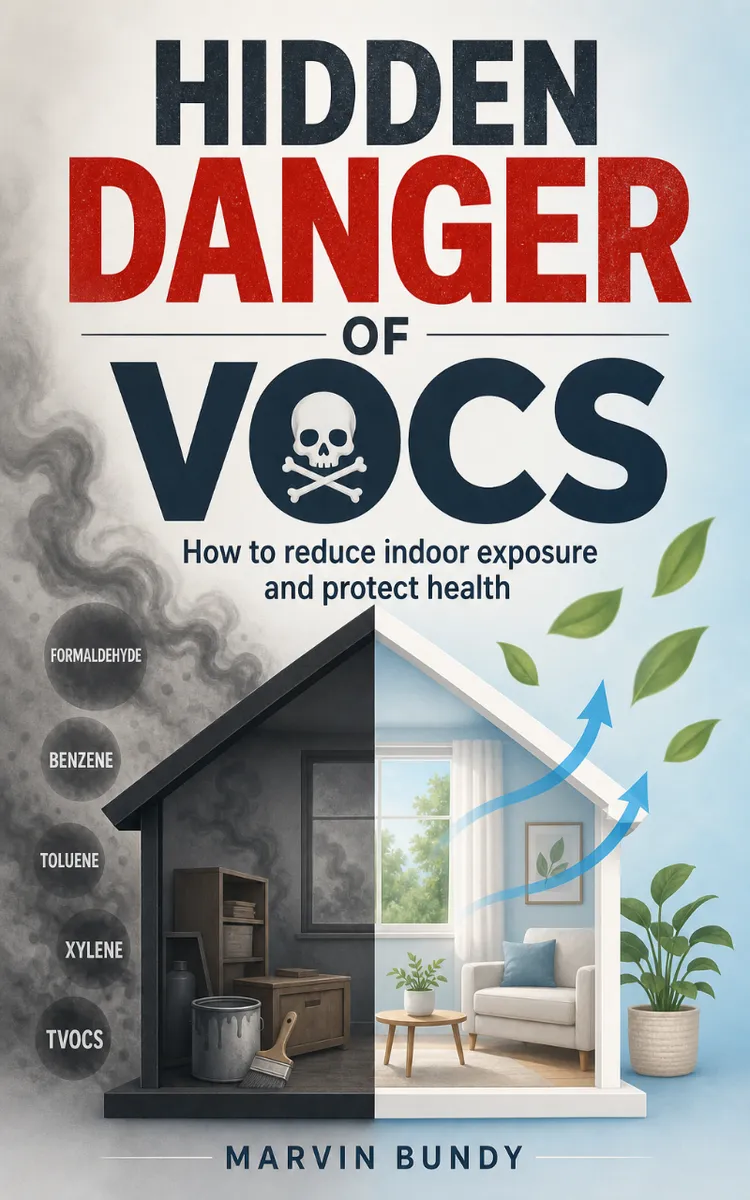
"Hidden Danger Of Vocs" is a health & wellness book by Marvin Bundy with 8 chapters and approximately 14,657 words. Risks of volatile organic compounds in homes and mitigation.
This book was created using Inkfluence AI, an AI-powered book generation platform that helps authors write, design, and publish complete books. It was made with the AI Health Book Generator.
Frequently Asked Questions
What is "Hidden Danger Of Vocs" about?
Risks of volatile organic compounds in homes and mitigation
How many chapters are in "Hidden Danger Of Vocs"?
The book contains 8 chapters and approximately 14,657 words. Topics covered include VOC Sources and Health Pathways, Allergy and Asthma Flare Triggers, Headaches, Eye Irritation, and Dizziness, Sleep Disruption From Indoor Chemicals, and more.
Who wrote "Hidden Danger Of Vocs"?
This book was written by Marvin Bundy and created using Inkfluence AI, an AI book generation platform that helps authors write, design, and publish books.
How can I create a similar health & wellness book?
You can create your own health & wellness book using Inkfluence AI. Describe your idea, choose your style, and the AI writes the full book for you. It's free to start.
Write your own health & wellness book with AI
Describe your idea and Inkfluence writes the whole thing. Free to start.
Start writingCreated with Inkfluence AI


