
Read the first chapter
The whole of chapter one, free. About 5 min. Turn the pages with the arrows, your keyboard, or a swipe.
Chapter 1
Do You Hear Me? When Silence Feels Personal
Psalm 34:17-18
The righteous cry out, and the Lord hears them;
he delivers them from all their troubles.
The Lord is close to the brokenhearted
and saves those who are crushed in spirit.
When prayer feels like it disappears into the ceiling, Scripture says God is not distant from the cry or from the person crying.
There’s a particular ache that comes from praying the same request for days, weeks, or years - and hearing no clear answer. You may still attend church, read your Bible, and tell others that God is faithful. Yet when you’re alone with the unanswered question, your heart may whisper, Does He hear me at all?
That question doesn’t make you a bad Christian. The Bible is full of people who brought their confusion to God. David asked, “How long, Lord?” (Psalm 13:1). Job poured out his grief. Jesus Himself prayed in deep anguish in the garden. Faith doesn’t mean pretending silence doesn’t hurt. It means bringing the hurt honestly to the God who meets us there.
Psalm 34 doesn’t say God hears only polished prayers. It says He hears the cries of His people. A cry may be brief: “Lord, help me.” It may be a tired sentence spoken while washing dishes, driving to work, or staring at a medical bill. It may be tears when words won’t come. God is attentive to all of it.
Reflection
When an answer takes time, it’s easy to treat the delay as a message about our worth. We may think, Perhaps I didn’t pray correctly. Perhaps God is disappointed with me. Perhaps He listens to people with stronger faith, but not to me. Yet Psalm 34:18 gives us a different picture. God is close to the brokenhearted - not standing far away, waiting for us to become less needy. Your pain is not proof of God’s absence. In fact, Scripture says He draws near to people who are crushed in spirit.
God’s listening doesn’t always look like immediate change. Sometimes His answer is “not yet,” while He strengthens us for what lies ahead. Sometimes He gives a different way than the one we requested. A job may not open, but a needed relationship or provision may appear. A conflict may not resolve quickly, but God may begin changing our responses and giving us wisdom. Sometimes His answer is a clear “no” or a redirection that protects us from something we can’t see. None of this makes the waiting painless. But it does mean silence is not the same as indifference.
There are also unseen factors in our lives. Other people make choices. Circumstances overlap. Healing, work, family decisions, and finances can involve more pieces than we understand. God remains sovereign, but He doesn’t treat us like machines. He works patiently, often in ways we recognize only later. Psalm 66:19-20 says, “God has surely listened and has heard my prayer,” then praises Him for not withholding His love. The answer may still be unfinished, but His steadfast love is not on hold.
That’s why you can keep praying without forcing yourself to sound cheerful. Psalm 55:17 describes calling on God morning, noon, and night. Psalm 145:18 says He is near to all who call on Him in truth. Truth includes faith, but it also includes disappointment. You can say, “Lord, I believe You hear me, and I’m struggling because I can’t sense Your answer.” That is not disrespect. It is relationship.
You don’t have to measure God’s attention by your feelings. Feelings matter, and God cares about them, but they can become especially unreliable during long stress. A quiet morning may feel like rejection. A delayed response may feel personal. Scripture gives you something firmer to hold: God hears the cry, stays close to the brokenhearted, and invites you to cast your anxiety on Him because He cares for you (1 Peter 5:7).
So today, don’t demand that your heart feel peaceful before you approach God. Come as you are. The throne of grace is open to you, not because your prayer is impressive, but because Jesus has made a way for you to draw near and receive mercy and help (Hebrews 4:16).
Practice for Today
• Name the silence without judging yourself. Set a timer for five quiet minutes. Tell God the request you’ve been carrying and describe what the delay feels like. You might say, “I’m afraid this means You’ve forgotten me,” or, “I’m tired of asking and not knowing what to do next.” Don’t edit the sentence to make it sound more spiritual. Afterward, read Psalm 34:17-18 slowly twice. Notice which phrase meets you most directly.
• Keep a listening record for seven days. In a journal, divide each page into three short lines: “What I asked,” “What I notice,” and “What I still need to trust.” Under “What I notice,” record small signs of God’s care - not as proof that your request must be answered soon, but as reminders that He is present. Perhaps someone checks in, a needed expense is covered, wisdom becomes clearer, or you receive strength for one more difficult conversation. This practice won’t manufacture an answer. It helps you distinguish God’s quiet care from the lie that nothing is happening.
• Release the demand for one specific outcome. Pray through the request in two parts. First, tell God plainly what you want. Then add, “Lord, if Your answer is not yet, a different way, or a no, keep me close and help me recognize Your care.” This isn’t giving up. It’s placing the outcome in God’s hands while continuing to trust His character. If the issue involves another person, pray for wisdom about your own next faithful step rather than trying to control that person’s response.
As you journal, consider this prompt: What answer am I expecting God to give, and what would it look like to believe He is listening before I see that answer? Be specific. If you’re waiting for work, write about the fear behind the application process. If you’re praying for healing, name the loss of normal routines. If you’re asking God to restore a relationship, acknowledge both your hope and the other person’s freedom to choose. Honest prayer makes room for honest dependence.
You may finish today without a changed circumstance. That doesn’t mean the time was wasted. You brought the ache into God’s presence instead of carrying it alone. You returned to what He has said when your feelings were loud. That is a real act of faith.
End of chapter one. 14 more chapters in the full book.
Swipe or use the arrows to turn the page

Successful Christian Business Leadership

When the devil whispers to you

Worrying Is Like Worshipping
What's inside: 15 chapters
- 1. Do You Hear Me? When Silence Feels Personal
- 2. God Hears the Cries of the Brokenhearted
- 3. Keep Calling: Faith That Doesn’t Stop Praying
- 4. Near to All Who Call in Truth
- 5. The Invitation: Ask, Seek, and Expect God to Speak
- 6. Cast Your Anxieties: God Cares for You
- 7. Approach the Throne: Mercy and Help in Your Time of Need
- 8. Not Yet: When God Is Growing You in the Waiting
- 9. A Different Way: God Gives What You Truly Need
- 10. A No or Redirection: Protection and a Better Plan
- 11. Timing: What Feels Like a Long Wait to You Is Not to God
- 12. Renewed Strength for the Long Road
- 13. Be Still: Peace When Answers Don’t Come Yet
- 14. Yes, God Hears You: Living with Faith After the Wait
- 15. Prayer For The Readers
About this book
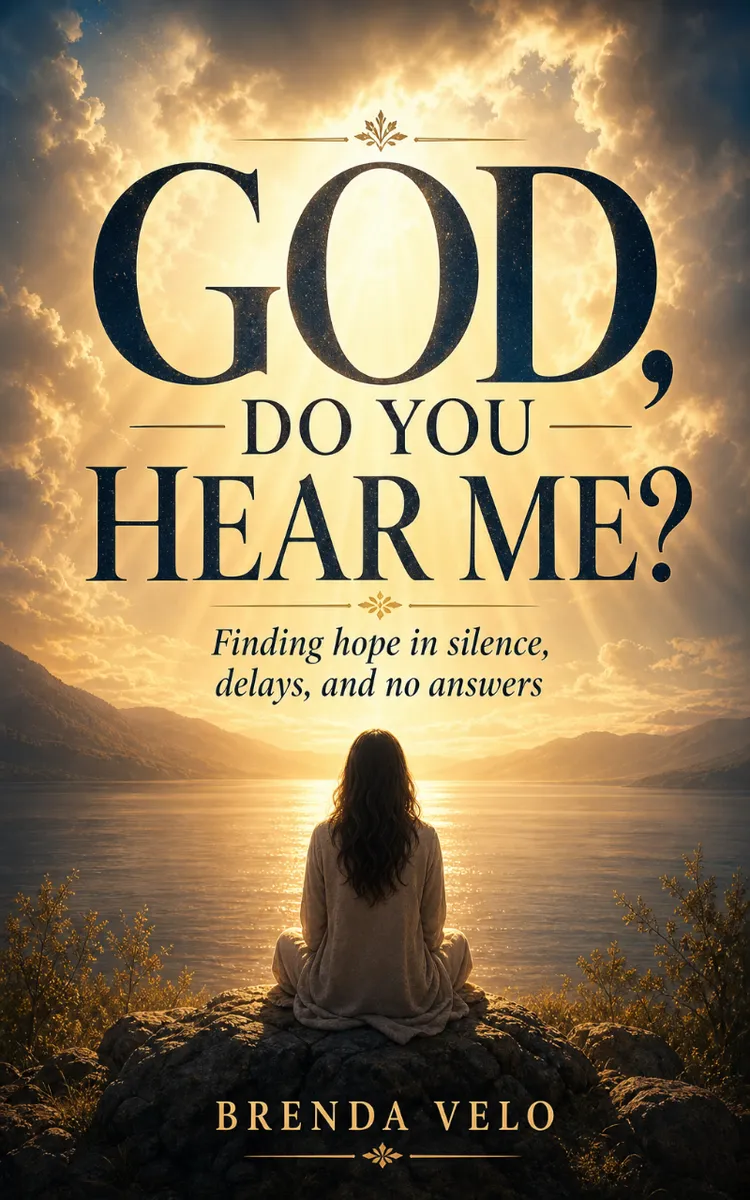
"God, Do You Hear Me?" is a religious devotional book by Brenda Velo with 15 chapters and approximately 16,940 words. Christian encouragement on prayer, God’s listening, and unanswered requests.
This book was created using Inkfluence AI, an AI-powered book generation platform that helps authors write, design, and publish complete books.
Frequently Asked Questions
What is "God, Do You Hear Me?" about?
Christian encouragement on prayer, God’s listening, and unanswered requests
How many chapters are in "God, Do You Hear Me?"?
The book contains 15 chapters and approximately 16,940 words. Topics covered include Do You Hear Me? When Silence Feels Personal, God Hears the Cries of the Brokenhearted, Keep Calling: Faith That Doesn’t Stop Praying, Near to All Who Call in Truth, and more.
Who wrote "God, Do You Hear Me?"?
This book was written by Brenda Velo and created using Inkfluence AI, an AI book generation platform that helps authors write, design, and publish books.
Write your own religious devotional book with AI
Describe your idea and Inkfluence writes the whole thing. Free to start.
Start writingCreated with Inkfluence AI


