
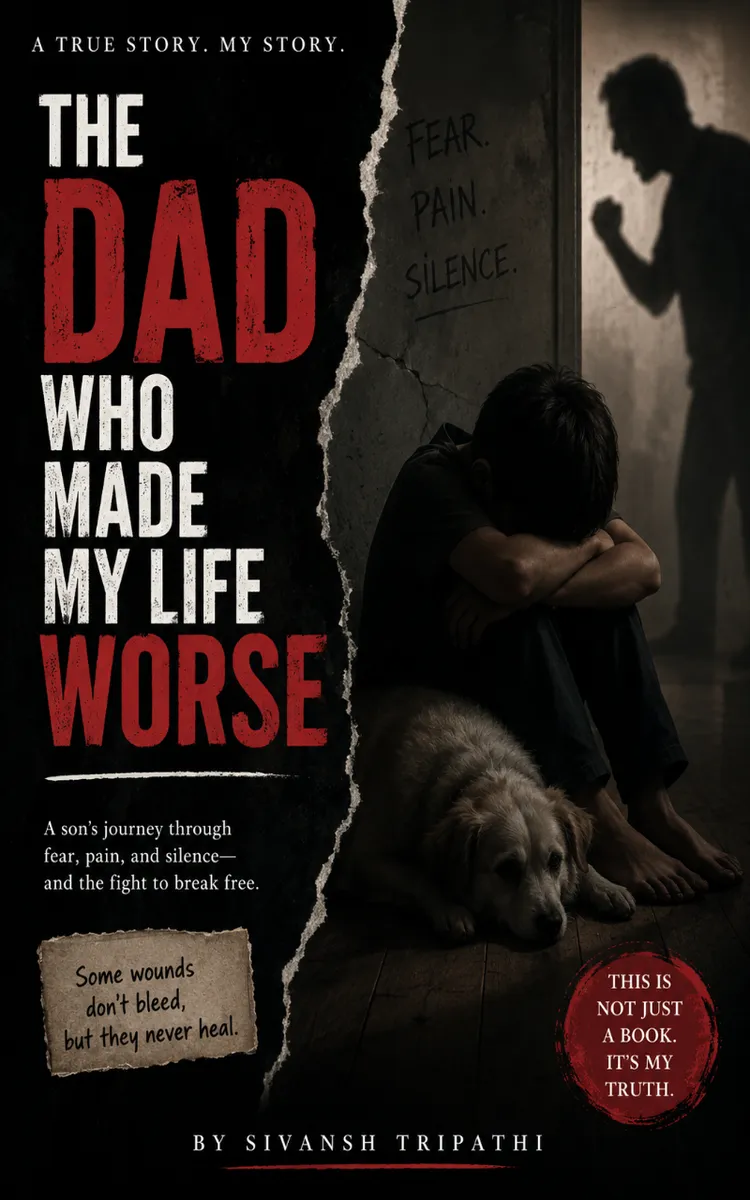
Read the first chapter
The whole of chapter one, free. About 15 min. Turn the pages with the arrows, your keyboard, or a swipe.
Chapter 1
Cradles, Cake, and the Dog’s Name
The first thing I smelled was baby powder and warm milk, the kind that clings to your nose no matter how many times you wipe it. The living room was already crowded - shoes by the door, coats folded on chairs, voices layered over each other like someone had turned the volume up too high. My baby sister had come home earlier that morning, wrapped in a blanket so light it barely made a sound when people shifted her. On the couch, fresh blankets spread out in a fan of soft colors, and the whole place looked like it had been dressed for a holiday: bright bows, a new bottle set on the coffee table, little plastic toys that caught the light when someone moved.
I was fourteen, which meant I was old enough to hold her if I was calm, and young enough to be moved aside when I wasn’t. I stood near the couch with my hands busy - straightening a blanket edge, fixing a crooked card, making myself useful - because if I kept moving, maybe I wouldn’t have to listen too hard. My 8-month-old dog, Miso, kept weaving between ankles, eager and careful at the same time. He wasn’t a pet in my mind. He was smaller than the adults’ legs and faster than my patience, but he’d grown up with me in our house. When the baby blanket smell came in waves, he would lower his head, sniff once, then lift his eyes at me as if to ask permission to be close.
“Don’t you worry,” my aunt said, leaning over the couch so her perfume brushed the air. “He’ll get used to her.”
Miso’s tail thumped once, twice, and then he settled his weight against my shin like he was trying to become part of the furniture. I could hear his breathing when the room quieted for half a second, a soft sound under the laughter. He kept glancing at the baby - at her tiny fist curled like a question, at the way her chest rose and fell - then looking back at me, reassured by my face.
That reassurance didn’t reach my father.
I noticed it in the way his voice kept dropping lower during conversations, like he was talking to the floor. It wasn’t that he said the words out loud right away. It was the rhythm of it: a pause after someone congratulated us, a change in his expression when he thought no one was watching, the way he kept returning to the same thought with different wording. For days he’d insisted we should give Miso away, like the dog was a problem we could solve with paperwork and a stranger’s kindness. Today, he tried to fold that insistence into the noise, but it kept slipping through.
When my uncle handed my mother a box of diapers, my father took the chance to step near the coffee table. His hand hovered over the gift as if he were measuring it. I watched him out of the corner of my eye. He looked at the baby blanket first, then at the floor where Miso’s paws made small scuff marks.
“We’ll have to be careful,” my father said, not loud, but not soft either. “With the dog.”
Someone laughed politely. “He’s just a little guy.”
My father’s mouth tightened. “He’s not a baby. He’s going to - ” He stopped, as if the rest of the sentence didn’t fit inside the room full of smiling faces. “Anyway. We’ll see.”
I could feel my shoulders go rigid. I didn’t know why I couldn’t relax. Maybe because every “we’ll see” from him sounded like a door closing. Maybe because Miso was there, leaning forward at the sound of my name when I shifted, and I wanted to believe that if I stood between him and danger, the world would understand.
Someone passed me a cup of juice. I didn’t drink it right away. The plastic cup was cold in my hand, and my palms sweated anyway. I kept thinking about the way Miso would tilt his head when he was confused, the way he trusted without asking questions. He didn’t know about giving away. He didn’t know about conditions.
The visitors kept coming in waves, and the living room stayed bright. People kept saying my sister’s name like it was a song they’d memorized. My mother kept smiling in a way that made her cheeks ache, and every time she looked at the baby her eyes went soft. I watched her hands adjust the blanket around my sister’s legs, careful and practiced. Then I watched my father stand a little too far from the couch, like he was trying not to touch anything that might make his argument harder.
I tried to keep Miso close. I guided him with my body, not my voice. When he started to trot toward someone’s chair, I shifted in front of him and patted the floor near me. He followed, ears perked, waiting for my next signal. He stayed quiet until the baby let out a small cry, a thin sound that cut through the laughter. Miso froze at that noise, his head lifting like he was listening for the right person to comfort.
“That’s my girl,” my mother said, bouncing the baby gently.
Miso let out a soft whine and then pressed his nose to my knee. I felt his warm breath through the fabric of my jeans. The room was full of people and congratulations, but when I looked down at him, it felt like we were the only ones in the world. I could almost forget my father’s insistence. Almost.
Then, in the middle of someone saying, “She’s so tiny,” my father’s voice carried again, clearer than it had been before. I heard it because it landed wrong against the baby’s sweetness, like a nail tapping the same spot.
“I’m telling you, we can’t keep him like this,” he said.
The room didn’t pause completely - people kept shifting, moving, talking - but I felt the air change. My aunt’s laughter died on her tongue. My uncle’s eyebrows lifted. My mother’s smile held for a second too long before it faltered.
“What do you mean?” my uncle asked.
My father looked at Miso, then at my mother, then away again. “He’s going to get in the way. He’s already - ” He stopped and changed direction, like he was trying to find a softer angle. “It’s better if we place him with someone who can handle him. Someone who knows what they’re doing.”
It was the same insistence I’d heard in the kitchen, in the hallway, in the way he’d talk about Miso like he was a broken appliance. Now it was in the open, right in the living room with the baby blanket spread across the couch and the smell of new diapers in the air. I could feel my heart thumping in my throat, loud enough that I wanted to grab it and hold it still.
Miso’s ears went forward. He turned his head toward my father, tail still, eyes wide. He didn’t understand the words, but he understood the tone - how the room got colder around them.
“He’s family,” I said before I could think about how my voice would sound to adults.
Everyone’s attention slid toward me. The juice cup tilted in my hand, and I set it down too hard on the coffee table. It clacked against the wood. The sound made Miso flinch.
My father stared at me. “Don’t start,” he said, and there was something in his face that made my stomach sink. It wasn’t anger yet, not fully, but it was close enough that I could taste metal.
My mother shifted, trying to smooth it over. “Ethan, honey - ”
“It’s not fair,” I said. I didn’t mean to say it like that. I meant to say something calmer, something that would keep the party going. But the words came out anyway, sharp and honest. “He’s not doing anything. He’s just here. Like he’s always been.”
My uncle rubbed his jaw. “Your dad’s just thinking ahead.”
Thinking ahead. That phrase didn’t belong to a house full of blankets. It belonged to paperwork and distance. It belonged to a future where Miso’s name would stop being said in our kitchen.
My father leaned a little closer, like he was trying to make me smaller with his body. “You’re fourteen,” he said. “You don’t get to decide everything.”
I hated how that landed. It sounded reasonable to the adults who didn’t live with Miso’s daily routine. It sounded like a lesson. But what I felt was simpler: I was the one who knew how he flinched when the broom moved too fast, how he liked his water in the same corner, how he’d wait by my bedroom door when my friends left. I was the one who loved him like a younger brother, and I couldn’t stand the idea that a stranger would take that away because my father was impatient with the mess of having a living creature in the house.
Miso pressed against my leg again, as if he could feel the tension and wanted to be proof that he was safe with me.
“Dad,” I started, and my voice wobbled. “We can make it work.”
My father’s eyes flicked to the couch, to the baby, to the blankets. For a second he looked like someone trying to balance two truths. Then his face hardened.
“We can’t,” he said. “Not if you keep letting him around her. It’s irresponsible.”
My mother’s breath caught. “He’s not - ”
“He is,” my father cut in. “You don’t know what he might do. Dogs don’t think like people.”
I felt my ears heat with shame I couldn’t explain. I wasn’t ashamed of Miso. I was ashamed of how helpless I sounded when I tried to defend him. I was ashamed that the adults who loved my baby sister were suddenly treating Miso like he was the only risk in the room.
The visitors kept talking again, trying to return to the surface of celebration. People asked if we’d picked names, asked whether the baby had been sleeping, asked questions that made my mother beam. But the tone had changed. The room felt like it had two temperatures now: one for the baby, one for the dog.
Miso became restless. He circled once, twice, then lay down near my feet, nose tucked under his paw. He watched the couch with a quiet, steady attention. When the baby made a soft sucking sound, Miso’s chest rose and fell a little faster. When someone clapped lightly for a joke, he flinched and then looked at me again, as if I were the only thing that could tell him what was safe.
I kept my hand on his back through the fabric of my jeans, feeling the rise and fall of his breathing. His fur was warm. It was the kind of warmth that should have made me feel protected, not trapped. My father’s insistence sat between us like a thin wall I couldn’t see but couldn’t cross.
The day kept rolling forward, filled with small movements: my mother adjusting the blanket, someone wiping frosting from a napkin, my aunt passing around a photo album. But my mind kept snagging on the same thought - if my father wanted Miso gone badly enough, he would find a way.
I tried to ignore it. I tried to keep Miso calm by keeping my own body calm. I told myself that if I acted like this was normal, maybe it could stay normal.
Then, later, when the room got loud again - someone laughing too hard, someone turning on a playlist, the baby finally settling after a fuss - Miso stood up abruptly and walked toward the living room rug. He moved like he’d decided he needed to do something quickly. I watched him, confused for half a second, because he was good about waiting most days. His tail didn’t wag. His ears were flat. He looked unsettled, like his body had sent him an urgent message and his mind couldn’t translate it fast enough.
I stood to follow, but the couch blankets had made a maze. My feet caught on the edge of a folded blanket, and the movement slowed me down. I heard someone behind me say my sister’s name again. For a moment I felt like I was stuck inside a busy picture.
The sound came next - soft, then unmistakable - followed by a smell that hit me in the face immediately. I turned my head and saw it: the bed in the corner of the room, a place we’d set up earlier as a safe spot for Miso, now stained where he shouldn’t have been. He looked down at it as if he didn’t understand how it happened, his body stiff with embarrassment. His eyes lifted to me, pleading without words.
My stomach dropped.
The house had been all celebration, but now it was about to become about Miso. I could feel it. I could feel my father’s attention shift like a hand moving toward a switch.
“Ethan,” my father said, and I heard the edge in his voice before I even saw his face turn. “That’s what I mean.”
I rushed toward Miso, not thinking, just moving. The dog’s nose was already turning away, trying to get distance from the situation. I crouched and checked his face, touched his head with my palm. His fur was damp at the neck, and his breathing was quick. He wasn’t crying. He was waiting for what would happen next.
I grabbed paper towels. The smell was strong and sour, and it filled the room. I kept my hands steady as I cleaned, even though my fingers shook. My mother was busy with the baby, but I heard her call my name from the couch, her voice tight.
“What happened?” she asked.
“He had an accident,” I said. I hated how small my voice sounded, like I was apologizing for the dog’s body instead of for the mess.
My father came closer. His shoes scuffed on the floor. The carpet fibers stuck to the paper towels, and I could hear the scrape of them against the bed as I cleaned.
“That’s it,” he said.
He grabbed Miso by the collar with a force that made Miso jerk backward. The dog’s body went rigid, then fought against it, trying to pull away. His eyes were wide, and I saw the fear in them before I could stop myself from understanding. It wasn’t confusion anymore. It was terror.
“Miso,” I said, and the sound came out thin. I reached for him, but my father pulled him back out of my reach.
My father struck him.
Three times - fast, heavy hits that made a dull sound against fur and bone. Each hit was followed by a small cry from Miso that I couldn’t unhear. It wasn’t the bark he made when he wanted attention. It was a sound of pain and fear. The dog tried to move away, twisting his body, stumbling on the edge of the living room rug. His paws scrabbled, searching for a place to escape, and his head kept turning toward me as if I could suddenly fix everything just by being closer.
I froze, not because I didn’t care, but because my body had no plan for what to do when the person who should protect him decided he was the problem.
My mother stood up quickly from the couch. The baby was in her arms, and her face went pale in a way that made my throat burn. “Stop,” she said, her voice breaking.
My father didn’t stop. His face was set hard, like he’d already decided what kind of day this would be. He let Miso go and then, without warning, his anger turned toward me.
“You see?” he shouted, spittle catching at the corners of his mouth. “This is what you’ve been doing. This is what you defend.”
He pointed at me like my chest was the target.
“You’re sick,” he said. “You’re just like him.” Then his words swung harder, crueler, aimed at both of us at once. “You’re useless. You’re disgusting. Get out of my sight.”
My ears rang. The living room noise - visitors, blankets, baby powder - fell away into a dull blur. I heard my own breathing, too loud, and I heard Miso’s soft whimper from the floor. His body curled inward, trying to protect himself from being touched again. When he looked at me, I saw how young he was in that moment. How trusting. How he kept expecting safety from the wrong person.
I stood there with paper towels in my hand, cleaning something that had already happened, as if wiping could undo a choice. My guilt came in waves: guilt for not stepping between them, guilt for being fourteen and thinking there would be time, guilt for listening to my father’s insistence for days and still believing love could outlast his temper.
My father’s voice didn’t fade right away. It kept coming, each sentence a new bruise. People moved then - someone reached for my mother, someone told him to calm down, someone asked if the baby was okay. But my eyes stayed on Miso. I watched him tuck his head down, trembling, and I felt my stomach twist with the helpless knowledge that he was depending on me and I had failed to stop it.
When the room finally quieted into stunned conversations, I crouched beside Miso as carefully as I could. My hands hovered, unsure. His fur was warm, but his body felt tighter, like he’d pulled himself into a smaller shape to survive. I slid my palm along his back, slow enough that he could retreat if he wanted. He didn’t get away. He leaned into my touch just a little, like he was grabbing onto the only steady thing left.
The baby’s blanket was still spread across the couch, bright and soft, and the baby herself slept with her mouth slightly open, completely unaware of the change in our house. That contrast hurt in a clean, sharp way - like seeing two truths in the same frame. One truth was my sister’s homecoming, the voices that had lifted her name into the air. The other truth was Miso shrinking on the floor while my father’s words cut through the room like they belonged to him.
I didn’t know how to make sense of either one. I only knew I couldn’t let Miso feel alone.
So I stayed there, sitting close enough to feel his trembling through my jeans. I didn’t speak. I didn’t ask anyone for permission. I just sat, watching his eyes lift toward me and then drop again, as if he were trying to memorize me for later.
In my head, without sound, I promised him something I could actually keep. No matter what my father decided next, no matter what he said about giving him away, I would not abandon him.
I kept my hand on his back until the shaking eased into smaller, slower breaths, and the living room noise around us became background again - soft, distant, and wrong - while my sister slept and Miso stayed afraid. I sat there anyway, because love was the only thing I had left that felt like a decision.
End of chapter one. 4 more chapters and about 14,220 words in the full book.
Swipe or use the arrows to turn the page
What's inside: 5 chapters
- 1. Cradles, Cake, and the Dog’s Name
- 2. Refusing the Hand That Offers a Deal
- 3. The Poop on the Bed That Nobody Cleans
- 4. Three Strikes and the Father I Lost
- 5. Sitting Beside Him, Never Abandoning
About this book
"The Day Home Changed" is a biography book by Sivansh Tripathi with 5 chapters and approximately 14,220 words. A teen memoir chapter about witnessing a dog being abused..
This book was created using Inkfluence AI, an AI-powered book generation platform that helps authors write, design, and publish complete books. It was made with the AI Biography Writer.
Frequently Asked Questions
What is "The Day Home Changed" about?
A teen memoir chapter about witnessing a dog being abused.
How many chapters are in "The Day Home Changed"?
The book contains 5 chapters and approximately 14,220 words. Topics covered include Cradles, Cake, and the Dog’s Name, Refusing the Hand That Offers a Deal, The Poop on the Bed That Nobody Cleans, Three Strikes and the Father I Lost, and more.
Who wrote "The Day Home Changed"?
This book was written by Sivansh Tripathi and created using Inkfluence AI, an AI book generation platform that helps authors write, design, and publish books.
How can I create a similar biography book?
You can create your own biography book using Inkfluence AI. Describe your idea, choose your style, and the AI writes the full book for you. It's free to start.
Write your own biography book with AI
Describe your idea and Inkfluence writes the whole thing. Free to start.
Start writingCreated with Inkfluence AI


