
Read the first chapter
The whole of chapter one, free. About 6 min. Turn the pages with the arrows, your keyboard, or a swipe.
Chapter 1
First Contact: Opening Questions for Cold Calls, DMs, and Introductions
Overview
A cold call can lose momentum in its first ten seconds, while a direct message (DM) can be ignored after one vague sentence. Questions #1 - #11 give you practical ways to earn permission, show relevance, and begin a useful conversation by phone, email, or social media.
Use these questions as starting points, not scripts to recite word for word. Your goal is a short exchange that feels relevant to the prospect’s situation.
The Breakdown
#1: “Did I catch you at an okay time?”
Problem: Calling without checking the prospect’s availability can make even a good offer feel like an interruption. If they are serving a customer, driving, or between appointments, they may end the call before hearing why you reached out.
Solution: Ask this question immediately after introducing yourself and your company. If the answer is no, ask, “What time would be better for a quick two-minute call?” Respect the answer and schedule a specific time instead of saying, “I’ll try again later.”
Result: You show respect and create a clear next step. A short, agreed time is more likely to lead to a real conversation than an unexpected sales pitch.
#2: “Can I take 30 seconds to explain why I reached out?”
Problem: Prospects often reject cold calls because they expect a long pitch. Without a time limit, they may assume the conversation will take ten or fifteen minutes.
Solution: State a small, honest time limit and use it. In those 30 seconds, mention the type of customer you help, the problem you address, and why you chose to contact them. Then pause and ask whether it is worth continuing.
Result: The prospect knows what to expect and keeps control of the conversation. You earn attention without pretending the call is something it is not.
#3: “How are you handling [specific task] today?”
Problem: A product-first opening forces you to explain features before knowing how the prospect works now. You may spend five minutes describing online booking to a business that already has a system it likes.
Solution: Choose one task connected to your offer, such as scheduling jobs, following up with leads, or managing stock. Ask how they handle it today, then listen for tools, manual steps, delays, or repeated work.
Result: You learn the prospect’s current process and can make your next question specific. The conversation becomes about their work rather than your brochure.
#4: “What prompted you to look into this now?”
Problem: Timing matters. Someone may have had a problem for a year but only become ready to act after losing a customer, hiring staff, or missing a deadline.
Solution: Use this question when the prospect has shown interest, replied to an email, or accepted a call. Do not assume the reason; let them explain it. Note both the event and its effect, such as “two missed bookings last month” or “a new location opening in June.”
Result: You discover the reason behind the conversation and how urgent it is. That helps you avoid pushing a solution before the prospect is ready.
#5: “Which part of that process takes the most time?”
Problem: Broad questions such as “What challenges are you facing?” often produce short answers. They also make it difficult for a beginner to know what to ask next.
Solution: First ask the prospect to describe the process, then narrow the discussion to time. If they say invoicing takes too long, ask how many hours it takes each week and who does the work. Use their numbers rather than guessing at the cost.
Result: A general complaint becomes a clear business problem. You can connect your offer to saved time, fewer delays, or more completed work.
#6: “What have you tried so far?”
Problem: Recommending something the prospect already tested makes you look uninformed. It can also reopen frustration if a previous supplier failed to deliver.
Solution: Ask about tools, suppliers, staff changes, and temporary fixes. Follow up with, “What worked, and what did not?” Avoid criticizing another provider until you understand the full story.
Result: You learn the prospect’s experience and avoid repeating an unsuccessful approach. Your recommendation can address the gap that earlier attempts missed.
#7: “Would it be useful if I shared how we help businesses like yours?”
Problem: A sudden pitch can feel pushy, especially in a social message or an email reply. Even relevant information may be ignored if the prospect did not agree to receive it.
Solution: Ask permission before explaining your offer. Keep the explanation to one or two sentences, then return to the prospect with a question. For example: “We help gyms reduce missed trial appointments with automated reminders. Would that be relevant to your booking process?”
Result: Permission makes the conversation feel cooperative. The prospect is more likely to read or hear your explanation because they agreed to it.
#8: “Is this a priority for you this month?”
Problem: Interest does not always mean action. A prospect may like your idea but have no time, budget, or reason to make a change soon.
Solution: Ask about a clear period, such as this month, this quarter, or before a stated opening date. If the answer is no, ask when the issue may become important and record that date for follow-up.
Result: You separate immediate opportunities from future ones. Your follow-up becomes timely instead of becoming a series of unwanted check-ins.
#9: “Who else should be part of this conversation?”
Problem: You can have a strong first call and still lose the deal if the person you spoke with cannot approve the purchase. Discovering this after sending a proposal wastes time.
Solution: Ask early, using neutral language. Say, “Who else normally looks at a decision like this?” Include owners, finance staff, operations managers, or the person who will use the service. Offer to include them in the next call or send them a short summary.
Result: The right people enter the conversation sooner. You reduce delays caused by missing information or an unplanned internal handoff.
#10: “What would make this conversation useful for you?”
Problem: A first conversation can wander between features, background details, and unrelated problems. The prospect may finish without knowing what happens next.
Solution: Ask this near the beginning, especially on a scheduled call. They may want a price range, advice on options, or a quick check that your service fits their business. Use their answer to set the focus and confirm it before moving on.
Result: The conversation has a clear purpose. You can measure whether you helped instead of delivering information the prospect did not need.
#11: “Would you be open to a short next step?”
Problem: Ending with “I’ll send some information” creates no commitment and often leads to silence. The prospect may not know what to do with the information or when to review it.
Solution: Offer one specific next step: a 15-minute demonstration, a quote based on two details, or a follow-up call on a named day. Ask for agreement, confirm the time or action, and send a brief written summary afterward.
Result: A good first conversation turns into a scheduled action. You leave with a clear commitment rather than a vague promise to stay in touch.
Ask yourself before using any question: What do I need to learn, and why would this question matter to the prospect? That simple check keeps your opening natural across a phone call, an email thread, or a social message.
What Comes Next
Once a prospect agrees to continue, you need to learn whether the opportunity is real: the need, budget, decision-maker, and timeline. The next chapter turns those areas into clear qualifying questions you can ask without making the conversation feel like an interview.
End of chapter one. 9 more chapters and about 11,948 words in the full book.
Swipe or use the arrows to turn the page


What's inside: 10 chapters
- 1. First Contact: Opening Questions for Cold Calls, DMs, and Introductions
- 2. Discovery: Questions That Uncover Goals and Context
- 3. Qualification: Need, Fit, and the Cost of Doing Nothing
- 4. Qualification: Budget, Authority, and Decision Process
- 5. Pain and Need: Find the Friction Behind the Request
- 6. Pain and Need: Define the Better Outcome
- 7. Objections: Respond to Price, Risk, and “I’ll Think About It”
- 8. Closing: Confirm Readiness and Agree on the Next Step
- 9. Follow-Up: Keep Momentum and Re-Engage Quiet Prospects
- 10. Field Tools: Two Final Questions, a Cheat Sheet, and a Call-Planning Worksheet
About this book
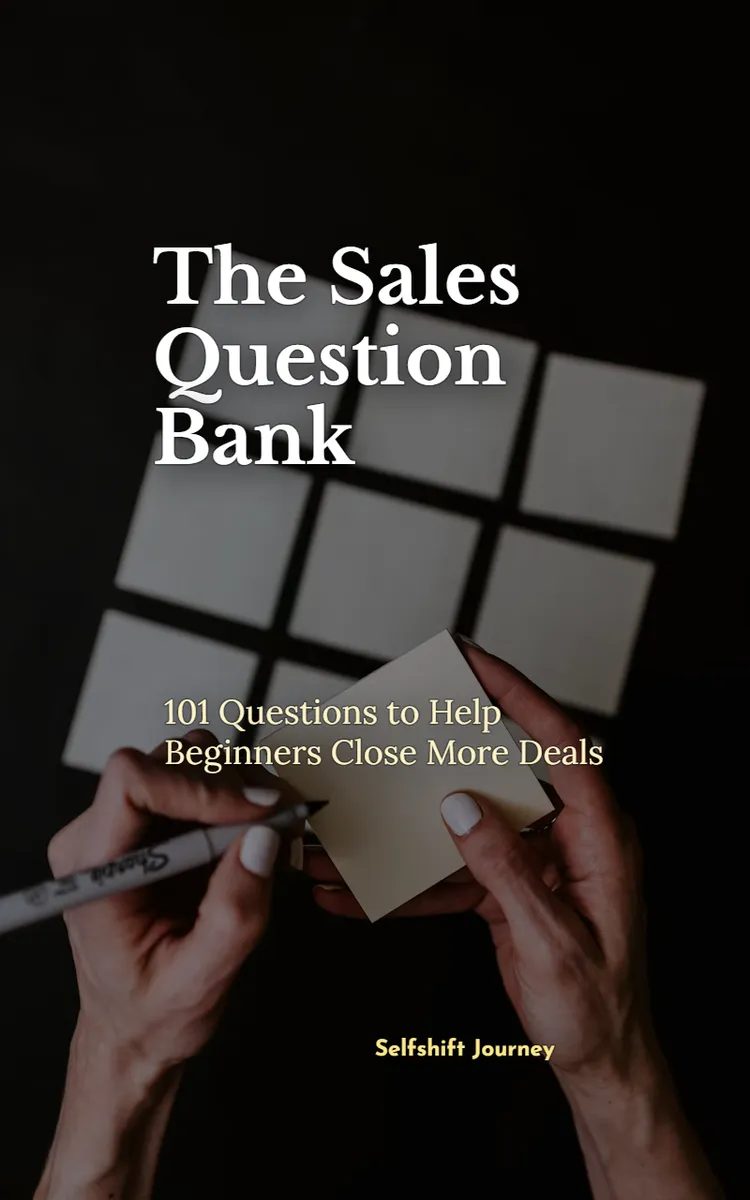
"The Sales Question Bank" is a list book by Selfshift Journey with 10 chapters and approximately 11,948 words. Sales questions for prospecting, qualification, objection handling, closing, and follow-up.
This book was created using Inkfluence AI, an AI-powered book generation platform that helps authors write, design, and publish complete books.
Frequently Asked Questions
What is "The Sales Question Bank" about?
Sales questions for prospecting, qualification, objection handling, closing, and follow-up
How many chapters are in "The Sales Question Bank"?
The book contains 10 chapters and approximately 11,948 words. Topics covered include First Contact: Opening Questions for Cold Calls, DMs, and Introductions, Discovery: Questions That Uncover Goals and Context, Qualification: Need, Fit, and the Cost of Doing Nothing, Qualification: Budget, Authority, and Decision Process, and more.
Who wrote "The Sales Question Bank"?
This book was written by Selfshift Journey and created using Inkfluence AI, an AI book generation platform that helps authors write, design, and publish books.
Write your own list book with AI
Describe your idea and Inkfluence writes the whole thing. Free to start.
Start writingCreated with Inkfluence AI


