
Read the first chapter
The whole of chapter one, free. About 4 min. Turn the pages with the arrows, your keyboard, or a swipe.
Chapter 1
Colorful Produce for Daily Disease Protection
Overview
A red bell pepper, a handful of berries, and a serving of beans can place several protective plant compounds on your plate before the day is over. This starter list covers five colorful, high-fiber fruits and vegetables that support heart health, immune function, and healthy inflammation levels.
The goal is variety, not a single “perfect” food. Use the color guide below to build meals with different types of fiber, vitamins, and antioxidants - natural compounds that help protect cells from damage.
The Breakdown
#1: Berries
Problem: Many breakfast and snack choices are high in added sugar but low in fiber. Over time, that pattern can make it harder to manage appetite and support steady blood sugar. It also leaves less room for foods rich in protective plant compounds.
Solution: Add ½ to 1 cup of blueberries, strawberries, raspberries, or blackberries to breakfast, plain yogurt, oatmeal, or a snack. Choose whole or frozen berries rather than juice, which removes much of the fiber. Raspberries and blackberries are especially useful when you want more fiber; a cup can provide roughly 7-8 grams.
Result: Berries add deep red, blue, and purple pigments along with fiber and vitamin C. Regular servings can make meals more filling while increasing the range of plant compounds in your diet.
#2: Leafy Greens
Problem: A plate built around refined grains and meat may provide calories without enough folate, vitamin K, magnesium, or fiber. Low vegetable intake also reduces the variety of nutrients available to support blood vessels and normal immune defenses.
Solution: Use spinach, kale, collard greens, or Swiss chard at least once daily. Add two cups of raw greens to a salad, or cook about 1 cup as a side dish, stir-fry ingredient, or addition to soup. For a quick option, keep washed greens available and add a handful to eggs, beans, or a sandwich.
Result: Leafy greens supply dark green pigments, fiber, and several vitamins and minerals linked with heart and bone health. Cooking reduces their volume, making it easier to eat a meaningful portion.
#3: Red and Orange Bell Peppers
Problem: Meals without brightly colored vegetables can fall short on vitamin C and carotenoids, plant pigments found in red, orange, and yellow produce. Relying on supplements alone also misses the fiber and water that whole vegetables provide.
Solution: Slice one pepper into a lunch box, salad, or hummus plate, or cook it with onions in a stir-fry. Red and orange peppers are particularly rich in vitamin C; one medium pepper can provide more than a day’s worth for many adults. Eat them raw for a crisp snack or roast them to concentrate their flavor.
Result: Peppers add vivid color, crunch, and fiber with relatively few calories. Their vitamin C supports normal immune function, while carotenoids add another category of antioxidant protection.
#4: Cruciferous Vegetables
Problem: Broccoli, cauliflower, cabbage, and Brussels sprouts are often treated as occasional side dishes, so people miss their fiber and distinctive plant compounds. Skipping them also narrows vegetable variety, especially in meals dominated by potatoes or refined grains.
Solution: Aim for 1 cup several times each week, rotating among broccoli, cabbage, cauliflower, Brussels sprouts, and bok choy. Steam or roast them until tender but not mushy; overcooking can reduce texture and appeal. Add broccoli to a bean bowl, shredded cabbage to tacos, or roasted Brussels sprouts to a grain-based dinner.
Result: Cruciferous vegetables provide fiber, vitamin C, folate, and sulfur-containing compounds being studied for their role in normal cell protection. Their mild bitterness and firm texture also make meals more satisfying.
#5: Beans and Lentils
Problem: Fruit and vegetables are important, but a produce-focused plan can still fall short on fiber if it excludes legumes. Low fiber intake may contribute to poor fullness and less support for healthy cholesterol levels and digestion.
Solution: Include ½ to 1 cup of black beans, chickpeas, kidney beans, or lentils in a meal most days. Rinse canned beans to reduce excess sodium, then add them to salads, soups, chili, or whole-grain bowls. If beans cause gas, begin with ¼ cup and increase gradually while drinking enough water.
Result: Beans and lentils combine plant protein with substantial fiber, making them one of the most efficient foods for heart-supportive meals. They also help turn a small serving of vegetables into a filling, balanced dish.
A simple color check can guide the week:
| Color group | Easy choices | Practical use | |---|---|---| | Blue or purple | Blueberries, blackberries | Oatmeal or yogurt | | Dark green | Spinach, kale, broccoli | Salad, soup, stir-fry | | Red or orange | Peppers, strawberries | Snack or roasted side | | White or green | Cauliflower, cabbage | Tacos, bowls, or soup | | Mixed colors | Beans with vegetables | Main meal |
Ask yourself: Did I eat at least three different produce colors today, and did one serving contain a reliable source of fiber? That quick check keeps the focus on variety and consistency rather than perfection.
What Comes Next
The next chapter turns from fruits and vegetables to whole grains, nuts, seeds, and other plant foods that add fiber, healthy fats, and minerals to a disease-protective eating pattern.
End of chapter one. 9 more chapters and about 7,842 words in the full book.
Swipe or use the arrows to turn the page
What's inside: 10 chapters
- 1. Colorful Produce for Daily Disease Protection
- 2. Cruciferous Vegetables (Cancer-Protection Friendly)
- 3. Legumes & Beans for Gut Health and Metabolic Support
- 4. Whole Grains & Fiber-Rich Carbs
- 5. Healthy Fats (Omega-3s, Monounsaturated, and Polyphenols)
- 6. Berries, Citrus, and Vitamin C Powerhouses
- 7. Fermented Foods for Microbiome Resilience
- 8. Lean Proteins with Lower Inflammatory Load
- 9. Herbs, Spices, and Flavor Boosters with Bioactive Compounds
- 10. Smart Beverage Choices & Hydration Helpers
About this book
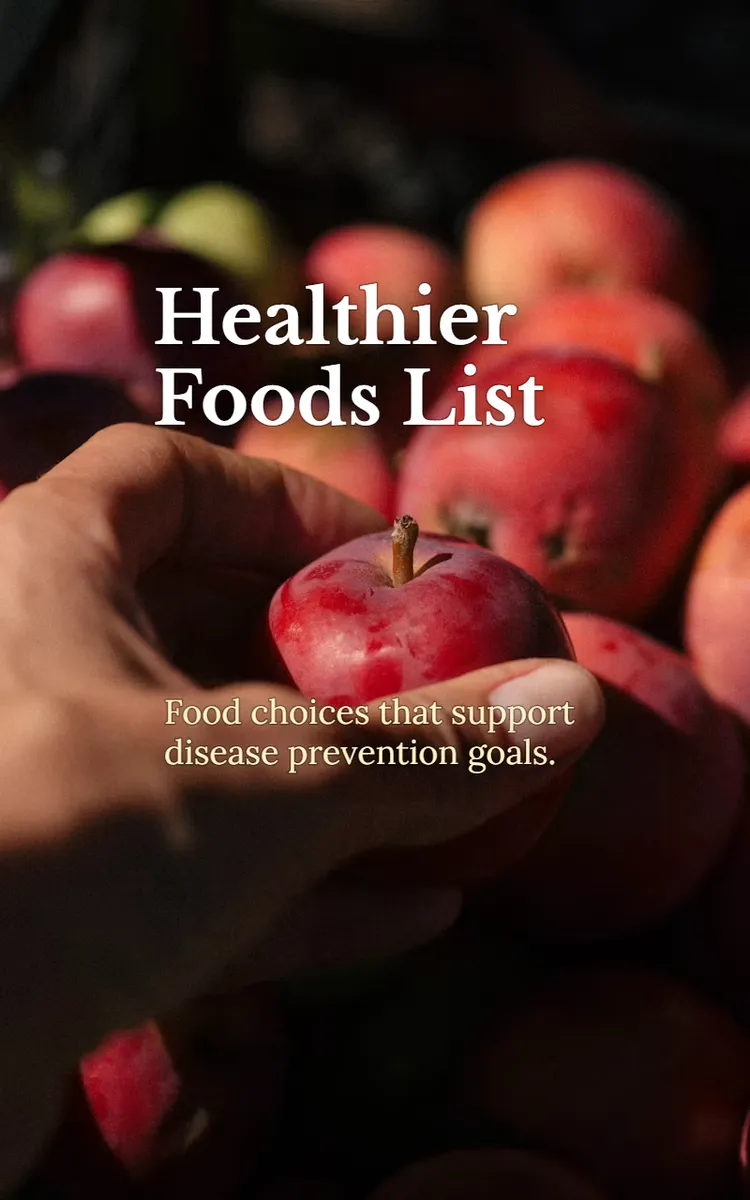
"Healthier Foods List" is a list book by Anonymous with 10 chapters and approximately 7,842 words. Curated lists of healthier foods for disease protection.
This book was created using Inkfluence AI, an AI-powered book generation platform that helps authors write, design, and publish complete books.
Frequently Asked Questions
What is "Healthier Foods List" about?
Curated lists of healthier foods for disease protection
How many chapters are in "Healthier Foods List"?
The book contains 10 chapters and approximately 7,842 words. Topics covered include Colorful Produce for Daily Disease Protection, Cruciferous Vegetables (Cancer-Protection Friendly), Legumes & Beans for Gut Health and Metabolic Support, Whole Grains & Fiber-Rich Carbs, and more.
Who wrote "Healthier Foods List"?
This book was written by Anonymous and created using Inkfluence AI, an AI book generation platform that helps authors write, design, and publish books.
Write your own list book with AI
Describe your idea and Inkfluence writes the whole thing. Free to start.
Start writingCreated with Inkfluence AI


