
Read the first chapter
The whole of chapter one, free. About 9 min. Turn the pages with the arrows, your keyboard, or a swipe.
Chapter 1
The Night the Power Went Out
The porch light blinked twice, went dark, and left Mara Ellison staring at her own reflection in the black window.
Outside, rain drove sideways across the street, silver whenever lightning opened the sky. The power had been failing all evening - lights dimming during dinner, the television coughing into silence, the furnace shuddering back to life only to quit again. Now the house had gone still except for the storm and the frightened ticking of the wall clock.
“Mom?” Jonah called from the hallway. “Is it out again?”
Mara turned from the window. “It’s out.”
A small whimper came from the living room floor. Poppy, their old shepherd mix, pressed herself against the couch, ears flat. Eight-year-old Lila sat beside her with a blanket gathered under her chin.
“How long?” Jonah asked.
Mara found the flashlight on the mantel and clicked it on. The beam shook once in her hand before settling over his face. He was fourteen, tall enough to look nearly grown until fear narrowed his eyes.
“Long enough for us to get comfortable,” she said. “Then it’ll come back.”
It was a lie shaped like reassurance. She had been telling it since the first flicker, and each time the storm answered with another low growl of thunder.
She crossed to the woodstove in the corner and crouched beside it. The fire had collapsed into red coals. The stove was decorative, installed by the previous owner without a proper flue. It had never been used. Their real backup sat beneath the side table: a small propane heater meant for emergencies, the kind Mara had bought after the January freeze and kept sealed in its box.
“Jonah, bring me the heater. Lila, stay on the couch.”
“I can help,” Lila said.
“You can keep Poppy company. That’s important.”
Lila’s fingers tightened in the dog’s fur. “Is the storm going to break the windows?”
“No.” Mara looked toward the glass, where a branch scraped and scraped like a fingernail. “The windows are strong.”
Another flash whitened the room. A second later, thunder struck hard enough to rattle the framed photographs on the wall.
Jonah returned carrying the heater against his chest. “The box is wet.”
“Wet?”
“It was in the mudroom. Water’s coming under the door.”
Mara took it from him. Cold water ran over her wrist. The mudroom door had been leaking for years, but never like this. She hurried down the hallway, flashlight beam jumping over the walls. At the far end, beneath the door, a thin stream of brown water slid across the tile.
The storm surge had reached their street.
For one second she stood there, listening. Rain hammered the roof. Water tapped against the baseboards. Somewhere outside, something large struck a fence and dragged along it.
“Mom?” Jonah said behind her.
“Get towels.”
He moved immediately. That steadiness in him frightened her more than panic would have. He was watching her for instructions, measuring every breath she took.
Mara set the heater on the living-room rug and opened the box. The propane canister was cold and slick. She wiped it with her sleeve, attached it, and turned the valve.
Nothing happened.
She tried again. The igniter clicked, clicked, clicked.
“Come on,” she whispered.
A tiny blue flame appeared, then vanished.
Jonah knelt beside her. “Is it broken?”
“It’s temperamental.”
“That means broken.”
“It means try again.”
Lila’s voice drifted from the couch. “Mom, my hands are cold.”
Mara looked over. Lila’s lips had begun to pale. The room had cooled sharply since the furnace stopped. Their breath did not show yet, but the chill had slipped beneath Mara’s sweater and settled between her shoulder blades.
“Blankets,” Mara said. “All of them.”
Jonah ran to the bedrooms. Mara turned the valve once more and struck the igniter. The heater flared, a weak yellow tongue, then steadied.
“There,” she said.
The warmth was barely noticeable, but it was something. She pulled the heater away from the blankets and placed it on a metal baking sheet. Jonah returned with quilts piled to his chin.
“Keep the hallway door shut,” Mara told him. “We’ll stay together in here.”
“What about the water?”
“I’ll check it.”
“You said stay together.”
“I’m checking the door, not going outside.”
He looked as if he wanted to argue. Instead, he lowered the blankets onto the couch.
Mara crossed the room and pushed the hallway door nearly closed. Water had reached the first strip of carpet. She dragged a towel against the threshold, then another. The cold seeped through her knees as she worked. When she stood, a gust rattled the front door in its frame.
The house gave a long, low creak.
“Mom,” Jonah said quietly.
“I heard it.”
The heater snapped.
Mara turned. Its flame had shrunk to a pinprick.
“No,” she said.
She hurried back and lifted the canister. It was empty.
Jonah stared at it. “That was the last one?”
“The last full one.”
“You said we had two.”
“The other was half-used.”
“For the camping stove.”
“I know.”
He looked toward the kitchen. “Could we use that?”
“Not inside. And the kitchen’s already taking water.”
“Then what are we supposed to do?”
The question landed harder than the thunder. Mara wanted to answer with certainty. She wanted to tell him the power company knew, that the roads were clear, that a repair truck was already crawling toward their neighborhood through the flooded streets. She wanted to promise the furnace would roar back before their fingers stiffened.
Instead, she knelt in front of him.
“We stay in this room,” she said. “We keep the doors shut. We put on every layer we have. We wait for the storm to pass.”
Jonah’s jaw tightened. “What if it doesn’t?”
“It will.”
“You don’t know that.”
“No,” Mara said. “I don’t. But I know we’re not going to spend tonight being scared of every minute.”
For a moment, only the storm spoke.
Then Lila raised one hand from beneath the quilt. “Can I wear my snow boots?”
Mara almost laughed. The sound broke in her throat, but it became a smile. “Absolutely.”
Lila slid from the couch and ran toward the bedrooms. Poppy followed, nails clicking unevenly over the floor.
Jonah remained beside Mara. “You really think this is okay?”
Mara touched the back of his neck. His skin was cold. “I think we can make it okay for the next ten minutes.”
“And after that?”
“We make it okay again.”
He nodded, though he did not look convinced. Still, he went to gather coats.
Mara moved through the house with the flashlight between her teeth, closing doors, pulling curtains tight, collecting blankets from beds and towels from the bathroom. Water had spread beneath the mudroom door in a dark fan. It reached the wall outlet.
She stopped.
The heater cord was not plugged in. The lamp beside the couch was, along with the television and a power strip crowded with chargers. Mara unplugged everything. Her fingers trembled as she worked. The storm had turned their familiar rooms into hazards: wet floors, dark corners, glass, wires. Even the house seemed to be changing shape around them.
A sharp crack sounded outside.
Lila screamed.
Mara dropped the flashlight. It rolled across the floor, spinning a pale circle over the ceiling. Jonah caught his sister before she fell.
“Tree?” he asked.
“I don’t know.” Mara grabbed the light and ran to the window.
The maple in the front yard bent nearly horizontal. One of its heavy limbs had split and fallen across the sidewalk, blocking the street. Water rushed along the curb in a fast brown ribbon. Across from them, Mrs. Alvarez’s porch light flickered once, then disappeared.
Mara’s stomach tightened.
No one was coming through that street now.
She turned back. “Away from the windows. Everyone.”
Jonah guided Lila toward the center of the room. Poppy crawled beneath the coffee table. Mara pulled the sofa several feet from the glass and shoved the blankets into the space behind it.
“Down here,” she said. “We’ll make a nest.”
Lila crawled in first. Jonah followed, folding his long legs awkwardly. Mara tucked the quilts around them, layering coats over their shoulders. The air beneath the blankets warmed slowly from their bodies.
“Mama,” Lila whispered, “what if the lights never come back?”
Mara settled beside her, pressing close. “They’ll come back.”
“You said that before.”
“I know.”
“Were you lying?”
Mara looked at her daughter’s face in the flashlight glow. Lila had inherited her father’s dark eyes, though she remembered him only through photographs now: smiling beside a lake, one hand raised against the sun. Mara had promised herself the children would never see fear on her face the way she had seen it on her mother’s during the hospital winter. Promises were easy before the weather turned.
“I was hoping,” she said. “Sometimes hoping sounds like knowing.”
Lila considered this. “Can I hope too?”
“You have to.”
The words left Mara before she could soften them. Lila tucked her face against Poppy’s warm side.
Jonah stared at the ceiling. “The emergency radio is in the kitchen.”
“I know.”
“Maybe they’re saying when the power comes back.”
“It’s probably soaked.”
“We should check.”
“No.”
“If there’s a flood warning - ”
“I said no.” Mara heard the edge in her voice and saw him flinch. She lowered it. “The kitchen floor is wet. We don’t know what’s live.”
“What if the radio is the only way to know what’s happening?”
“We know what’s happening. The street is flooding. The heat is out. The storm is still here.”
“But if help is coming?”
Mara looked toward the dark hallway. Somewhere beyond it, the radio sat on the counter beside the sink, likely surrounded by water. Their cell phones showed no signal. The landline had died with the lights. The battery radio had been her last thread to the outside world, and now even reaching it might cost more than information was worth.
A gust slammed into the house. The windows shuddered.
“Not yet,” she said.
Jonah turned away.
The backup heater gave a soft metallic pop.
Mara lifted her head. The faint warmth against her shins had disappeared.
“No.”
She crawled out from beneath the blankets and reached for the heater. The casing was cold. She twisted the valve. A yellow flame sputtered, rose, and vanished.
Lila began to cry.
Mara struck the igniter again. Nothing.
Jonah pushed himself free. “What happened?”
“It’s out.”
“You said it would last.”
“I know what I said.”
“Then fix it!”
His voice cracked across the room. Poppy began to bark beneath the table.
Mara stared at the dead heater, at the empty canister beside it. The cold seemed to rush in all at once, lifting the hairs on her arms. The room that had felt merely uncomfortable now felt exposed, too large, full of places for the night to enter.
She stood.
“Get your boots,” she said.
Jonah blinked. “What?”
“Your boots. And your coat.”
“Where are you going?”
“To the kitchen.”
“You said it wasn’t safe.”
“It isn’t.”
“Mom - ”
Mara took the flashlight and opened the hallway door. Brown water slid over the threshold, spreading toward her bare feet.
She looked back at her children, wrapped in quilts, watching her with the same frightened expectation.
“We need the radio,” she said. “And we need another way to make heat.”
The next flash of lightning revealed water climbing the kitchen steps, inch by inch.
Mara stepped into the hallway anyway. The floor was ice-cold beneath her socks, and behind her the house began to grow colder.
End of chapter one. 14 more chapters and about 29,387 words in the full book.
Swipe or use the arrows to turn the page


What's inside: 15 chapters
- 1. The Night the Power Went Out
- 2. Fixing the Radio With Wet Hands
- 3. The Missing Name on the Evac List
- 4. Crossing the Flooded Footbridge Alone
- 5. Choosing to Share the Last Blanket
- 6. When the Roof Leak Turns Into Mold
- 7. Finding Warmth in the Basement Generator
- 8. The Shelter Clerk’s Voice Memo
- 9. Rewriting Proof With a Broken Printer
- 10. The Volunteer Van That Never Arrives
- 11. When Hope Feels Like a Lie
- 12. Following the Waterline to the Records Office
- 13. The Service Corridor That Saved Her
- 14. Arriving at Dawn With a New Name
- 15. Learning to Wait Without Vanishing
About this book
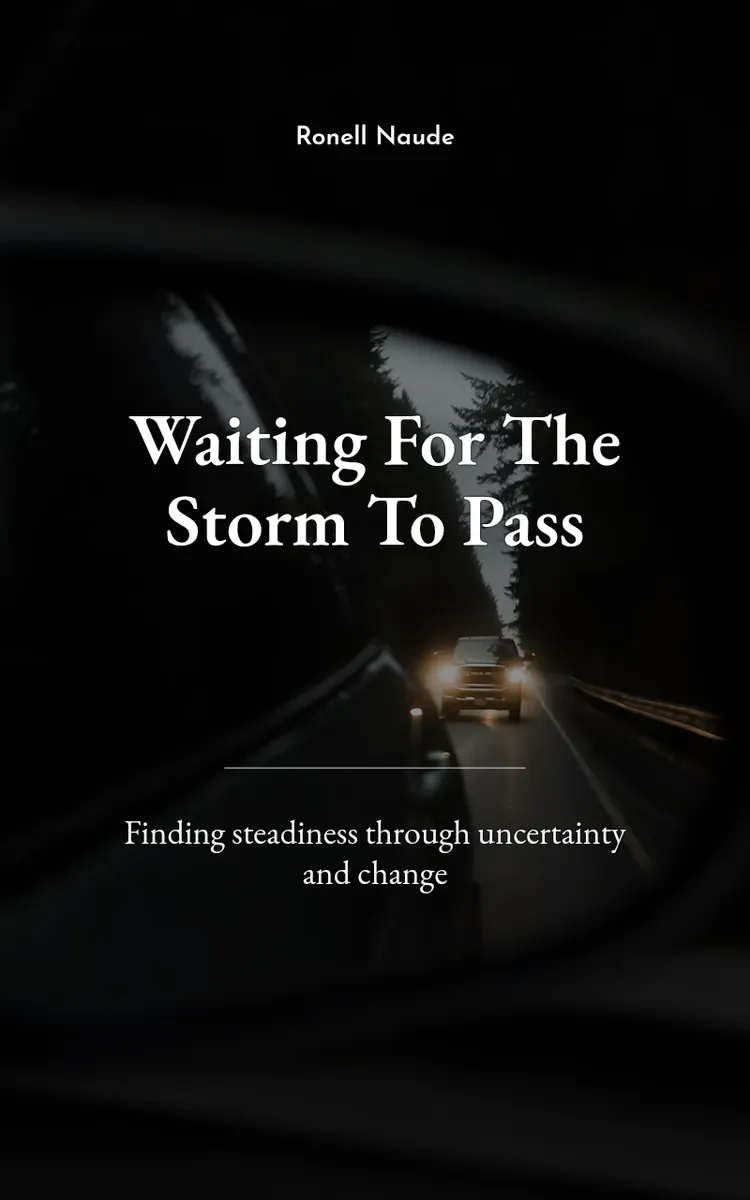
"Waiting For The Storm To Pass" is a fiction book by Ronell Naude with 15 chapters and approximately 29,387 words. Coping with hardship and maintaining hope during difficult times.
This book was created using Inkfluence AI, an AI-powered book generation platform that helps authors write, design, and publish complete books. It was made with the AI Novel Writer.
Frequently Asked Questions
What is "Waiting For The Storm To Pass" about?
Coping with hardship and maintaining hope during difficult times
How many chapters are in "Waiting For The Storm To Pass"?
The book contains 15 chapters and approximately 29,387 words. Topics covered include The Night the Power Went Out, Fixing the Radio With Wet Hands, The Missing Name on the Evac List, Crossing the Flooded Footbridge Alone, and more.
Who wrote "Waiting For The Storm To Pass"?
This book was written by Ronell Naude and created using Inkfluence AI, an AI book generation platform that helps authors write, design, and publish books.
How can I create a similar fiction book?
You can create your own fiction book using Inkfluence AI. Describe your idea, choose your style, and the AI writes the full book for you. It's free to start.
Write your own fiction book with AI
Describe your idea and Inkfluence writes the whole thing. Free to start.
Start writingCreated with Inkfluence AI


