
Read the first chapter
The whole of chapter one, free. About 5 min. Turn the pages with the arrows, your keyboard, or a swipe.
Chapter 1
When the Question Won’t Leave
There are questions that visit briefly, and there are questions that move in and rearrange the furniture.
Why am I here? may begin as a passing thought. Then something changes. A relationship ends. A job loses its meaning. A loved one dies. Your children grow up and need you differently. You reach a goal and discover that satisfaction did not arrive with it. Or perhaps nothing dramatic happens at all. You simply wake up one morning and realize you have been moving through your days without feeling fully present in them.
In those moments, the question becomes harder to dismiss. It follows you into the car, waits beside you at night, and sits with you in quiet rooms. You may wonder whether something is wrong with you for asking it. You may even feel guilty, especially if you believe you are supposed to have strong faith and clear answers.
But a question about purpose is not necessarily a sign of failure. Sometimes it is an invitation.
Pain Can Expose What Distraction Covered
Much of life can be lived on autopilot. We work, shop, answer messages, care for responsibilities, and keep moving. This rhythm can be useful, but it can also keep deeper questions out of sight. Pain interrupts that rhythm.
When familiar sources of security disappear, you may begin to notice what you have been depending on. A career may have provided identity. A relationship may have provided belonging. Achievement may have provided worth. When one of these supports weakens, the emptiness underneath can feel frightening.
Yet exposure is not the same as abandonment. The discomfort may be showing you where your life needs attention. It may be revealing desires, gifts, wounds, or values that have been ignored. It may be creating space for God to meet you more honestly than before.
This does not mean your suffering was sent to teach you a simple lesson. Loss is still loss. Depression is still serious and may require professional care. Grief should not be rushed into a tidy explanation. But even in difficult seasons, you can begin asking a gentler question: What is this moment helping me notice?
Purpose Is More Than a Perfect Plan
Many people imagine purpose as one grand assignment: a particular career, ministry, achievement, or life mission. If they cannot identify that assignment, they assume they are behind.
Purpose is often less dramatic and more immediate. It can include the way you care for someone, the courage to tell the truth, the patience to learn, the work of healing, or the willingness to use your experience to help another person. Your purpose may unfold through ordinary acts long before you can describe it as a complete picture.
Ephesians 2:10 describes us as God’s workmanship, created in Christ Jesus for good works that God prepared for us to walk in. This image offers both comfort and direction. You are not an accident trying to invent value from nothing. Your life has been formed with intention. At the same time, you may not receive the entire map in advance. You are invited to walk, one faithful step at a time.
That changes the question. Instead of demanding, “What is my one ultimate purpose?” you might ask:
• What good is in front of me today?
• Who needs the particular compassion or skill I can offer?
• What responsibility is mine in this season?
• What small act of faithfulness would move me toward life rather than fear?
Look for Evidence of Life
When you feel empty, your attention naturally searches for what is missing. Purpose often becomes easier to recognize when you also look for signs of life already present.
Notice the subjects that consistently stir your concern. Pay attention to the work that makes you feel focused rather than scattered. Remember moments when someone benefited from your presence, even if the result seemed small. Consider the burdens you cannot easily ignore and the abilities others regularly ask you to use.
These observations do not automatically reveal a complete calling. They are clues. God’s work may be unfolding through patterns you have overlooked because they seemed ordinary.
A conversation with a lonely neighbor may matter. Showing up faithfully for a child may matter. Learning to forgive may matter. Resting when you have treated exhaustion as virtue may matter. Purpose is not measured only by visibility. Some of the most meaningful work happens where no audience is present.
A Practice for the Unsettled Season
Set aside fifteen quiet minutes. If you are in acute emotional pain, choose a safe place and consider inviting a trusted person, counselor, or pastor into the process.
• Name the question. Write the exact words that keep returning. Do not edit them to sound spiritual or positive.
• Name the season. Describe what has changed, ended, or become difficult.
• Notice what remains. List the people, opportunities, strengths, and needs still present in your life, even if they seem modest.
• Ask for the next step. Pray simply: “God, help me recognize the good work in front of me today.” Then write one practical response.
• Take one small action. Send the message, make the appointment, offer the help, begin the task, or create the boundary your reflection revealed.
Do not judge the exercise by whether you receive a dramatic answer. The goal is attention. You are practicing the ability to notice God’s presence and direction within the life you are actually living, not the life you wish you had already figured out.
When the Answer Feels Delayed
Sometimes you will ask sincerely and still feel uncertain. That does not mean you have failed, and it does not prove that God is absent. A delayed answer can be painful, especially when you are making decisions or carrying responsibilities. Give yourself permission to grieve the uncertainty without turning it into a verdict about your worth.
While you wait, return to what is clear. Care for your body. Tell the truth to someone safe. Keep the commitments that are genuinely yours. Release responsibilities that belong to other people. Seek wise counsel before making major choices. If depression, anxiety, or hopelessness is making daily life difficult, reach out to a qualified mental-health professional. Spiritual reflection and professional support can work together.
Purpose is not proved by constant confidence. Often it is expressed through faithful action in the presence of unanswered questions. You may not know where the road leads, but you can still choose the next honest, loving, life-giving step.
Carry This With You
Your question may have begun in pain, but it does not have to end in despair. Let it become an invitation to pay attention. God’s work may be appearing through a relationship that needs care, a wound that needs healing, a gift that needs practice, or a need you are uniquely prepared to meet.
You do not have to discover your entire purpose today. Notice what is in front of you, ask for wisdom, and walk faithfully into the next good thing.
Before you move on, write one sentence beginning with: “Today, I believe the next faithful step is...” Keep it specific, small, and possible within the next twenty-four hours. Then take that step.
End of chapter one. 5 more chapters and about 7,013 words in the full book.
Swipe or use the arrows to turn the page

Successful Christian Business Leadership

When the devil whispers to you

Worrying Is Like Worshipping
What's inside: 6 chapters
- 1. When the Question Won’t Leave
- 2. You’re Workmanship, Not Accident
- 3. Good Works Are Prepared
- 4. Walking in the Life You Have
- 5. Purpose That Survives Pain
- 6. A Daily Practice of Readiness
About this book
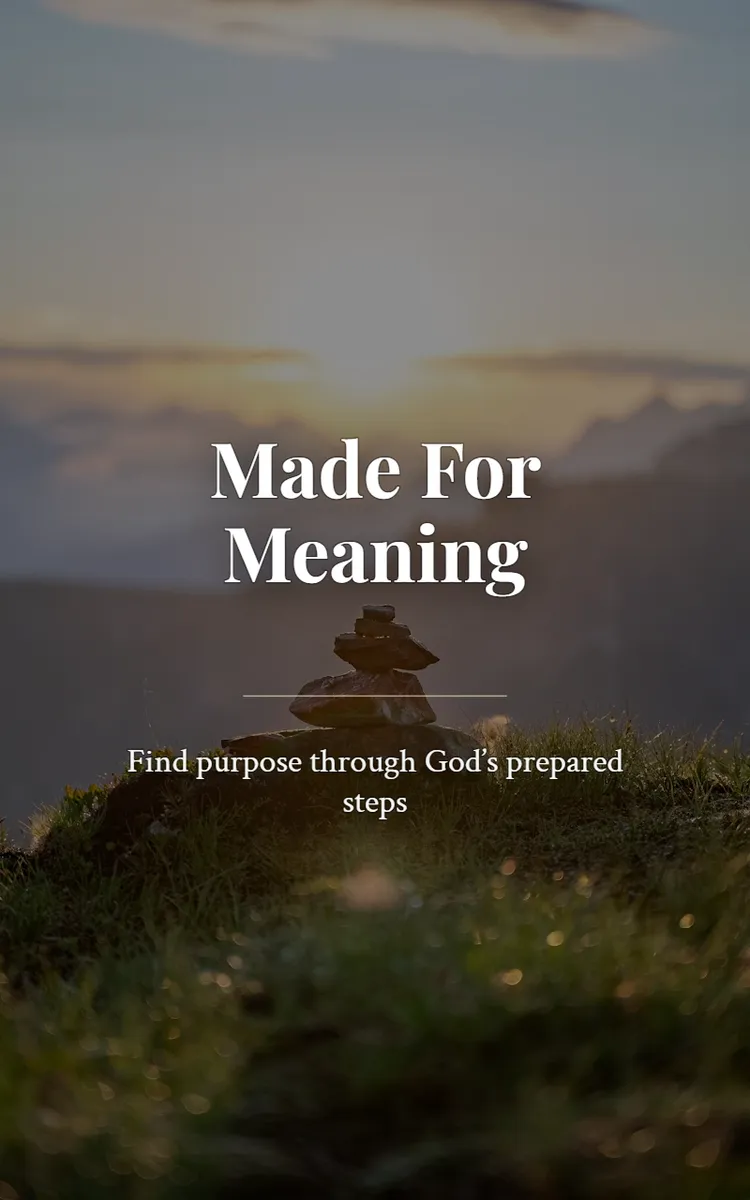
"Made for Meaning" is a self-help book by Brenda Velo with 6 chapters and approximately 7,013 words. An empathetic self-help guide that helps you answer “God, why am I here?” by translating faith into practical habits, choices, and next steps..
This book was created using Inkfluence AI, an AI-powered book generation platform that helps authors write, design, and publish complete books. It was made with the AI Self-Help Book Writer.
Frequently Asked Questions
What is "Made for Meaning" about?
An empathetic self-help guide that helps you answer “God, why am I here?” by translating faith into practical habits, choices, and next steps.
How many chapters are in "Made for Meaning"?
The book contains 6 chapters and approximately 7,013 words. Topics covered include When the Question Won’t Leave, You’re Workmanship, Not Accident, Good Works Are Prepared, Walking in the Life You Have, and more.
Who wrote "Made for Meaning"?
This book was written by Brenda Velo and created using Inkfluence AI, an AI book generation platform that helps authors write, design, and publish books.
How can I create a similar self-help book?
You can create your own self-help book using Inkfluence AI. Describe your idea, choose your style, and the AI writes the full book for you. It's free to start.
Write your own self-help book with AI
Describe your idea and Inkfluence writes the whole thing. Free to start.
Start writingCreated with Inkfluence AI


