

Read the first chapter
The whole of chapter one, free. About 2 min. Turn the pages with the arrows, your keyboard, or a swipe.
Chapter 1
Why Ice Floats on Water
Could a Solid Be Lighter Than Its Liquid?
What if a frozen drink cube were heavier than the water around it? Ice does something surprising: it floats. Most solids sink in their liquids, but frozen water is different.
The secret is hidden in the tiny water molecules that make up every drop. When water freezes, these molecules do not pack tightly like oranges in a box. They spread into a roomy, open shape called a crystal.
We will follow this shape using the Floating Crystal Map. It helps us see why ice stays on top of ponds, lakes, and glasses of juice.
Why does frozen water need more room than liquid water?
Water Molecules Hold Hands
A water molecule is much too small to see. It is made from two hydrogen atoms joined to one oxygen atom. Water molecules are always moving, even when the water looks still.
In liquid water, the molecules slide past one another. They stay close, but their pattern keeps changing, like children moving through a busy playground.
When water cools, the molecules slow down. At freezing temperatures, they settle into a careful pattern. Each molecule links with nearby molecules in a way that leaves open spaces.
The Floating Crystal Map
This open pattern is called a crystal structure. It looks a little like a wide, six-sided frame made from tiny connections. The spaces are not empty by accident. They are part of the pattern.
Because the molecules spread out, the same amount of water takes up more room when it becomes ice. Its density - how much matter fits into a space - becomes lower.
That is why ice floats. It is not because ice has no weight. Ice is still made of water. It floats because its weight is spread through a larger space.
A Small Surprise With a Big Effect
Here is the strange part: cooling water does not always make it shrink. Water becomes most tightly packed just before it freezes. Then, as it turns into ice, its open crystal pattern makes it expand.
This matters far beyond an ice cube. Ice on a lake forms a blanket on top. The water below can stay liquid, giving fish and plants a place to live during cold weather.
Ice on Real Lakes
In cold places such as northern Canada, lakes can freeze across their surfaces. The ice layer remains above the deeper water because it is less dense.
The frozen top also slows the escape of heat. Underneath, liquid water may remain while the air above is bitterly cold. A simple change in the arrangement of water molecules helps shape whole lake habitats.
The Question Beneath the Ice
Water’s unusual crystal is a reminder that tiny shapes can change giant parts of the world. A molecule too small to see can help protect life in a frozen lake.
Draw six small circles in an open ring to show the roomy shape of ice. Then color the spaces between them. What other things might change when their tiny pieces arrange themselves differently?
End of chapter one. 24 more chapters and about 12,972 words in the full book.
Swipe or use the arrows to turn the page


What's inside: 25 chapters
- 1. Why Ice Floats on Water
- 2. The Tiny Forces Behind Sticky Tape
- 3. How Soap Outsmarts Grease
- 4. Bubbles That Refuse to Pop
- 5. The Rainbow Hidden in White Light
- 6. Why Metal Feels Colder Than Wood
- 7. The Secret Life of Rust
- 8. Baking Soda’s Fizzing Trick
- 9. Yeast Makes Dough Rise
- 10. Color-Changing Cabbage Juice
- 11. The Magnetic Force You Cannot See
- 12. Electricity’s Loop Around a Circuit
- 13. The Chemistry of a Glow Stick
- 14. Why Shadows Change Shape
- 15. Sound Travels Through Vibrations
- 16. The Bendy Science of Slime
- 17. Crystals Growing from Saltwater
- 18. The Invisible Chemistry of Smell
- 19. How Plants Build Sugar from Sunlight
- 20. The Chemistry Inside Your Breath
- 21. Why Apples Turn Brown
- 22. The Materials That Remember Shapes
- 23. The Chemistry of Clean Drinking Water
- 24. What Happens to Plastic After Use
- 25. Everything Is Connected by Atoms
About this book
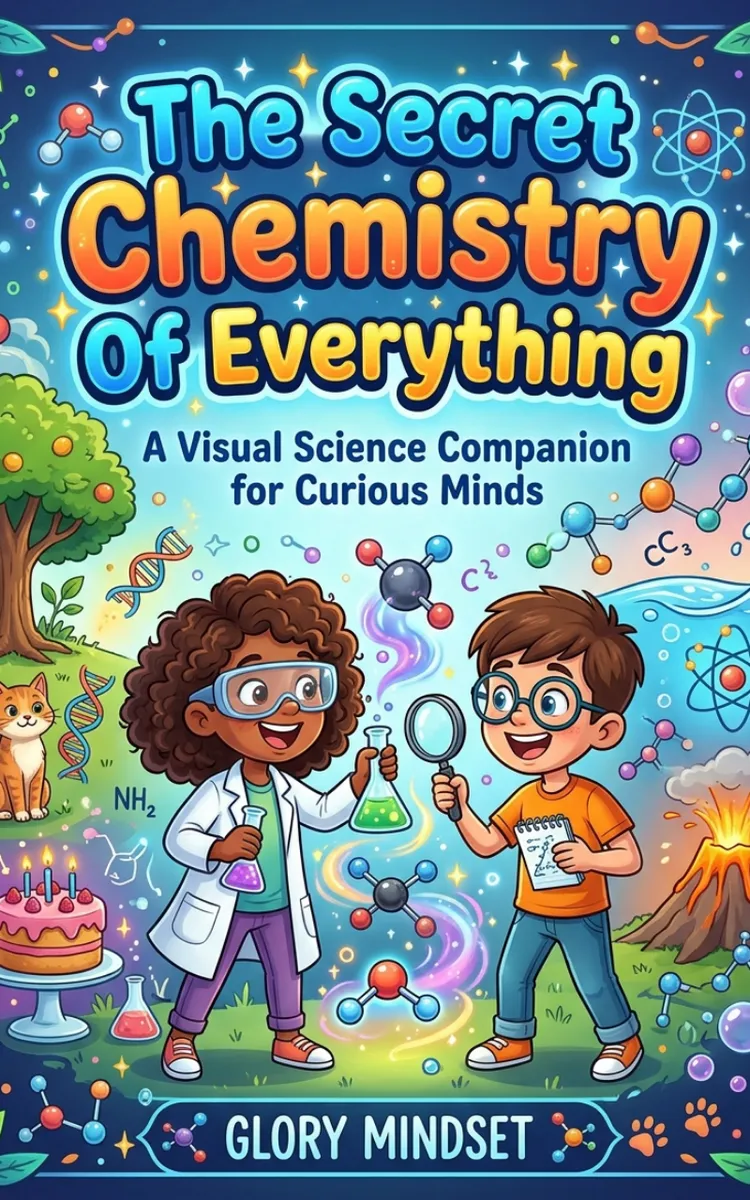
"The Secret Chemistry Of Everything" is a curiosity book by Glory Mindset with 25 chapters and approximately 12,972 words. Engaging science facts and real-world experiments exploring chemistry, molecules, and physics.
This book was created using Inkfluence AI, an AI-powered book generation platform that helps authors write, design, and publish complete books.
Frequently Asked Questions
What is "The Secret Chemistry Of Everything" about?
Engaging science facts and real-world experiments exploring chemistry, molecules, and physics
How many chapters are in "The Secret Chemistry Of Everything"?
The book contains 25 chapters and approximately 12,972 words. Topics covered include Why Ice Floats on Water, The Tiny Forces Behind Sticky Tape, How Soap Outsmarts Grease, Bubbles That Refuse to Pop, and more.
Who wrote "The Secret Chemistry Of Everything"?
This book was written by Glory Mindset and created using Inkfluence AI, an AI book generation platform that helps authors write, design, and publish books.
Write your own curiosity book with AI
Describe your idea and Inkfluence writes the whole thing. Free to start.
Start writingCreated with Inkfluence AI


