
Read the first chapter
The whole of chapter one, free. About 8 min. Turn the pages with the arrows, your keyboard, or a swipe.
Chapter 1
Why York Made Wolfgang Candy
A Candy Factory in a Steel-and-Rail Town
When Wolfgang Candy began making chocolate in York, Pennsylvania, the town was better known for machinery, rail connections, and manufacturing than for confectionery. Yet the company’s address would eventually connect a local candy counter to sugar grown in distant fields, shipped through international markets, and priced by forces no York shopkeeper could control.
That is the central puzzle of York’s candy history. Why did a business built around chocolate and sweets take root in a mid-sized Pennsylvania industrial town rather than in a famous port, a large city, or a place already identified with candy? The answer lies less in romance than in geography, labor, transportation, immigrant enterprise, and the changing economics of sugar.
York offered something a candy maker needed: access. Its roads and rail lines linked farms, factories, wholesalers, and customers. The surrounding region supplied workers and consumers, while the town’s industrial culture encouraged practical experimentation. Candy could be made locally, sold locally, and gradually distributed farther afield.
The York Sweetness Map follows those connections. It begins with kitchens and storefronts, crosses factory floors and freight routes, and ends at the global sugar market, where a familiar chocolate bar becomes part of a much larger system.
How did a candy made in one Pennsylvania town become a small window onto the world economy?
Why York Was Ready for Candy
York sits in the Susquehanna Valley, a region shaped by agriculture, manufacturing, and movement. By the late nineteenth and early twentieth centuries, it was not an isolated rural settlement waiting for an industry to appear. It was a working town with established commercial habits, skilled labor, and transportation links that made regular trade possible.
That setting mattered because candy was not simply a kitchen craft. Small batches could be made by hand, but a dependable candy business required ingredients arriving on schedule, equipment that could be repaired, packaging that could be printed, and customers who could be reached beyond the immediate neighborhood. Sugar, cocoa, milk, nuts, flavorings, paper, and machinery all had to meet in one place.
York’s industrial character created a useful environment for that meeting. The town had experience with metalworking and manufacturing, including the production of equipment for farms and factories. Such experience did not automatically produce good candy, but it supported the habits that candy production demanded: attention to temperature, timing, cleanliness, consistency, and mechanical reliability.
Candy also fit the region’s commercial scale. A York confectioner did not need the population of Philadelphia to begin. A neighborhood shop could serve local families, nearby towns, travelers, and workers. As roads improved and distribution widened, products that began as local specialties could move through wholesalers and retailers across Pennsylvania and beyond.
The most important ingredient was not sugar. It was connection.
York’s location placed it between sources of agricultural production and larger markets. Pennsylvania’s farms supplied dairy products and other materials, while railroads carried imported or nationally distributed ingredients into the region. A candy company could therefore operate away from the coast without being cut off from the world.
From Kitchen Craft to Factory Discipline
Early confectionery depended heavily on knowledge that was both practical and fragile. A candy maker had to understand how sugar behaved when heated, how chocolate responded to temperature, and how moisture could ruin a batch. These were scientific processes, even when they were learned through observation rather than formal laboratory training.
Sugar changes as it cooks. Water evaporates, concentration rises, and the resulting syrup develops different textures depending on temperature and handling. Chocolate presents another problem: its cocoa butter crystals must be controlled if the finished product is to have a smooth surface, a clean snap, and resistance to melting. A small difference in heat can separate a glossy candy from a dull or crumbly one.
Industrial production did not eliminate this craft. It made the craft repeatable.
As candy businesses expanded, they needed workers who could perform specialized tasks in sequence. Mixing, cooking, cooling, coating, cutting, wrapping, and packing became parts of a larger system. The factory made it possible to produce more pieces, but it also made consistency a public promise. Customers expected the same flavor and texture each time they bought a familiar product.
Wolfgang Candy belonged to this transition from local confectionery to organized manufacturing. Its story was shaped by the same pressures affecting candy makers throughout the United States: better machinery, improved packaging, growing retail networks, and the need to turn perishable ingredients into stable products that could travel.
A candy factory was a food business with the temperament of a machine shop.
That comparison helps explain why York was not as unlikely as it first appears. The town already understood production as an organized activity. Candy added heat, sugar, cocoa, and appetite to an industrial culture that was accustomed to making things precisely.
The York Sweetness Map
The York Sweetness Map is not a literal street plan. It is a way of tracing how a piece of candy gathers places into one object.
At the center is York, where ingredients are transformed. Around it are the farms and dairies that contribute milk, the ports and warehouses through which cocoa and sugar move, the rail lines and roads that carry finished goods, and the stores where customers encounter the result. Each point changes the meaning of the others.
Sugar is especially revealing. Cane and beet sugar may begin thousands of miles from Pennsylvania, but their economic life continues through refineries, brokers, railroads, warehouses, manufacturers, and retailers. The price paid by a candy company reflects more than the crop itself. It can be affected by weather, labor, trade rules, energy costs, shipping conditions, and competition among buyers.
Cocoa adds another layer. Chocolate depends on cacao grown in tropical regions, processed into cocoa liquor, cocoa butter, and cocoa powder, then transported into manufacturing centers far from the farms where it began. The finished candy conceals that distance. Its wrapper may show a neat brand name and a familiar shape, while the supply chain behind it stretches across continents.
One surprising fact follows from this map: a local candy business can be local in identity but global in material dependence. Wolfgang Candy could be associated with York even when essential ingredients came from places York consumers might never see.
That distinction changes how regional industry is understood. Local manufacturing does not mean local self-sufficiency. A town’s identity may be built around products whose raw materials arrive through international networks. York candy was regional at the point of production and global at the point of supply.
The Counterintuitive Economics of Sweetness
The unexpected connection is that candy’s local character depended partly on distance. The farther sugar and cocoa could travel reliably, the more confidently a York manufacturer could present candy as a stable local product.
This matters because “local” often sounds like the opposite of industrial or global. In practice, York’s candy tradition depended on both. Regional identity gave the product its setting and reputation; distant commodity networks made regular production possible. The candy was local because it was made in York, but it was affordable and consistent because York was connected to systems beyond Pennsylvania.
Sugar also reveals how ordinary goods absorb world events. A crop failure, a shipping disruption, a change in tariff policy, or a refinery bottleneck could reach a York factory without any visible change in the town’s streets. The wrapper stayed familiar while the calculations behind it shifted.
For a candy maker, this created a delicate balance. Customers wanted a product that seemed dependable and pleasurable. The manufacturer faced ingredients whose costs and availability could change. Efficiency, careful purchasing, recipe control, and distribution were not abstract business concerns; they were part of keeping a recognizable sweet on store shelves.
The candy bar therefore became a quiet record of economic interdependence. It carried the appearance of simplicity while requiring a complicated arrangement of land, labor, machinery, finance, and transport.
Wolfgang Candy and the Human Scale of Industry
The history of Wolfgang Candy becomes more tangible when placed against York itself. The company was not operating in a blank industrial landscape. It joined a community where factory work, family commerce, local retailing, and regional trade were already familiar parts of life.
A York candy business could be seen in several places at once: in the production rooms where ingredients were measured and heated, in the hands of workers who learned the repeated movements of confectionery, in the shops that displayed boxed sweets, and in homes where candy marked holidays, visits, and ordinary purchases. The product moved through a chain of human decisions before it ever became a line item in a commodity market.
That chain gave industrial candy its emotional durability. A box bought in York was not experienced as a shipment of sugar and cocoa. It was a gift, a treat, a marker of celebration, or a small purchase after work. The global system disappeared into taste.
Yet the disappearance was never complete. The company’s survival depended on managing the tension between affection and arithmetic. A candy maker had to preserve flavor and reputation while coping with ingredient prices, equipment, labor, packaging, and competition. The local community supplied loyalty, but loyalty alone could not defeat a changing market.
Wolfgang Candy’s York setting makes that tension visible. The company’s story belongs to a particular place, but its materials and pressures belong to a much larger world. The factory was local; the economic weather was not.
What a York Chocolate Bar Reveals
York’s candy history shows how industries become rooted. They do not grow from location alone. They emerge when transportation, labor, technical knowledge, consumer habits, and access to materials happen to reinforce one another.
The town’s importance was not that it possessed some magical candy-making ingredient. Its importance was that it could connect many ordinary advantages: a manufacturing tradition, a workable regional market, routes for incoming supplies, and a community prepared to make and buy goods at scale.
That is why Wolfgang Candy belongs in the history of sweetness and in the history of sugar. Its products translated global commodities into local experience. A piece of candy could be made in Pennsylvania, consumed in a nearby home, and economically linked to farms, ports, refineries, and markets far beyond the Susquehanna Valley.
Human beings often experience the world through objects that hide their origins. Candy is one of the most pleasant examples: small, familiar, and full of places we cannot taste directly. Somewhere between York’s factory floors and the distant fields that supplied them, local identity became a form of global connection - and the wrapper never had to say so.
End of chapter one. 39 more chapters and about 65,689 words in the full book.
Swipe or use the arrows to turn the page

Mclaughlin And The Garment Industry

The Mclaughlins Of Ireland

Mclaughlin's And The Irish Government
What's inside: 40 chapters
- 1. Why York Made Wolfgang Candy
- 2. Inside Wolfgang’s Candy Kitchen
- 3. How a Local Sweet Became a Name
- 4. The Taste of a Pennsylvania Childhood
- 5. Candy’s First Salesmen: Storekeepers
- 6. Wrapping Sweets for the Journey
- 7. When Candy Traveled by Rail
- 8. The Machines Behind the Chew
- 9. Sugar’s Long Road to York
- 10. What Makes Candy Set
- 11. The Secret Work of Flavor
- 12. Why Candy Sells at Holidays
- 13. The Gift Box as a Promise
- 14. Women’s Labor in Candy Making
- 15. The Immigrant Skills Behind Sweets
- 16. Childhood, Pocket Money, and Candy
- 17. Advertising the Taste of Home
- 18. When National Brands Arrived
- 19. The Price of Staying Independent
- 20. Recipes That Outlive Their Makers
- 21. The Factory Floor’s Human Rhythm
- 22. Food Safety Changes the Recipe
- 23. Why Sugar Prices Swing
- 24. Cane and Beet, Two Sugars
- 25. The Refinery Between Farm and Candy
- 26. Tariffs at the Candy Counter
- 27. The Sweetener Substitutes Debate
- 28. How Corn Syrup Changed Candy
- 29. Global Trade in Every Bite
- 30. Weather Risk in the Sugar Bowl
- 31. Sugar’s Labor and Land Costs
- 32. The Label That Changes the Sale
- 33. Health Warnings Meet Sweet Tradition
- 34. The New Craft Candy Revival
- 35. Selling Candy in a Digital World
- 36. Why Regional Candy Still Matters
- 37. Reading Today’s Sugar Market
- 38. Who Wins When Sugar Rises
- 39. The Future of Sweetness
- 40. A York Candy, A World Connected
About this book
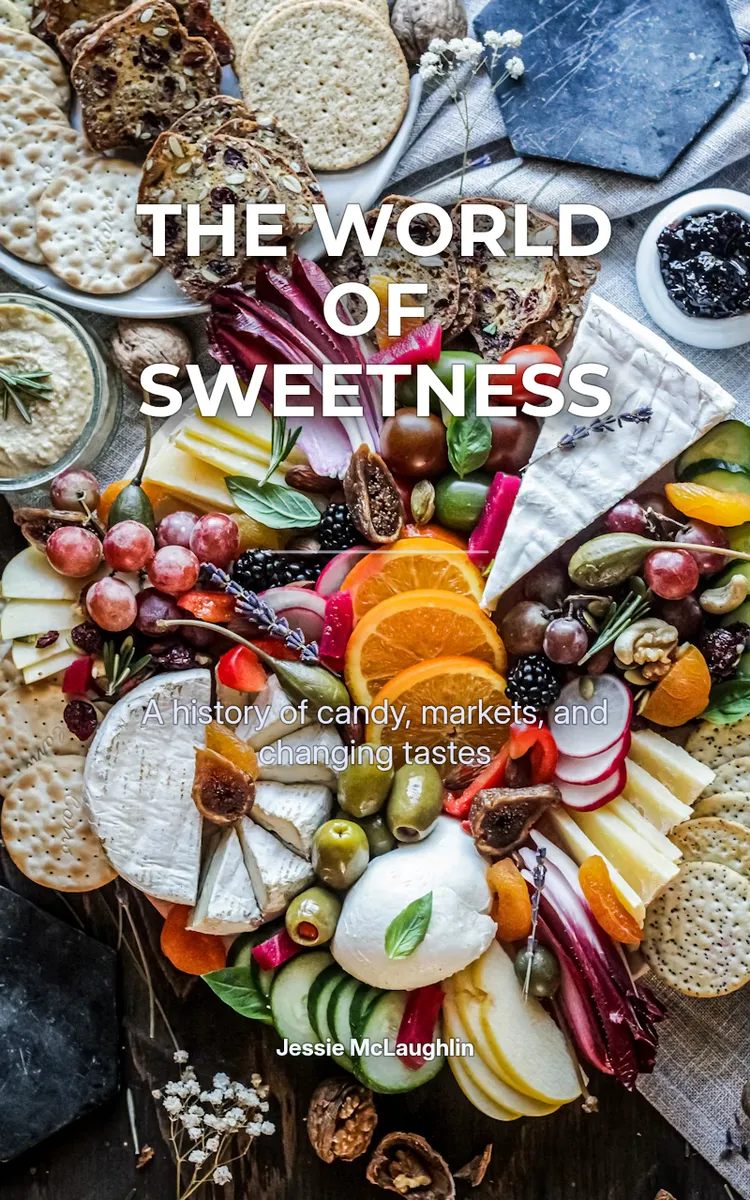
"The World Of Sweetness" is a curiosity book by Jessie McLaughlin with 40 chapters and approximately 65,689 words. McLaughlin, York Pennsylvania candy, and the evolution of the sugar market.
This book was created using Inkfluence AI, an AI-powered book generation platform that helps authors write, design, and publish complete books.
Frequently Asked Questions
What is "The World Of Sweetness" about?
McLaughlin, York Pennsylvania candy, and the evolution of the sugar market
How many chapters are in "The World Of Sweetness"?
The book contains 40 chapters and approximately 65,689 words. Topics covered include Why York Made Wolfgang Candy, Inside Wolfgang’s Candy Kitchen, How a Local Sweet Became a Name, The Taste of a Pennsylvania Childhood, and more.
Who wrote "The World Of Sweetness"?
This book was written by Jessie McLaughlin and created using Inkfluence AI, an AI book generation platform that helps authors write, design, and publish books.
Write your own curiosity book with AI
Describe your idea and Inkfluence writes the whole thing. Free to start.
Start writingCreated with Inkfluence AI


